Building Better Cities
From Research to Action: Turning Evidence into Better Cities with Robert Puentes
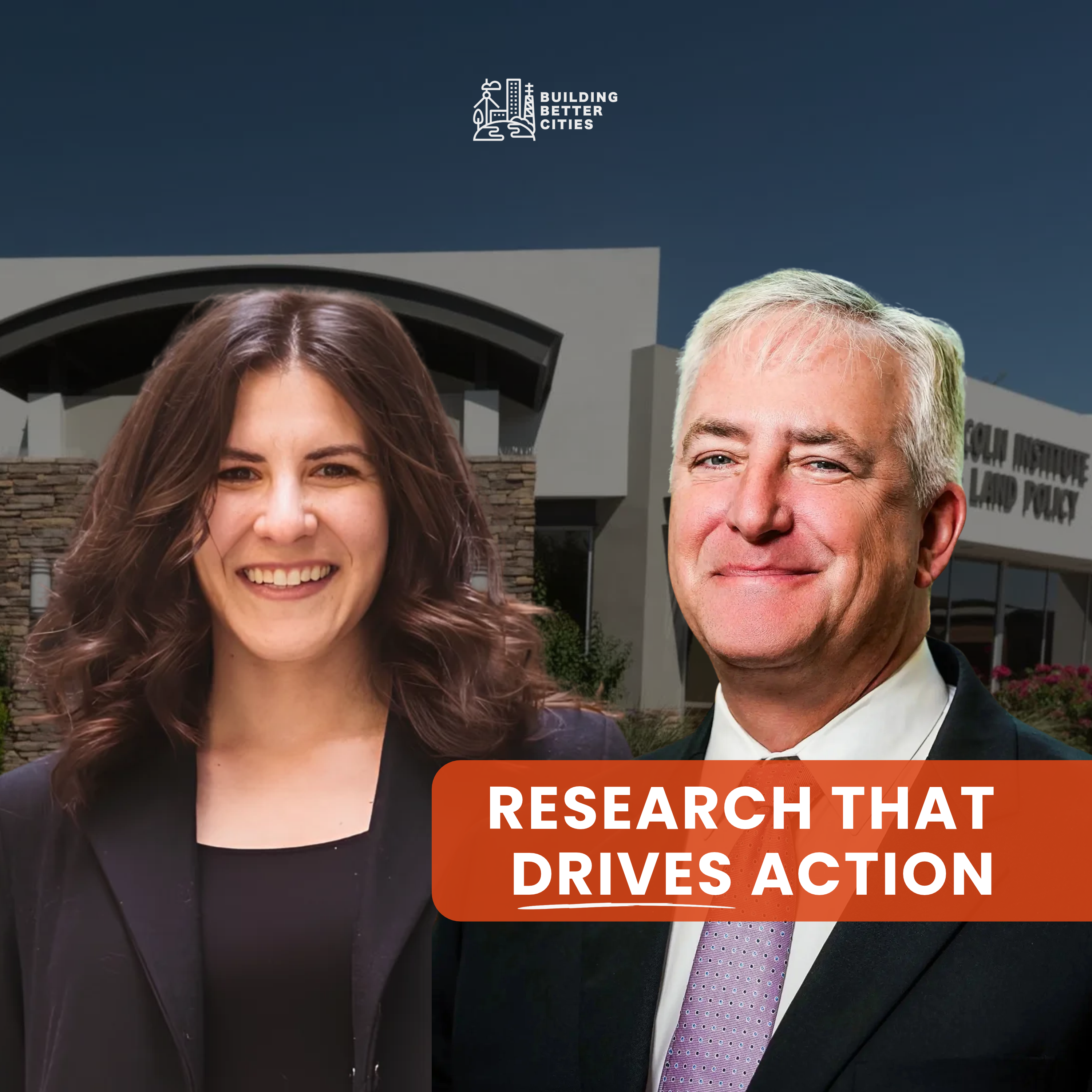
We have more data and research about cities than ever before—but is it actually leading to better decisions? In this episode of Building Better Cities, Kate Gasparro sits down with Robert Puentes , President and CEO of the Lincoln Institute of Land Policy , to explore how research can move beyond reports and into action. Drawing on Robert’s leadership at Lincoln and his previous roles at the Brookings Institution and Eno Center for Transportation , they discuss the role independent research institutions play in shaping housing, affordability, sustainability, infrastructure, economic policies in our cities at a time when trust in institutions is being challenged. The conversation explores how cities can better connect research to implementation, the need to break down silos between housing, transportation, land use, municipal finance, and urban infrastructure, and how evidence can help us understand not only whether a policy works—but who benefits, who bears the costs, and what the long-term tradeoffs may be. And those questions aren't just for city leaders. As voters head to the polls this fall, land policy—from property taxes to housing and zoning—is appearing directly on ballots across the country. We discuss how voters, too, can seek out credible research, understand the tradeoffs behind policy proposals, and use evidence to inform their own decisions at the ballot box. For city leaders, planners, developers, policymakers, researchers, and engaged residents, this episode asks: How do we move from simply having better information to actually building better cities? And how do we build the muscle memory—in our institutions and in our communities—to make evidence a meaningful part of the decisions shaping the places we live? Resources: New Leadership for a Pivotal Moment (Lincoln Institute of Land Policy) A Good Tax: Legal and Policy Issues for the Property Tax in the US (ULI) The Biggest Tax Issues Voters will Decide in the 2026 Midterms (Forbes)