Episode #32
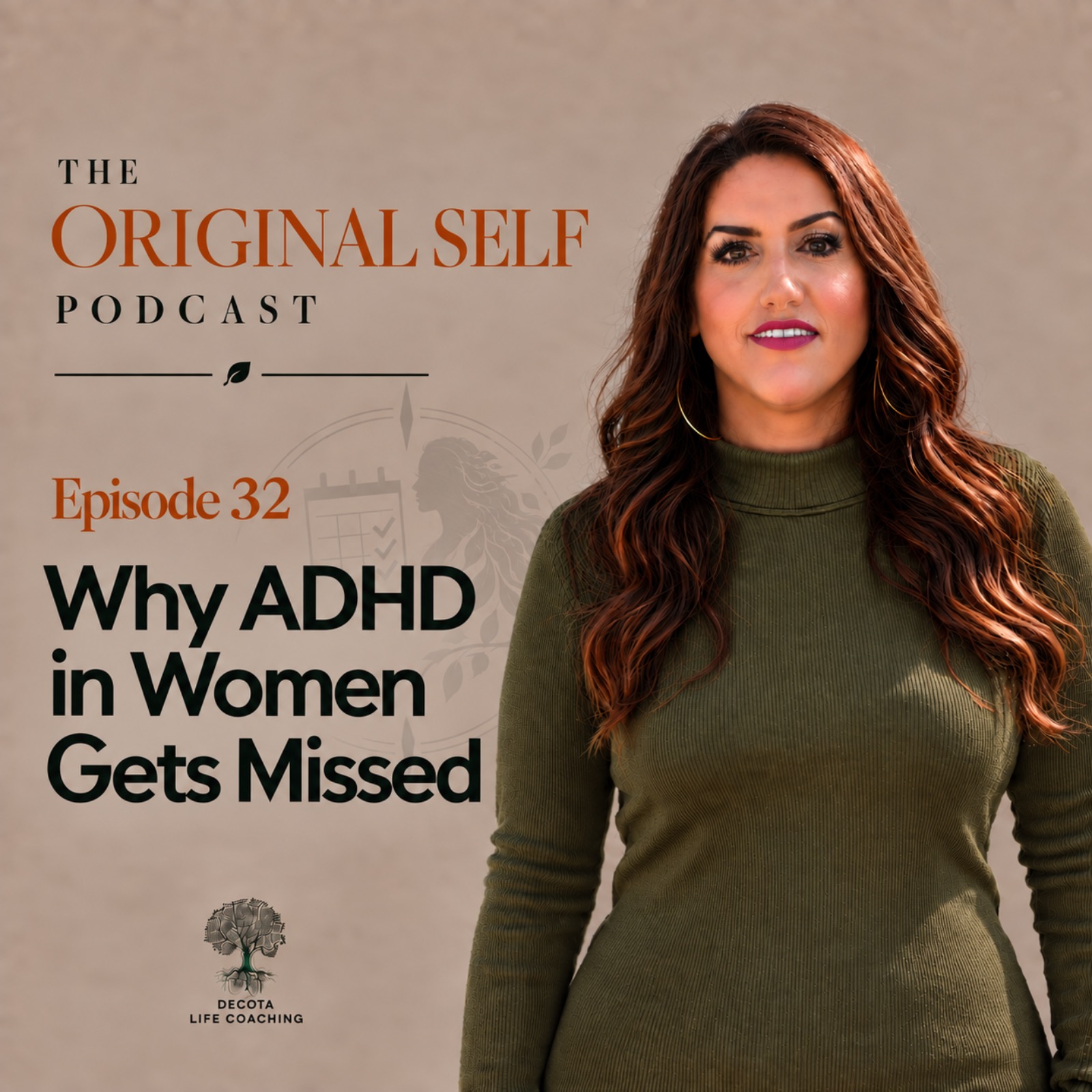
Why ADHD in Women Gets Missed | The Original Self Podcast
What does it take to look like you have it all together? In Episode 32 of The Original Self Podcast, I explore why ADHD in girls and women can be missed for years—and what it can cost to appear fine while working so hard behind the scenes. A woman may remember every appointment because she checks three calendars. She may complete a project under pressure while struggling to begin it days earlier. From the outside, she looks capable. Inside, she may have learned to call herself lazy or careless. In this episode, I look at research on delayed recognition, the coping systems adults build, executive functions, sleep timing, and the emotions that belong in this conversation. My friend Silvina describes the quiet freedom she finds at night, when no one expects anything from her. Her experience sits alongside research on later sleep timing in some adults with ADHD; there can be more than one reason a person stays awake. We also consider why changes during pregnancy, postpartum, and perimenopause deserve careful questions, while keeping an association distinct from a cause. Research on PMOS (formerly PCOS) and ADHD in children does not establish that PMOS or a particular prenatal hormone level causes ADHD. The episode closes with the story of a woman who may learn about herself after years of hearing “careless.” A later explanation may bring relief, while old self-criticism takes time to loosen. Missing a deadline describes something that happened. It does not define who you are. If this sounds familiar, a qualified clinician can help assess ADHD and other possible explanations, including sleep difficulties, anxiety, and hormonal changes. My coaching question for you: What have you called a flaw in yourself that might deserve a closer look? Research discussed: Skoglund et al. (2024) on age at ADHD recognition; Ohan and Visser (2009) on gendered referral; Canela et al. (2017) on coping systems; Coogan and McGowan (2017) on circadian timing; Murray et al. (2021) on emotional dysregulation; Kooij et al. (2025) on hormonal transitions; Andersson et al. (2023) on postpartum depression; Jakobsdóttir Smári et al. (2025) on perimenopausal symptoms; Holden et al. (2025) on late diagnosis. Hosted by Evet DeCota, Associate Certified Coach (ACC), B.A. Psychology, founder of DeCota Life Coaching. I offer a free discovery call to talk about what’s coming up for you and whether coaching might be a good fit. There’s no pressure, no pitch, no commitment required. Website: https://www.decotalifecoaching.com Email: decotalifecoaching@gmail.com Follow The Original Self Podcast on your preferred listening platform. Next episode: a conversation with Jen Walters about her lived experience.