Would you like to unlock the creative, imaginative and innovative potential in your team or organisation…BUT…don’t want to listen to another serious podcast which offers 7 steps, 5 habits, 3 mantras, and a hard sell in a pear tree?Then join ‘The Occupational Philosophers’, a ‘not-so-serious’ podcast with Simon Banks (middle-aged Australian surfer man, artist and published author) and John Rice (middle-aged British man with a love of curiosity and philosophy) as they chat with a ‘clowder’ (great word!) of curious cats from the fields of Comedy, Academia, Philosophy, Neuroscience, Psychology, Design, Marketing, and Business, to explore how you, your team, and your organisation, can develop your curiosity, spark your creativity, and free your imagination, so you can grow your business and your people….sounds great huh?!But don’t just take our word for it, read what our listeners think:“Worth a listen, one of them has a strange Australian accent”“They’re not philosophers, they’re idiot
Pitch Analysis
Required Pod Score for this show. PitchCentric checks your profile against host openness, topical fit, and audience signals before you generate a pitch.
Contact path
Verified email
Booking probability
35%
Guest openness
Selective
Verified email on file
80/100
Required Score
Sign up to generate a grounded pitch for The Occupational Philosophers - A not-so-serious business podcast to spark Creativity, Imagination and Curiosity.
Questions about The Occupational Philosophers - A not-so-serious business podcast to spark Creativity, Imagination and Curiosity
What is The Occupational Philosophers - A not-so-serious business podcast to spark Creativity, Imagination and Curiosity about?
Would you like to unlock the creative, imaginative and innovative potential in your team or organisation…BUT…don’t want to listen to another serious podcast which offers 7 steps, 5 habits, 3 mantras, and a hard sell in a pear tree?
Who hosts The Occupational Philosophers - A not-so-serious business podcast to spark Creativity, Imagination and Curiosity?
The Occupational Philosophers - A not-so-serious business podcast to spark Creativity, Imagination and Curiosity is hosted by The Occupational Philosophers. The show has published 122 episodes to date.
What has The Occupational Philosophers - A not-so-serious business podcast to spark Creativity, Imagination and Curiosity covered recently?
Recent episodes include "Ep 123: What a Museum Curator Sees in Your Organisational Culture with guest Jenny Theolin" (27 September 2026, 84 minutes), "Ep 121: How to be a better public speaker with guest, Dr Louise Mahler (From the vault)" (1 September 2026, 75 minutes), and "Ep 104 Inbetweener - Creative Insights you can plan your life around" (1 September 2026, 29 minutes).
How often does The Occupational Philosophers - A not-so-serious business podcast to spark Creativity, Imagination and Curiosity publish?
The Occupational Philosophers - A not-so-serious business podcast to spark Creativity, Imagination and Curiosity publishes roughly weekly, with episodes averaging 59 minutes across 122 episodes.
How hard is it to get booked on The Occupational Philosophers - A not-so-serious business podcast to spark Creativity, Imagination and Curiosity?
Booking probability for The Occupational Philosophers - A not-so-serious business podcast to spark Creativity, Imagination and Curiosity is 35%, and the host is rated Selective on guests. The Occupational Philosophers - A not-so-serious business podcast to spark Creativity, Imagination and Curiosity requires a Pod Score of 80 or higher. The Occupational Philosophers - A not-so-serious business podcast to spark Creativity, Imagination and Curiosity's contact route on record: verified email.
Who should pitch The Occupational Philosophers - A not-so-serious business podcast to spark Creativity, Imagination and Curiosity?
The strongest fits for The Occupational Philosophers - A not-so-serious business podcast to spark Creativity, Imagination and Curiosity are Business & Management Consulting. The Occupational Philosophers - A not-so-serious business podcast to spark Creativity, Imagination and Curiosity has a business audience.
About the host
The Occupational Philosophers hosts The Occupational Philosophers - A not-so-serious business podcast to spark Creativity, Imagination and Curiosity, a business show with 122 episodes published.
Our AI reads these to draft pitches. Use them as grounding for a pitch that cites a real guest and a specific topic.
Episode #123
Ep 123: What a Museum Curator Sees in Your Organisational Culture with guest Jenny Theolin
Sep 27, 20261h 24m
What a Museum Curator Sees in Your Organisational Culture The Occupational Philosophers | Episode 121 - Jenny Theolin Jenny Theolin is a Stockholm-based designer, facilitator, curator, photographer and author. She spent...
Ep 121: How to be a better public speaker with guest, Dr Louise Mahler (From the vault)
Sep 1, 20261h 15m
How to be a better Public Speaker with Dr Lousie Mahler. (This is a reboot of episode 71, recorded a few years back - and one of our favourites) Dr Louise is the polymath's polymath and is recognised as a Top 30 Global...
Ep 104 Inbetweener - Creative Insights you can plan your life around
Sep 1, 202629 min
SHOW NOTES In this short, sharp Inbetweener episode, The Occupational Philosophers continue to delve back into some highlights from the first 100 episodes and some sage advice from guests who have helped populate the...
Ep.120: The fear of being judged Is Killing your Creativity | Nuggets With Dr Peter Lovatt
Aug 26, 202610 min
Why Movement Changes How You Think | Nuggets With Peter Lovatt The Occupational Philosophers | Episode 120 Nuggets With Dr Peter Lovatt — Dance Psychologist and the show's very first-ever guest. John and Simon launch a...
Ep.119 - The Art of Asking Great Questions (And Why We're Losing It) With Larry Robertson
Aug 17, 20261h 22m
The Art of Asking Great Questions (And Why We're Losing It) The Occupational Philosophers | Episode 119 With Larry Robertson With Larry Robertson: author, innovation advisor, and Inc. Magazine columnist, and founder of...
Ep. 118 - Casa de Cambio x Occupational Philosophers, with guest Natasha Redman
Jul 1, 20261h 31m
In Episode 118,The Occupational Philosophers dive into a totally different format! Together with Natasha Redman, host of the very popular‘Casa De Cambio’ podcast, they have created their first ‘mash up’ podcast episode...
Ep. 117 Why Your Company Events Are Killing Culture (And What Burning Man Gets Right) | With guest, Jasper Vallance
Jun 26, 20261h 7m
The Occupational Philosophers | Episode 117 | With Jasper Vallance Jasper Vallance is a social entrepreneur who left his corporate life at Google to create a life of meaning driven by his passions. As an event...
Ep. 114 - Guest episode with the wonderfully curious Professor Kathryn Boydell
May 28, 202654 min
In this episode 114, the Occupational Philosophers chat with the wonderfully curious Professor Katherine Boydell. Katherine is an internationally recognised leader in qualitative inquiry and arts-based knowledge...
Ep. 116: Who's that behind the mask? Creative Director, Tim Simpson!
May 18, 20261h 21m
In Episode 116,The Occupational Philosophers chat with Tim Simpson, creative director of Plunge Creations, a company probably best known for being the imaginative powerhouse in designing and making the costumes for ‘The...
Ep. 115: Photography: the art of seeing and failing your way to creativity, with guest, Kurt Sneddon.
Apr 17, 20261h 4m
The Occupational Philosophers chat with Kurt Sneddon, photographer, cinematographer, and actor. In this episode, they explore a wide range of topics including: Where AI can enhance the creative process The art of...
Ep. 113: Curiosity, empathy, and being open to the world, with guest, David Bramwell, Author of 'The Number 9 Bus to Utopia'.
Feb 3, 20261h 25m
In this episode 113, the Occupational Philosophers chat with the wonderfully curious David Bramwell - a writer, broadcaster, performer and professional seeker. He’s the author of The Number 9 Bus to Utopia, a...
Ep. 112: Graphic rewilding, public art and the value of boredom, with guests, Catherine Borowoski and Lee Baker.
Jan 7, 20261h 13m
In Episode 112, The Occupational Philosophers chat with the artists, Catherine Borowski and Lee Baker, two exceptionally talented guests who show the true power of creative collaboration and imagination. Together they...
Ep 110: How to Turn Any Stupid Thing Into a LinkedIn Business Lesson
Aug 12, 202514 min
Have you noticed everyone on LinkedIn now turns the most mundane crap into a business lesson? Stubbed toe...that's leadership. Wrinkly socks...team dynamics. Toothbrush running flat...how do you lead a team? So Simon...
Episode 109: What Benjamin Franklin can teach us about curiosity, creativity, imagination and play,with Eric Weiner, New York Times bestselling author & travel Philosopher
Jul 4, 20251h 10m
In Episode 109, The Occupational Philosophers chat with Eric Weiner, an award-winning journalist, a New York Times bestselling author, and much sought-after keynote speaker on a variety of topics, including happiness...
Episode 108 Inbetweener - Rick Rubin and the Creative Act
Jun 9, 202539 min
Ep.108 Rick Rubin and the Creative Act John and Simon explore the creative wisdom of music producer Rick Rubin and what it means to bring creativity into everyday work and life What does it really mean to be creative...
Ep.107: Design thinking and the entrepreneurial mindset, with guest, Dr Jochen Schweitzer
May 13, 20251h 13m
In episode 107, The Occupational Philosophers chat with the highly curious Dr Jochen Schweitzer, a strategy, innovation, and entrepreneurship researcher and education leader at UTS, Director of the Executive MBA...
Ep.106: Hello 2025 - Curious Questions for Curious Dinner Parties - and other fun events
Apr 9, 202533 min
Hello and welcome back to 2025! (Noting the irony that is is now April...) The Occupational Philosophers have returned from walking the Earth, exploring the heavens and astral travelling beyond the stratosphere...
Ep.105 - Happy (late) New Year, Christmas Vibes and what caught our curious eye in 24
Jan 5, 202515 min
Reflecting on the year of 2024 seemed like such a good idea. That's the thing right? Launching that episode as quickly as planned didn't go as well as planned.... Drinking their own Kool-Aid and embracing serendipity...
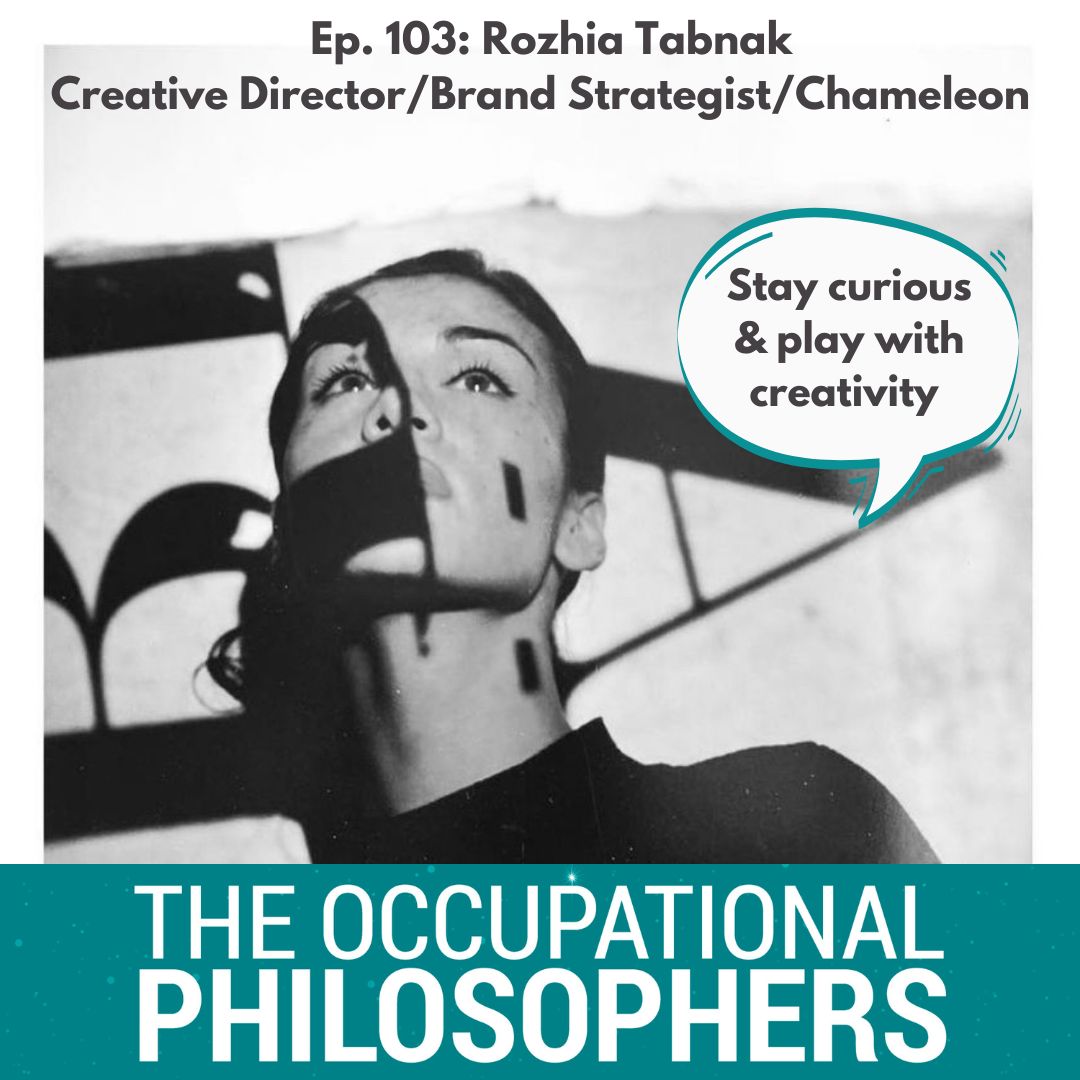
Ep.103: Why curiosity is at the heart of great design, with Rozhia Tabnak.
Dec 6, 20241h 17m
In episode 103, The Occupational Philosophers chat with Creative Director, Brand Strategist and Poly-Disciplinary Creative Chameleon, Rozhia Tabnak. Her work includes interior design, art curation, film production...
Recent guests on The Occupational Philosophers - A not-so-serious business podcast to spark Creativity, Imagination and Curiosity. Study who booked and why before you pitch.
Best industries to pitch The Occupational Philosophers - A not-so-serious business podcast to spark Creativity, Imagination and Curiosity for
PitchCentric classifies The Occupational Philosophers - A not-so-serious business podcast to spark Creativity, Imagination and Curiosity under these industries. Guests from them are the closest fit, and each links to the best podcasts in that industry.