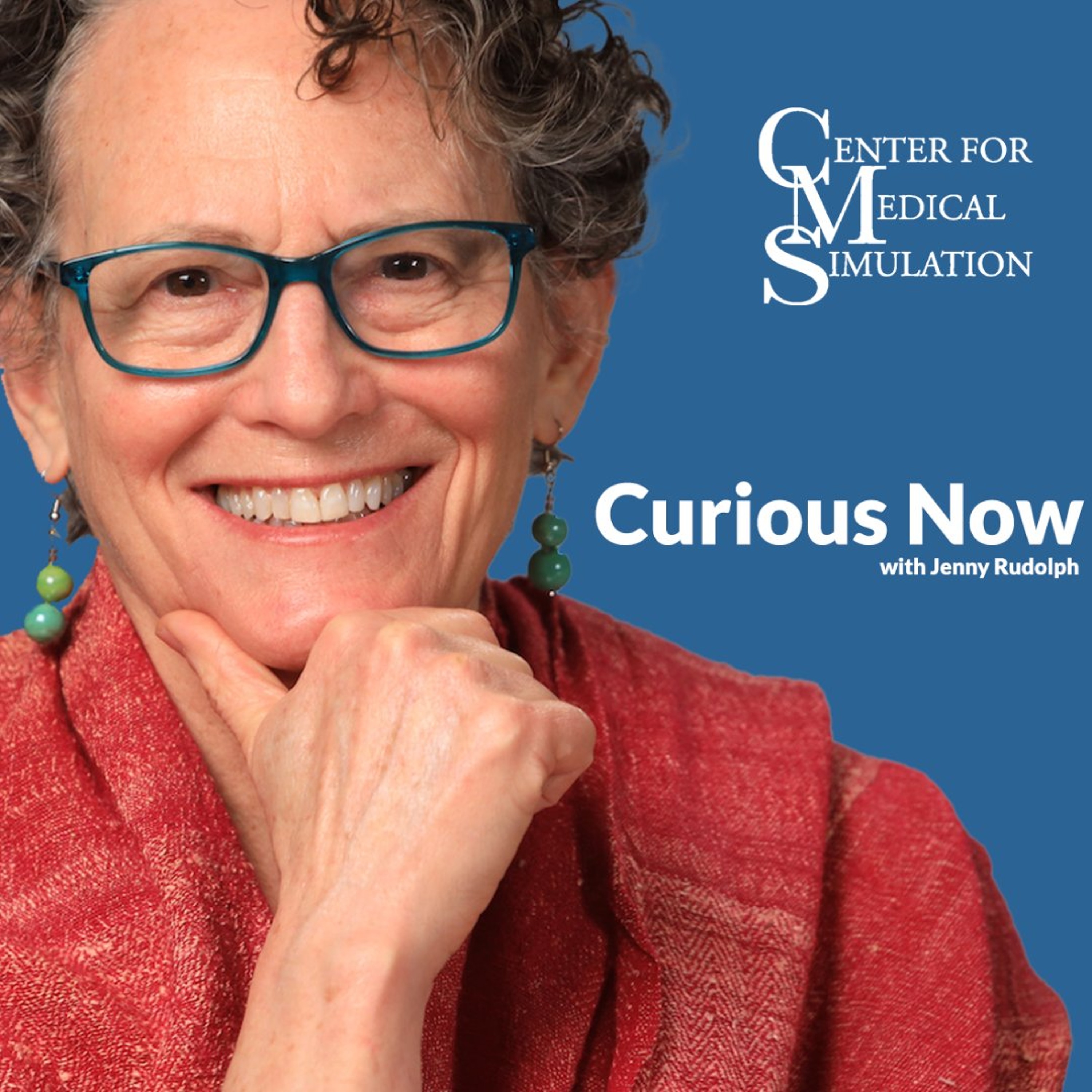
Am I Safe? | Curious Now 50
Self-awareness of our stress level is the foundation of our ability to self-regulate, which is what allows us to notice what’s going on with others more accurately: https://podcasts.apple.com/us/podcast/the-center-for-me

Loading…
Hosted by Center for Medical Simulation · 🇺🇸 US · EN · 260 episodes
Established thought leaders with verified media credentials.
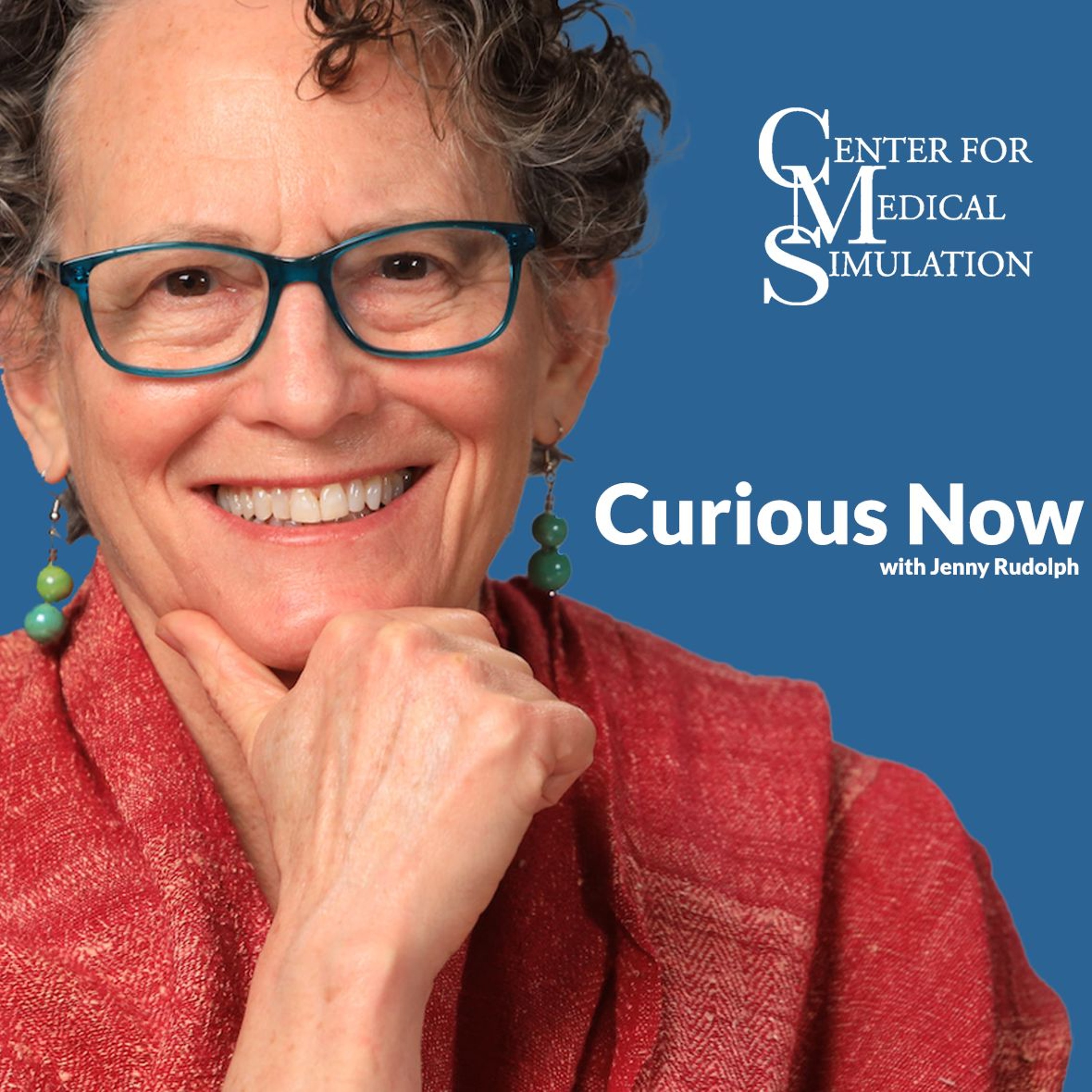
A nurse preceptor has just watched a trainee commit a serious error despite hours of lecture, reading, and hands on training. In spite of herself, she starts to heat up, much like the more severe clinical educators who trained her years ago. “Why can’t you just get this right?”An ICU attending asks her resident to call her if a patient’s hematocrit drops under a certain value. Despite this agreement, and despite the patient deteriorating, the resident never calls. “Are you an idiot? Why didn’t you call me?”In these moments, how do we reset ourself to a place of care, curiosity, and compassion? How do we model a better culture of learning? How do we have our judgment, instead of our judgment having us?In “Curious Now with Jenny Rudolph,” a social scientist takes on the hidden structures that shape our behavior, culture, communication, and learning in healthcare.In this interactive podcast, Jenny Rudolph, PhD, FSSH, will help listeners approach the thoughts, feelings, and judgments u
Center for Medical Simulation hosts The Center for Medical Simulation, a science show with 260 episodes published.

Self-awareness of our stress level is the foundation of our ability to self-regulate, which is what allows us to notice what’s going on with others more accurately: https://podcasts.apple.com/us/podcast/the-center-for-me
Managing our own attention at critical moments is one of the key elements of self-leadership, allowing us to control our reactions and focus rather than being controlled by it: https://podcasts.apple.com/us/podcast/the-c

How do we help our colleagues push through initial effort to focus into a realm where they feel like they have achieved flow and are doing their best work? : https://podcasts.apple.com/us/podcast/the-center-for-medical-s

“If I create too much psychological safety, won’t discussions just become endless? It sounds nice, but I have actual work to get done.” : https://podcasts.apple.com/us/podcast/the-center-for-medical-simulation/id12792668

People are going to make mistakes. As the leader of a team, how do we help people move from the mindset of failure as a character flaw to seeing failure as a moment for growth?: https://podcasts.apple.com/us/podcast/the-

What should a leader do when they’ve encouraged their team to speak up, they’ve created psych safety, and then their team gives them feedback they didn’t really want to hear: https://podcasts.apple.com/us/podcast/the-cen

Teamwork isn’t free—our teammates are always making cost calculations about the benefits of weighing in versus the potential costs: https://podcasts.apple.com/us/podcast/the-center-for-medical-simulation/id1279266822 One

Emira Yusufova, Lucas Farris, and Julie Hartman join us again to talk their experience at asking questions where they truly don’t know the answer: https://podcasts.apple.com/us/podcast/the-center-for-medical-simulation/i

“There should be no more simulation programs. There should be READINESS programs.” Jenny Rudolph and Chris Roussin team up to show how simulation programs can make themselves essential to their larger organizations: http

n this special episode led by Mary Fey, Dr. Penni Watts, President of INACSL, joins us to discuss what we learned helping two nursing schools achieve INACSL endorsement, and how other nursing programs can get there! List

Esmira Yusufova, RN, Lucas Ferris, RN, and Julie Hartman from the Society for Simulation in Healthcare’s Mindfulness Special Interest Group join us to reflect on their recent tries at the workout of the week: https://pod

“Walk me through what your work looks like,” is one of the most powerful questions a leader can ask: https://podcasts.apple.com/us/podcast/the-center-for-medical-simulation/id1279266822 By understanding how each worker a

What does it mean when psych safety literature asks us to emphasize the purpose of the work as a leader? When we have psych safety, it can make the risks involved in making things better feel worth the effort: https://po

When Dr. Hannah Lawn returned home after completing a fellowship at Center for Medical Simulation, colleagues asked a simple question: How did the experience change you? “It’s changed my career,” she said. “I honestly fe

Moving our series on psych safety to the team level: how do we set expectations regarding things like reporting mistakes, managing uncertainty, or how we’re going to depend on one another? https://podcasts.apple.com/us/p

Psych Safety: Boundaries and the Cost of Growth | Curious Now 38 Why are we talking about boundaries in a series on psych safety? When we can’t hold consistent standards for ourselves and what we will tolerate, that unpr

Where’s the line between requests and boundaries that we’re comfortable making, and ones that seem impossible to set? https://podcasts.apple.com/us/podcast/the-center-for-medical-simulation/id1279266822 How do we recogni

How do we offer the kind of connection our teammates need to strengthen psychological safety in our teams, especially in duos? https://podcasts.apple.com/us/podcast/the-center-for-medical-simulation/id1279266822 In the s

A clinical situation involving a violent patient led Dr. Henrique Arantes and team at Hospital Universitário Sagrada Família in Araguari, Brazil to examine whether it would be possible to use AI to quickly design an effe

When we make a mistake and get into psychologically unsafe territory, how do we recover quickly, especially when the consequences of freezing are so high?: https://podcasts.apple.com/us/podcast/the-center-for-medical-sim
Detected from recent episode content. Sponsor presence is a real signal of listener purchasing power and show monetisation.
No public pitch examples yet for this show.
Generate your own personalised pitchBased on semantic analysis of episode topics and host coverage, this show is a strong guest fit for executives in:
Industry fit is computed by PitchCentric using vector embeddings of the show's episode catalog.
Shows with the most semantically similar episode content. Pitch one, pitch all; producers cluster.


The Center for Medical Simulation has a verified contact on file. Create a free PitchCentric account to access it and generate a personalised pitch in seconds. Research at least 3 recent episodes first and lead with a specific angle that serves their science audience.
The Center for Medical Simulation is hosted by Center for Medical Simulation. The show is categorised under science and has published 260 episodes.
The Center for Medical Simulation has published 260 episodes.
The Center for Medical Simulation regularly covers science. It sits in the science category.
The Center for Medical Simulation is accessible for guests with genuine science expertise. A personalised, episode-aware pitch will still outperform a generic one every time.
The Center for Medical Simulation hasn't explicitly signalled guest openness in recent episodes. That doesn't rule out pitching. your hook just needs to be especially compelling and relevant to their recent content.
Episodes of The Center for Medical Simulation average 21 minutes. a focused format where a clear narrative arc and tight preparation matter most.
Our data rates The Center for Medical Simulation's guest bar at 80/100 (Premium tier). Established thought leaders with verified media credentials. Sign in to PitchCentric to see how your own Pod Score compares against this show.
Methodology. Booking Probability™ blends Listen Score, 30-day Virality, open-to-guests detection, and Apple ratings. Data refreshed every 60 minutes. Listen Score and Booking Probability are calculated by PitchCentric. Last enriched yesterday.