Episode #100
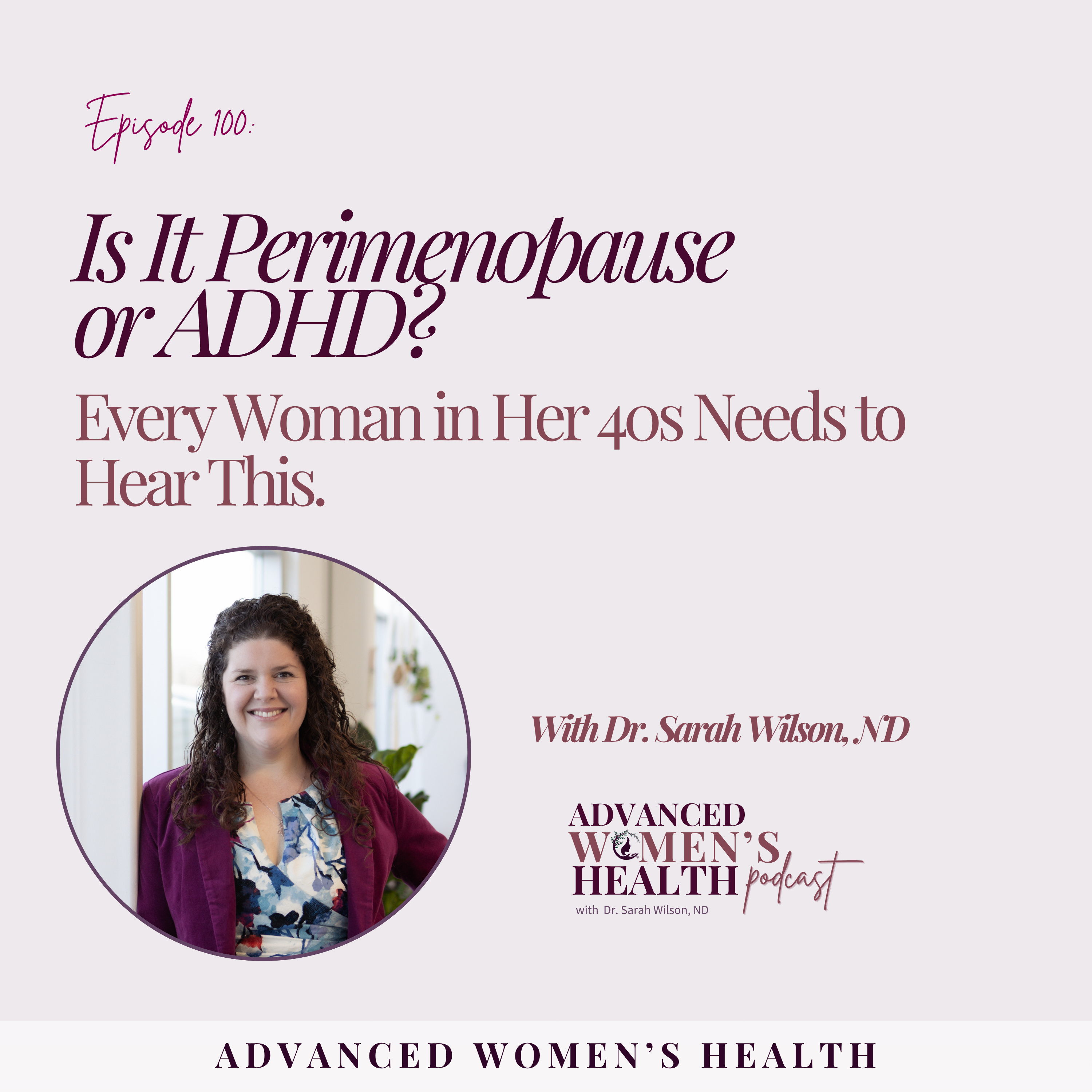
Episode 100: Is It Perimenopause or ADHD? Every Woman in Her 40s Needs to Hear This.
If you have found yourself wondering whether you need Ozempic, HRT, more protein, or an ADHD diagnosis all at once — this episode explains exactly why that is happening and what it actually means. In This Episode, We Answer: Why do so many women in their 40s suddenly feel like they have ADHD? Is perimenopause causing my brain fog and focus problems? What is the connection between hormones and ADHD symptoms? Why are women being put on ADHD medications they do not need? What is the midlife core four and why does Dr. Sarah talk about it? Quick Answers (FAQ): Q: Why do so many women in their 40s suddenly feel like they have ADHD? A: Estrogen supports brain function, focus, memory, and word retrieval. Progesterone calms the nervous system and reduces inflammation. When both begin to fluctuate unpredictably in perimenopause, the result looks clinically identical to ADHD. Add nutrient deficiencies and chronic nervous system overload, and the picture becomes nearly indistinguishable. We go deeper into this at 08:06. Q: Is perimenopause causing my brain fog and focus problems? A: Possibly, but it is more accurate to say perimenopause is revealing a problem that was already building. The hormone shift makes the brain less able to compensate for inflammation, blood sugar swings, and nutrient deficiencies that have been accumulating for years. We go deeper into this at 07:18. Q: What should I investigate before starting an ADHD medication? A: Blood sugar, fasting insulin, inflammatory markers, iron, B vitamins, and choline. If these have not been assessed and addressed, the ADHD-like symptoms may resolve without medication. If they do not, you now have a clearer picture of what the medication is working on top of. We go deeper into this at 17:28. Q: What is the midlife core four? A: The four things Dr. Sarah hears about most in clinic for women in their 40s and 50s: GLP-1 medications, hormone replacement therapy, protein intake, and ADHD. They cluster together because they share the same root drivers — hormonal instability, insulin dysregulation, inflammation, and nervous system overload. We go deeper into this at 01:02. Connect With Us: Website: advancedwomenshealth.ca Instagram: @drsarah_nd | @advancedwomenshealth Book an appointment: advancedwomenshealth.ca Email for programs: info@advancedwomenshealth.ca Leave a review: wherever you are listening, it helps other women find this episode