017 Tomorrow Never Knows
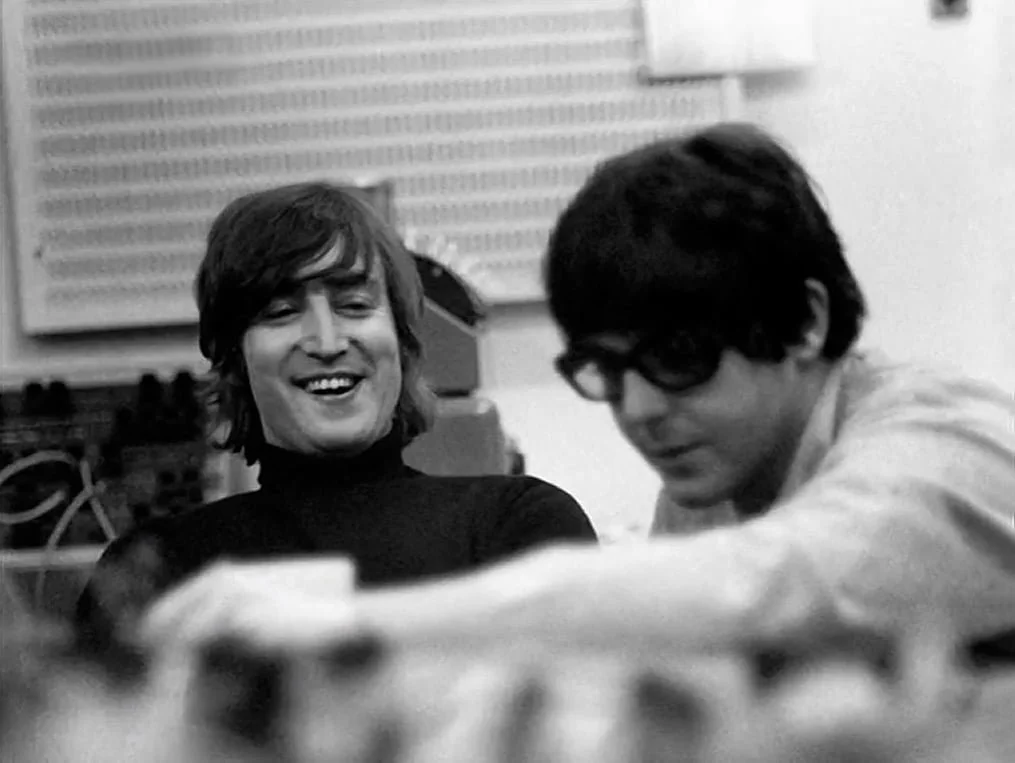
We kick off Season 2 with one of the Beatles’ most revolutionary recordings, “Tomorrow Never Knows,” the closing track on Revolver but the first song recorded for the album. It would be both a creative and technical brea

Hosted by Jason Kruppa · 🇺🇸 US · EN-US · 19 episodes
Established thought leaders with verified media credentials.
The podcast dedicated to exploring the untold story behind producer George Martin's revolutionary collaboration with The Beatles.
Jason Kruppa hosts Producing The Beatles, a music show with 19 episodes published.

We kick off Season 2 with one of the Beatles’ most revolutionary recordings, “Tomorrow Never Knows,” the closing track on Revolver but the first song recorded for the album. It would be both a creative and technical brea

Beatle author Ken Womack and Ranking the Beatles host Jonathan Pretus join me to discuss the tech that made the Beatles’ new single “Now and Then” possible. And from John's haunting vocal to Giles Martin's stirring strin

A little extra mini-episode examining George Martin’s orchestration for “Live and Let Die,” with a recreation of part of the arrangement.

In our penultimate Season 1 bonus episode, we examine another solo recording, this time Paul McCartney’s thrilling theme song for the 1973 James Bond film, Live and Let Die. I’m joined by Allan Kozinn, co-author of The M

Beatle author Ken Womack and Ranking the Beatles host Jonathan Pretus join me to discuss the tech that made the Beatles’ new single “Now and Then” possible. And from John's haunting vocal to Giles Martin's stirring strin

A little extra mini-episode examining George Martin’s orchestration for “Live and Let Die,” with a recreation of part of the arrangement.

In our penultimate Season 1 bonus episode, we examine another solo recording, this time Paul McCartney’s thrilling theme song for the 1973 James Bond film, Live and Let Die. I’m joined by Allan Kozinn, co-author of The M

In the second episode looking at the making of All Things Must Pass, we explore the recording of the largest production on the album. We hear from participants at the sessions, listen to outtakes and isolations, peek int

Today, the first of two episodes exploring the production of George Harrison’s first solo album, All Things Must Pass, with new research and interviews drawn from the book Ken Womack and I wrote on the making of the albu

In the first bonus episode for Season 1, we step outside of our regular format and take a peek into solo Beatles territory, with a look at the recording of John Lennon’s song “Love” from his first post-Beatles solo album

Recording Strawberry Fields Forever was a complicated, layered process, famously requiring the cutting together of two different takes in two different keys and tempos. Today we put our magnifying glass on the second of

In examining the making of the third version of Revolution (after Revolution 1 and Revolution 9), we talk to musician and composer Casey McAllister to consider the origins of the recording’s intro; author and producer Je

Sparked by the air of social upheaval in 1968, John's song "Revolution" spawned three very different recordings: Revolution 1, Revolution 9, and Revolution (the single version). Today, in the first of a two part episode,

With Apple’s announcement that Peter Jackson will be reworking the Let It Be footage, we go back to the actual sessions to examine this period from George Martin’s perspective. Martin and The Beatles advanced the use of

Building off George Martin’s half-speed, wind up piano technique, The Beatles and their producer used varispeed — variable speed recording — to alter the sound of instruments, vocals, and even entire rhythm tracks of son

The Beatles’ first four singles seem to be fairly straightforward live studio recordings, but George Martin expended a good bit of effort to polish these songs up for release. Today, we listen through the session tapes f

“When I’m Sixty-Four” is Paul McCartney’s nostalgic throwback to British music hall, and a tribute to his father, Jim McCartney. Today, we examine George Martin’s iconic clarinet score for the song, and consider how much

In the second half of our brief overview of how George Martin and The Beatles used multitrack recording, we’ll hear how they pushed four-track recording to its breaking point, and we’ll learn how they managed the complex

One of the most fascinating aspects of The Beatles’ career is how, with George Martin’s guidance, they advanced the art of recording, as they went from twin track to four track to eight track tape. Today, we examine how

George Martin’s score for “Eleanor Rigby” builds on the classical string quartet form that the producer introduced The Beatles to on the song “Yesterday.” In this episode, we examine the writing and recording of the scor
Sponsor detection runs nightly. Check back soon.
No public pitch examples yet for this show.
Generate your own personalised pitchBased on semantic analysis of episode topics and host coverage, this show is a strong guest fit for executives in:
Industry fit is computed by PitchCentric using vector embeddings of the show's episode catalog.
Shows with the most semantically similar episode content. Pitch one, pitch all; producers cluster.


Producing The Beatles has a verified contact on file. Create a free PitchCentric account to access it and generate a personalised pitch in seconds. Research at least 3 recent episodes first and lead with a specific angle that serves their music audience.
Producing The Beatles is hosted by Jason Kruppa. The show is categorised under music (arts) and has published 19 episodes.
Producing The Beatles has published 19 episodes.
Producing The Beatles regularly covers music, arts, performing. It sits in the music category, with a arts focus.
Producing The Beatles is accessible for guests with genuine music expertise. A personalised, episode-aware pitch will still outperform a generic one every time.
Producing The Beatles hasn't explicitly signalled guest openness in recent episodes. That doesn't rule out pitching. your hook just needs to be especially compelling and relevant to their recent content.
Episodes of Producing The Beatles average 25 minutes. a focused format where a clear narrative arc and tight preparation matter most.
Our data rates Producing The Beatles's guest bar at 80/100 (Premium tier). Established thought leaders with verified media credentials. Sign in to PitchCentric to see how your own Pod Score compares against this show.
Methodology. Booking Probability™ blends Listen Score, 30-day Virality, open-to-guests detection, and Apple ratings. Data refreshed every 60 minutes. Listen Score and Booking Probability are calculated by PitchCentric. Last enriched 5 days ago.