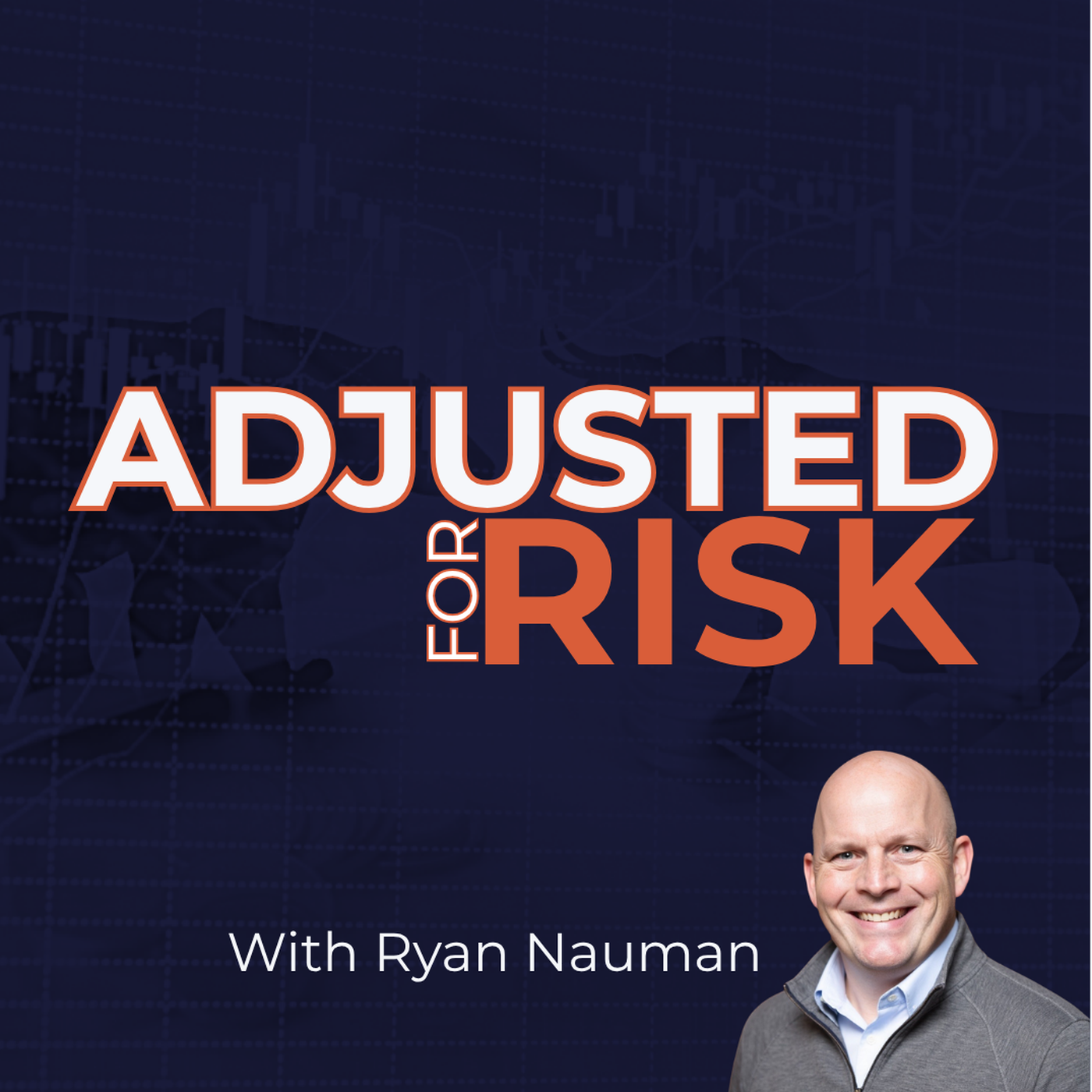
Hosted by Market Strategist Ryan Nauman, Adjusted for Risk brings together financial markets, investments, economics, wealth management, and life to help investment professionals make sense of what's happening—and prepare for what's next. Ryan sits down with industry leaders, investment experts and thought leaders to explore the trends driving markets and influencing investor behavior, from ETFs and SMAs to portfolio construction, AI, the economy, and the evolving wealth management industry. Expect insightful conversations, actionable ideas, and a fun, engaging approach to the topics that matter most to financial advisors, wealth managers, portfolio managers, and investment professionals. Cut through the noise. Gain perspective. Make more informed investment decisions. Subscribe to Adjusted for Risk and stay ahead of the trends shaping markets, investments, and wealth management. Adjusted for Risk — Cut Through the Noise. Invest With Perspective.
Pitch Analysis
Required Pod Score for this show. PitchCentric checks your profile against host openness, topical fit, and audience signals before you generate a pitch.
Contact path
Verified email
Booking probability
31%
Guest openness
Selective
Verified email on file
80/100
Required Score
Sign up to generate a grounded pitch for Adjusted for Risk.
Adjusted for Risk is a business podcast hosted by Unknown Host, with 46 episodes on record and a Required Pod Score of 80. PitchCentric scores this show on Booking Probability, Listen Score, and live audience signals refreshed every 24 hours.
About the host
Unknown Host hosts Adjusted for Risk, a business show with 46 episodes published.
Our AI reads these to draft pitches. Use them as grounding for a pitch that cites a real guest and a specific topic.
Adjusted for Risk
The ETF Innovation Boom: What’s Next for the Fastest-Evolving Corner of Investing?
Sep 2, 202629 min
Ryan Nauman discusses rapid ETF growth and key industry trends with Steve Foy, Senior Vice President of Trading at Tidal Financial Group. Foy explains Tidal’s full-stack ETF platform and ongoing support for clients, from product development and SEC filings to trading and operations. They highlight active ETFs as a major shift from traditional indexing, the surge in defined outcome/buffered and derivative income products, and increasingly concentrated thematic ETFs driven in part by AI-related market changes. The conversation addresses investor and advisor adoption of more complex derivative-based and leveraged products, emphasizing disclosures, education, and suitability. They also cover auto callables, private market access following SpaceX-related developments, the speed of IPO-linked ETF launches, and what may come next, including prediction markets and evolving regulatory and tax considerations. Connect with Ryan Nauman: LinkedIn: https://www.linkedin.com/in/ryannauman1/ X: https://twitter.com/LkTahoeBadger www.NaumanStrategicPartners.com Learn more about Tidal Financial Group: https://tidalfinancialgroup.com/ 00:00 ETF Boom Overview 01:02 Meet Steve Foy 01:59 Tidal Full Stack Platform 04:52 Active ETF Surge 07:21 Is There an ETF Bubble 08:53 Who Drives Innovation 11:29 Defined Outcome Demand 14:16 Thematic ETFs and AI 16:14 Derivatives and Exotic Risk 22:20 Auto Callables and Private Markets 24:46 IPOs and Single Stock ETFs 26:35 Whats Next Prediction Markets 28:17 Wrap Up and Where to Learn More
Catastrophic Bonds and Their Role in Modern Investment Strategies
Aug 28, 202630 min
Host Ryan Nauman welcomes Ethan Powell, Principal and CIO at Brookmont Capital Management, to discuss catastrophe bonds and how they help insurers transfer tail risks from natural disasters while offering investors potential income and diversification. Powell explains how fully cash-collateralized 144A cat bonds work, including triggers, attachment points, and how returns combine SOFR earned on collateral with a risk premium funded by insurer premiums. They cover why cat bonds can improve pricing transparency and scalability in an opaque insurance market, potentially supporting insurance availability in high-peril areas. The conversation addresses rising climate volatility, recent insured-loss trends, AI’s role in faster damage assessment and improved modeling (especially for wildfires), liquidity in the cat bond market, key risks (natural disaster impairments), and how advisors typically use cat bonds as a satellite alternative income allocation via Brookmont’s ETF. Connect with Ryan Nauman: LinkedIn: https://www.linkedin.com/in/ryannauman1/ X: https://twitter.com/LkTahoeBadger www.NaumanStrategicPartners.com Learn more about Brookmont Capital Management: https://www.brookmont.com/ 00:00 Disaster Risk Meets Investing 00:56 Meet Ethan Powell 02:36 Why Insurance Is Breaking 03:54 How Cat Bonds Work 05:38 Rising Losses And Volatility 07:29 AI And Wildfire Modeling 10:47 Transferring Risk With Cat Bonds 13:48 Investor Benefits And Diversification 16:40 Liquidity And Market Growth 21:08 Key Risks And Expected Losses 23:21 Cat Bonds Versus Other Bonds 25:59 Portfolio Role And Allocation 28:35 Wrap Up And Resources
AI Won’t Replace Financial Advisors. It Could Make Them More Human
Aug 24, 202649 min
Host Ryan Nauman welcomes Matt Halloran (“Matt GPT”), Chief Evangelist at Zocks, to discuss how AI is affecting wealth management and why many advisors still underuse it due to fear, unrealistic expectations, compliance concerns, and industry noise. Halloran argues advisors are only scratching the surface with note-taking and content tools, while the bigger opportunity is integrating structured data across the tech stack to uncover client opportunities, speed service, and drive organic growth. He recommends talking with peers, ensuring secure two-way integrations, and testing platforms side by side. The conversation covers building trust through incremental adoption and social proof, how AI-driven faster communication can help during bear markets, and how reclaimed time should be reinvested in clients, teams, personal wellbeing, and relationship building. Halloran also notes AI can support compliance via accurate transcriptions and reduced errors. Connect with Ryan Nauman: LinkedIn: https://www.linkedin.com/in/ryannauman1/ X: https://twitter.com/LkTahoeBadger www.AdjustedForRisk.com Learn more about Zocks: https://www.zocks.io/ 00:00 Show Kickoff AI Focus 00:54 Meet Matt Halloran 01:39 Career Path Influence 03:51 Kindness Trust Culture 06:14 Why Advisors Fear AI 09:47 AI Beyond Content 12:28 Choosing AI Tools 14:47 Clients Bring AI 16:22 Trust Compliance Steps 20:32 Bear Market Speed Service 23:57 Faster Client Communication 24:42 Using Freed Time Well 27:07 Feed Your Soul 28:50 Next Gen Advisor Skills 31:03 Preparedness Story 34:10 Winning Over Skeptics 39:01 Organic Growth Plays 42:41 Augmented Intelligence 45:01 Compliance Safety Net 46:54 Wrap Up And Resources
Why Insider 'Skin in the Game' May Beat the S&P 500
Aug 17, 202642 min
On the Adjusted for Risk podcast, host Ryan Nauman interviews Haren Bhakta, founder and CEO of the Inside Ownership Index, who explains how the S&P 500’s free-float weighting effectively underweights shares held by controlling insiders and can end up buying more of founder-led companies after key leaders die. Bhakta describes manually compiling 20 years of S&P 500 proxy filings to aggregate insider-ownership data and creating a passive index that weights companies by insider ownership as a “skin in the game” approach. He argues high ownership aligns management with shareholders, supports long-term innovation, and avoids value-destroying incentives, citing ownership patterns among 100-baggers and major S&P value destroyers. He also warns that proxy voting power concentrated in large asset managers entrenches mediocre leadership. Connect with Ryan Nauman: LinkedIn X Learn more about Inside Ownership Index : Related: Russell’s Rebalance Is a Healthy Pruning Amidst an Epic Small-Cap Run 00:00 Welcome and Guest Intro 01:08 Origin of the Index 02:04 Free Float Problem 03:17 Building the Dataset 08:02 Why Ownership Matters 11:50 Power Law Leaders 14:37 Hundred Bagger Evidence 18:00 Long Term Culture Edge 27:24 Downside Protection 33:57 Passive Voting Risks 38:27 How Advisors Use OWN 40:25 Where to Learn More 41:29 Closing and Subscribe
Recorded live at Wealth Management EDGE, host Ryan Nauman welcomes Nate Lenz, co-founder and CEO of Concurrent, to discuss shifts in wealth management and the rise of NextGen advisors. Lenz explains Concurrent’s platform model supporting independent wealth managers by handling middle and back office functions while preserving advisor autonomy, and highlights growth to supporting over 90 firms, plus newer RIA Capital Partners and Platform-as-a-Service offerings. They discuss the aging advisor workforce amid rising demand for advice, AI as a productivity and entrepreneurship enabler rather than a job threat, and the increasing importance of human relationships as some services become commoditized. Lenz shares findings on nextgen expectations—mentorship and clear career paths over remote work—and describes Concurrent’s campus recruiting, internship program, training curriculum, and 18-month operational rotation. Connect with Ryan Nauman: LinkedIn X Learn more about Concurrent here . 00:00 Podcast Welcome 00:33 Live From Edge 01:35 Meet Nate Lenz 02:01 Concurrent Platform 03:07 Advisor Talent Crunch 06:01 AI Opportunity Debate 08:44 AI Boosts Productivity 10:27 Human Element Matters 12:14 Next Gen Expectations 13:48 Internships Recruiting 16:23 Training Rotation Paths 18:22 Attracting Young Advisors 20:49 Wrap Up And Links
Every question we get asked before someone starts their trial.
If you have a concern about deliverability, AI quality, data privacy, or whether this will actually work for your specific situation, it's probably answered below.
What is the difference between Founder Solo and Founder Pro?
Founder Solo gives you 50 AI pitches per month using the credit model (Standard pitches cost 1 credit, Enriched pitches cost 2). Founder Pro raises that to 200 credits per month and adds full Booking Probability access, unlimited Magic Match, Apollo enrichment credits, and data export capabilities. Both plans use the same credit system, so you can stretch your monthly budget further by using Standard-mode drafting.
How do agency tiers work?
Agency tiers have no base fee. You pay per managed client and per talent profile. Agency Standard is $199 per client per month; Agency Pro is $399 per client per month. Both add $39 per talent profile per month. Your own team's user seats are always free.
What is a talent profile?
A talent profile represents one person (founder, executive, or spokesperson) you are booking onto podcasts. It includes their bio, topics, headshots, and outreach history. Team plans include 5 profiles; agency plans are pay-as-you-go.
Can I switch plans later?
Yes, at any time. Upgrades take effect immediately; downgrades apply at the end of the current billing period. Contact support if you need help migrating between plan families.
Do you offer a free trial?
Every paid plan includes a 15-day free trial. Your card is saved at signup but you will not be charged until day 16. Cancel any time from your dashboard.
What happens if I cancel?
You keep access until the end of your current billing period. No charges after that. Your data is retained for 30 days in case you reactivate.
Is the 20% annual discount automatic?
Yes. Select Annual on the pricing toggle and the discounted price is applied automatically at checkout. The annual price shown is the full year cost.
What if I have more than 50 profiles or 20 clients?
That is our Enterprise tier. Contact our sales team and we will build a custom plan with volume pricing, a dedicated account manager, and SLA guarantees.