Why They Fail ... and the Simple Key to Success!
The Fix Worked, Culture Didn't: A VA Door to Doc Story
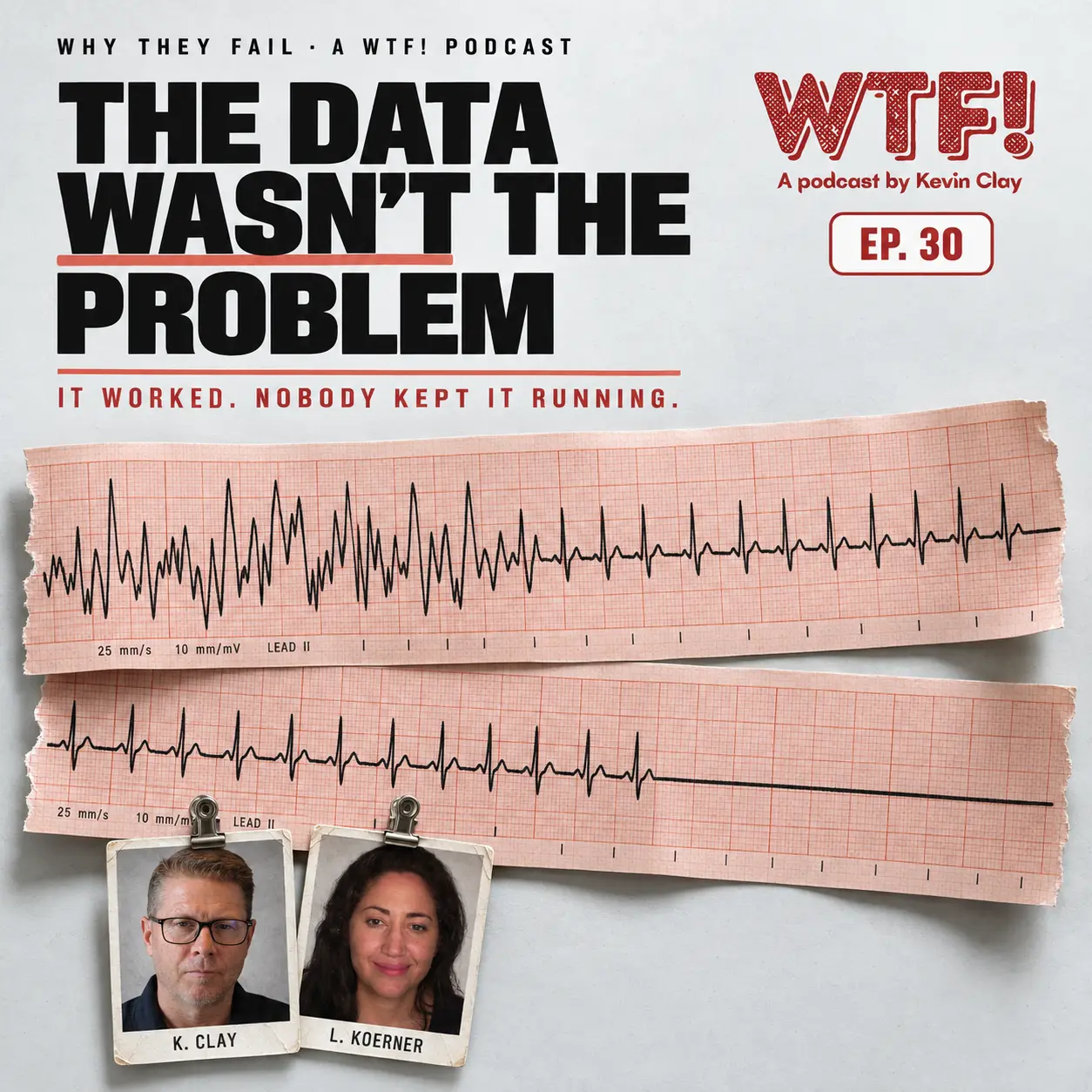
The Fix Worked, Culture Didn't: A VA Door to Doc Story Five minutes for one doctor. Over 400 minutes for another. Same emergency room, same shifts. That is the scale of door to doc variation one Lean Six Sigma team found inside a Veterans Affairs hospital. However, the real story is what happened next. They fixed it, and then the fix died the moment the team walked away. In this episode of the Why They Fail Podcast, Kevin Clay sits down with Lacee Koerner (MSN, RN, CEN), an emergency room and quality nurse. Together, they walk through an honest account of a project that worked on paper but failed in practice. TACKLING DOOR TO DOC VARIATION IN THE EMERGENCY ROOM At first, Lacee and her team set out to reduce Left Without Being Seen rates. However, during their early Gemba walks, they found something uncomfortable. The numbers leadership trusted were easy to bend through simple workarounds. Therefore, the team changed direction. Instead of chasing a metric staff could shape, they moved to door to doc variation. As a result, they captured what was really happening rather than what the reports claimed. Next, they ran a careful Measurement System Analysis and applied statistical process control. Consequently, the swings became visible. One doctor answered in five minutes. Another took more than 400. Once they found those outliers and set up controls, response times dropped in a way the data could prove. WHY GREAT PROCESS FIXES GO DEAD ON ARRIVAL So the fix worked. Nevertheless, it did not last. In this candid talk, Lacee explains why the project went dead on arrival once her team stepped back. Because there was no supervisor buy-in, no steady backing from leaders, and no daily support system, the gains faded fast. Within weeks, the department drifted back to old habits. In other words, nothing held the change in place. Furthermore, the staff were hearing two messages at once. On one hand, leaders asked for strict compliance. On the other hand, they asked nurses to speak up and own the work. Therefore, this episode lands on a hard truth. Data and tools can solve the technical problem. Only leaders and culture can keep it solved. KEY TAKEAWAYS Above all, these lessons separate a fix that holds from one that quietly slips away. First, uncontrolled door to doc variation hurts patient flow and care quality. Second, a careful measurement system analysis stops teams from trusting numbers that have been shaped. Third, top-down orders without supervisor buy-in create pushback, and eventually the project falls apart. Fourth, even a proven win will go dead on arrival unless something is built to hold it. Finally, lasting improvement happens when leaders match what they ask for with how they actually behave. FREE BOOK Over 90% of continuous improvement programs fail within eighteen months. In his book, Kevin explains exactly why, and what to do instead. Therefore, if your last project slipped back, this is a good place to start. Get a free copy of "Why They Fail and the Simple Key to Success" here: Chapters (00:00:00) - Intro and Framing the Contradiction (00:01:15) - Meet Lacey Kerner and Her CI Journey (00:04:03) - Does VA Culture Embrace Data? (00:05:36) - Bureaucracy and Data Access Struggles (00:07:22) - Frontline Nurses' Resistance to the Project (00:09:31) - Lack of Infrastructure and Sustainment Challenges (00:11:43) - Cutting Through Red Tape for Data (00:13:57) - Executive Sponsorship and Leadership Buy-in (00:16:07) - Top-Down vs Frontline Empowerment Paradox (00:18:47) - Did the Improvements Stick? (00:19:34) - Defining the Door-to-Doc Project (00:22:58) - Data Analysis Errors and Discovering Variability (00:25:13) - Wild West Variation and Finding Focus (00:26:37) - Closing Thoughts and Show Wrap-up