Oct 28, 202612 min
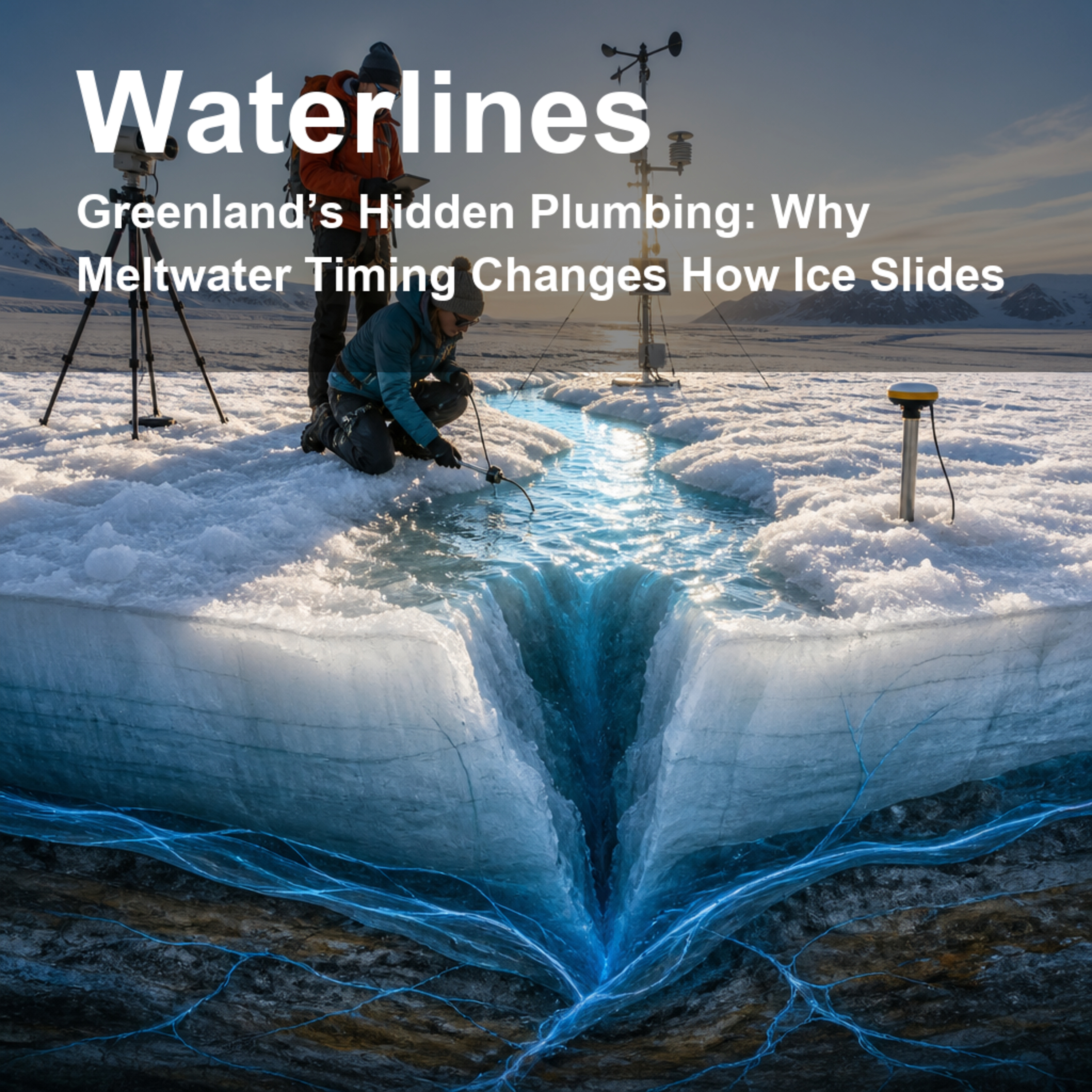
Takeaway: On Greenland’s ice, meltwater can act like a delayed message: the farther it travels to reach a moulin, the later pressure builds below and the later the ice responds. Greenland’s summer melt is not just about...

science
Hosted by jaywen · science · EN
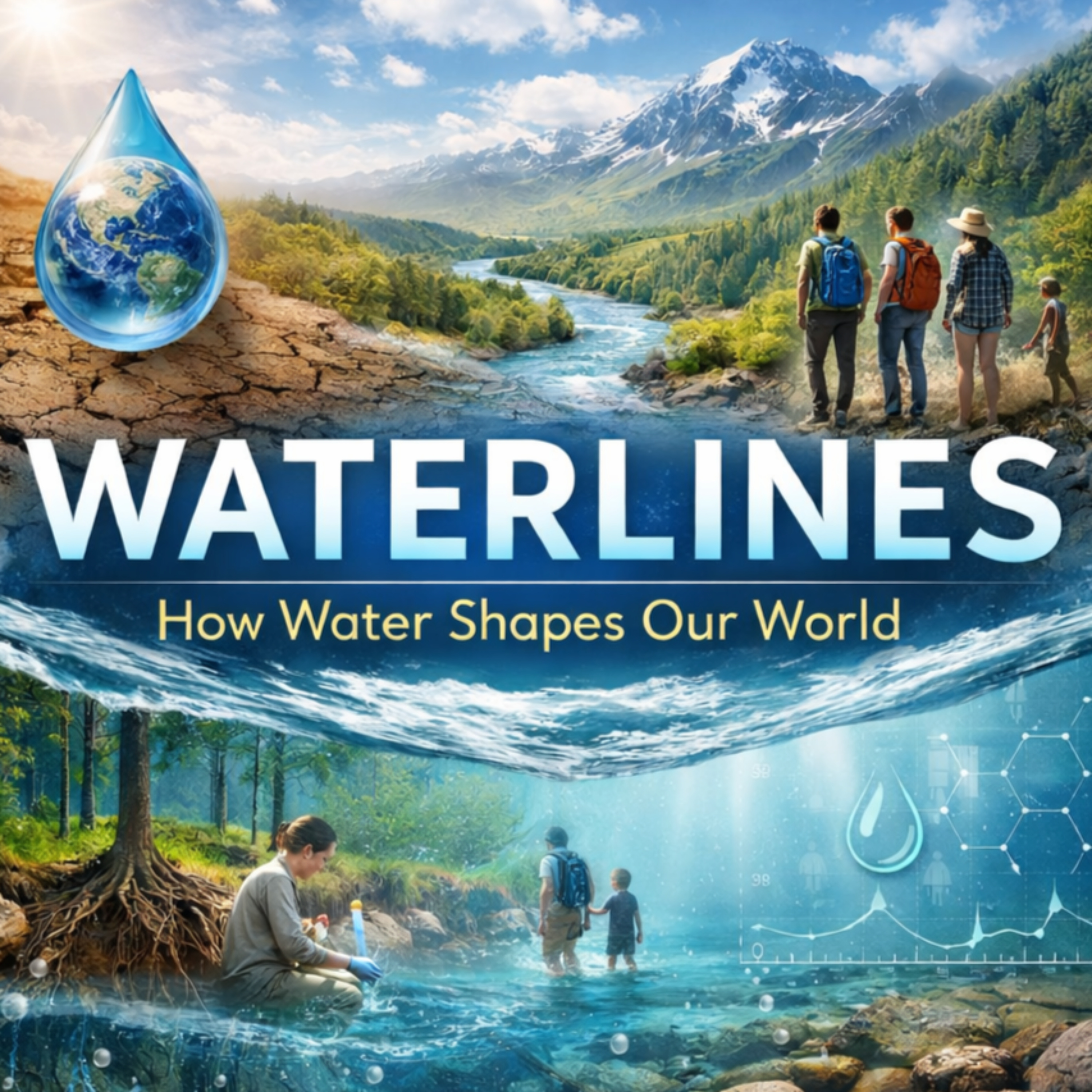
✦ Waterlines: How Water Shapes Our World ✦ explores the hidden role of water in shaping our planet, ecosystems, and daily lives. Each episode turns advanced water science into engaging, everyday conversationsDesigned for curious listeners — no scientific background required — the show features researchers, field stories, and real-world challenges that reveal why water matters more than we think. Whether you’re interested in the environment, climate, or how science connects to society, Waterlines helps you see the world through the lens of water.
Required Pod Score for this podcast. PitchCentric checks your profile against host openness, topical fit, and audience signals before you generate a pitch.
Contact path
Verified email
Booking probability
35%
Guest openness
Selective
Sign up to generate a grounded pitch for Waterlines: How Water Shapes Our World.
Signup to Generate a Pitch✦ Waterlines: How Water Shapes Our World ✦ explores the hidden role of water in shaping our planet, ecosystems, and daily lives. Each episode turns advanced water science into engaging, everyday conversationsDesigned for curious listeners, no scientific background required, the show features researchers, field stories, and real-world challenges that reveal why water matters more than we think.
Recent episodes include "Greenland’s Hidden Plumbing: Why Meltwater Timing Changes How Ice Slides" (28 October 2026, 12 minutes), "The Ice Sheet’s Hidden Drainpipes: Why Moulin Shape Changes Water Pressure Under Greenland" (23 October 2026, 11 minutes), and "Greenland’s Helheim Glacier: Why Ice Speed Depends on Both Ocean Edge and Hidden Water" (21 October 2026, 10 minutes).
Waterlines: How Water Shapes Our World publishes roughly a few times a week, with episodes averaging 11 minutes across 112 episodes.
Booking probability for Waterlines: How Water Shapes Our World is 35%, and the host is rated Selective on guests. Waterlines: How Water Shapes Our World requires a Pod Score of 80 or higher. Waterlines: How Water Shapes Our World's contact route on record: verified email.
The strongest fits for Waterlines: How Water Shapes Our World are Scientific Research & Development. Waterlines: How Water Shapes Our World has a science audience.
Waterlines: How Water Shapes Our World is a science podcast with 112 episodes published.
Our AI reads these to draft pitches. Use them as grounding for a pitch that cites a real guest and a specific topic.
Takeaway: On Greenland’s ice, meltwater can act like a delayed message: the farther it travels to reach a moulin, the later pressure builds below and the later the ice responds. Greenland’s summer melt is not just about...
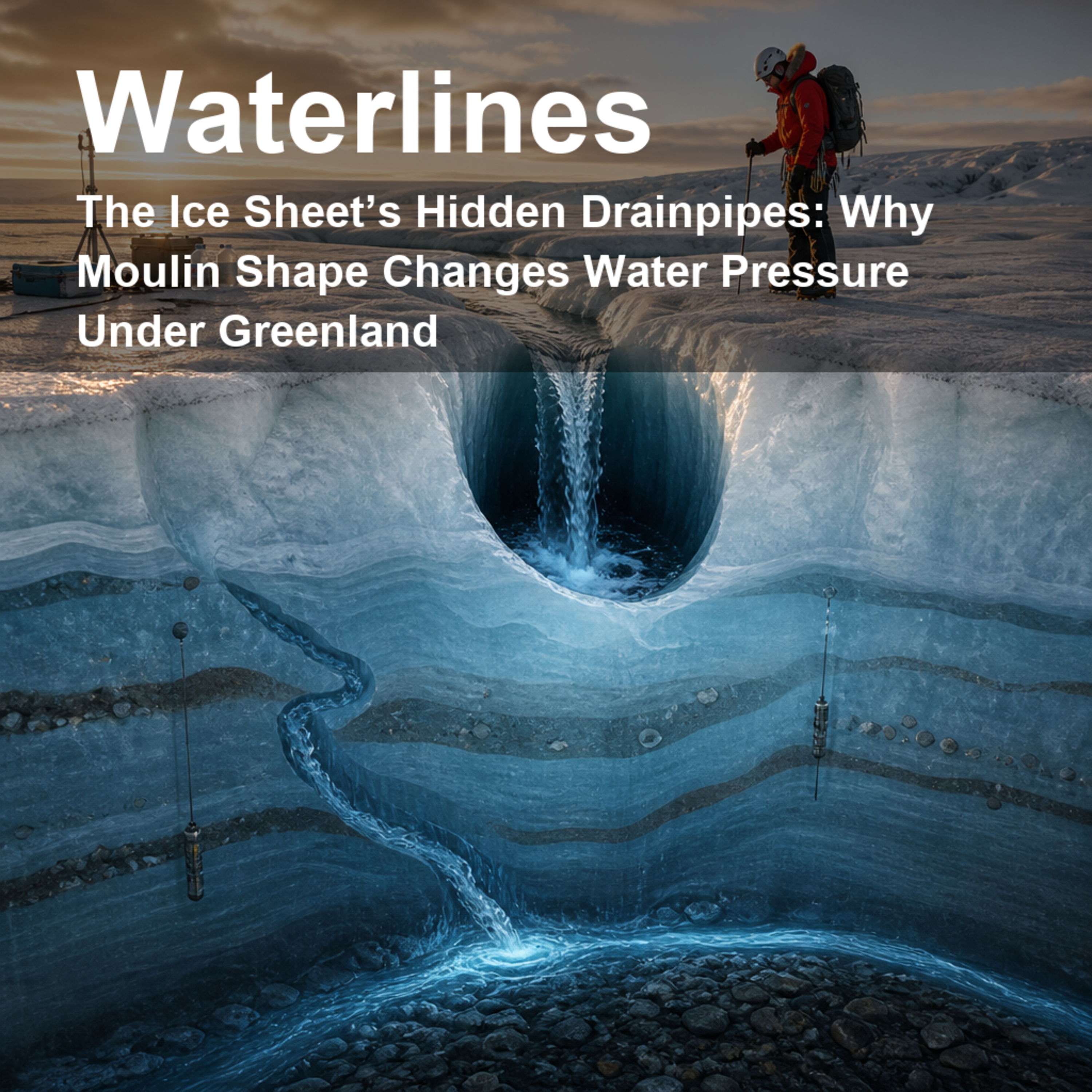
Episode #112
Takeaway: Under Greenland’s ice, the shape of a moulin near its waterline can decide whether a day’s meltwater hits the glacier bed like a pulse or a cushion. Greenland’s summer meltwater does not simply run off the ice...
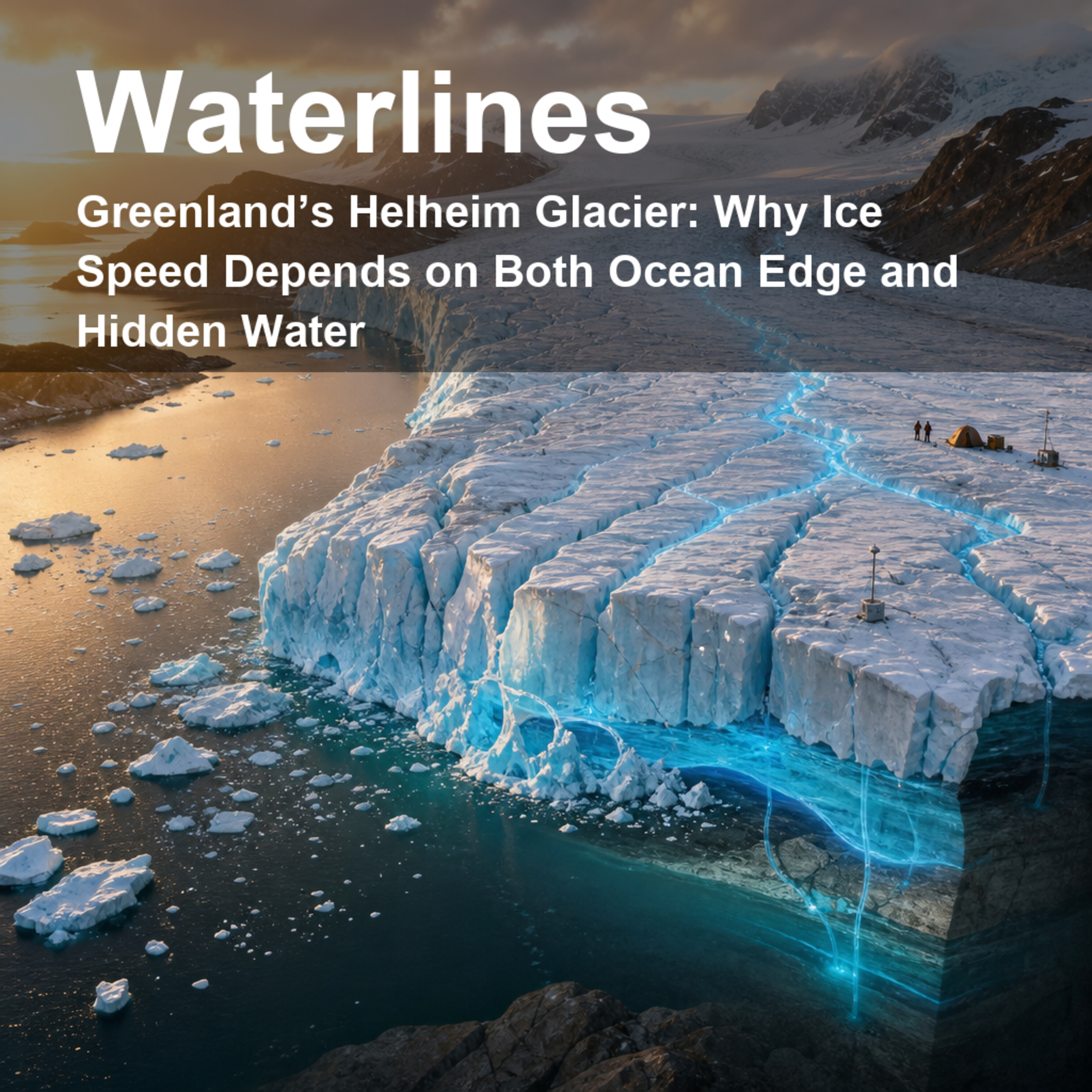
Takeaway: Helheim Glacier is steered by its ocean front near the coast, but farther inland the hidden water under the ice can take the wheel. Greenland’s outlet glaciers matter far beyond the Arctic because they help...
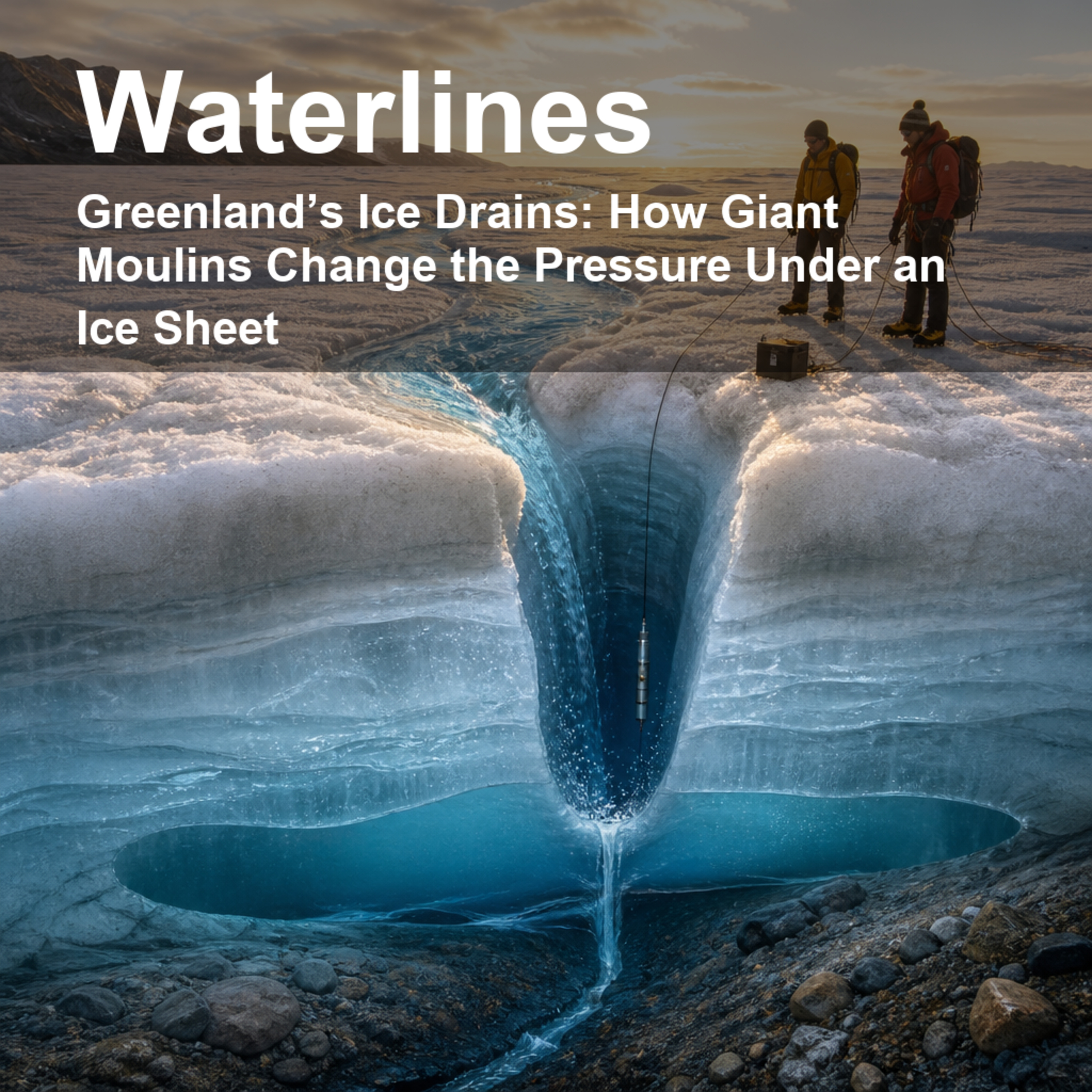
Takeaway: A moulin can act less like a drainpipe and more like a hidden water tank, softening daily pressure pulses under Greenland’s ice. Greenland’s meltwater does not just run across the surface and disappear. In...
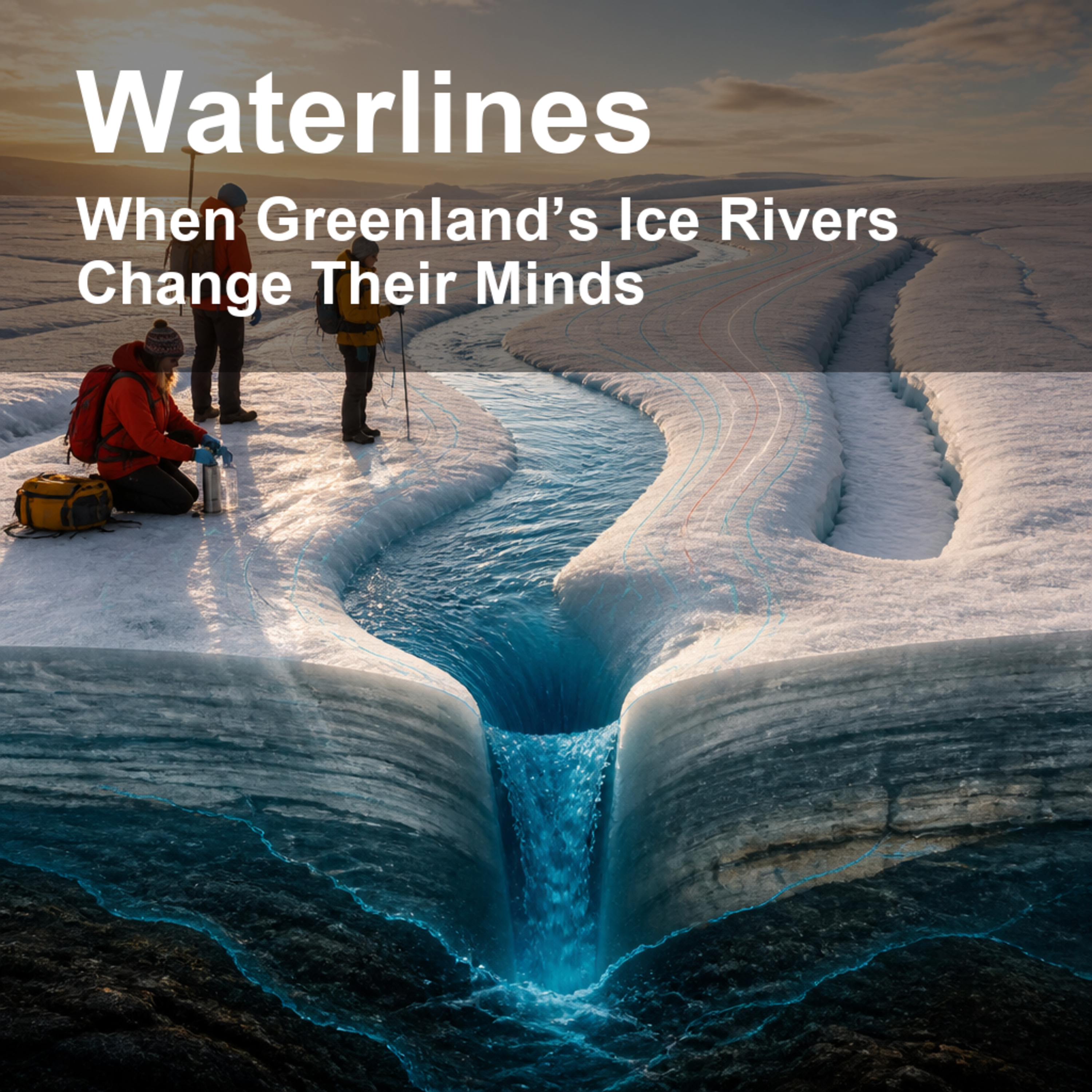
Episode #106
Takeaway: On Greenland’s ice sheet, a winter snow plug can make a summer meltwater river abandon one hole in the ice and carve a route to another. Greenland’s summer meltwater is not just water running downhill and out...
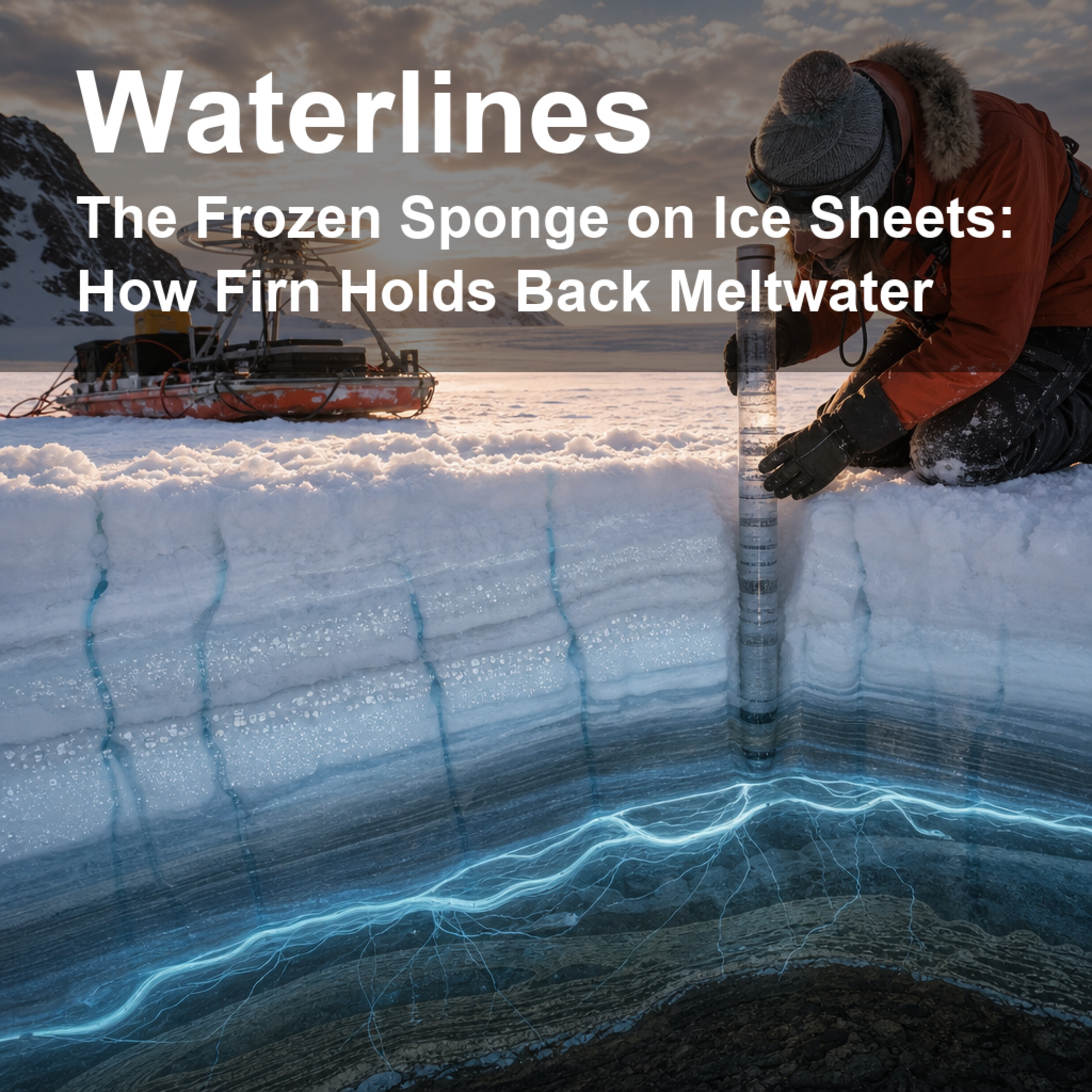
Takeaway: Firn is the old snow that works like a frozen sponge, and as it fills with ice, more meltwater can escape to the sea and weaken ice shelves. Ice sheets do not just melt from the top and send water straight to...
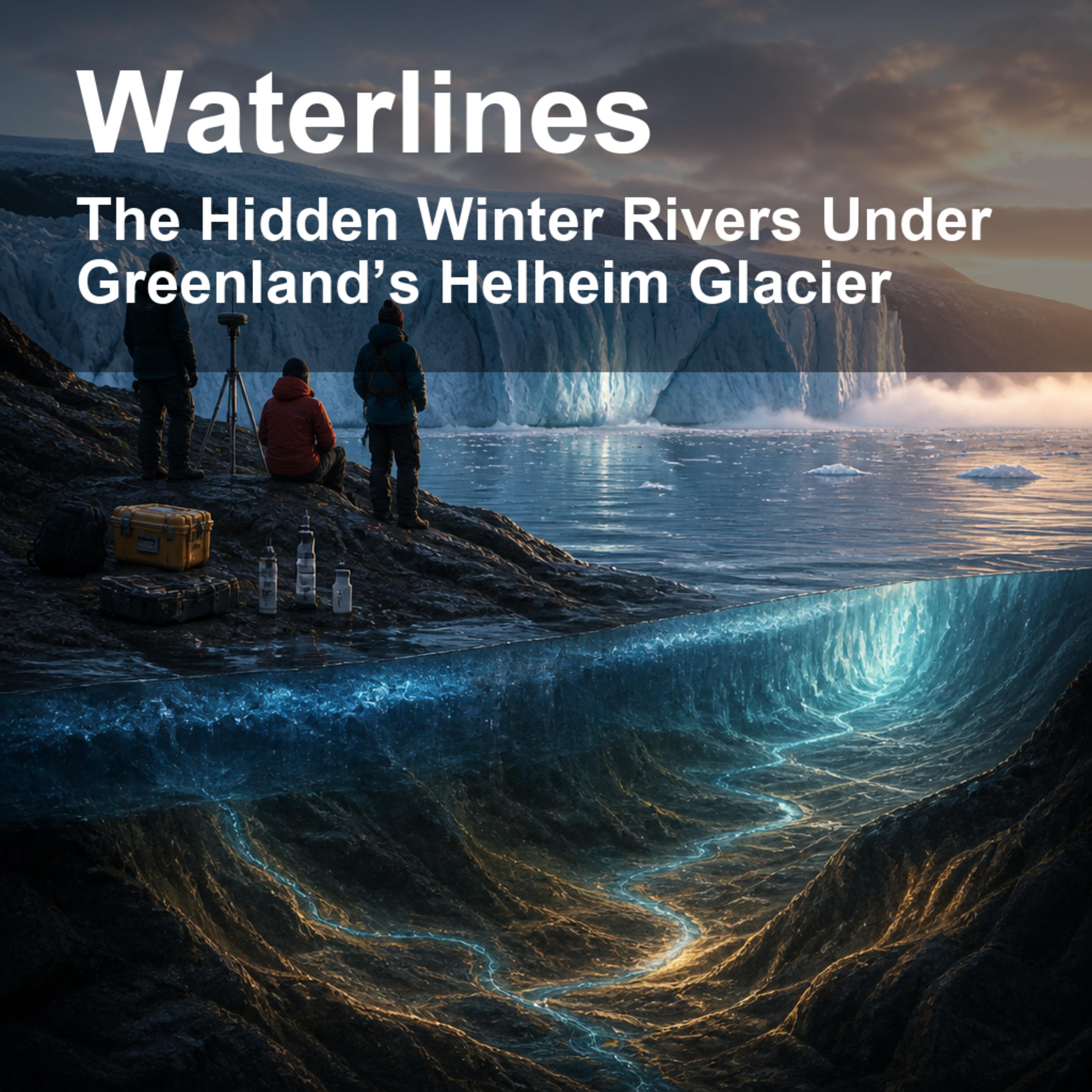
Takeaway: Even in Greenland’s dark winter, heat at the glacier bed can keep hidden water pathways pressurized and ready beneath the ice. Greenland’s fast outlet glaciers help decide how much ice reaches the ocean, but...
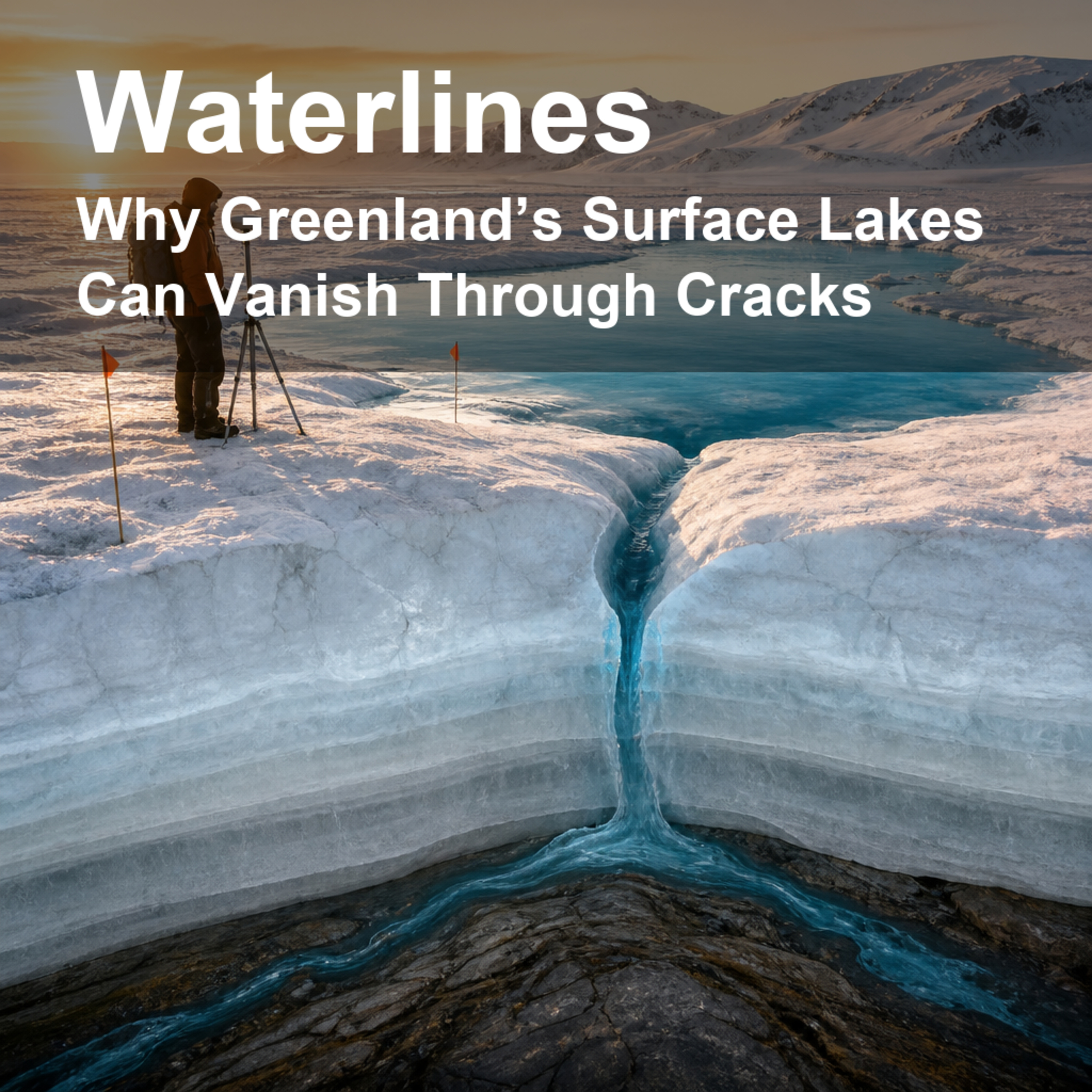
Takeaway: A Greenland lake can vanish through a crack not just because ice breaks, but because the ice slowly gives way enough to keep the drain open. When a lake sitting on top of the Greenland Ice Sheet suddenly...
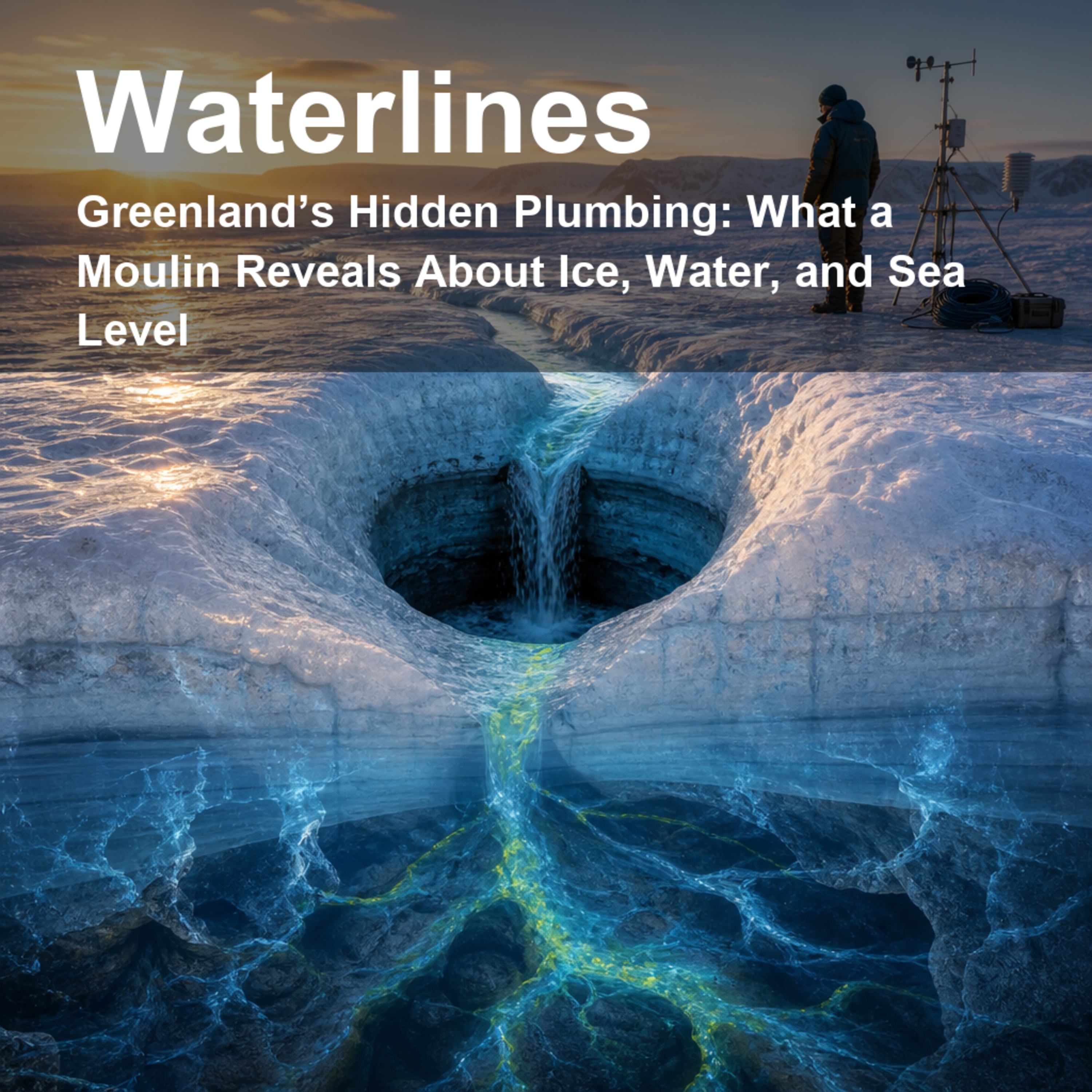
Takeaway: A Greenland moulin is not just a drainpipe into the ice; its water level can reveal a whole hidden plumbing network working far below the surface. Greenland’s summer meltwater does not simply run off the ice...
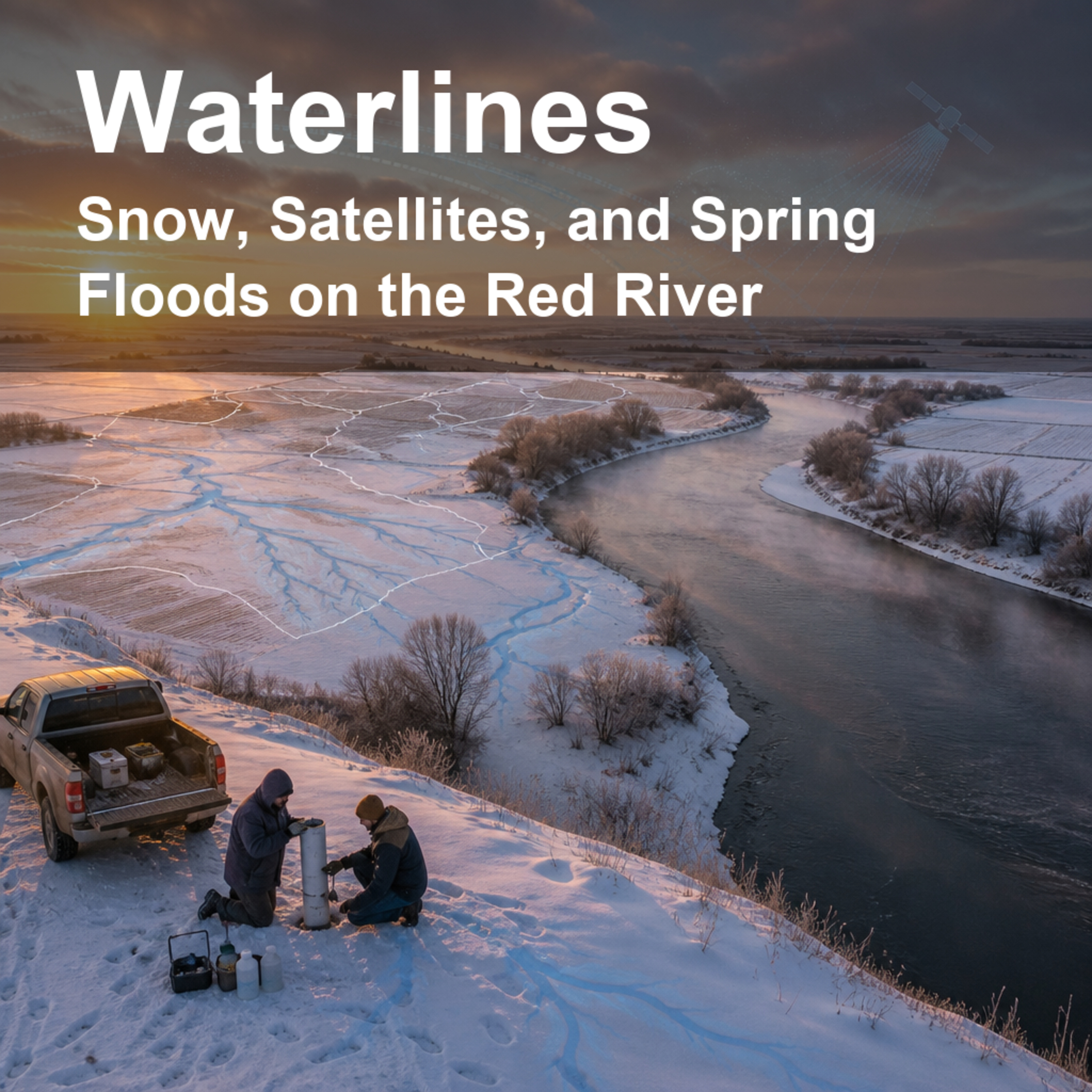
Takeaway: In a flat flood-prone basin, knowing how much water is locked in snow can depend on whether you look from the ground, a plane, a model, or a microwave satellite. Spring flooding is not just a river problem; it...
Episode #100
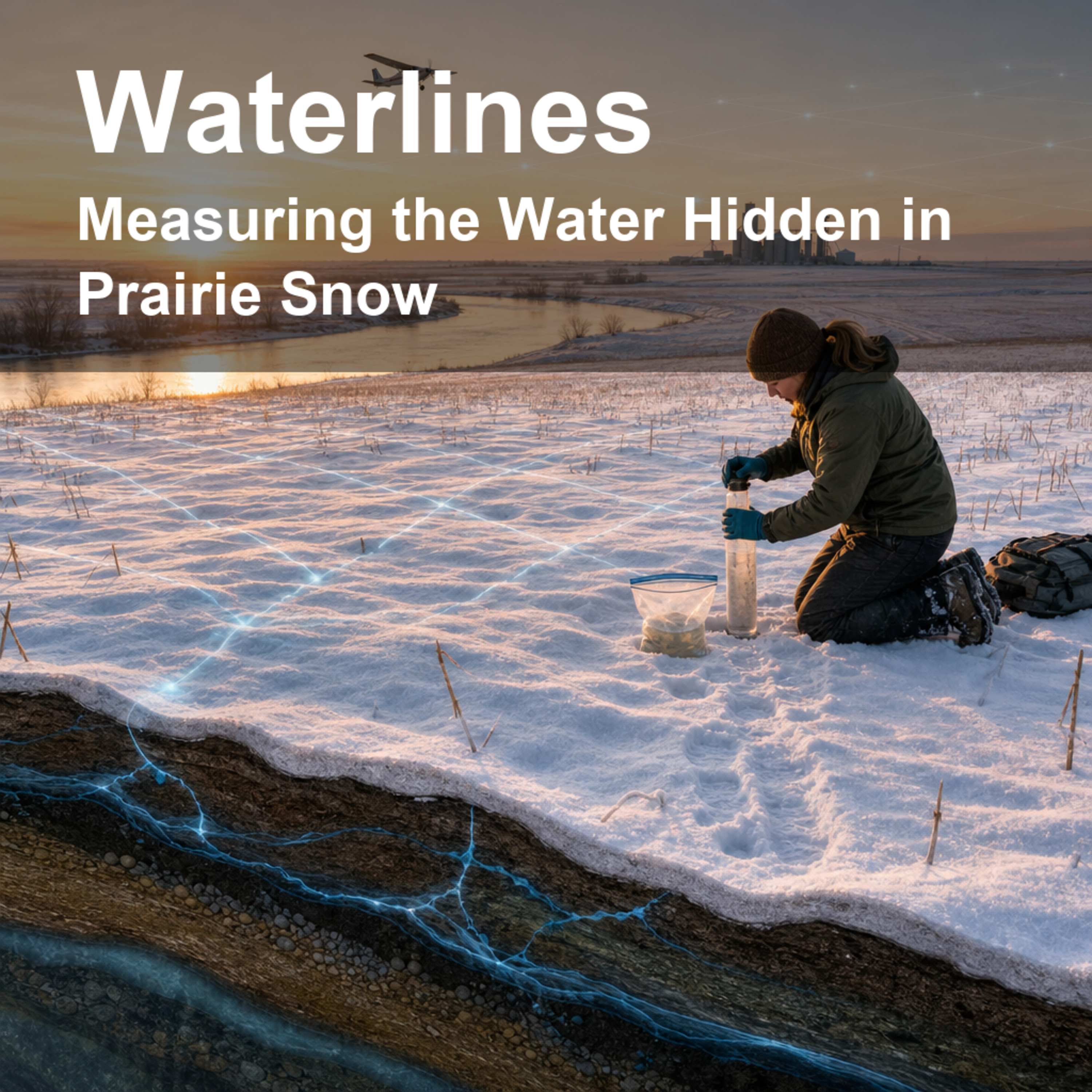
Takeaway: For spring floods on the northern plains, the hard part is not seeing snow—it is knowing how much water is hidden inside each windswept field. Spring flooding on the northern plains can begin quietly, with...
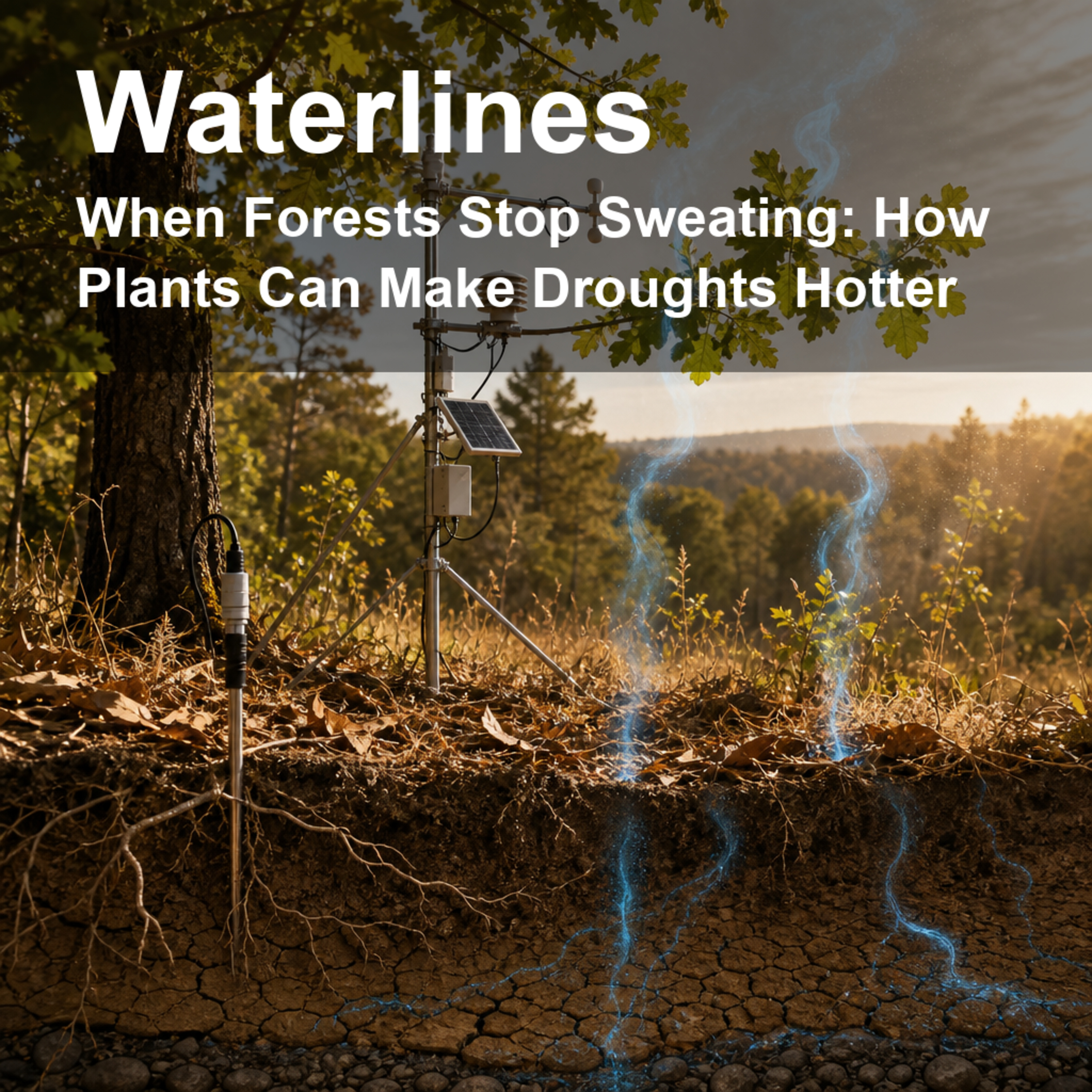
Takeaway: A dry spell can turn hotter not just because the soil is empty, but because the plants stop sending water back into the air. A drought is not only a shortage of rain; it can become a heat engine. This episode...
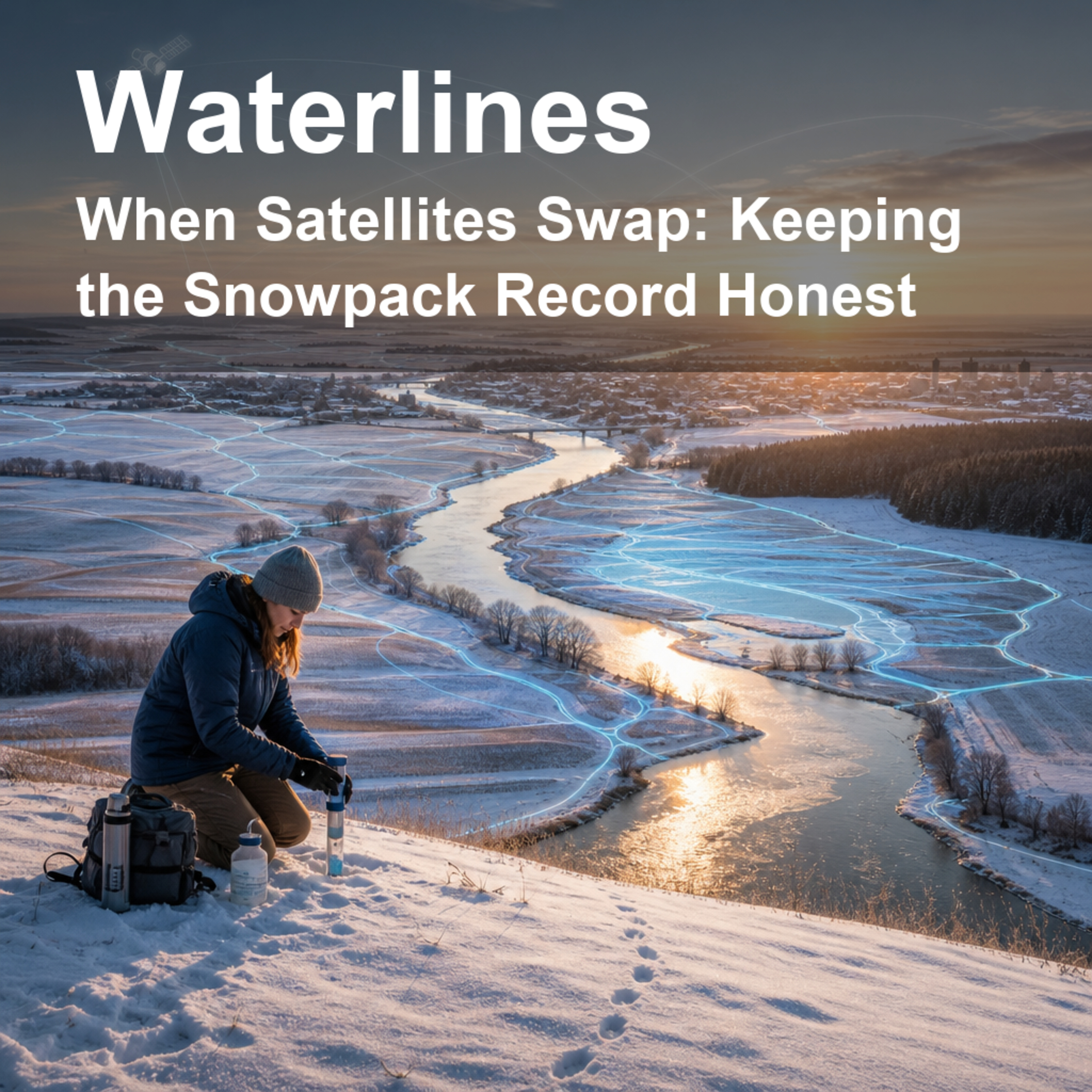
Takeaway: When a snow-monitoring satellite is replaced, scientists have to make sure a jump in the record is real snow, not a new ruler in space. Snow is not just winter scenery; it is stored water. In the North Central...
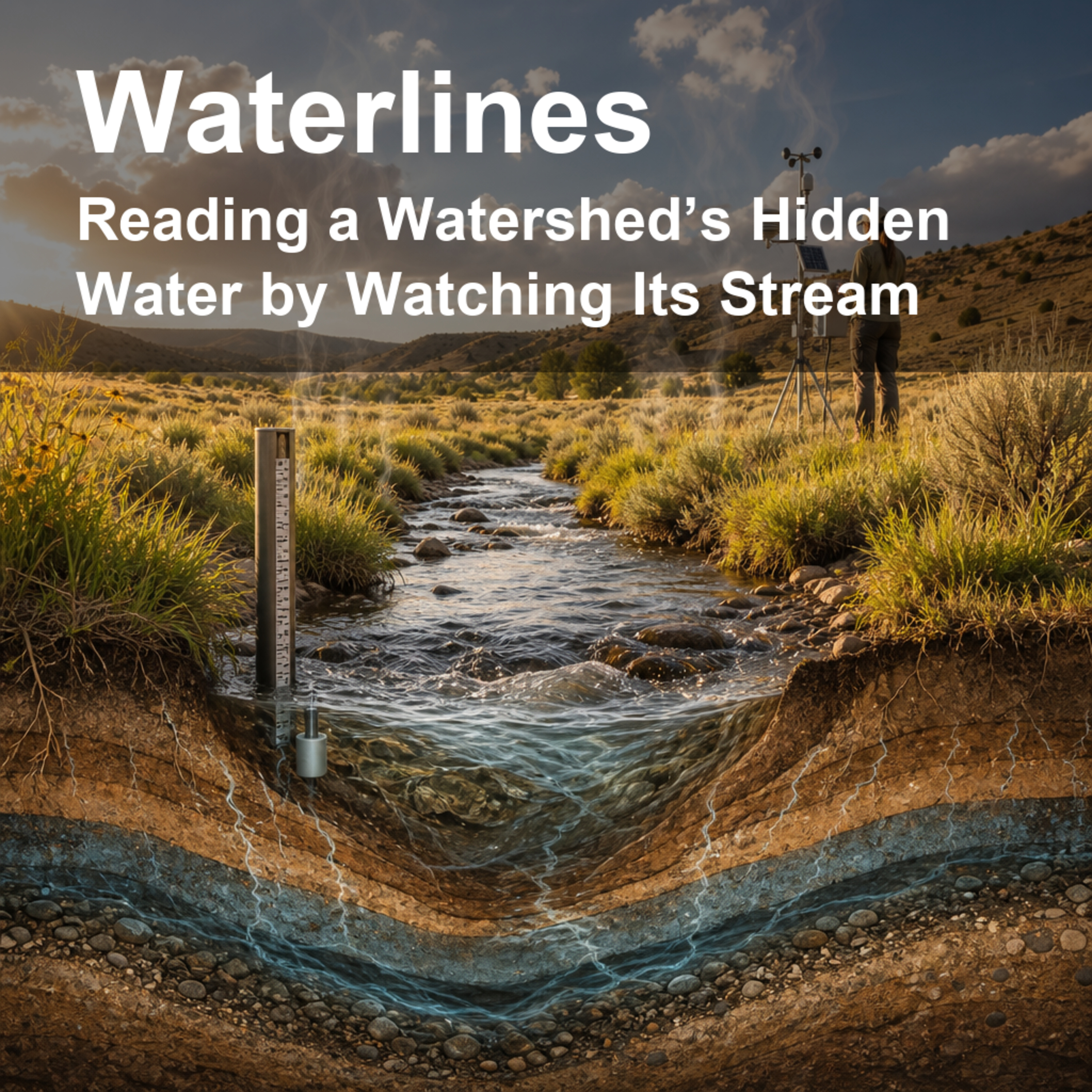
Takeaway: A stream can tell us about more than runoff; its rises and falls can help reveal how much hidden water the whole watershed is losing to the air. Every water plan depends on a hard-to-see number: how much water...
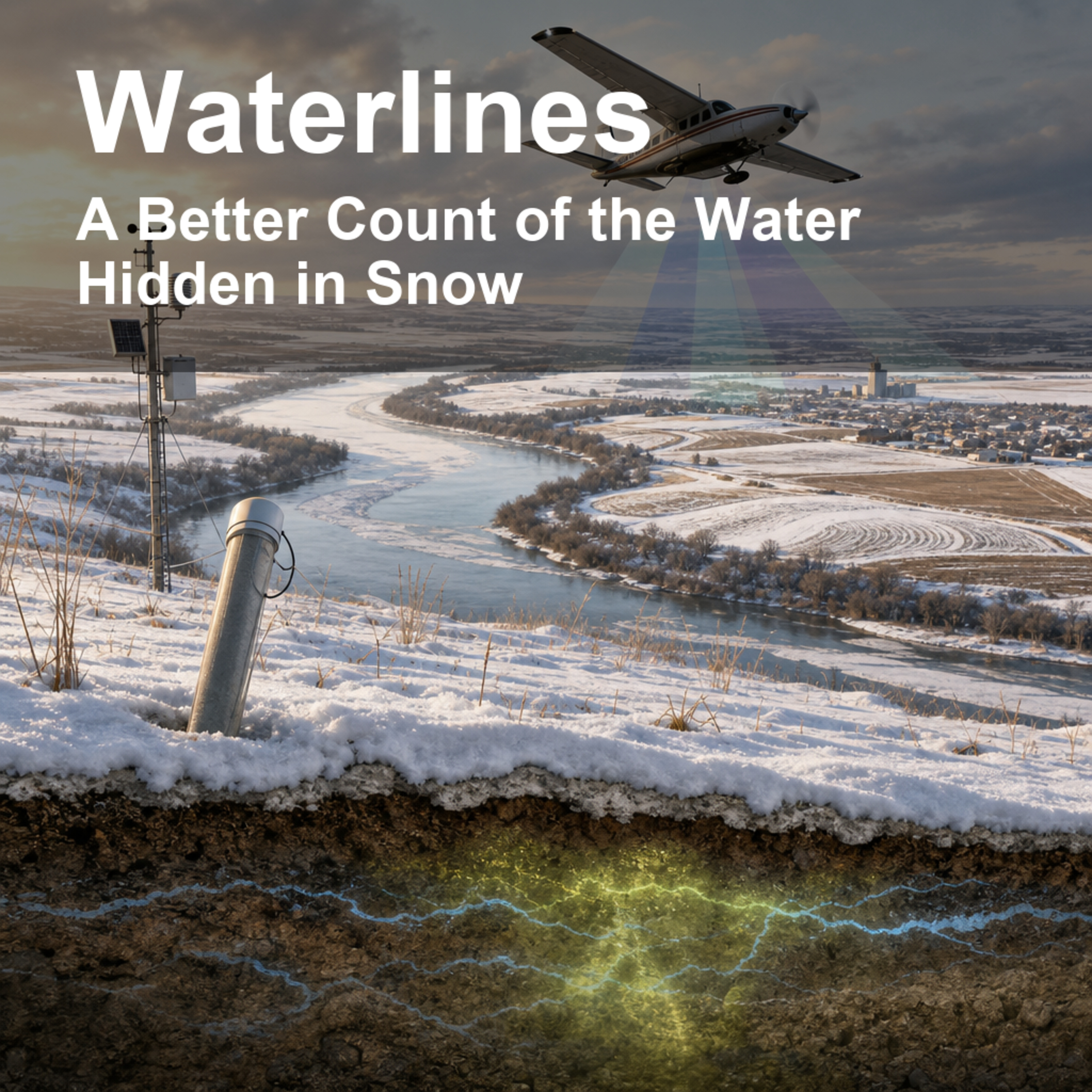
Episode #96
Takeaway: A thin change in soil moisture can make an aircraft misread the water in a snowpack, so a satellite check before freeze-up can sharpen flood forecasts. Spring flooding can hinge on a surprisingly small...
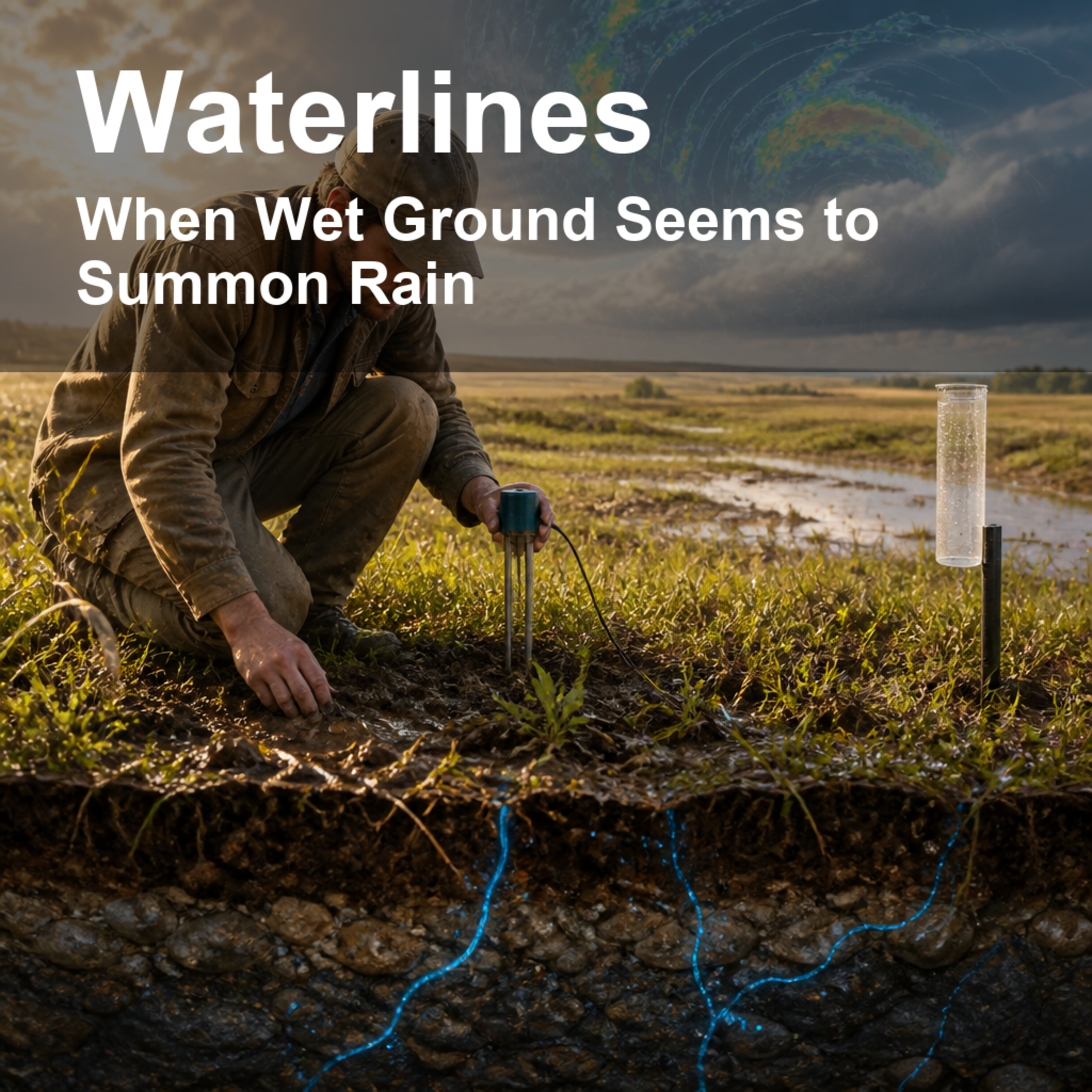
Episode #95
Takeaway: Wet soil can look like it is calling the rain, but scientists have to separate that signal from seasons and lingering storms before they can trust the story. Rainfall forecasts, drought planning, wildfire...
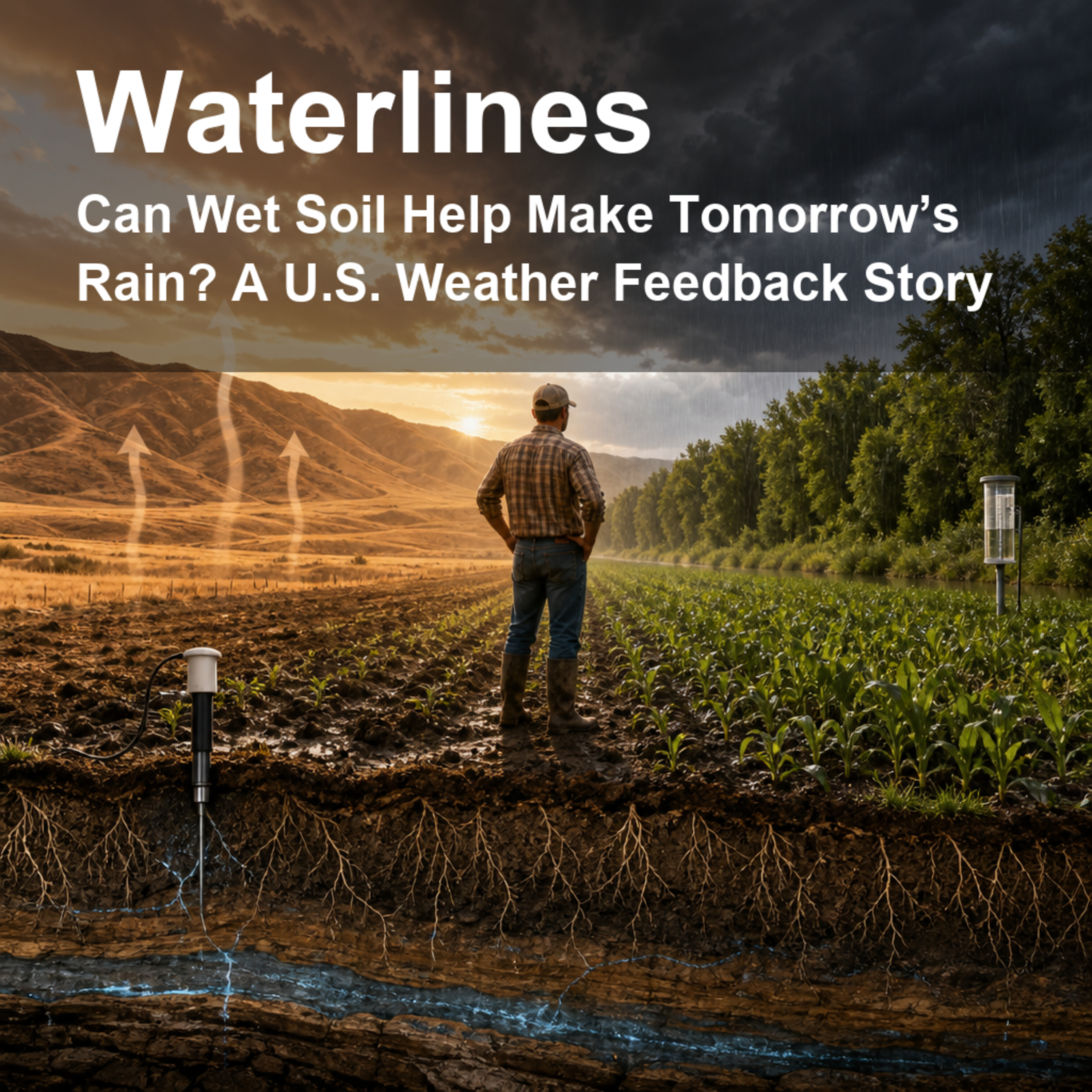
Takeaway: The ground can nudge tomorrow’s rain, but in this study wet soil helped rain chances in much of the dry West and often worked the other way in the humid East. Rain does not only fall from the sky; it also...
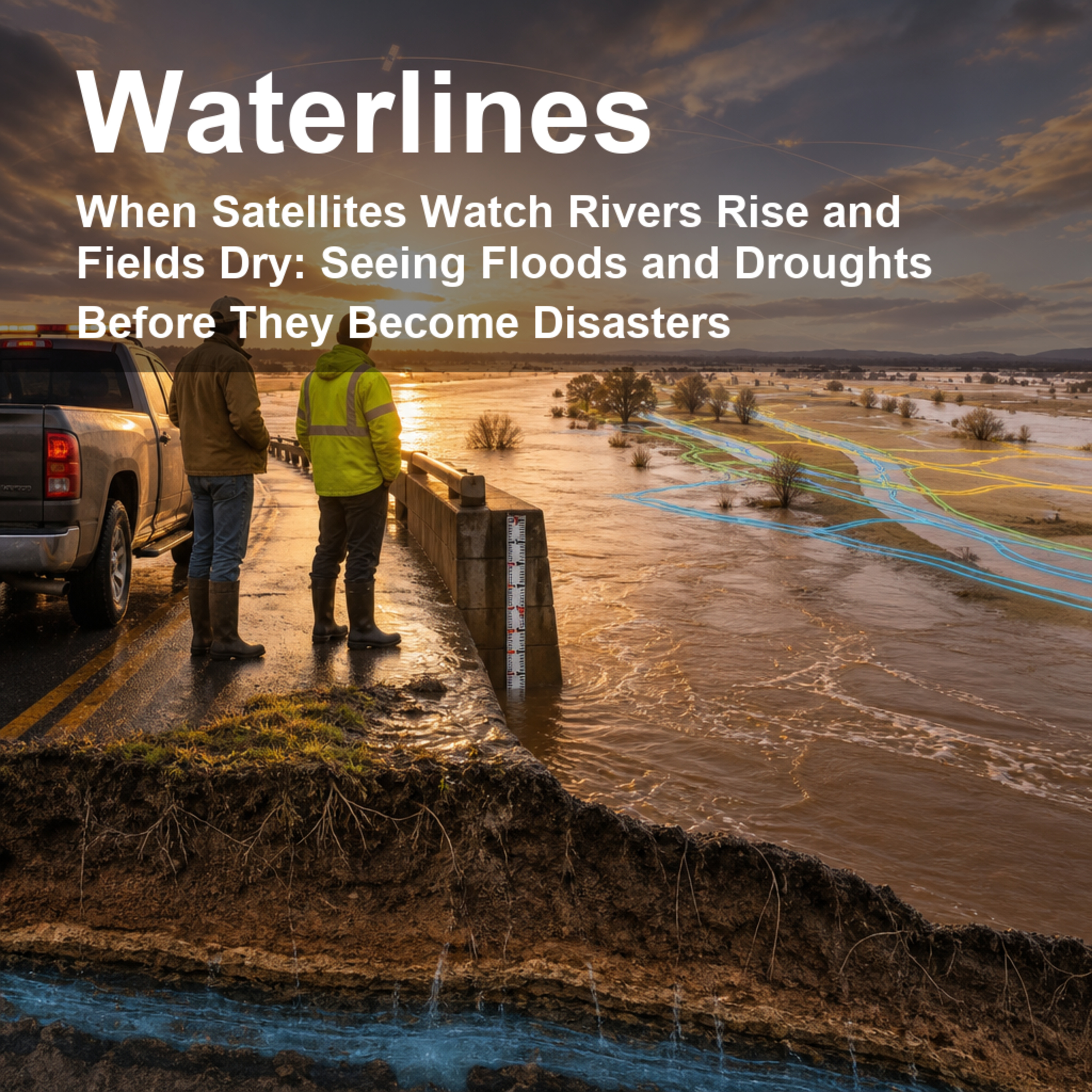
Takeaway: Satellites do not replace people on the ground, but they can show the shape of missing or overflowing water when gauges are too few, too late, or too far apart. Floods can arrive overnight; droughts can creep...
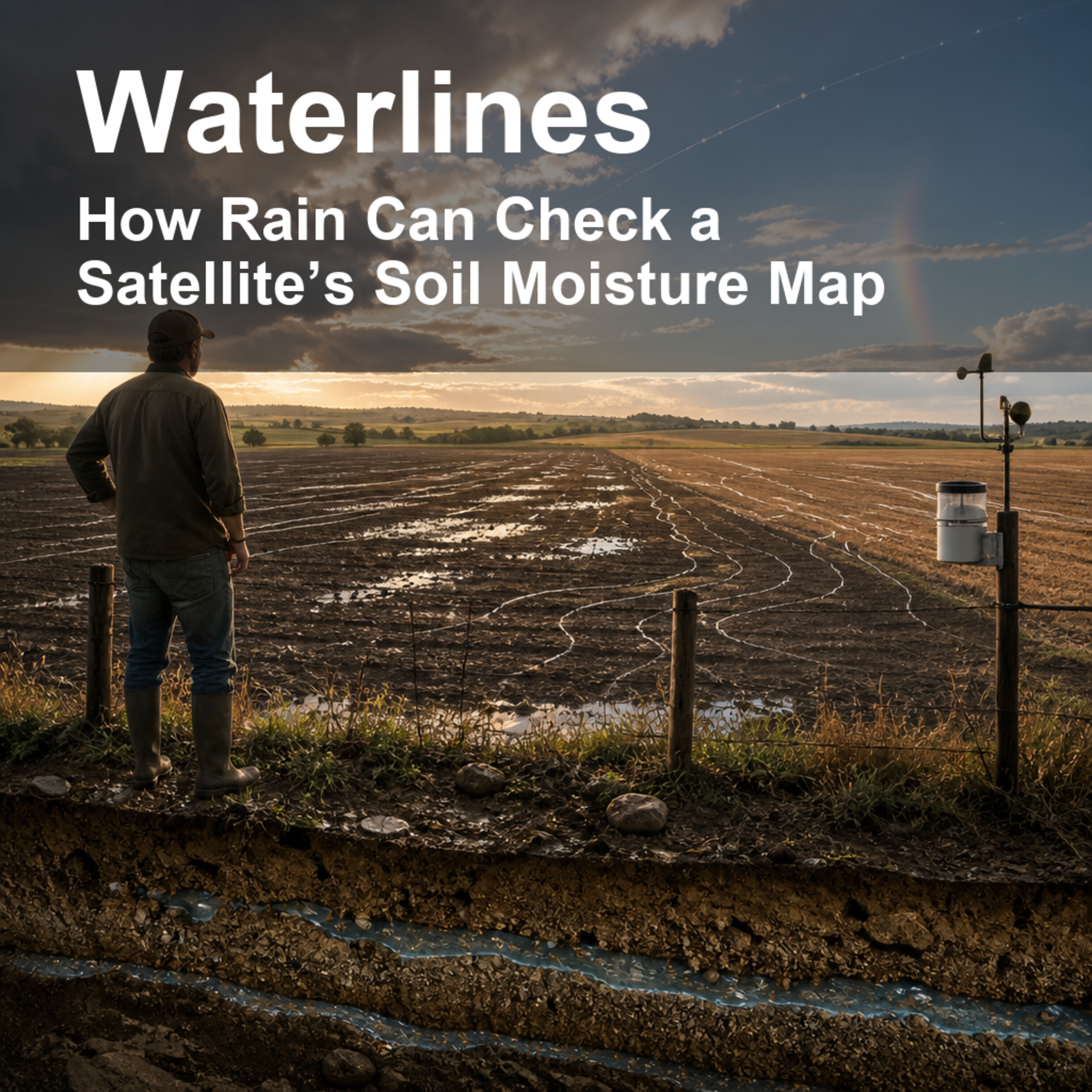
Takeaway: A satellite soil-moisture map is more trustworthy when rainy days and wet ground line up in the pattern real soils naturally make.Flood warnings, drought outlooks, farm decisions, and climate models all depend...
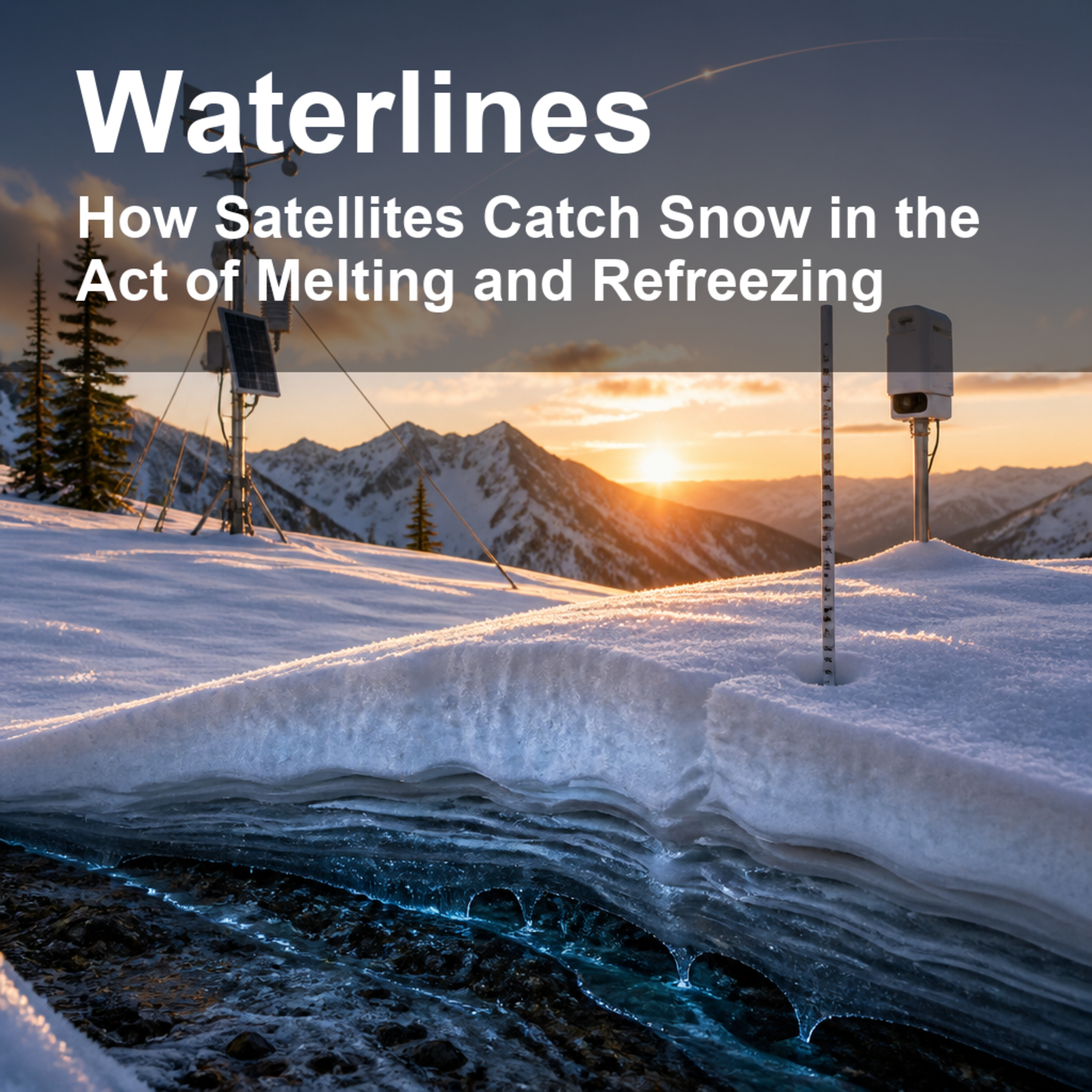
Takeaway: A snowpack can look still, but its microwave glow changes when it flips between frozen storage and liquid water. Spring runoff, flood risk, irrigation water, forest timing, and even winter wildlife can all...
Recent guests on Waterlines: How Water Shapes Our World. Study who booked and why before you pitch.
PitchCentric classifies Waterlines: How Water Shapes Our World under these industries. Guests from them are the closest fit, and each links to the best podcasts in that industry.
Shows with the most semantically similar episode content. Pitch one, pitch all; producers cluster.
Is this podcast yours and you'd like to remove or correct details? Request removal or email privacy@pitchcentric.com.
Questions about the free trial? See the pricing FAQ