No hype. No gurus. No impostors.Just real business — deals, risk, pressure, and high-stakes decisions told by the people who’ve actually lived them.Wall Street to Y’all Street is a long-form video podcast featuring seasoned founders, funders and executives sharing what it really takes to build, scale, survive and win. It features real lessons who have built, scaled, lost and rebuilt businesses.ABOUT THE HOST: Joseph J. Raetzer, MBA, JD is Corporate, Mergers & Acquisitions (M&A) and Securities Lawyer (capital raising). He started his career over 20 years ago on Wall Street and he has done over $100+ billion in transactions. He is also a serial entrepreneur with a successful 7-figure exit in under 3 years, and founder of his corporate M&A and securities law firm Raetzer PLLC.
Pitch Analysis
Required Pod Score for this show. PitchCentric checks your profile against host openness, topical fit, and audience signals before you generate a pitch.
Contact path
Verified email
Booking probability
37%
Guest openness
Selective
Verified email on file
80/100
Required Score
Sign up to generate a grounded pitch for Wall Street To Y'all Street.
Wall Street To Y'all Street is a business podcast hosted by Joseph J. Raetzer, MBA, JD, with 16 episodes on record and a Required Pod Score of 80. PitchCentric scores this show on Booking Probability, Listen Score, and live audience signals refreshed every 24 hours.
About the host
Joseph J. Raetzer, MBA, JD hosts Wall Street To Y'all Street, a business show with 16 episodes published.
Our AI reads these to draft pitches. Use them as grounding for a pitch that cites a real guest and a specific topic.
Episode #16
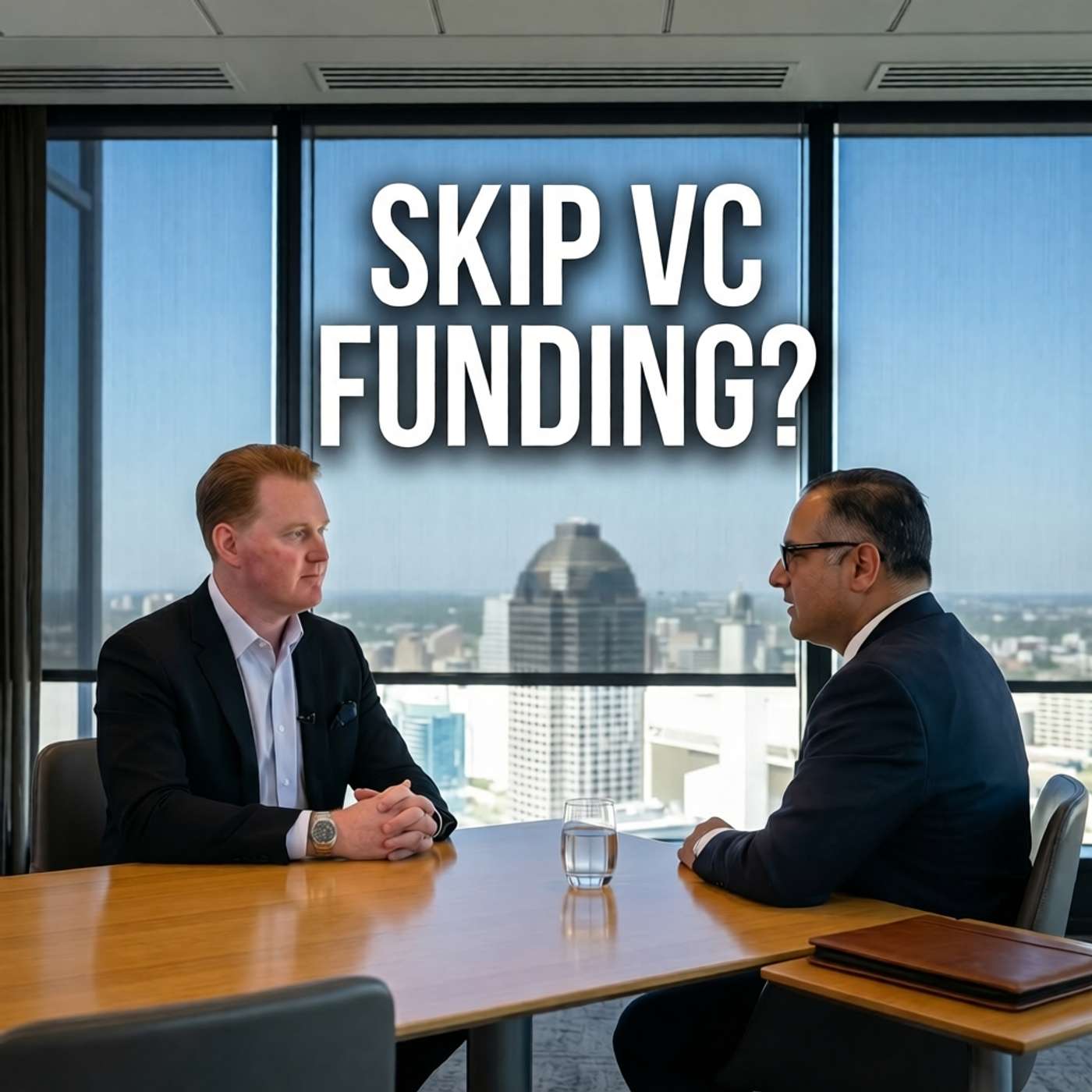
Why Smart Founders Skip VC Funding, And What They Do Instead | Erik Andersen, Toronto Stock Exchange
Apr 16, 202644 min
Most founders think venture capital is the only way to scale. It's not — and taking VC money at the wrong stage can destroy your company. In this episode, we break down the capital raise alternatives that seasoned operators actually use and why smart founders are skipping the traditional VC path entirely. 🔑 What you'll learn: • The alternative funding strategies operators use to scale without giving up control • How to evaluate whether raising capital publicly is even the right move • The process for a US company that is venture eligible to go public on the TSXV Connect with Erik on Linkedin HERE and learn more about TSX and TSXV at https://us.tsx.com/ 🎙️ABOUT THE HOST: Joseph J. Raetzer, MBA, JD is Corporate, Mergers & Acquisitions (M&A) and Securities Lawyer (capital raising). He started his career over 20 years ago on Wall Street and he has done over $100+ billion in transactions. He is also a serial entrepreneur with a successful 7-figure exit in under 3 years, which he rolled into a national retail chain and lost it all due to the pandemic. He's had highs, lows, and rebuilt from scratch. He is founder of his corporate M&A and securities law firm Raetzer PLLC. His podcast Wall Street to Y’all Street features real business lessons from seasoned founders, operators and executives.This is not legal advice - always consult with your attorney. Joseph J. Raetzer, MBA, JD is licensed in New York and Texas. 🎙️ CONNECT WITH JOE ON LINKEDIN AT https://www.linkedin.com/in/raetzer/
He Said No to Big Money to Protect Schools Instead | Scott Newman, Founder of Titan Armored Systems
Apr 11, 20261h 2m
What does it take to walk away from money — and build a company to save kids' lives instead? In this episode of Wall Street To Y'all Street, I sit down with Scott Newman , Founder & CEO of Titan Armored System — a company building physical protection technology designed to stop active shooters in schools. Scott breaks down what it really takes to build a mission-driven startup in one of the most emotionally charged markets in America: selling safety to the people responsible for protecting children. This isn't a feel-good story. It's a raw look at the pressure, the setbacks, and the decisions that come with building a company where failure has consequences beyond a balance sheet. In this episode: - Why Scott chose mission over margin — and what it cost him - The brutal reality of selling to schools: budget cycles, bureaucracy, and grief - How Titan Armored System's technology actually works - What investors think when your market is school shootings - The moment Scott knew he was building something that couldn't fail - Lessons from building a company where the stakes are life and death Connect with Scott on LinkedIn at https://www.linkedin.com/in/scottroddynewman/ and learn more about Titan Armored Systems at https://www.titan-armored.com/ 🎙️ABOUT THE HOST: Joseph J. Raetzer, MBA, JD is Corporate, Mergers & Acquisitions (M&A) and Securities Lawyer (capital raising). He started his career over 20 years ago on Wall Street and he has done over $100+ billion in transactions. He is also a serial entrepreneur with a successful 7-figure exit in under 3 years, which he rolled into a national retail chain and lost it all due to the pandemic. He's had highs, lows, and rebuilt from scratch. He is founder of his corporate M&A and securities law firm Raetzer PLLC. His podcast Wall Street to Y’all Street features real business lessons from seasoned founders, operators and executives. This is not legal advice - always consult with your attorney. Joseph J. Raetzer, MBA, JD is licensed in New York and Texas. 🎙️ CONNECT WITH JOE ON LINKEDIN AT https://www.linkedin.com/in/raetzer/ TIMESTAMPS 00:00 Introduction 03:00 What shaped Scott’s work ethic as a founder? 05:10 What did Scott learn from building and shutting down Elevation Concepts? 09:05 What are the first lessons Scott now applies to every new business? 10:10 Why founders need to watch numbers, not feelings 10:45 Why “do one thing and do it great” matters so much 11:10 How do you know when it’s time to shut a business down? 12:30 Why losing can still make you a better entrepreneur 14:55 What is the biggest lie founders tell themselves about growth? 16:00 How did Scott go from armored vehicles and standing desks to school safety? 17:50 Why Uvalde became the turning point 20:20 What is Titan’s flagship product and how does it work? 21:00 Why selling into schools is harder than people think 22:10 Why discretion matters in school safety products 23:10 How can one product serve as both a teaching tool and protective barrier? 24:05 Why most traditional police shields fall short in schools 25:10 What makes the TAG Mobile different from anything else in the market? 26:00 Was it harder to build the product or educate the market? 27:00 Why Scott tries to educate, not hard-sell 29:00 How do you sell a life-saving product without selling fear? 30:05 What are school leaders actually worried about right now? 31:00 Why the school buying process is so unpredictable 32:00 Where else can this product work beyond schools? 33:00 How does Scott think about modern threat scenarios and soft targets? 35:05 Why manufacture in Texas and the USA instead of offshore? 36:00 What are the biggest manufacturing lessons he has learned? 37:20 How do you scale a physical product company without breaking it? 38:10 Why some founders need to stop selling and fix operations 39:00 Why “we only deliver a perfect product” matters 40:00 What is the biggest choke point to scaling Titan? 41:00 What lessons from doubling revenue in a prior company still apply today? 42:00 Why founders need to become the face of the brand 43:00 How does Scott handle criticism and social media hate? 44:00 Why one great product should pull the sled first 45:00 Why personal brand matters before company brand can stand on its own 47:00 Is it more dangerous to scale too slowly or too fast? 48:00 What does Scott believe about raising money, protecting IP, and timing? 49:00 Why staying lean matters more than most founders realize 50:00 How should founders think about advertising, ROI, and customer targeting? 51:00 Why consultative selling beats fear-based selling 52:20 What is the best founder advice Scott lives by? 54:00 What is the difference between grinding and just being busy? 55:00 Has Titan’s product ever been used in a real-life incident? 56:00 Why Border Patrol testing was such a major validation moment 57:00 Would Scott trust the product with his own family? 58:00 What does success mean to him now as a founder?
The $100 Billion Problem Nobody Is Solving — Until Now | Joe & Chrysa Jones, Founders Stream Settle
Apr 9, 202649 min
Lawsuits drag on for years — not because the two sides are far apart, but because both are bluffing. What if there was a way to strip the posturing out and settle in minutes? In this episode of Wall Street To Y'all Street, we break down the settlement market — a massive, broken system where billions of dollars sit in limbo while lawyers play games of poker. We sit down with a founder who's building the technology to fix it, and explore why this $100 billion problem has gone unsolved until now. Whether you're a founder disrupting a legacy industry, a legal professional tired of the status quo, or just fascinated by how broken systems get fixed — this conversation will change how you think about negotiation, technology, and the business of law. 🔑 In this episode: • Why settlements take years when both sides would accept the same number • The startup building blind-settlement technology that removes bluffing entirely • How legal tech is disrupting one of the oldest industries in the world • What founders can learn from attacking "unsexy" billion-dollar problems Connect with Chrysa on LinkedIn at https://www.linkedin.com/in/chrysa-jones-2a556a271/ and Joe at https://www.linkedin.com/in/joe-jones-9802a3a/ Learn more about Stream Settle at https://streamsettle.com/ 🎙️ABOUT THE HOST: Joseph J. Raetzer, MBA, JD is Corporate, Mergers & Acquisitions (M&A) and Securities Lawyer (capital raising). He started his career over 20 years ago on Wall Street and he has done over $100+ billion in transactions. He is also a serial entrepreneur with a successful 7-figure exit in under 3 years, and founder of his corporate M&A and securities law firm Raetzer PLLC. His podcast Wall Street to Y’all Street features real lessons from founders, operators, and executives who have built, scaled, lost, and rebuilt businesses. This is not legal advice - always consult with your attorney. Joseph J. Raetzer, MBA, JD is licensed in New York and Texas. 🎙️CONNECT WITH JOE ON LINKEDIN AT https://www.linkedin.com/in/raetzer/ Timestamps 00:00 The $135 billion problem caused by posturing 03:20 What in Joe and Krisha’s backgrounds led them toward entrepreneurship? 05:00 What pain point in legal negotiation sparked Stream Settle? 07:00 How did the idea for Stream Settle actually happen? 08:00 How long did it take to go from idea to viable product? 10:00 What was the biggest challenge in getting the first customer? 13:40 How does Stream Settle actually work? 15:15 Why hadn’t this been solved earlier? 17:10 How do you protect a business like this from being copied? 18:20 What was the significance of getting a judicial mandate? 20:00 Who benefits from cases not settling quickly? 21:00 What has been the hardest part of becoming entrepreneurs? 22:05 Why has sales been harder than expected? 23:00 Why is changing adjuster behavior such a challenge? 24:30 What resistance do lawyers and insurers have to using the platform? 25:45 Why has the 1% success-fee model worked so well? 27:00 How did they come up with a pricing model nobody could object to? 28:10 Does Stream Settle align incentives better than mediation? 29:20 Why do plaintiff lawyers often face a “math problem” late in litigation? 30:15 How are they measuring time and cost savings on the platform? 31:15 Could this reshape the insurance and litigation industry? 32:30 How might this affect insurance premiums for everyone else? 33:40 What early assumptions about the market proved wrong? 35:00 What was the biggest surprise in growing the company? 35:30 How did a top global law firm find and use the platform on its own? 37:10 What was the biggest validation moment so far? 38:05 What is the go-forward strategy: Texas first or nationwide? 39:15 How important is word of mouth in getting adoption? 40:00 Could this business scale through territories or a franchise-style model? 41:20 Can Stream Settle expand beyond lawsuits and insurance? 42:05 How could this work in real estate? 42:50 What role could AI play in negotiation? 44:05 When do they decide to raise capital? 45:30 What has been the darkest or most uncertain part of the founder journey? 47:00 Why keeping part of the law practice alive mattered 47:40 What advice would they give founders about going all in too soon?
This AI Is Replacing 10,000 Government Workers — Here's How | Eric & Laura Davis, Founders USLege
Apr 6, 202654 min
What happens when a startup builds AI that can do the work of thousands of government employees — faster, cheaper, and without the bureaucracy? In this episode of Wall Street To Y'all Street, we sit down with a founder who's taking on one of the most entrenched systems in America: government operations. Their AI isn't a chatbot or a gimmick — it's replacing real workflows, cutting costs, and forcing agencies to rethink how they operate from the ground up. Whether you're building in govtech, interested in how AI is reshaping the public sector, or just want to understand what happens when startups go head-to-head with government bureaucracy — this is the conversation you need to hear. 🔑 In this episode: • How this AI startup landed government contracts that legacy vendors couldn't • The brutal reality of selling technology to government agencies • Why most govtech startups fail — and what this founder did differently • What AI replacing government jobs actually looks like (and what it doesn't) • The founder's playbook for navigating politics, procurement, and red tape Connect with Laura on LinkedIn at https://www.linkedin.com/in/laurauslege/ and learn more about USLege at https://www.uslege.ai/ Connect with Eric on LinkedIn at https://www.linkedin.com/in/eric-in-tech/ 🎙️ABOUT THE HOST: Joseph J. Raetzer, MBA, JD is Corporate, Mergers & Acquisitions (M&A) and Securities Lawyer (capital raising). He started his career over 20 years ago on Wall Street and he has done over $100+ billion in transactions. He is also a serial entrepreneur with a successful 7-figure exit in under 3 years, and founder of his corporate M&A and securities law firm Raetzer PLLC. His podcast Wall Street to Y’all Street features real lessons from founders, operators, and executives who have built, scaled, lost, and rebuilt businesses. This is not legal advice - always consult with your attorney. Joseph J. Raetzer, MBA, JD is licensed in New York and Texas. 🎙️CONNECT WITH JOE ON LINKEDIN AT https://www.linkedin.com/in/raetzer/ Timestamps 00:00 Introduction 01:40 What problem was Laura solving inside government? 03:45 Laura’s upbringing 06:10 Founders have to be okay with rejection 09:10 Breaking into politics and government work 10:55 What surprised Laura most once she started working in government? 11:20 Relationships matter 13:10 Is policymaking really organized — or just chaotic? 14:20 How did people track legislation before AI? 18:00 Why policy teams are drowning in too much information 19:15 How many meetings can large teams actually monitor? 20:00 Is it now impossible to track policy without tools like this? 22:20 How did Laura go from seeing the problem to deciding to build a company? 23:00 Why ChatGPT alone was not enough in the early days 23:50 How did Laura know people would actually pay for this? 25:00 Why talking to 500 potential users mattered 25:40 How fast did they move from idea to MVP? 26:30 Why starting with a newsletter and mailing list helped 27:00 How did Laura find her technical co-founder? 27:30 What does US Ledge actually do in simple terms? 28:15 Who are the core customers for US Ledge? 29:10 How is US Ledge changing lobbying? 30:00 How one user doubled revenue using the platform 30:20 What work does AI automate — and what work stays human? 31:20 Is government becoming too complex to understand without AI? 32:00 Can AI eventually predict policy before it happens? 33:35 What would Laura say to someone who sees a huge problem and wants to build? 34:20 Why founders should learn an industry deeply before building in it 35:30 Eric joins: what led him into startups? 36:30 What did Silicon Valley teach Eric about grit? 37:15 Why cold-calling taught pain tolerance and resilience 38:10 What did Eric learn from building in automotive tech? 39:30 Why startup operators learn faster than almost anywhere else 40:15 What happened after Eric’s earlier exit? 40:45 How did Laura pitch the idea to Eric? 41:20 What made Eric realize this could be a real company? 41:50 What founder lessons did Eric bring from prior startups? 42:10 What is the “mom test” for startup ideas? 42:35 Why nothing matters until someone actually pays 43:10 What does Eric mean by “nothing is ever as good or as bad as it seems”? 44:05 Why execution matters more than ideas 44:40 Can AI just copy a business like this? 45:40 What’s the next step after getting the first paying customers? 46:00 Why Eric prefers staying lean instead of hiring too fast 46:50 How does he decide what to delegate first? 47:40 What mistake do many experienced executives make in startups? 48:20 Why over-hiring can kill a startup 49:00 Why founders must know their burn rate cold 50:05 What is the long-term vision for US Lege? 50:25 Why talking about exits too early can be a trap 50:45 What does building a sustainable business really mean? 51:30 What is it like building a company with your spouse? 52:00 What are the pros and cons of being co-founders and partners?
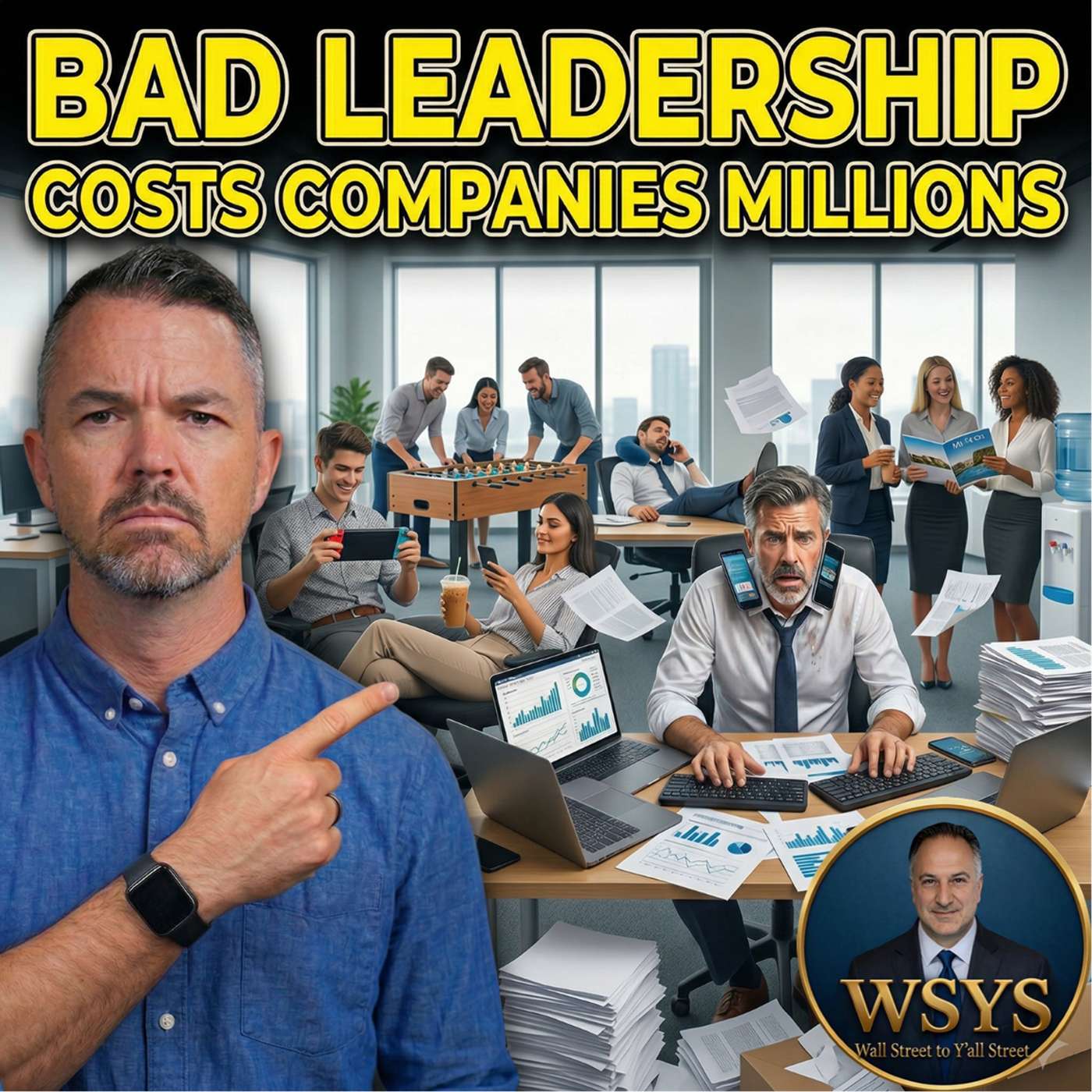
Good Employees Quit Bad Bosses | Brett Myles, Founder of LeadWell
Apr 6, 202638 min
Bad leadership isn't just a morale problem — it's costing U.S. companies $8.8 trillion a year in lost productivity. In this episode of Wall Street To Y'all Street, leadership expert Bret Myles breaks down why the most dangerous hire in any company is often your best individual contributor — promoted to manager with zero training. Brett has built a leadership operating system used by organizations including Chick-Fil-A. In this conversation, he gets real about what bad bosses actually cost, why one-off training workshops don't work, and what it takes to build leaders who make people want to stay. In this episode: - Why high performers get promoted into leadership roles they're not ready for - The "Pit of Despair" — and how leaders get stuck there without knowing it - Why disengaged employees are a leadership problem, not a people problem - The GIANT Framework: a repeatable leadership operating system - How to build trust fast as a leader — and the #1 thing that destroys it overnight TIMESTAMPS 00:00 Why great employees get promoted before they’re ready to lead 01:13 Intro: why most leadership training is a waste of time 03:20 What in Brett’s background shaped how he thinks about leadership? 04:10 When did Brett first realize he could lead other people? 05:15 What did Brett learn from seeing both great leaders and bad leaders? 08:05 Can bad leadership teach you as much as good leadership? 08:55 What is the Support-Challenge Matrix — and why does it matter? 10:05 Why do companies keep promoting people with no leadership training? 12:20 How should companies prepare employees for leadership roles? 12:55 Why does Brett say most leadership training is useless? 14:10 Why do companies keep spending money on leadership training that doesn’t work? 15:00 What do younger employees want from work that older generations didn’t ask for? 15:35 Why execution problems usually start with trust and communication 17:05 How much employee turnover is really caused by bad leadership? 18:35 What is the most common leadership flaw Brett sees? 19:15 What happens psychologically when someone gets promoted too fast? 20:20 Brett’s “sharpen your axe” advice for overloaded leaders 21:15 What is a leadership operating system? 22:25 Why leadership development has to happen over time, not in one workshop 24:20 Can leadership actually be measured? 25:50 What is the biggest myth companies believe about leadership development? 27:00 What leadership habit quietly destroys teams? 27:35 Why “hire good people and leave them alone” is bad advice 28:20 Why leadership has to be tailored to different personalities 29:20 What is the fastest way for a leader to lose trust? 30:20 What mistake do new managers make over and over? 31:35 What separates great leaders from average ones? 34:05 Can leadership systems work for companies of any size? 35:05 Why leadership training should apply from CEO to first-year employee 36:25 What happens to companies that never build a real leadership system? 37:00 What does Brett’s 2.0 leadership rollout look like after the first year? Connect with Brett on LinkedIn at https://www.linkedin.com/in/brett-myles-leadwell/ or his company Leadwell at https://www.letsleadwell.com/ ⚖️ Need a corporate attorney who actually understands business and startups? Discover how Raetzer Law can help you scale and protect your company: 🔗 https://raetzerlaw.com/ 📞 Call: (945) 221-6318 ✉️ Email: clients@raetzerlaw.com General Business Law, Mergers & Acquisitions and Securities Law (capital raising) ⚖️ 🎙️ABOUT THE HOST: Joseph J. Raetzer, MBA, JD is Corporate, Mergers & Acquisitions (M&A) and Securities Lawyer (capital raising). He started his career over 20 years ago on Wall Street and he has done over $100+ billion in transactions. He is also a serial entrepreneur with a successful 7-figure exit in under 3 years, and founder of his corporate M&A and securities law firm Raetzer PLLC. His podcast Wall Street to Y’all Street features real lessons from founders, operators, and executives who have built, scaled, lost, and rebuilt businesses. This is not legal advice - always consult with your attorney. Joseph J. Raetzer, MBA, JD is licensed in New York and Texas. 🎙️
Every question we get asked before someone starts their trial.
If you have a concern about deliverability, AI quality, data privacy, or whether this will actually work for your specific situation, it's probably answered below.
What is the difference between Founder Solo and Founder Pro?
Founder Solo gives you 50 AI pitches per month using the credit model (Standard pitches cost 1 credit, Enriched pitches cost 2). Founder Pro raises that to 200 credits per month and adds full Booking Probability access, unlimited Magic Match, Apollo enrichment credits, and data export capabilities. Both plans use the same credit system, so you can stretch your monthly budget further by using Standard-mode drafting.
How do agency tiers work?
Agency tiers have no base fee. You pay per managed client and per talent profile. Agency Standard is $199 per client per month; Agency Pro is $399 per client per month. Both add $39 per talent profile per month. Your own team's user seats are always free.
What is a talent profile?
A talent profile represents one person (founder, executive, or spokesperson) you are booking onto podcasts. It includes their bio, topics, headshots, and outreach history. Team plans include 5 profiles; agency plans are pay-as-you-go.
Can I switch plans later?
Yes, at any time. Upgrades take effect immediately; downgrades apply at the end of the current billing period. Contact support if you need help migrating between plan families.
Do you offer a free trial?
Every paid plan includes a 15-day free trial. Your card is saved at signup but you will not be charged until day 16. Cancel any time from your dashboard.
What happens if I cancel?
You keep access until the end of your current billing period. No charges after that. Your data is retained for 30 days in case you reactivate.
Is the 20% annual discount automatic?
Yes. Select Annual on the pricing toggle and the discounted price is applied automatically at checkout. The annual price shown is the full year cost.
What if I have more than 50 profiles or 20 clients?
That is our Enterprise tier. Contact our sales team and we will build a custom plan with volume pricing, a dedicated account manager, and SLA guarantees.