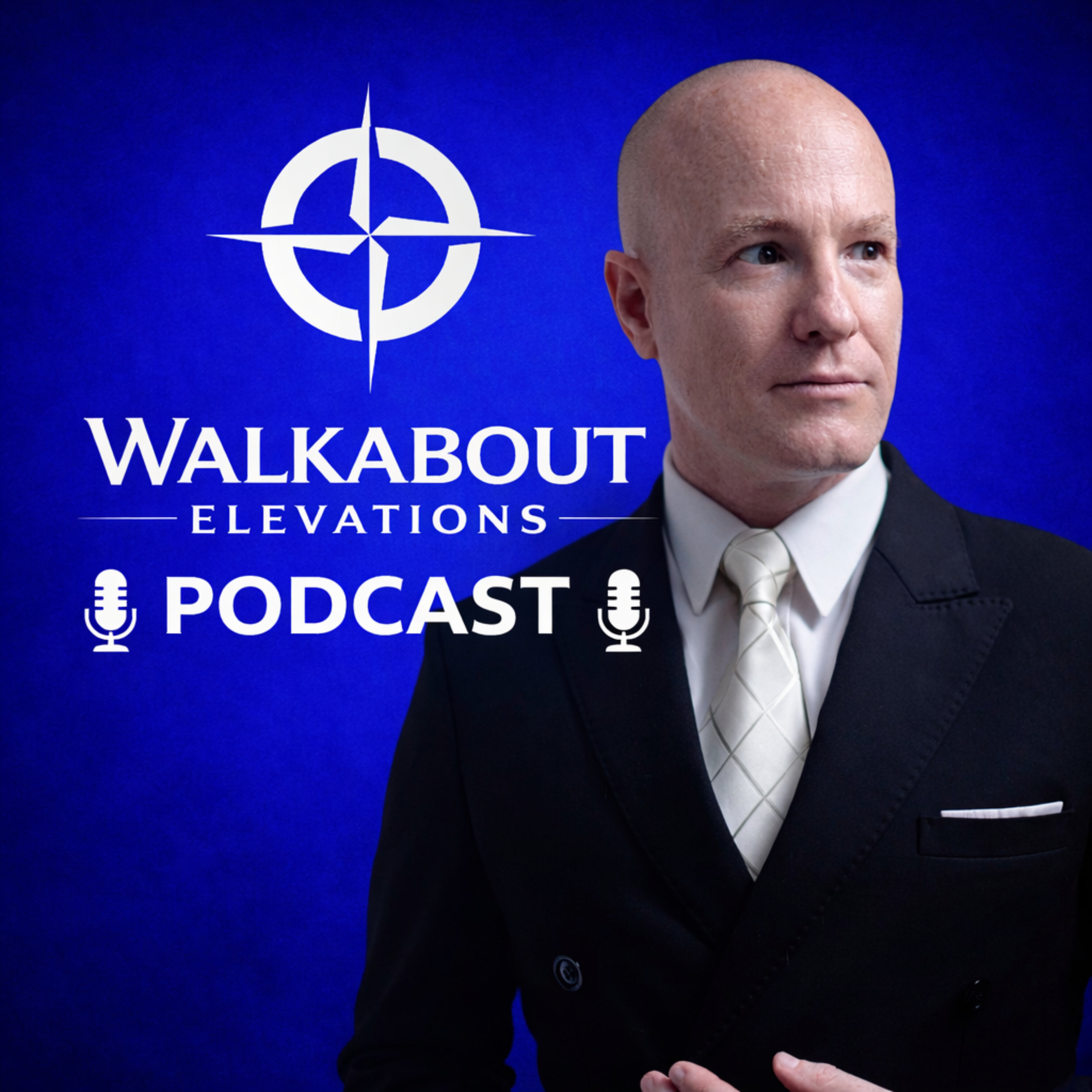
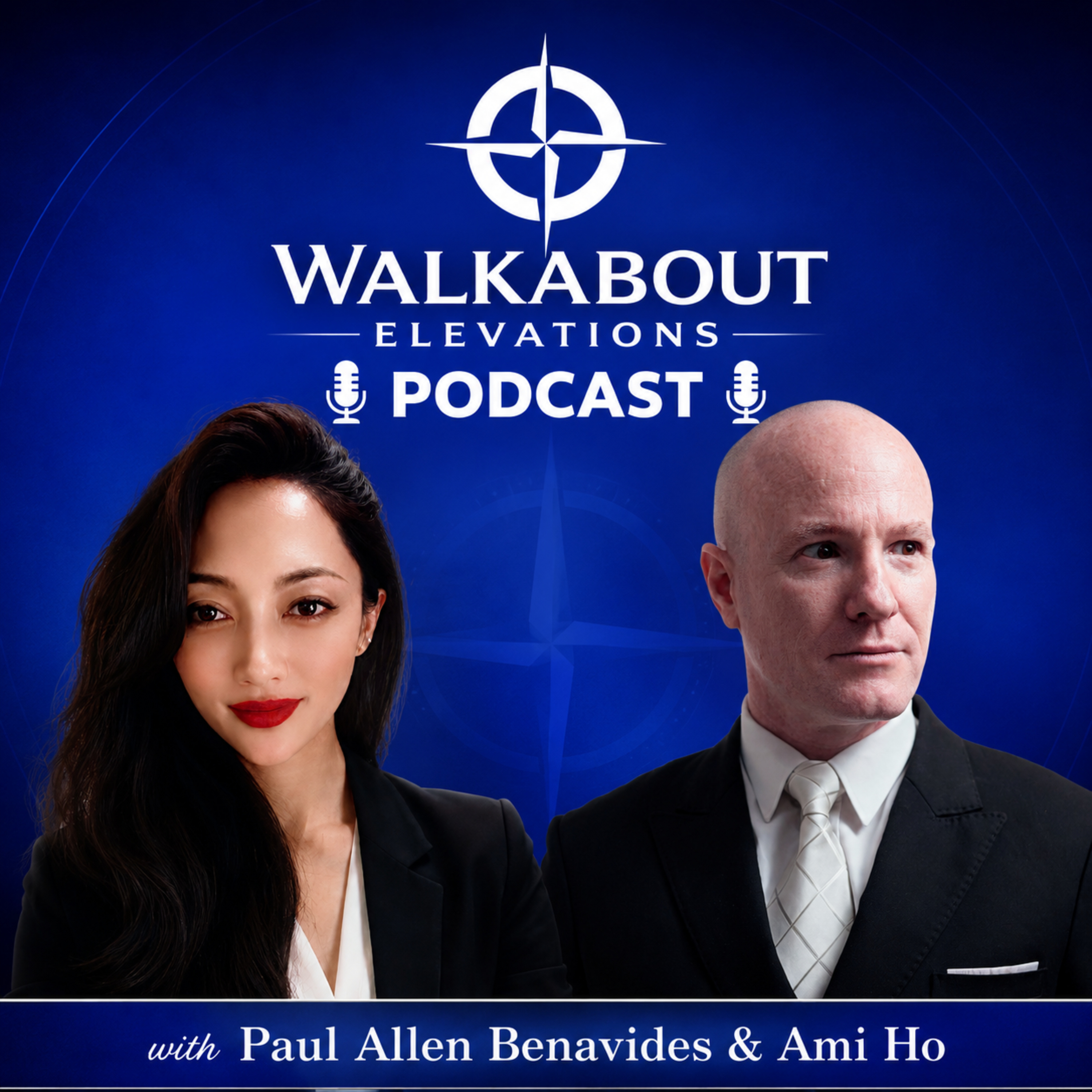
The Walkabout Elevations Podcast explores communication, culture, geopolitics, international business, and what it really means to build a life that fits.Hosted by Paul Allen Benavides, known by many as Walkabout Rojo. Each episode features long-form conversations with entrepreneurs, creators, and professionals from around the world, diving into how people think, adapt, and evolve across different stages of life.We talk about presence, identity, cross-cultural living, and the decisions that shape who we become.Recorded in Da Nang, Vietnam, at Walkabout Studio.
Pitch Analysis
Required Pod Score for this show. PitchCentric checks your profile against host openness, topical fit, and audience signals before you generate a pitch.
Contact path
Verified email
Booking probability
30%
Guest openness
Selective
Verified email on file
80/100
Required Score
Sign up to generate a grounded pitch for Walkabout Elevations Podcast.
Walkabout Elevations Podcast is a business podcast hosted by Walkabout Elevations, with 23 episodes on record and a Required Pod Score of 80. PitchCentric scores this show on Booking Probability, Listen Score, and live audience signals refreshed every 24 hours.
About the host
Walkabout Elevations hosts Walkabout Elevations Podcast, a business show with 23 episodes published.
Our AI reads these to draft pitches. Use them as grounding for a pitch that cites a real guest and a specific topic.
Walkabout Elevations Podcast
The Future of Luxury Hotels: AI, Branding & the Human Touch | Neha Pandey
Sep 10, 202625 min
What does luxury hospitality really mean in 2026?In this episode of Walkabout Elevations, recorded at HORECFEX Vietnam 2026 in Da Nang, I sit down with Neha Pandey, Vice President of Branding at PN Consulting in Singapore, to explore how branding, artificial intelligence, personalization, and guest expectations are reshaping the hospitality industry.For decades, hotel brands were built around standardization. Travelers knew what to expect because brands created consistent rooms, service standards, and operating procedures across their properties.But luxury hospitality is moving in a very different direction.Today’s guests are more informed, more discerning, and increasingly expect experiences designed around who they are rather than what is easiest for the hotel to deliver.Neha and I discuss the shift from cookie-cutter hospitality toward locally authentic and highly personalized experiences, and how AI can help hotel operators remove repetitive back-office work while improving their ability to understand and respond to guests.We also explore an important tension: how do hotels embrace AI and technology without removing the human connection that makes hospitality special in the first place?Neha shares a fascinating example from her own luxury travel experiences, where a casual conversation about enjoying picnics ultimately became a personalized experience in a forest treehouse. Even more interestingly, another luxury property achieved an extraordinary level of personalization not through sophisticated technology, but through old-fashioned communication, observation, and service.We also discuss:• The evolution of luxury hotel branding• Why storytelling matters in building strong hospitality brands• AI and automation in hotel operations• Guest-generated content and online visibility• Personalization versus privacy• Why listening remains one of hospitality’s most important skills• Locally authentic guest experiences• The difference between technology-enabled hospitality and truly human hospitalityRecorded live at HORECFEX Vietnam 2026 in Da Nang.Walkabout Elevations is presented by Walkabout Pathways.
Why Startups Should Be Looking at Vietnam | Shimna Chandan of Vantage Point Asset Management
Aug 29, 202616 min
At the Vietnam Financial Forum 2026, I sat down with Shimna Chandan, Managing Director and Head of Private Assets at Vantage Point Asset Management in Singapore, to discuss why international investors are increasingly looking at Vietnam, and why Da Nang may have a particularly interesting role in what comes next. Shimna and her firm have been actively investing in Vietnam for several years. What makes her perspective particularly interesting is that she isn't simply talking about Vietnam's potential from the sidelines. She is looking at where capital can actually be deployed. We discuss: • Why foreign institutional investors are increasingly interested in Vietnam • Whether Da Nang could become a major regional technology and fintech hub • How Ho Chi Minh City and Da Nang could develop different roles within Vietnam's International Financial Center • The emerging opportunity around carbon markets and climate technology • What international investors need from Vietnam's regulatory environment • Why execution and follow-through now matter more than promises • Vietnam's talent advantage and remaining language challenges • Why entrepreneurs may increasingly look beyond Singapore • The combination of lifestyle, affordability and business opportunity that makes Da Nang unusual • Why Shimna believes the timing for Vietnam may finally be right Shimna also shares a fascinating vision of Da Nang developing around fintech, climate technology, carbon markets, AI and blockchain while Ho Chi Minh City continues to grow as Vietnam's primary commercial and institutional financial center. The question is shifting from Does Vietnam have potential? to How quickly can that potential become reality? Recorded at the Vietnam Financial Forum 2026 in Da Nang, Vietnam.
Vietnam Is Creating Wealth. Can It Make It Last? | Lu Zhou of Vanquour Wealth Management
Aug 26, 202631 min
Vietnam is creating wealth at remarkable speed. But creating wealth and preserving it across generations are two very different challenges.At the Vietnam Financial Forum 2026, I sat down with Lu Zhou, CEO of Vanquour Wealth Management in New York, for a conversation that moved from Vietnam's financial ambitions to China, Wall Street, family offices, women in finance and the surprisingly difficult question of how "new money" becomes "old money."Lu Zhou brings an unusual perspective. Originally from Beijing, she moved to the United States 26 years ago and spent two decades working on Wall Street, where she witnessed the rapid creation of Chinese wealth and the movement of Chinese investors into American markets.We discuss why she believes Vietnam could develop into a major Asian financial center, what Vietnam can learn from China's extraordinary growth, and why talent, legal institutions, capital markets and international expertise will matter as the country enters its next phase.But economic growth is only part of the story. What happens after wealth is created?Lu Zhou explains why generations of Chinese investors looked to American family offices to understand how wealthy families preserve capital across generations. We also explore financial literacy, teaching children about money, women's confidence as investors, the coming generational wealth transfer, and why more women are needed in wealth management.Finally, we return to Vietnam and a larger question: can the country build the institutions required to turn today's economic momentum into enduring prosperity?Recorded at the Vietnam Financial Forum 2026 in Da Nang, Vietnam.
What Makes a Great Financial Center? | Jochen Biedermann of the WAIFC
Aug 25, 202635 min
Can Vietnam build an international financial center capable of competing in one of the most competitive regions in the global economy? At the Vietnam Financial Forum, I sat down with Jochen Biedermann, Managing Director of the World Alliance of International Financial Centers and a member of the advisory council supporting Vietnam's International Financial Center. Jochen brings a rare global perspective. The World Alliance represents 27 financial centers across five continents, giving him firsthand insight into what makes financial hubs succeed, why some struggle, and what Vietnam must get right. We discuss the different models behind financial centers such as London, Dubai, Hong Kong and emerging fintech hubs; the importance of talent, regulation, infrastructure and international connectivity; and the challenges Vietnam still needs to address as it builds its own financial ecosystem. We also explore the unusual dual-city model between Ho Chi Minh City and Da Nang, why a little competition between the two cities might actually be healthy, and how Da Nang could combine fintech, technology, sustainable finance and quality of life to create something distinctly its own. Perhaps most importantly, this conversation moves beyond the question of whether Vietnam has potential. The more interesting question now is how that potential gets converted into institutions, talent, investment and businesses. Recorded at the Vietnam Financial Forum in Da Nang, Vietnam.
Why do so many successful people still feel like they're not enough?In this episode of Walkabout Elevations, I sit down with entrepreneur and leadership coach Joel Rickard to explore imposter syndrome, entrepreneurship, men's mental health, childhood programming, comparison, self-worth, and the psychology behind lasting success.Joel shares how he went from studying aerospace engineering to coaching ambitious entrepreneurs, helping them overcome fear, procrastination, limiting beliefs, and the internal stories that quietly shape their decisions.We discuss:• What imposter syndrome really is• Why successful people still struggle with self-doubt• Childhood programming and limiting beliefs• Why entrepreneurs undercharge for their work• The pressure men face balancing business and family• Self-awareness versus action• Why fulfillment matters more than success• Morning and evening routines that shape your mindsetGuest: Joel RickardIf you enjoy conversations about leadership, psychology, mindfulness, entrepreneurship, and personal growth, subscribe to Walkabout Elevations for more interviews like this.
Every question we get asked before someone starts their trial.
If you have a concern about deliverability, AI quality, data privacy, or whether this will actually work for your specific situation, it's probably answered below.
What is the difference between Founder Solo and Founder Pro?
Founder Solo gives you 50 AI pitches per month using the credit model (Standard pitches cost 1 credit, Enriched pitches cost 2). Founder Pro raises that to 200 credits per month and adds full Booking Probability access, unlimited Magic Match, Apollo enrichment credits, and data export capabilities. Both plans use the same credit system, so you can stretch your monthly budget further by using Standard-mode drafting.
How do agency tiers work?
Agency tiers have no base fee. You pay per managed client and per talent profile. Agency Standard is $199 per client per month; Agency Pro is $399 per client per month. Both add $39 per talent profile per month. Your own team's user seats are always free.
What is a talent profile?
A talent profile represents one person (founder, executive, or spokesperson) you are booking onto podcasts. It includes their bio, topics, headshots, and outreach history. Team plans include 5 profiles; agency plans are pay-as-you-go.
Can I switch plans later?
Yes, at any time. Upgrades take effect immediately; downgrades apply at the end of the current billing period. Contact support if you need help migrating between plan families.
Do you offer a free trial?
Every paid plan includes a 15-day free trial. Your card is saved at signup but you will not be charged until day 16. Cancel any time from your dashboard.
What happens if I cancel?
You keep access until the end of your current billing period. No charges after that. Your data is retained for 30 days in case you reactivate.
Is the 20% annual discount automatic?
Yes. Select Annual on the pricing toggle and the discounted price is applied automatically at checkout. The annual price shown is the full year cost.
What if I have more than 50 profiles or 20 clients?
That is our Enterprise tier. Contact our sales team and we will build a custom plan with volume pricing, a dedicated account manager, and SLA guarantees.