
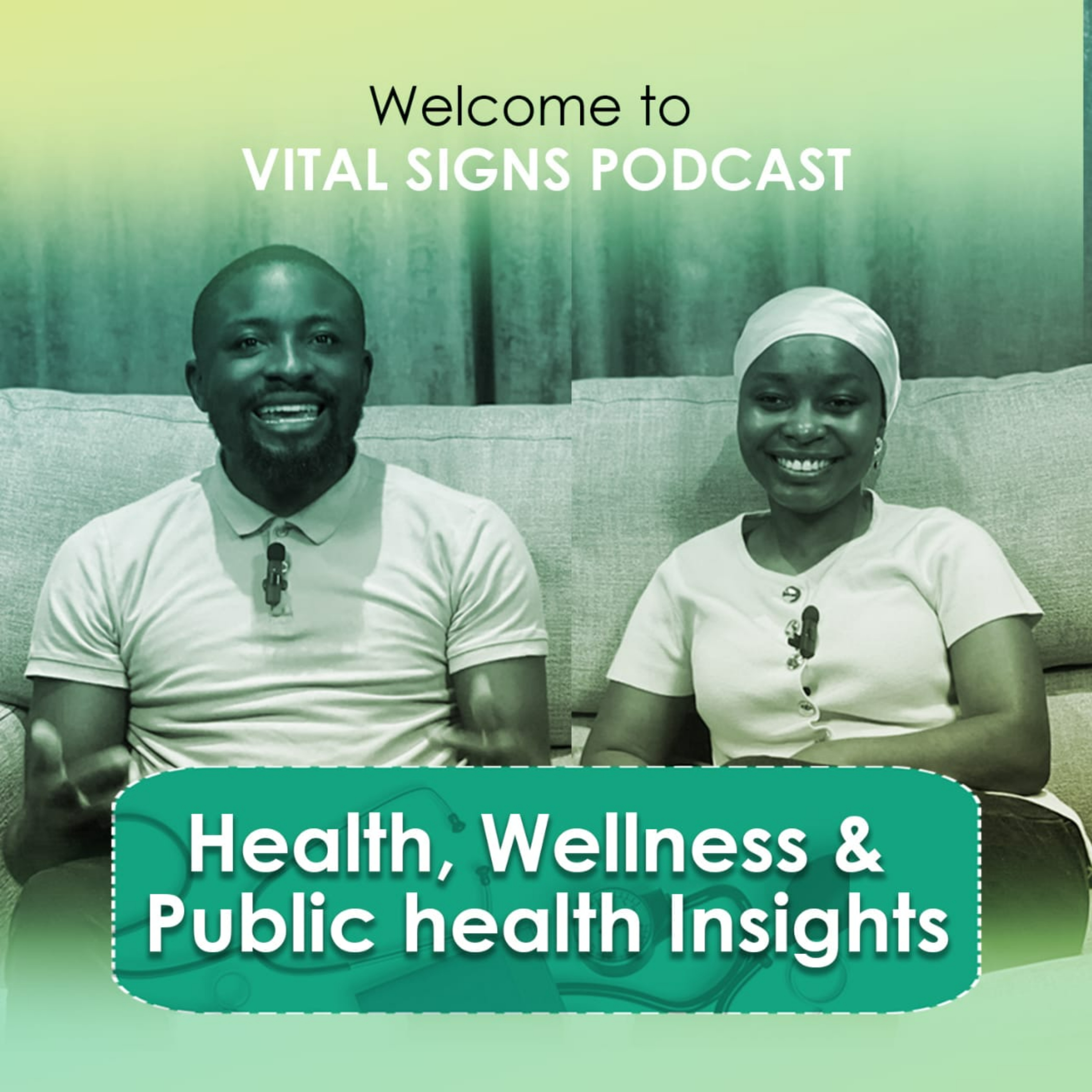
Episode #11
What Now? Can Nigerian Healthcare Actually Be Fixed? (Series Finale)
For ten weeks, Vital Signs Unfiltered has walked through Nigeria's healthcare system — the failures, the deaths, the missing money, the people who left, and the ones who stayed. In this season finale, we ask the only question that remains: what now? Can it actually be fixed? A broken system is not the same as an irreversible one. Other countries have rebuilt collapsed health systems before. Rwanda — after the genocide of 1994 — restructured its healthcare almost from scratch, and now ranks among the best-performing in Africa. Reform is possible. But only if the will exists. So what would change in Nigeria require? Three things. First, funding: meeting the Abuja Declaration target of 15% of the national budget would more than double current health spending. Second, workforce retention: better salaries, safer hospitals, and clear pathways for newly qualified doctors and nurses. Third, primary care: strong, well-equipped community clinics that catch problems before they reach hospitals. And the case for reform is not just moral — it is mathematical. According to global health research, every dollar invested in primary healthcare in low-resource settings returns multiple dollars in economic productivity, life expectancy, and reduced emergency cost. But policy alone is not enough. Trust has to be rebuilt. Patients must feel respected. Healthcare workers must feel protected. And accountability must mean something — when a hospital fails, when a budget disappears, when a life is lost. That is the harder reform, and it cannot be done by government alone. Citizens knowing their rights. Nurses speaking up. Doctors staying when they can. Journalists asking questions. Diaspora professionals coming home, even temporarily, to teach, train, and treat. Reform happens when many small forces push in the same direction at once. Nigeria's healthcare system is broken. But broken is a description — not a destiny. The deaths we have spoken about across this series were preventable. Which means future ones can be too. Because sometimes the end of a question is the beginning of a demand. ️ Follow Vital Signs Podcast on Spotify for more. ⭐ If this series moved you, please rate the show — it helps more Nigerians find it. Sources: World Health Organization, Abuja Declaration 2001 Archive, Rwanda Ministry of Health, global primary care investment research.
