Episode #110
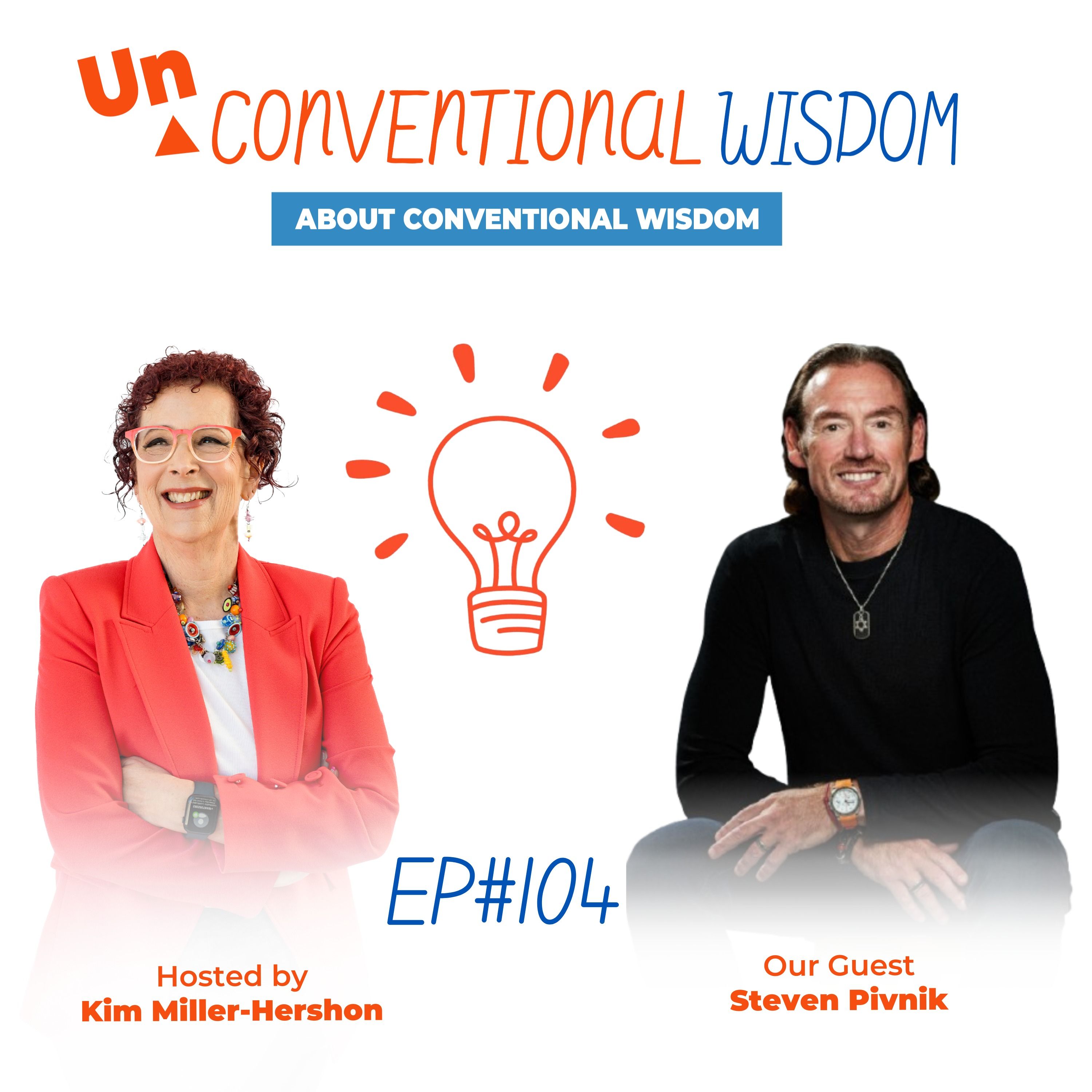
Built to Finish: What 18 Ironmans Taught Him About Scaling and Selling a Company | Steven Pivnik
In this episode of Unconventional Wisdom About Conventional Wisdom , Kim Miller-Hershon sits down with Steve Pivnik , a successful entrepreneur who scaled his last company to 200-plus employees across 12 countries and executed a strategic exit to a $4 billion competitor using a disciplined, repeatable framework. That discipline was forged not only in the boardroom but through elite endurance challenges, including 18 Ironman triathlons and high-altitude mountaineering expeditions, including Everest. Steve is the best-selling author of Built to Finish , a keynote and TEDx speaker, and host of the Built to Finish podcast. Today he advises founders and CEOs on building companies intentionally designed not just to grow, but to finish strong through a strategic acquisition or investor recapitalization. His Ironman journey is its own story: a "midlife crisis" he started at 40 with no athletic background, chasing a 13-year goal of crossing the finish line at the Kona World Championship. In this conversation, Steve challenges the founder's most seductive belief: that because it's your company, you have to do the heavy lifting, be in every big sales call, own every big decision, the Superman complex. He learned, over many years, that the best way to scale is to remove yourself from those decisions, because that's when you unleash the business's true potential. He puts hard numbers on it: a founder who stays the hub of every spoke caps the company's valuation, while one who builds systems, delegation, and a real management team can double or triple it. The aha moment for his clients is that stepping back doesn't just free them from an 80-hour week with a laptop on every vacation, it makes the company worth more. That reframe sits right at the inflection point where Kim is often brought in, the moment a founder knows they need to stop being the bottleneck but can't actually execute the letting go. She and Steve are a natural complement, his data and strategy alongside her work on the psychology of releasing control and on leveling up the executives who were never allowed to make decisions independently. Steve's rule, from a mentor, is to delegate when someone is 70% ready rather than waiting for a 100% that never comes, and Kim adds the gut-check she can't resist: when you insist no one can do it as well as you, is that true, or is it your ego, and are you making someone else wrong to avoid letting go of something it's time to release? They agree servant leadership works only with the right cadence, because somebody still has to draw the line and say "that's not my job, it's yours." Steve is refreshingly candid about what people assume he had that he didn't. His LinkedIn shows a Harvard credential (an online course he took after the exit), but he's a proud college dropout from the school of hard knocks, and his company was bootstrapped from day one with not a dollar of outside funding. He left school not out of rebellion but because his family hit hard times and his mother, unimpressed by a four-year business degree, pointed her "computer nerd" toward a downtown Manhattan mainframe programming course, a get-out-of-jail-free card he happily took. It leads into a shared riff with Kim on how traditional education rewards one narrow kind of intelligence, illustrated by her son who could see the answer instantly but got failed for not documenting a "process" he didn't consciously have. His biggest leadership challenge is one he calls endemic and hates discussing because it's personal to others: founder loyalty to the people who built the company with them. The best friend, cousin, or uncle who ran sales or finance from day one deserves enormous credit, but often can't run the organization at the level it's grown to. For the key roles, he argues, you need someone who has already run an org at double your current size, because it'll be a cakewalk for them versus a struggle for your loyal early hires. Kim adds the humane counterpoint from her coaching: those people are usually miserable being in over their heads, and giving them permission to make a better decision for themselves lets them leave with dignity, choosing the exit rather than waiting for the other shoe to drop. His unconventional growth habit is the realization that he doesn't have all the answers, becoming coachable after years of "my way or the highway." Kim's favorite reframe lands the point: being open to coaching isn't a sign you're failing, it's what LeBron James, Serena Williams, and Patrick Mahomes do, top performers surround themselves with many coaches. Both of them have coaches, both practice what they preach, and both agree that if you're fantastic at one thing you're almost certainly lacking in another. On imposter syndrome, Steve is honest that it hits every time he's about to walk on stage, the "why me?" backstage, until he reminds himself he earned the spot and gives himself a pep talk. Kim's addition ties the whole hour together: the nerves mean you care, and the cure is remembering the message was never about you, you're just the vessel, so make the audience the hero. His closing charge is pure Steve: if a self-described couch-potato college dropout can build and sell a company and finish the Ironman World Championship, nothing should stop anyone from setting a big, hairy, audacious goal and going after it. This episode explores: Why the founder's Superman complex caps growth Hub-and-spoke architecture and what it does to your valuation How stepping back can double or triple what your company is worth Delegating at 70% ready instead of waiting for a 100% that never comes The ego question: is it really true no one can do it as well as you? Servant leadership with the right cadence, and knowing when to draw the line Bootstrapping to a $4 billion exit as a college dropout Why traditional education rewards only one kind of intelligence The hardest call: outgrowing the loyal early team in key roles Why the person who's outgrown their role is usually miserable Letting people leave with dignity by choosing the exit themselves Becoming coachable, and why top performers have many coaches Beating stage-fright imposter syndrome by making the audience the hero Setting big, hairy, audacious goals and starting before you're ready If you're a founder, endurance athlete, or anyone sitting on a goal that feels too big, this conversation offers practical insight, honest talk about letting go and imposter syndrome, and a refreshing case that you were built to finish. Connect with me here: Website: https://www.kimmillerhershon.com LinkedIn: https://www.linkedin.com/in/kmillerhershon Newsletter: https://link.kimmillerhershon.com/widget/form/aEdmdA1W5MhoMCMfy5O8 Webinar: https://webinar.kimmillerhershon.com/?utm_source=Podcast Guest Details: Guest: Steve Pivnik Book: Built to Finish Focus: Advises founders and CEOs on building companies intentionally designed to finish strong through a strategic acquisition or investor recapitalization; scaled and sold his last company (200+ employees, 12 countries) to a $4 billion competitor; keynote and TEDx speaker, host of the Built to Finish podcast, 18-time Ironman and Everest mountaineer Hosted by Simplecast, an AdsWizz company. See pcm.adswizz.com for information about our collection and use of personal data for advertising.