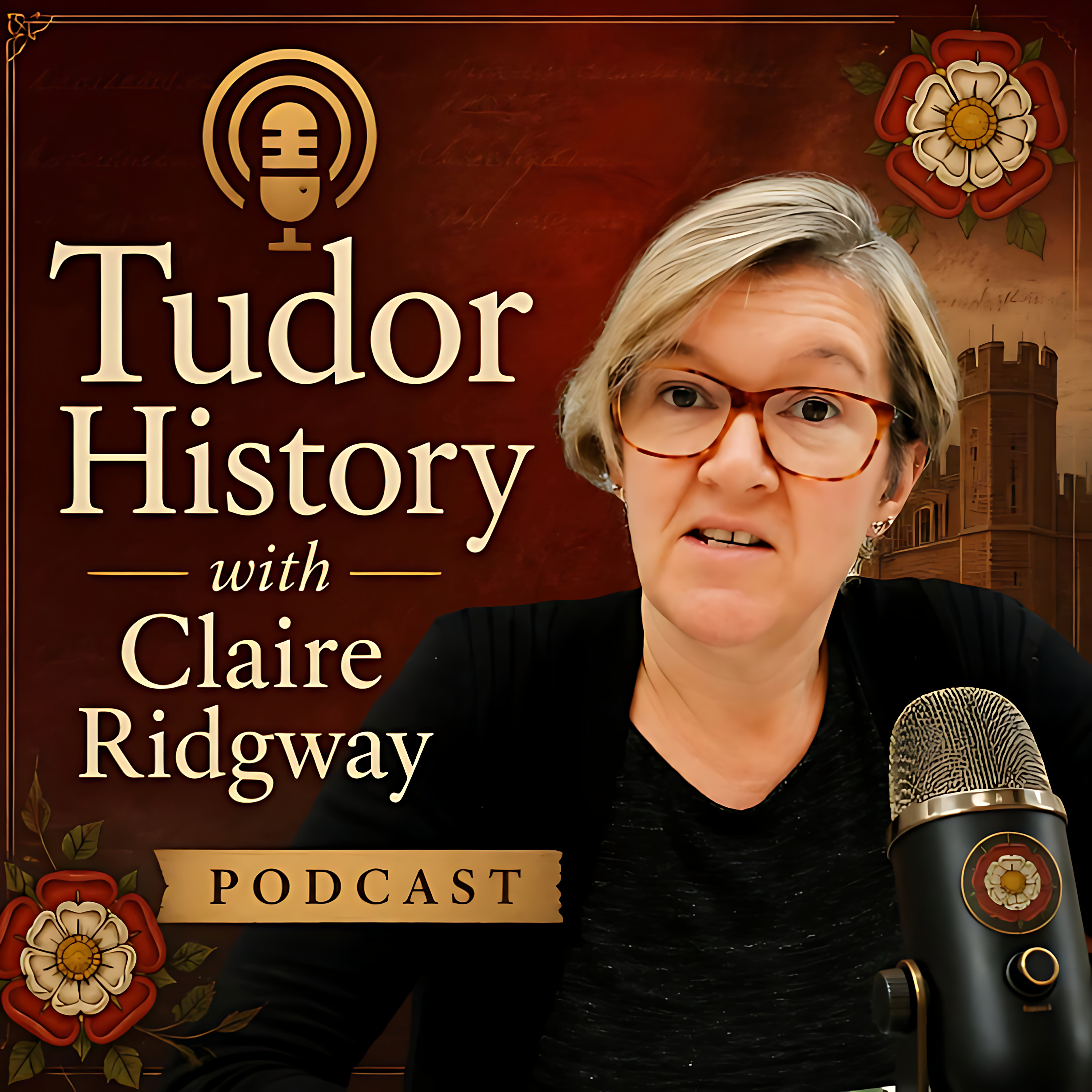
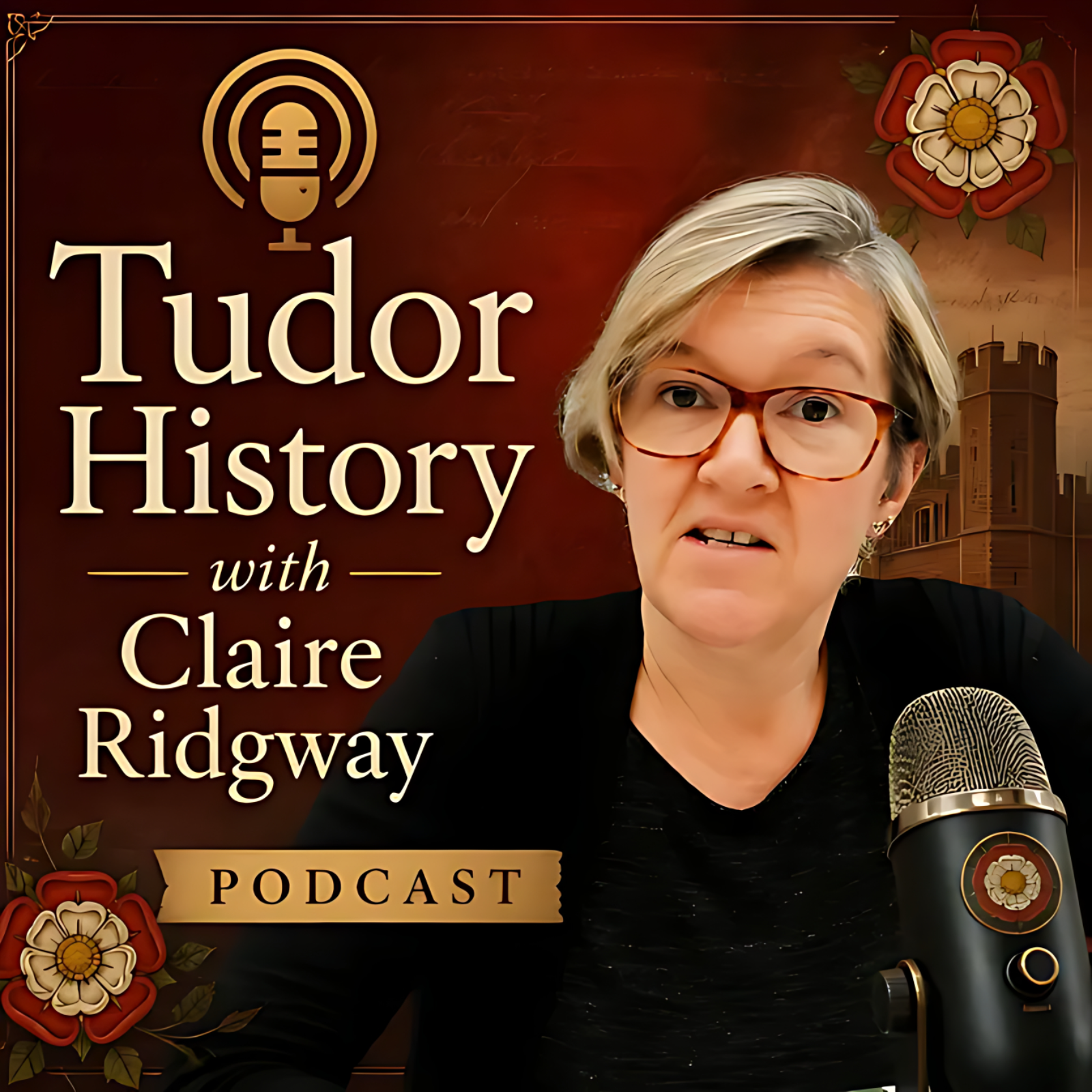
Step back into a world of intrigue, passion, and ruthless ambition — welcome to Tudor England. Join historian and bestselling author Claire Ridgway as she uncovers the riveting stories of the Tudor dynasty. From the scandalous love affairs of King Henry VIII to the tragic fall of Anne Boleyn, the fierce reign of Elizabeth I, and the lesser-known secrets of Tudor court life, this podcast brings history to life in vivid detail. Hear dramatic tales of betrayal, execution, forbidden love, and political manoeuvring that shaped England forever. Discover daily Tudor history with fascinating “On This Day” episodes — unique insights you won’t find in typical history books. Get behind-the-scenes stories from Claire’s own research trips to historic sites like the Tower of London, Hampton Court Palace, Hever Castle, and more. Enjoy interviews with top historians and experts in Tudor studies, plus lively Q&A sessions tackling listeners’ burning Tudor questions. 🖋 Who is Claire Ridgway? Claire is the author of the bestselling On This Day in Tudor History series and numerous other Tudor books loved by readers around the world. She founded The Tudor Society, connecting enthusiasts with experts through live online events, and runs the hugely popular history websites The Anne Boleyn Files and www.ClaireRidgway.com. Her mission: to uncover the human stories behind the crown — the hopes, fears, and triumphs of not only kings and queens but also the courtiers, rebels, and ordinary people who lived under the Tudor rose. What can you expect? Gripping accounts of famous events like the Field of Cloth of Gold, the Dissolution of the Monasteries, or the Babington Plot. Intimate portraits of Tudor figures: Anne Boleyn’s charm and downfall, Thomas Cromwell’s rise and brutal fall, Elizabeth I’s cunning survival. Dark mysteries and unsolved deaths Who really killed Amy Robsart? Was Katherine Howard truly guilty? Special episodes on Tudor fashion, food, medicine, and the day-to-day lives of Tudor men and women. Join thousands of Tudor fans worldwide Never miss an episode — subscribe now and become part of a global community that can’t get enough of Tudor drama. Explore more with Claire’s books, free resources, and live historical events at www.ClaireRidgway.com. Ready to travel back 500 years? Press play and let the adventure begin.
Pitch Analysis
Required Pod Score for this show. PitchCentric checks your profile against host openness, topical fit, and audience signals before you generate a pitch.
Contact path
Verified email
Booking probability
40%
Guest openness
Selective
Verified email on file
80/100
Required Score
Sign up to generate a grounded pitch for Tudor History with Claire Ridgway.
Our AI reads these to draft pitches. Use them as grounding for a pitch that cites a real guest and a specific topic.
Episode #1196
A Viewer Told Me to Cover Up - Anne Boleyn Had the PERFECT Response
Sep 22, 202612 min
A viewer recently emailed me with some well-meaning professional advice: she found my bare arms, flushed skin and tattoos distracting from my history content, and suggested that I might consider wearing a blouse or even a turtleneck when filming. There was just one rather wonderful irony...The two visible tattoos she suggested I cover up are both connected to Anne Boleyn - and one of them seemed to provide the perfect response from nearly 500 years ago:"Ainsi sera, groigne qui groigne." Or, as I like to translate it: "Let them grumble. That's the way it's going to be." In this video, I'm exploring the fascinating history behind Anne Boleyn's defiant motto, why she had it embroidered on her servants' livery during Henry VIII's Great Matter, and its possible connection to the court of Margaret of Austria. I'm also sharing the very personal reason I had those words tattooed on me in 2021, after years of allowing online criticism to affect my confidence. And the viewer's email raised another interesting question: are women still judged differently from men when it comes to appearance and professionalism? Can bare shoulders or tattoos really distract from someone's expertise? And would we react in the same way to a male historian? I'd love to know what you think in the comments.And as for whether I'll be filming my videos in a turtleneck from now on...Ainsi sera, groigne qui groigne.Let them grumble! #AnneBoleyn #TudorHistory #Tudors #HenryVIII #History
You've probably heard the famous rhyme about Henry VIII's six wives:"Divorced, beheaded, died; divorced, beheaded, survived."But mention it online, and you tend to get someone saying, "Actually, Henry didn't divorce Catherine of Aragon or Anne of Cleves. Their marriages were annulled. "But is that correction actually right? In this video, I'm looking at what "divorce" meant in the sixteenth century, why Tudor terminology doesn't fit neatly with our modern distinction between divorce and annulment, and what contemporary sources actually say. We'll look at medieval canon law, Henry VIII's sister Margaret Tudor, Henry VIII's relationship ends, and a legal document from 1540 which explicitly describes Anne of Cleves as "divorced" from Henry VIII. So , was Henry VIII's marriage to Anne of Cleves annulled? Yes. But is it historically inaccurate to say they were divorced?Not at all. So "Divorced, beheaded, died..." can definitely stay!#HenryVIII #TudorHistory #AnneOfCleves #CatherineOfAragon #Tudors
Anne Boleyn Was Queen for 3 Years - What Did She Actually Do?
Aug 24, 202634 min
We spend so much time talking about Anne Boleyn's extraordinary rise and her dramatic fall that we often skip over the bit in between, but what was Anne actually like as Queen of England? Anne was Henry VIII's queen for just three years, but during that short time she acted as an intercessor, supported scholars and universities, promoted religious reform, gave to the poor, patronised artists and used her access to Henry VIII to help people who appealed to her. In this instalment of my Anne Boleyn documentary series, I'm looking at Anne "the queen in her own right". What was expected of a Tudor queen consort? How much influence could Anne really exercise? How did she use patronage, her household and her position close to the king? And what can surviving objects such as her famous "Most Happy" medal, crowned falcon badge, jewellery and books tell us about the way Anne presented herself as queen? I'll also look at Anne's religious and charitable activities, her patronage of scholars and reformers, her role as intercessor, her pregnancies and the all-important expectation that she would provide Henry VIII with a male heir. Join me as we explore an often overlooked part of Anne Boleyn's story: the years when she wasn't Henry VIII's prospective bride or his condemned wife, but Queen of England.
Who Would Marry Henry VIII? The Search for Wife No. 4
Aug 14, 202618 min
Who would agree to become Henry VIII's fourth wife? By late 1537, Henry VIII was back on the marriage market. Catherine of Aragon had been banished, Anne Boleyn had been executed, and Jane Seymour had died shortly after giving Henry the legitimate son he had longed for. Now the 46-year-old king needed another queen. And so began an extraordinary search across Europe. In this video, I'm giving Henry VIII's search for wife number four the Tudor Blind Date treatment as we meet some of the women considered by Henry and his government. There was Christina of Denmark, the young widowed duchess whose portrait by Hans Holbein delighted Henry; Marie de Guise, a tall French widow who had already produced sons; her younger sister Louise; Anna of Lorraine; and, eventually, two sisters from Cleves: Anne and Amalia. Along the way, ambassadors were dispatched, portraits were commissioned, diplomatic negotiations unfolded and Hans Holbein found himself travelling around Europe painting prospective queens. But finding Henry VIII a suitable wife wasn't simply a matter of finding a woman he liked. Marriage was foreign policy, and every prospective bride came with dynastic connections, diplomatic advantages and complications of her own. So who would win Tudor Blind Date and become Henry VIII's fourth wife?We already know the answer.But the story of how Henry ended up with Anne of Cleves is far more interesting than you might think. #HenryVIII #AnneOfCleves #TudorHistory #HansHolbein #TheTudors
Did Mary of Guise Use Anne Boleyn's Words to Refuse Henry VIII's Proposal?
Aug 6, 20269 min
One of the most famous quotations attributed to Mary of Guise is her alleged reply to Henry VIII's proposal of marriage: "I may be a big woman, but I have a very little neck." It's a wonderful story, cleverly alluding to Anne Boleyn's execution and Henry VIII's reputation. But did Mary of Guise really say those words? In this video, I investigate the evidence by examining contemporary diplomatic correspondence, including the dispatches of the French ambassador Castillon, along with the works of John Knox, John Lesley, George Buchanan, Agnes Strickland, Antonia Fraser, John Guy and other historians. Can this famous quotation be traced to a contemporary source, or has it become accepted simply through repetition? Join me as I follow the evidence and explore one of Tudor history's most intriguing quotation mysteries. If you enjoy evidence-based Tudor history, please like, subscribe and let me know your thoughts in the comments. And if you've come across a contemporary source for the quotation, I'd genuinely love to hear about it. #TudorHistory #HenryVIII #MaryOfGuise #AnneBoleyn #MaryQueenOfScots #TudorEngland #Tudors #BritishHistory #HistoryMystery #HistoryFacts #MedievalHistory #HistoryLovers
Every question we get asked before someone starts their trial.
If you have a concern about deliverability, AI quality, data privacy, or whether this will actually work for your specific situation, it's probably answered below.
What is the difference between Founder Solo and Founder Pro?
Founder Solo gives you 50 AI pitches per month using the credit model (Standard pitches cost 1 credit, Enriched pitches cost 2). Founder Pro raises that to 200 credits per month and adds full Booking Probability access, unlimited Magic Match, Apollo enrichment credits, and data export capabilities. Both plans use the same credit system, so you can stretch your monthly budget further by using Standard-mode drafting.
How do agency tiers work?
Agency tiers have no base fee. You pay per managed client and per talent profile. Agency Standard is $199 per client per month; Agency Pro is $399 per client per month. Both add $39 per talent profile per month. Your own team's user seats are always free.
What is a talent profile?
A talent profile represents one person (founder, executive, or spokesperson) you are booking onto podcasts. It includes their bio, topics, headshots, and outreach history. Team plans include 5 profiles; agency plans are pay-as-you-go.
Can I switch plans later?
Yes, at any time. Upgrades take effect immediately; downgrades apply at the end of the current billing period. Contact support if you need help migrating between plan families.
Do you offer a free trial?
Every paid plan includes a 15-day free trial. Your card is saved at signup but you will not be charged until day 16. Cancel any time from your dashboard.
What happens if I cancel?
You keep access until the end of your current billing period. No charges after that. Your data is retained for 30 days in case you reactivate.
Is the 20% annual discount automatic?
Yes. Select Annual on the pricing toggle and the discounted price is applied automatically at checkout. The annual price shown is the full year cost.
What if I have more than 50 profiles or 20 clients?
That is our Enterprise tier. Contact our sales team and we will build a custom plan with volume pricing, a dedicated account manager, and SLA guarantees.