
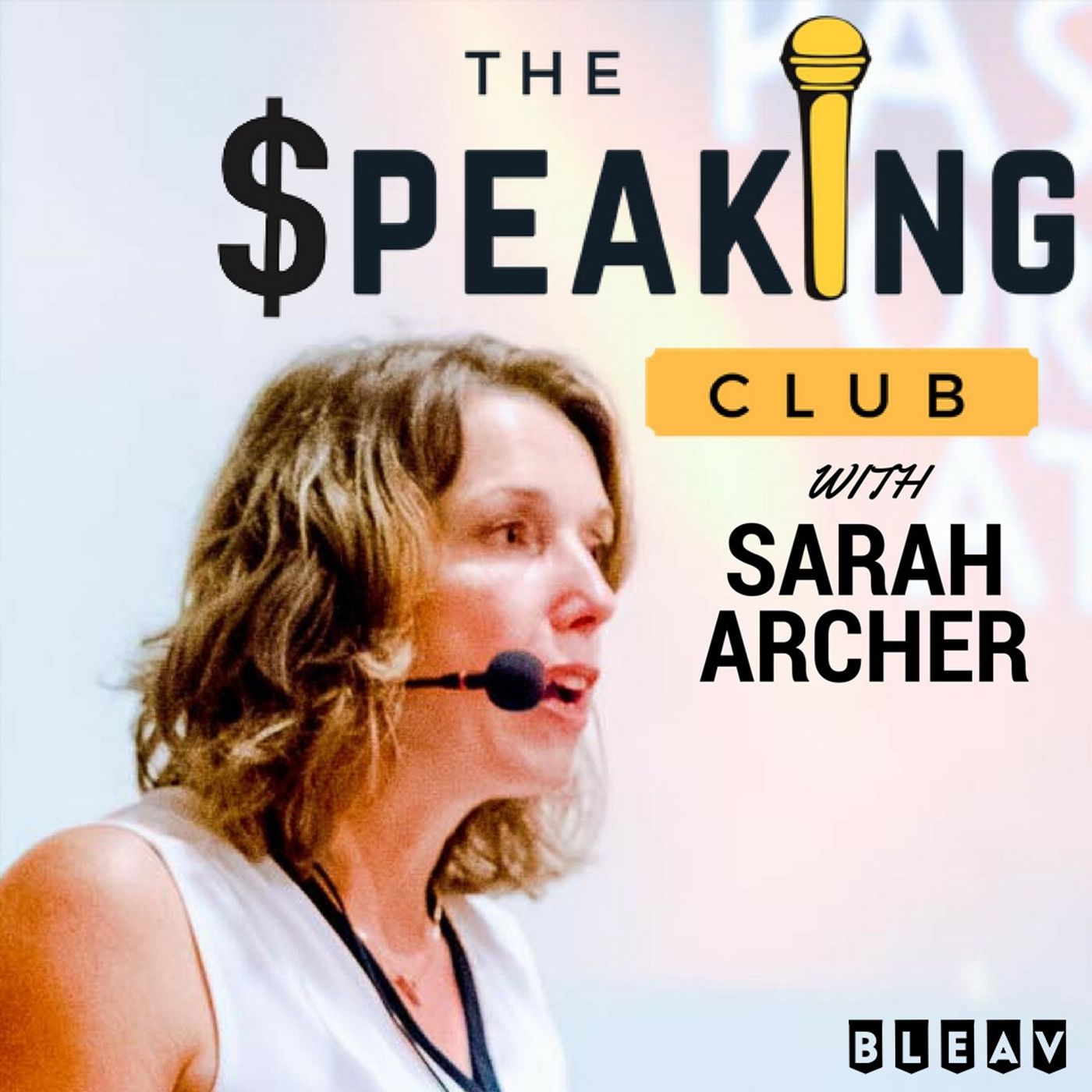
If you want to have a laugh whilst learning how to increase your confidence and public speaking skills, for personal or business growth, then you have come to the right place. Discover tips, tricks and strategies on how to speak and pitch using humour and performance. Find out how to better connect with people's pain points in a way that they will want to talk about and share, and get the low down on powering up your mind set. Sarah Archer, is a stand-up comedian, playwright, speaker and business woman. She is also author of 'Cracking Speech Mate! – How to use humour to make you an amazing speaker', and 'Straight to the Top – How to create and deliver a killer elevator pitch'. Communicating with authenticity and power, influencing through copy, spoken word and body language, managing negative thoughts and anxiety, building authority and trust, story-telling and comedy secrets...oh and we'll also cover focus and time management 'cause Sarah has a mind like a butterfly! Join her for fun
Pitch Analysis
Required Pod Score for this show. PitchCentric checks your profile against host openness, topical fit, and audience signals before you generate a pitch.
Contact path
Verified email
Booking probability
52%
Guest openness
Accepting guests
Verified email on file
56/100
Required Score
Sign up to generate a grounded pitch for The Speaking Club: Mastering the Art of Public Speaking.
What is The Speaking Club: Mastering the Art of Public Speaking?
The Speaking Club: Mastering the Art of Public Speaking is a business podcast hosted by Unknown Host, with 345 episodes on record and a Required Pod Score of 56. PitchCentric scores this show on Booking Probability, Listen Score, and live audience signals refreshed every 24 hours.
About the host
Unknown Host hosts The Speaking Club: Mastering the Art of Public Speaking, a business show with 345 episodes published.
Our AI reads these to draft pitches. Use them as grounding for a pitch that cites a real guest and a specific topic.
Episode #345
The Skill That Helps You Connect With Any Audience with Michelle Mills-Porter - 345
Aug 20, 20261h 7m
Most speakers spend far more time preparing their message than preparing to understand the people they're speaking to. And that can be an expensive mistake. In this episode, I'm joined by Michelle Mills-Porter, better known as The People Reader, to explore what it really means to understand human behaviour and why it's one of the most overlooked skills in speaking. We talk about the difference between communication and behaviour, how to understand audiences before you ever step on stage, why clients often have a very different problem from the one they think they're hiring you to solve, and how becoming a better reader of people can transform the way you connect, influence and build trust. If you've ever wished you could understand your audience, your clients or your event bookers just a little better... this conversation is a great place to start. What you'll discover: • How surviving the Boxing Day tsunami changed the direction of Michelle's life and work • Why understanding behaviour is very different from understanding communication • What it really means to become "The People Reader" • The biggest mistake people make when trying to understand others • Why clients often need a completely different solution from the one they ask for • How speakers can better understand an audience before they even step on stage • The balance between adapting to your audience and staying authentic • How understanding human behaviour changed Michelle's own storytelling • Three things every speaker should understand about the people sitting in front of them • The simple shift that helps you build stronger connections wherever you speak Enjoy! If you'd like to watch the video of the episode, you can do that on our YouTube Channel soon. Guest Information: Website: mmp.uk.com LinkedIn: linkedin.com/in/michellemillsporter Books & Resources*: Phone Genius: The art of non-visual communication by Michelle Mills-Porter The 5 Love Languages: The Secret to Love That Lasts by Gary Chapman The Four Agreements: Practical Guide to Personal Freedom by Don Miguel Ruiz Speaking Resources: Grab Your From Blank Page to Stage Guide and Nail the Topic for a Client Winning Talk: https://saraharcher.co.uk/newguide-tsc Want to get better at finding and sharing your stories then check out our FREE Five Day Snackable Story Challenge: https://www.saraharcher.co.uk/challenge To share your thoughts: · leave a comment below. · Share this show on Facebook or LinkedIn. To help the show out: · Leave an honest review at https://www.ratethispodcast.com/tsc. Your ratings and reviews really help get the word out and I read each one. *(please note if you use my link I get a small commission, but this does not affect your payment) Hosted by Simplecast, an AdsWizz company. See pcm.adswizz.com for information about our collection and use of personal data for advertising.
Stop Winging It: Choreograph Your Talk Like a Performer - 344
Aug 7, 202621 min
Great speakers don't just rehearse what they're going to say. They rehearse how they want their audience to experience it. Yet mention choreography to many speakers and you'll often hear the same concern... "I don't want to look rehearsed." In this episode, I explain why that's one of the biggest myths in public speaking, and how thinking more like an actor or performer can dramatically increase your impact without making you sound scripted. I'll share the four principles I use with my coaching clients to choreograph talks, show you why every movement either strengthens or weakens your message, and explain how to identify the moments in your talk that deserve intentional delivery. Whether you're preparing a keynote, TEDx talk or presentation, this episode will help you create a talk that doesn't just sound better... it feels better to your audience. What you'll discover: • Why performers embrace choreography but speakers often resist it. • The biggest myth about authenticity and rehearsal. • The four principles of choreographing your talk. • How movement, stillness and silence all shape your audience's experience. • Why your audience follows your attention. • The movement addition that turned a story from interesting to mesmerising. • How to identify the three to five moments in your talk that deserve intentional choreography. • The six performance levers you can use to increase impact. • Why rehearsal should be your sandpit of success. Enjoy! If you'd like to watch the video of the episode, you can do that here>> Speaking Resources: Grab Your From Blank Page to Stage Guide and Nail the Topic for a Client Winning Talk: https://saraharcher.co.uk/newguide-tsc Want to get better at finding and sharing your stories then check out our FREE Five Day Snackable Story Challenge: https://www.saraharcher.co.uk/challenge To share your thoughts: · leave a comment below. · Share this show on X, Facebook or LinkedIn. To help the show out: · Leave an honest review at https://www.ratethispodcast.com/tsc . Your ratings and reviews really help get the word out and I read each one. Hosted by Simplecast, an AdsWizz company. See pcm.adswizz.com for information about our collection and use of personal data for advertising.
The Speaking Club: Mastering the Art of Public Speaking
The Struggle IS the Story - Why Speakers Skip the Most Important Part - 342
Jul 23, 202615 min
Many speakers think that the sexiest part of their story for the audience is the before and after. They're wrong. The most valuable bit is often missed entirely or not given the space it deserves in your talk. In this episode, I'm covering what that missing part is, what leaving it out is costing you and why you might feel resistance to including it in your signature story. If you've ever felt your story isn't quite landing with your audience, or not getting you the results you want when you speak this episode might explain why ... and completely change the way you tell it. What you'll discover: • The storytelling mistake Sarah spotted happening judging this year's Speaker Awards • What The Odyssey can teach you about telling a memorable signature story • Why audiences care less about your success than you might think • The missing piece of your story that undermines trust • Why sharing your failures can make you more credible, not less • The reason audiences often admire your transformation but don't believe they can achieve it themselves • How expert blindness can sabotage your story • The simple questions that help you uncover the lessons hidden inside your story • How to include the struggle, even if you've only got a short speaking slot • Why the decisions you made matter more than the destination you reached • What caterpillars, butterflies and chicken recipes have to do with great storytelling Enjoy! If you'd like to watch the video of the episode, you can do that on my YouTube channel soon. Speaking Resources: Grab Your From Blank Page to Stage Guide and Nail the Topic for a Client Winning Talk: https://saraharcher.co.uk/newguide-tsc Episode 194, Storytelling. The Long and Short of It : https://thespeakingclub.com/episodes/tsc/194 Want to get better at finding and sharing your stories then check out our FREE Five Day Snackable Story Challenge: https://www.saraharcher.co.uk/challenge To share your thoughts: · leave a comment below. · Share this show on Facebook or LinkedIn. To help the show out: · Leave an honest review at https://www.ratethispodcast.com/tsc Your ratings and reviews really help get the word out and I read each one. *(please note if you use my link I get a small commission, but this does not affect your payment)
The Speaking Club: Mastering the Art of Public Speaking
The Speaking Strategy You Can't Learn from any Programme with Jenny Carell - 341
Jul 10, 20261h 20m
Most speakers spend years learning strategies. How to find speaking gigs. How to craft a keynote. How to market themselves. How to build a speaking business. But what if one of the most important strategies isn't something anyone can teach you? In this episode, I'm joined by intuition coach Jenny Carell to explore the role intuition plays in making better decisions, recognising the right opportunities and understanding the beliefs that quietly shape the speaking career you create. Whether you're naturally sceptical or already curious about intuition and manifestation, this conversation goes beyond the clichés to explore why success isn't always about doing more ... it can start with seeing yourself, your opportunities and your potential differently. Enjoy! What you'll discover: • Why Jenny believes intuition is far more practical than most people realise • The life-changing experience that took her from sceptic to intuition coach • How to tell the difference between intuition, fear and wishful thinking • What manifestation really means, and why it's often misunderstood • The manifestation story that even surprised Jenny • Why some speakers seem to attract opportunities while others unknowingly block them • How your self-perception shapes the opportunities that come your way • The subtle difference between pursuing speaking opportunities from scarcity versus alignment • Where intuition should play a role in choosing your message, niche and speaking gigs • Whether it's possible to manifest opportunities before you're truly ready for them • The limiting beliefs that keep many speakers stuck at free or low fee • Whether intuition is something you're born with, or a skill you can develop • Why your external success often starts with internal change • How to know whether your goal is coming from purpose… or ego • Three simple ways you can start attracting your dream speaking gigs Enjoy! If you'd like to watch the video of the episode, you can do that on my YouTube channel soon... Guest Information: Website: https://www.theintuitivepath.co.uk Instagram: https://www.instagram.com/the_intuitive_path/ Books & Resources*: Think and Grow Rich by Napoleon Hill Becoming Supernatural by Dr Joe Dispenza The Let Them Theory by Mel Robbins Speaking Resources: Grab Your From Blank Page to Stage Guide and Nail the Topic for a Client Winning Talk: https://saraharcher.co.uk/newguide-tsc Want to get better at finding and sharing your stories then check out our FREE Five Day Snackable Story Challenge: https://www.saraharcher.co.uk/challenge To share your thoughts: · leave a comment below. · Share this show on Facebook or LinkedIn. To help the show out: · Leave an honest review at https://www.ratethispodcast.com/tsc Your ratings and reviews really help get the word out and I read each one. *(please note if you use my link I get a small commission, but this does not affect your payment)
The Speaking Club: Mastering the Art of Public Speaking
The Secret to Sharing Emotional Stories - 340
Jul 7, 202621 min
Have you ever listened to a speaker share a deeply personal story ... and instead of feeling moved, you felt worried about them, a bit awkward and like the life had been sucked out of you? On the other side of the coin, you might have been in the room with a speaker who share the most harrowing story and yet when they've finished you feel moved, uplifted and energised. So what's the difference? In this episode, I explore what I believe is the secret to sharing emotional stories that create connection rather than discomfort, and why the most moving speakers aren't always the most emotional. If you've ever worried about sharing a personal story, or wondered why yours don't always land in the way you'd hoped, then this episode is for you. What you'll discover: • Why some emotional stories move an audience… while others leave them feeling awkward • The biggest mistake speakers make when sharing personal stories • Why speaking isn't acting ... and why that distinction matters • Why audiences don't need you to tell them how you felt • The hidden emotional layers inside every story • The simple questions that uncover the moments your audience will connect with most • Why behaviour is often more powerful than emotion words • How tiny details can create huge emotional impact • The storytelling principle comedians use that speakers can borrow • What an orchestra conductor can teach you about leading an audience's emotions • Why giving your audience space to make the connection themselves creates deeper engagement • Two brilliant examples of speakers who evoke emotion without becoming melodramatic • How to share deeply personal stories without overwhelming yourself, or your audience Enjoy! If you'd like to watch the video of the episode here> Links to the Clips mentioned in the podcast episode: John Peters on CBC News: https://www.youtube.com/watch?v=9iBBEANwDSY&feature=youtu.be Andrew Garfield on The Late Show with Stephen Colbert: https://www.youtube.com/watch?v=_u_TswLQ4ws Speaking Resources: Grab Your From Blank Page to Stage Guide and Nail the Topic for a Client Winning Talk: https://saraharcher.co.uk/newguide-tsc Want to get better at finding and sharing your stories then check out our FREE Five Day Snackable Story Challenge: https://www.saraharcher.co.uk/challenge To share your thoughts: · leave a comment below. · Share this show on Facebook or LinkedIn. To help the show out: · Leave an honest review at https://www.ratethispodcast.com/tsc Your ratings and reviews really help get the word out and I read each one. *(please note if you use my link I get a small commission, but this does not affect your payment)
Every question we get asked before someone starts their trial.
If you have a concern about deliverability, AI quality, data privacy, or whether this will actually work for your specific situation, it's probably answered below.
What is the difference between Founder Solo and Founder Pro?
Founder Solo gives you 50 AI pitches per month using the credit model (Standard pitches cost 1 credit, Enriched pitches cost 2). Founder Pro raises that to 200 credits per month and adds full Booking Probability access, unlimited Magic Match, Apollo enrichment credits, and data export capabilities. Both plans use the same credit system, so you can stretch your monthly budget further by using Standard-mode drafting.
How do agency tiers work?
Agency tiers have no base fee. You pay per managed client and per talent profile. Agency Standard is $199 per client per month; Agency Pro is $399 per client per month. Both add $39 per talent profile per month. Your own team's user seats are always free.
What is a talent profile?
A talent profile represents one person (founder, executive, or spokesperson) you are booking onto podcasts. It includes their bio, topics, headshots, and outreach history. Team plans include 5 profiles; agency plans are pay-as-you-go.
Can I switch plans later?
Yes, at any time. Upgrades take effect immediately; downgrades apply at the end of the current billing period. Contact support if you need help migrating between plan families.
Do you offer a free trial?
Every paid plan includes a 15-day free trial. Your card is saved at signup but you will not be charged until day 16. Cancel any time from your dashboard.
What happens if I cancel?
You keep access until the end of your current billing period. No charges after that. Your data is retained for 30 days in case you reactivate.
Is the 20% annual discount automatic?
Yes. Select Annual on the pricing toggle and the discounted price is applied automatically at checkout. The annual price shown is the full year cost.
What if I have more than 50 profiles or 20 clients?
That is our Enterprise tier. Contact our sales team and we will build a custom plan with volume pricing, a dedicated account manager, and SLA guarantees.