
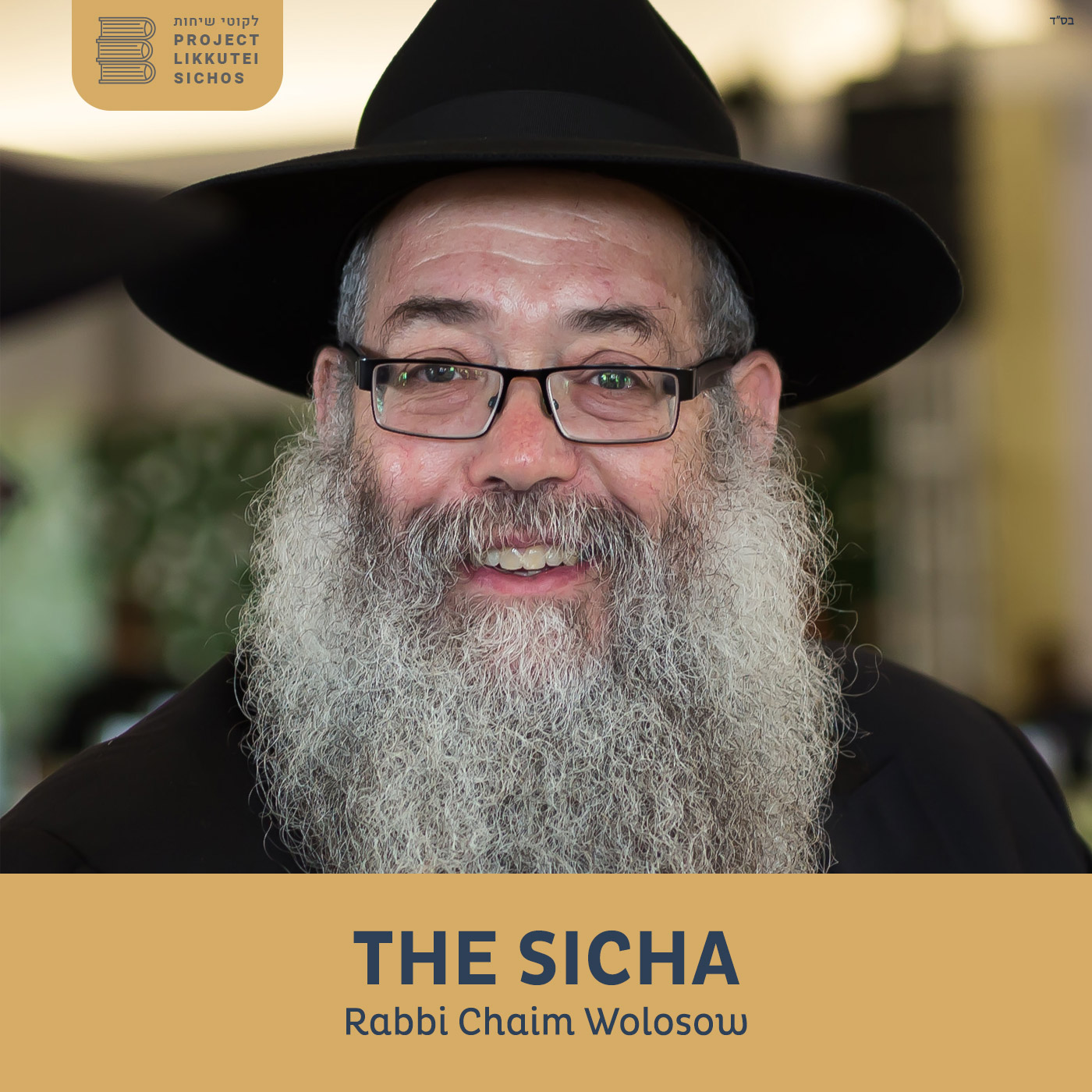
Chelek 34 - Tovo 1
Likkutei Sichos Vol. 34 – Ki Savo 1 ביכורים, חיוב מיידי, ושני אופני הודיה Bikkurim, Immediate Obligation, and Two Modes of Gratitude This sicha analyzes when the mitzvah of Bikkurim becomes obligatory—immediately upon en

Loading…

Hosted by Project Likkutei Sichos · 🇺🇸 US · EN · 200 episodes
Established thought leaders with verified media credentials.
This is the “classic” text-based shiur, covering the entire Sicha, and geared to those familiar with Likkutei Sichos. Following the learning cycle of Project Likkutei Sichos
Project Likkutei Sichos hosts The Sicha, Rabbi Chaim Wolosow, a religion show with 200 episodes published.

Likkutei Sichos Vol. 34 – Ki Savo 1 ביכורים, חיוב מיידי, ושני אופני הודיה Bikkurim, Immediate Obligation, and Two Modes of Gratitude This sicha analyzes when the mitzvah of Bikkurim becomes obligatory—immediately upon en

דיני הרמב"ם של אבנים פגומות במזבח ובבית הבחירה Rambam's Laws of Damaged Stones in the Altar and the Chosen House This sichah analyzes the Rambam's laws regarding blemished stones in the altar, ramp, Heichal, and courtyar

Rashi, Rabbeinu Tam, and Rambam on the Prohibition of Shatnez This shiur explores the disagreement between Rashi, Rabbeinu Tam, and Rambam regarding the Torah prohibition of shatnez—wearing garments of wool and linen. It

Likkutei Sichos Vol. 29 - Ki Setzei 3 - When Does Hashem Pay the Reward for Mitzvos? If the Torah commands, “You shall pay his wages on that day,” why is the reward for mitzvos deferred until the World to Come? Since all

ההבחנה בין שופטים ושוטרים בהלכה The Distinction Between Judges and Officers in Torah Law This sichah analyzes Rashi's commentary on the roles of judges and officers, explaining why both are mentioned and how their functi

Finding Merit Reveals the Hidden Good When every judge immediately finds the accused guilty, it shows that his inner good is too deeply concealed for punishment to bring atonement. When some judges argue in his favor, th

Increasing Tzedakah in Elul: Its Unique Role in Judgment and Mercy This class explores the special emphasis on increasing tzedakah during Elul, as taught in Likkutei Sichos vol. 34. The Rebbe explains why tzedakah is pri

"Not Every Abomination Is Inherent: Rashi on 'Do Not Eat Any Abominable Thing'" Rashi explains that "Do not eat any abominable thing" applies not to foods inherently forbidden, but to cases where the prohibition results

Likutei Sichos Vol. 34 – Eikev 1 – Why Moses Took Hold of the Tablets Before Breaking Them This class explores why Moses specifically 'took hold' of the tablets before breaking them, analyzing the legal and spiritual imp

The Deeper Meaning of Increasing Torah Study from Tu B'Av This Sicha explores why the Mishnah singles out the fifteenth of Av as a time to increase Torah study at night, examining the unique spiritual quality of nighttim

Why Rabbi Zeira Sought to Forget the Babylonian Talmud Why was Rabbi Zeira permitted to fast in order to forget the Babylonian Talmud? The Alter Rebbe explains that forgetting Torah is forbidden because it separates a pe

Two Forms of Divine Reward Rashi’s phrase “to take their reward” refers to a unique reward a person can claim directly in the World to Come. Ordinary mitzvah rewards can exist in this world, while the ultimate reward of

Rashi on 'See, I Have Set the Land Before You' – Literal Vision and Redemption This class analyzes Rashi's commentary on Devarim 1, exploring why the Torah uses the term 'see' regarding the promise of the Land of Israel,

Shabbos Chazon: The Parable of the Garment and the Future Beis Hamikdash This class explores why the future Beis Hamikdash is shown to every person on Shabbos Chazon through the parable of a garment. It explains how each

Why Half of Menashe Received Land East of the Jordan This class explores why Moshe gave half of the tribe of Menashe an inheritance east of the Jordan, even though they did not request it. The Rebbe explains that this ac

Why Is the Command “Whoever Kills a Person” Mentioned Only in Parashat Matot? – Rashi’s Explanation The essay explains why the law of impurity for one who kills a person appears in Parashat Matot rather than Chukat. Rash

The Sons of Korach: The Power of a Hidden Thought of Teshuvah Although Korach’s sons helped initiate the rebellion, they experienced a silent thought of repentance while still outwardly participating in it. Rashi explain

Pinchas: Living Beyond Nature — The Power of a Life of Mesirus Nefesh Why does the Gemara say that one who sees Pinchas in a dream merits a “wonder”? This talk explains that Pinchas embodied a state of constant mesirus n

“HaGomel LaChayavim”: Danger, Elevation, and the Mission of Yud-Beis Tammuz Birchas HaNes thanks Hashem for a miracle, while Birchas HaGomel thanks Him for deliverance from danger. Therefore HaGomel speaks of “the undese

Rashi on Moses and Israel: The Leader as the Entire Generation This class explores Rashi's commentary on the verses describing who sent messengers—Moses or Israel—and delves into the deeper meaning that the leader of a g
Sponsor detection runs nightly. Check back soon.
No public pitch examples yet for this show.
Generate your own personalised pitchBased on semantic analysis of episode topics and host coverage, this show is a strong guest fit for executives in:
Industry fit is computed by PitchCentric using vector embeddings of the show's episode catalog.
Shows with the most semantically similar episode content. Pitch one, pitch all; producers cluster.


To pitch The Sicha, Rabbi Chaim Wolosow, visit https://thesicharcw.captivate.fm for contact information, then craft a tight one-paragraph hook that ties your expertise to a gap in their recent religion coverage.
The Sicha, Rabbi Chaim Wolosow is hosted by Project Likkutei Sichos. The show is categorised under religion (spirituality) and has published 200 episodes.
The Sicha, Rabbi Chaim Wolosow has published 200 episodes.
The Sicha, Rabbi Chaim Wolosow regularly covers religion, spirituality, judaism. It sits in the religion category, with a spirituality focus.
The Sicha, Rabbi Chaim Wolosow is accessible for guests with genuine religion expertise. A personalised, episode-aware pitch will still outperform a generic one every time.
The Sicha, Rabbi Chaim Wolosow hasn't explicitly signalled guest openness in recent episodes. That doesn't rule out pitching. your hook just needs to be especially compelling and relevant to their recent content.
Episodes of The Sicha, Rabbi Chaim Wolosow average 81 minutes, giving guests a long-form format with plenty of time to expand on their expertise.
Our data rates The Sicha, Rabbi Chaim Wolosow's guest bar at 80/100 (Premium tier). Established thought leaders with verified media credentials. Sign in to PitchCentric to see how your own Pod Score compares against this show.
Methodology. Booking Probability™ blends Listen Score, 30-day Virality, open-to-guests detection, and Apple ratings. Data refreshed every 60 minutes. Listen Score and Booking Probability are calculated by PitchCentric. Last enriched 5 days ago.