The making and storage of memory
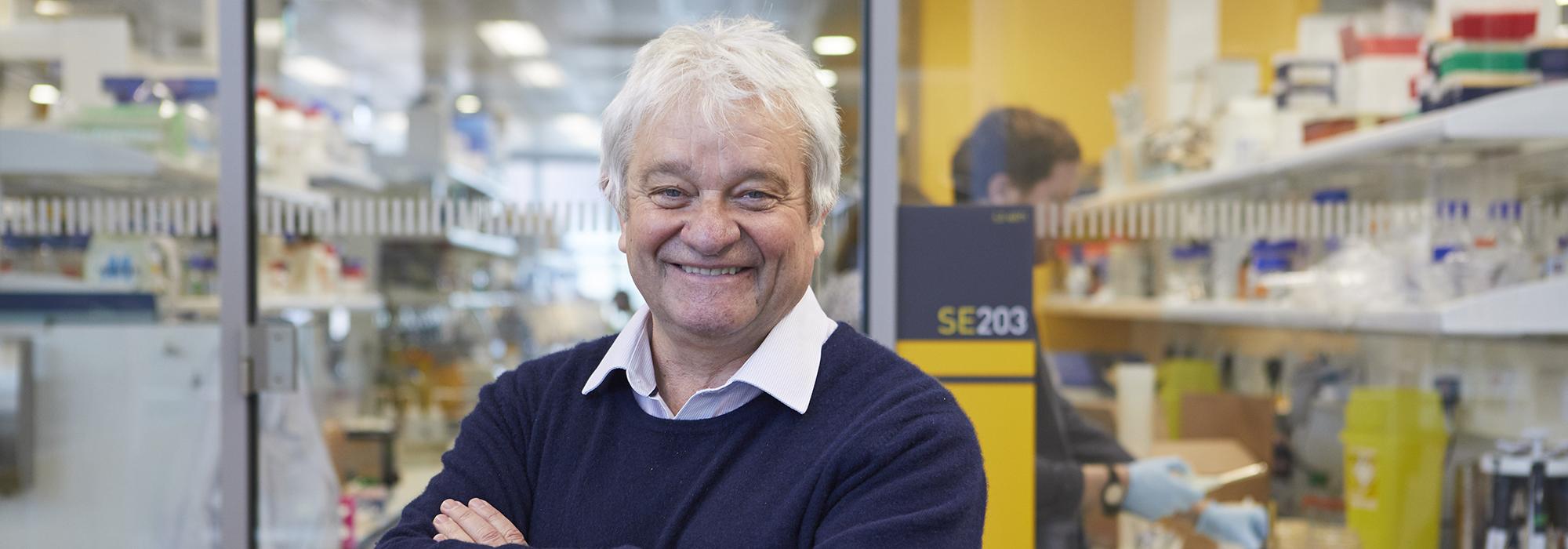
Professor of neurobiology Carlos Lois at the California Institute of Technology describes experiments using Australian zebra finches to investigate how memory is stored in the brain.

Hosted by ABC Australia · 🇺🇸 US · EN · 248 episodes
Established thought leaders with verified media credentials.
The Science Show gives Australians unique insights into the latest scientific research and debate, from the physics of cricket to prime ministerial biorhythms.
ABC Australia hosts The Science Show - Separate stories podcast, a science show with 248 episodes published.

Professor of neurobiology Carlos Lois at the California Institute of Technology describes experiments using Australian zebra finches to investigate how memory is stored in the brain.

Amy Briggs takes us to Mulligans Flat, a wildlife sanctuary north of Canberra to see preparations to quarantine a threatened marsupial, the eastern quoll.

The Science Show offers views on education from student Chloe Kwan, Superstar of STEM Jennifer Baker and indigenous rights campaigner Noel Pearson.

Ian Lowe is co-president of the Australian Peace and Security Forum and has many ideas about peaceful alternatives - beyond what is dismissed as ‘woke’.

Old satellites and bits of space junk regularly fall back to Earth, burning up as they pass through the atmosphere. All this burning metal causes a chain reaction and ultimately destroys ozone molecules, which keep us sa

In 1926, the organisation now known as Family Planning Australia was created and eugenics had as much hand in the birth control movement as did feminism. Eugenics is not part of the organisation today, and it did not dis

Dan Falk takes us 2Km underground to SNOLAB, the Sudbury Neutrino Observatory in northern Ontario, a Canadian science laboratory specialising in neutrino and dark matter physics sitting in a working nickel mine.

Australian mathematician Terence Tao, now a professor at the University of California Los Angeles, was awarded the AC – The Companion of the Order of Australia on 8th June 2026.

Australian zebra finches are being used to understand how human brains work and answer fundamental questions such as where memories are stored.

Ever wondered how your sweater became bright orange, or how your leather shoes were made? Chances are, at some point in the process, hazardous chemicals like lead or azo dyes were used. Jonathan Webb speaks to Ellen Phid

Birds on a US university campus have been seen to change in response to being fed. Evolution in front of our eyes.

A cricket attends to a damaged antenna. Is that a true indication of pain?

Logging in the Daintree rainforest in Far North Queensland began in the 1890s. Recently it has been impacted by dairying. Susan Laurance describes the restoration underway.

Based on David Bodanis’s book, E=mc2 The Musical introduces students and audiences to the human story behind the famous equation.

Rare variations exist making an IOC gene test for sex imperfect.

A new giant dinosaur has been uncovered in Thailand: the largest ever found in South-East Asia. More than 100 million years ago, Nagatitan towered over the Earth — and has now been described by a team of researchers from

This month Sam Berkovic becomes the 21st president of the Australian Academy of Science. He chats with Robyn Williams about the challenges for science and the Academy.

Despite losing his vast garden to bushfire, Kingsley Dixon, like the environment, is resilient and is bouncing back.

Plants have devised a great many ways of exchanging genes, creating seed, and ensuring the continuation of each species. Chantelle Doyle introduces us to the wonderful world of pollination in its many forms.

Karen Laurie at CSL Seqirus describes the steps which would lead to vaccine manufacture.
Sponsor detection runs nightly. Check back soon.
No public pitch examples yet for this show.
Generate your own personalised pitchBased on semantic analysis of episode topics and host coverage, this show is a strong guest fit for executives in:
Industry fit is computed by PitchCentric using vector embeddings of the show's episode catalog.
Shows with the most semantically similar episode content. Pitch one, pitch all; producers cluster.


The Science Show - Separate stories podcast has a verified contact on file. Create a free PitchCentric account to access it and generate a personalised pitch in seconds. Research at least 3 recent episodes first and lead with a specific angle that serves their science audience.
The Science Show - Separate stories podcast is hosted by ABC Australia. The show is categorised under science (natural) and has published 248 episodes.
The Science Show - Separate stories podcast has published 248 episodes.
The Science Show - Separate stories podcast regularly covers science, natural. It sits in the science category, with a natural focus.
The Science Show - Separate stories podcast is accessible for guests with genuine science expertise. A personalised, episode-aware pitch will still outperform a generic one every time.
The Science Show - Separate stories podcast hasn't explicitly signalled guest openness in recent episodes. That doesn't rule out pitching. your hook just needs to be especially compelling and relevant to their recent content.
Episodes of The Science Show - Separate stories podcast average 10 minutes. a focused format where a clear narrative arc and tight preparation matter most.
Our data rates The Science Show - Separate stories podcast's guest bar at 80/100 (Premium tier). Established thought leaders with verified media credentials. Sign in to PitchCentric to see how your own Pod Score compares against this show.
Methodology. Booking Probability™ blends Listen Score, 30-day Virality, open-to-guests detection, and Apple ratings. Data refreshed every 60 minutes. Listen Score and Booking Probability are calculated by PitchCentric. Last enriched 10 days ago.