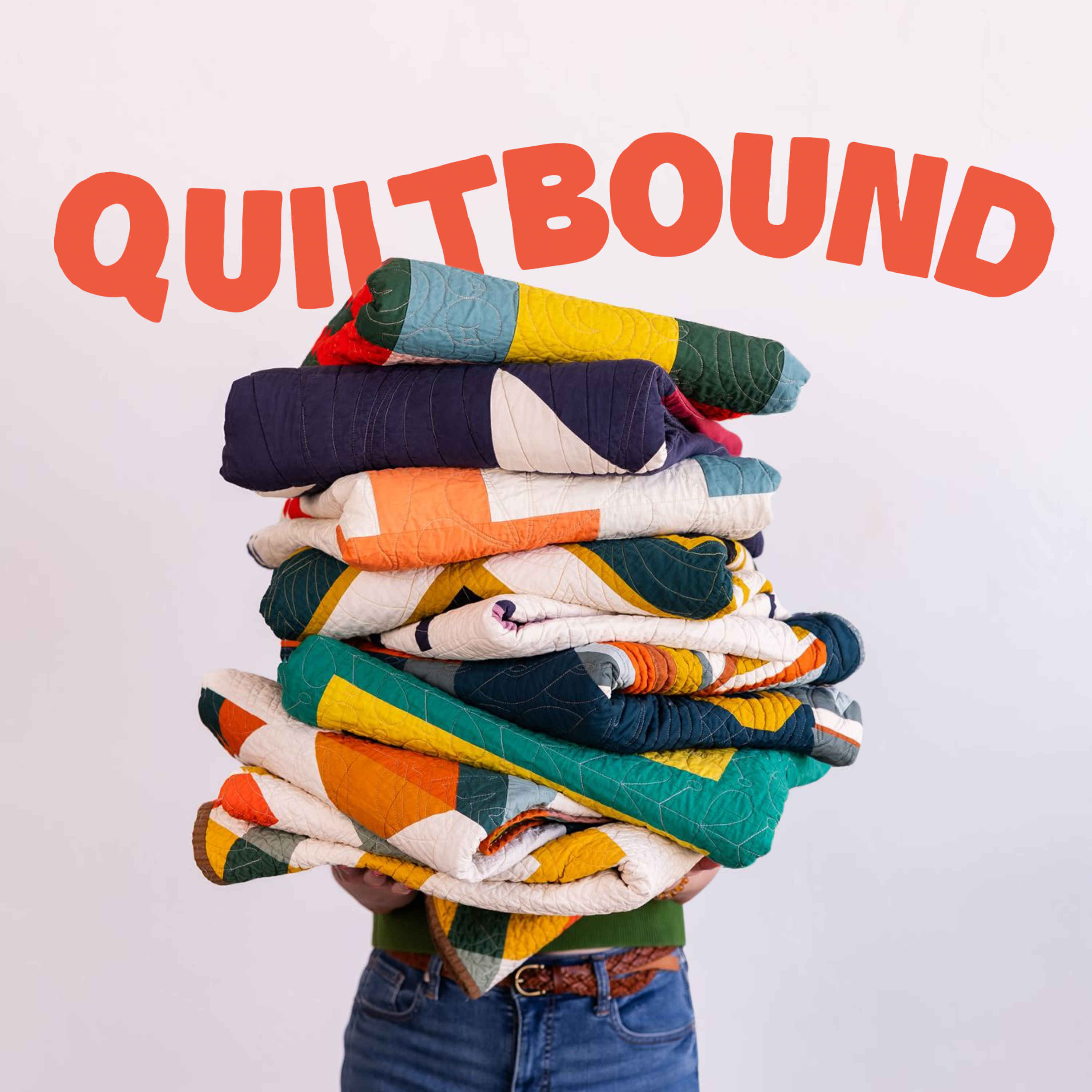
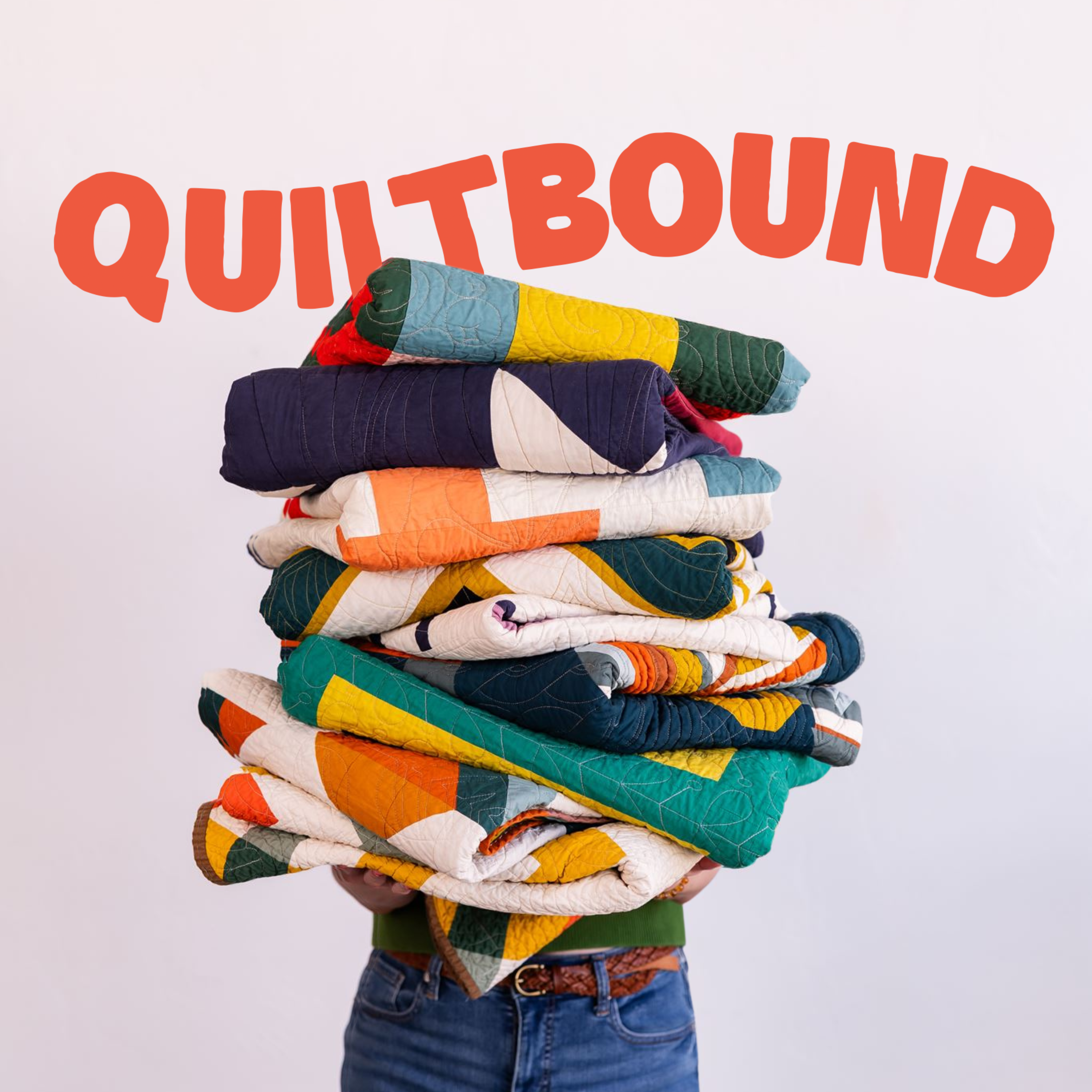
The Quiltbound Podcast is a cozy little corner of the quilting world for makers who love the stories, side quests, and creative rabbit holes that come with making things by hand. Hosted by Megan Fowler of Quiltbound, each episode explores quilting, creativity, community, and the scenic routes that shape our work. You’ll hear thoughtful conversations with quilters, artists, shop owners, historians, authors, and creative folks who remind us that quilting is never just about fabric. It’s about memory, experimentation, friendship, curiosity, and finding your own way stitch by stitch. Whether we’re talking about technique, creative confidence, quilt history, local shops, handmade business, or the weirdly specific joy of starting a project you absolutely did not need to start, this show is here to keep you company while you sew. Explore patterns, blog posts, podcast notes, and more at <a rel="noopener noreferrer nofollow" href="http://quiltbound.com"
Pitch Analysis
Required Pod Score for this show. PitchCentric checks your profile against host openness, topical fit, and audience signals before you generate a pitch.
Contact path
Verified email
Booking probability
29%
Guest openness
Selective
Verified email on file
80/100
Required Score
Sign up to generate a grounded pitch for The Quiltbound Podcast.
The Quiltbound Podcast is a leisure podcast hosted by Megan Fowler, with 14 episodes on record and a Required Pod Score of 80. PitchCentric scores this show on Booking Probability, Listen Score, and live audience signals refreshed every 24 hours.
About the host
Megan Fowler hosts The Quiltbound Podcast, a leisure show with 14 episodes published.
Our AI reads these to draft pitches. Use them as grounding for a pitch that cites a real guest and a specific topic.
The Quiltbound Podcast
Quilting History: From the 1930s to Today (Part 2) with Emily of Patchwork Revival
Apr 6, 202659 min
In this special crossover episode, I’m joined by Emily, host of the Patchwork Revival podcast, as we continue our conversation on the history of quilting in America. This is Part 2 of our series, so if you haven’t listened to Part 1 yet, be sure to head over to the Patchwork Revival podcast first—we cover early American quilting through the 1930s and set the stage for everything we dive into here. In this episode, we pick up in the 1930s and explore how quilting evolved through the Great Depression, World War II, the Quilt Revival of the 1970s, and into the modern quilting world we know today. We talk about how quilters adapted during times of scarcity, how community shifted from small local groups to nationwide connections, and how quilting grew into the creative, expressive craft we love today. We also chat about quilting co-ops, feed sack quilts, the rise of quilt guilds and shows, and how television (hello PBS!) helped shape how generations of quilters learned new skills. This episode is all about connection—how quilters have always found ways to gather, create, and share knowledge, even as the world around them changed. In This Episode, We Cover: Quilting during the Great Depression and WPA-era programs Feed sack quilts and resourcefulness in times of scarcity Quilting co-ops and community-based income The Quilt Revival of the 1970s and the Bicentennial The rise of quilt guilds, shows, and exhibitions Learning through television with early quilting shows How quilting shifted from necessity to creative expression 🔗 Resources & Links Mentioned: Listen to Part 1 on the Patchwork Revival podcast: https://podcasts.apple.com/us/podcast/patchwork-revival-a-quilting-podcast/id1729505286 Patchwork Revival Podcast: https://patchworkrevivalstudios.com/podcast Patchwork Revival Podcast Instagram: https://www.instagram.com/patchworkrevivalstudios Patchwork Revival Podcast YouTube: https://www.youtube.com/@PatchworkRevivalStudios International Quilt Museum: https://www.internationalquiltmuseum.org A New Deal for Quilts by Janneken Smucker Old Patchwork Quilts and the Women Who Made Them by Ruth Finley The Romance of the Patchwork Quilt in America by Carrie Hall & Rose Kretsinger Let’s Keep Exploring: If you loved this episode, come join me inside Quilt Scouts where we turn ideas like this into hands-on projects, badges, and creative adventures. And if this episode sparked something for you, I’d love to hear—what part of quilting history surprised you the most?
Catalog Your Quilts & Preserve Their Story with Kiley Ferons
Apr 2, 202643 min
What if your quilts could tell their full story—who they were made for, what season of life you were in, even the fabrics you used? In this episode, I’m joined by Kiley Ferons, founder of Kiley’s Quilt Room and co-creator of the My Quilts app. We’re diving into something many quilters don’t think about until it’s too late: documenting and cataloging your quilts. Kiley shares how her quilting journey evolved from longarming to pattern writing, fabric design, and now building a quilting-specific app with her husband. We talk about why quilt documentation matters (especially for future generations), how quickly quilt stories can get lost, and how to start cataloging your projects in a way that feels simple and sustainable. If you’ve ever forgotten when you made a quilt—or who you gave it to—this episode is your gentle nudge to start preserving your quilting legacy, one project at a time. In This Episode, We Cover: Kiley’s quilting journey (longarmer → pattern designer → fabric designer → app creator) The inspiration behind the My Quilts app Why documenting your quilts matters more than you think What happens when quilt stories aren’t preserved What to include when cataloging a quilt (photos + details) How to track works-in-progress and finished quilts The social and community features inside the app Built-in quilting calculators and tools Simple tips to start cataloging without overwhelm 🛠️ Resources & Links 📱 My Quilts App https://myquilts.app 🧵 Kiley’s Quilt Room https://kileysquiltroom.com 📸 Modish Quilter Magazine (mentioned in episode) https://modishquilter.com 🏛️ Quilt Alliance https://quiltalliance.org 🏛️ International Quilt Museum https://www.internationalquiltmuseum.org 🎒 Related Quilt Scouts Resources 🏕️ Quilt Scouts Membership https://quiltscouts.com 📓 Quilt Scouts Badge Logbook https://quiltscouts.com 🎖️ New Badge Alert! This episode pairs with a brand new Quilt Cataloger badge all about cataloging your quilts—because your projects deserve more than a dusty pile and a vague memory 😉 https://quiltscouts.myshopify.com/products/quilt-cataloger 💬 Favorite Takeaway Feeling overwhelmed by the idea of documenting all your quilts? Start with one. Just one project is enough to begin building your quilt story. 🔔 Don’t Miss an Episode If you loved this episode, make sure you’re following along so you never miss a new campfire chat. New episodes drop weekly (unless it’s my birthday… then we celebrate first 🎂).
From Fabric to Friendship: Sandy Weise of Little Sandy’s Quilt Shop
Mar 19, 202638 min
What really happens inside a quilt shop? In this episode, I’m sitting down with Sandy, owner of Little Sandy’s Quilt Shop in Arvada, Colorado—a cozy, community-centered shop that started as a spontaneous idea and quickly became something much bigger. Sandy shares the story behind opening her shop during a season of life that was already full (hello, five kids 😅), and what it’s actually like to run a quilt business—from inventory and emails to balancing family life and the unexpected emotional role quilt shops often play. We talk about how quilt shops become more than just places to buy fabric. They turn into gathering spaces where friendships are formed, stories are shared, and people move through some of life’s biggest moments—new babies, grief, celebrations, and everything in between. We also dive into: What surprised Sandy most about owning a quilt shop How quilting helps people process life and tell their stories Why shopping in-person hits different than online What it looks like to run a Quilt Scouts Base Camp without a classroom space Creative community experiences (like stargazing on quilts under the Colorado sky ✨) How small shops create big impact in their local communities This episode is a love letter to local quilt shops—the heart, the people, and the magic that happens between the bolts of fabric. Resources Mentioned: Little Sandy’s Quilt Shop website: https://littlesandysquiltshop.com Little Sandy’s Quilt Shop Newsletter: https://www.littlesandysquiltshop.com/newsletter.htm Little Sandy’s Quilt Shop on Instagram & Facebook: @littlesandysquiltshop Quilt Scouts: https://quiltscouts.com Garden of Quilts (Utah event) Lori Holt fabrics (Bee in My Bonnet) Connect with Quilt Scouts: Join the Quilt Scouts membership: https://quiltscouts.circle.so Follow along on Instagram: @quiltscouts Listener Love: If you enjoyed this episode, make sure to follow the podcast and leave a review—it helps more quilters find their way to the campfire 💛 Happy trails, Megan
Preserving Quilt History with Carolyn Ducey of the International Quilt Museum
Mar 12, 20261h 6m
What does it take to preserve quilts for future generations? In this episode of the Quilt Scouts Podcast , I’m joined by Carolyn Ducey , former curator of collections at the International Quilt Museum in Lincoln, Nebraska. Carolyn spent 27 years helping grow and care for one of the largest publicly held quilt collections in the world, which now includes around 9,000 quilts and textile objects from across centuries and cultures. We talk about what visitors can expect when they step inside the museum, how quilts are preserved and cared for on an institutional level, and why quilts are such powerful historical documents. Carolyn shares practical advice for preserving quilts at home, including how to protect textiles from light damage, why quilts should be refolded regularly, and why archival storage matters for heirloom pieces. We also dive into the importance of labeling your quilts . Carolyn encourages quilters to document the who, what, where, when, and why behind their quilts so future generations — and future quilt historians — can better understand the stories behind the work. If you can’t visit the museum in person, the International Quilt Museum offers many ways to explore its collection virtually, including an online quilt database, virtual exhibition tours, recorded lectures, and educational resources about quilt history. This episode pairs perfectly with the International Quilt Museum Badge and Quilt Historian Badge inside Quilt Scouts. Resources Mentioned in This Episode International Quilt Museum https://www.internationalquiltmuseum.org Plan Your Visit https://www.internationalquiltmuseum.org/visit Current Exhibitions https://www.internationalquiltmuseum.org/exhibitions World Quilts (educational quilt history resource) https://worldquilts.quiltstudy.org Quilt of the Month newsletter https://www.internationalquiltmuseum.org/about/quilt-month International Quilt Museum YouTube Channel https://www.youtube.com/c/internationalquiltmuseum Quilt Index (quilt research database) https://quiltindex.org Craft in America https://www.craftinamerica.org Enjoy the episode? Follow or subscribe to the Quilt Scouts Podcast so you don’t miss future episodes. Leaving a review is one of the best ways to help more quilters discover the show. You can find more from Quilt Scouts at quiltscouts.com .
Stargaze on a Quilt: Light Pollution, Dark Skies, and Quilting with Sarah Martin
Mar 5, 202634 min
In this episode, I’m joined by Sarah Martin, Chief Development Officer at Dark Sky International, a global nonprofit working to reduce light pollution and restore our connection to the night sky. We talk about: What light pollution actually is The five principles of responsible outdoor lighting How artificial light impacts wildlife and even scientific discovery How to find International Dark Sky Places around the world Simple ways to advocate for darker skies in your own neighborhood Resources Mentioned in This Episode Dark Sky International Website: https://darksky.org Find a local chapter: https://darksky.org/who-we-are/chapters/ Five Principles of Responsible Outdoor Lighting: https://darksky.org/resources/guides-and-how-tos/lighting-principles/ International Dark Sky Places interactive map: https://darksky.org/what-we-do/international-dark-sky-places/ Community advocacy toolkits: https://darksky.org/what-we-do/advancing-responsible-outdoor-lighting/darksky-outdoor-lighting-codes/ “How to Talk to Your Neighbor” guide: https://darksky.org/resources/what-is-light-pollution/light-pollution-solutions/lighting/my-neighbors-lighting/ Capture the Dark Photography Contest (submissions open in June, winners announced in August) https://darksky.org/what-we-do/events/photo-contest/ Follow on Instagram: https://www.instagram.com/darksky_org International Dark Sky Week April 13–20 Dedicated website with toolkits, trivia night guides, book display ideas, and community event resources https://idsw.darksky.org Stargazing App Star Guide (mobile app for identifying stars, planets, and satellites) Books Sarah Recommends Sleepless by Annabel Abbs-Streets Night Magic by Leigh Ann Henion Want to Keep the Adventure Going? Quilt Scouts is an online membership for adventurous quilters who want more creativity, confidence, and connection — one badge at a time. 👉 Learn more and join here: https://quiltscouts.com
Every question we get asked before someone starts their trial.
If you have a concern about deliverability, AI quality, data privacy, or whether this will actually work for your specific situation, it's probably answered below.
What is the difference between Founder Solo and Founder Pro?
Founder Solo gives you 50 AI pitches per month using the credit model (Standard pitches cost 1 credit, Enriched pitches cost 2). Founder Pro raises that to 200 credits per month and adds full Booking Probability access, unlimited Magic Match, Apollo enrichment credits, and data export capabilities. Both plans use the same credit system, so you can stretch your monthly budget further by using Standard-mode drafting.
How do agency tiers work?
Agency tiers have no base fee. You pay per managed client and per talent profile. Agency Standard is $199 per client per month; Agency Pro is $399 per client per month. Both add $39 per talent profile per month. Your own team's user seats are always free.
What is a talent profile?
A talent profile represents one person (founder, executive, or spokesperson) you are booking onto podcasts. It includes their bio, topics, headshots, and outreach history. Team plans include 5 profiles; agency plans are pay-as-you-go.
Can I switch plans later?
Yes, at any time. Upgrades take effect immediately; downgrades apply at the end of the current billing period. Contact support if you need help migrating between plan families.
Do you offer a free trial?
Every paid plan includes a 15-day free trial. Your card is saved at signup but you will not be charged until day 16. Cancel any time from your dashboard.
What happens if I cancel?
You keep access until the end of your current billing period. No charges after that. Your data is retained for 30 days in case you reactivate.
Is the 20% annual discount automatic?
Yes. Select Annual on the pricing toggle and the discounted price is applied automatically at checkout. The annual price shown is the full year cost.
What if I have more than 50 profiles or 20 clients?
That is our Enterprise tier. Contact our sales team and we will build a custom plan with volume pricing, a dedicated account manager, and SLA guarantees.