Oct 15, 202628 minS2
For most of medical history, the menstrual cycle has been treated as an inconvenience to manage, not information to read. Zarah Khondoker sits down with Laura Federico and Morgan Miller, the authors of The Cycle Book...


Through medicine, science, economics, and policy, the conversation around women’s health is far broader than we’ve allowed it to be. Yet for decades, the word “hormonal” has often been used to dismiss women’s symptoms rather than investigate them. Behind that label lies one of the most complex biological systems in the human body—one that remains significantly underfunded and understudied. Despite affecting half the global population, women’s health research receives a disproportionately small share of biomedical funding. Many conditions that affect millions—endometriosis, polycystic ovary syndrome, infertility, and pregnancy-related complications—remain poorly understood, with limited datasets, delayed diagnoses, and few effective treatments. Historically, clinical research has often excluded women or failed to account for sex-specific biology, leaving major gaps in the scientific evidence that guides care today.. On Hormonal , Zarah Khondoker speaks with scientists, clinicians, policymakers, and investors working to close these gaps. Together, they explore the biology, the data, and the capital shaping the future of women’s health—examining why the science has fallen behind, and what it will take to fund the research that half the world depends on.
Required Pod Score for this podcast. PitchCentric checks your profile against host openness, topical fit, and audience signals before you generate a pitch.
Contact path
Verified email
Booking probability
36%
Guest openness
Selective
Sign up to generate a grounded pitch for The Hormonal Podcast.
Signup to Generate a PitchThrough medicine, science, economics, and policy, the conversation around women’s health is far broader than we’ve allowed it to be. Yet for decades, the word “hormonal” has often been used to dismiss women’s symptoms rather than investigate them. Behind that label lies one of the most complex biological systems in the human body, one that remains significantly underfunded and understudied.
Recent episodes include "Reading the Cycle with Laura Federico and Morgan Miller" (15 October 2026, 28 minutes), "What Your Mammogram May Reveal About Your Heart With Dr. Anjali Malik" (2 October 2026, 18 minutes), and "A New "Period" of Time: Menstruation, Research, Innovations and Interventions That Are Still Lacking" (25 September 2026, 26 minutes).
The Hormonal Podcast publishes roughly every two weeks, with episodes averaging 29 minutes across 8 episodes.
Booking probability for The Hormonal Podcast is 36%, and the host is rated Selective on guests. The Hormonal Podcast requires a Pod Score of 80 or higher. The Hormonal Podcast's contact route on record: verified email.
The strongest fits for The Hormonal Podcast are Health & Wellness Services. The Hormonal Podcast has a health audience.
The Hormonal Podcast is a health podcast with 8 episodes published.
Our AI reads these to draft pitches. Use them as grounding for a pitch that cites a real guest and a specific topic.
For most of medical history, the menstrual cycle has been treated as an inconvenience to manage, not information to read. Zarah Khondoker sits down with Laura Federico and Morgan Miller, the authors of The Cycle Book...

In this episode of The Hormonal Podcast , host Zarah Khondoker sits down with Dr. Anjali Malik , a board-certified, fellowship-trained breast imaging radiologist at Washington Radiology and a women’s health advocate, to...

Episode #1
We’ve been taught to hide our periods. But what has that taught medicine to overlook? We've always collected blood, tested urine. Yet menstrual blood has largely been treated as something to dispose of, not something to...

<p>Join Zarah in the studio as she interviews Rico Herre about his feature film, Impure, which describes the harrowing consequences of not speaking up about menstruation. The stigma in the Global South continues to...

<p>For far too long, we’ve used the word “hormonal” to undermine women and their reproductive health. But what exactly does “hormonal” mean? Hormonal encapsulates the parts of reproductive health we don’t think about...

<p>In this episode, Zarah interviews Dr. Rene Almeling, professor of Sociology at Yale University, and author of GUYnecology: The Missing Science of Male Reproductive Health pertaining to men's fertility. Why do we not...
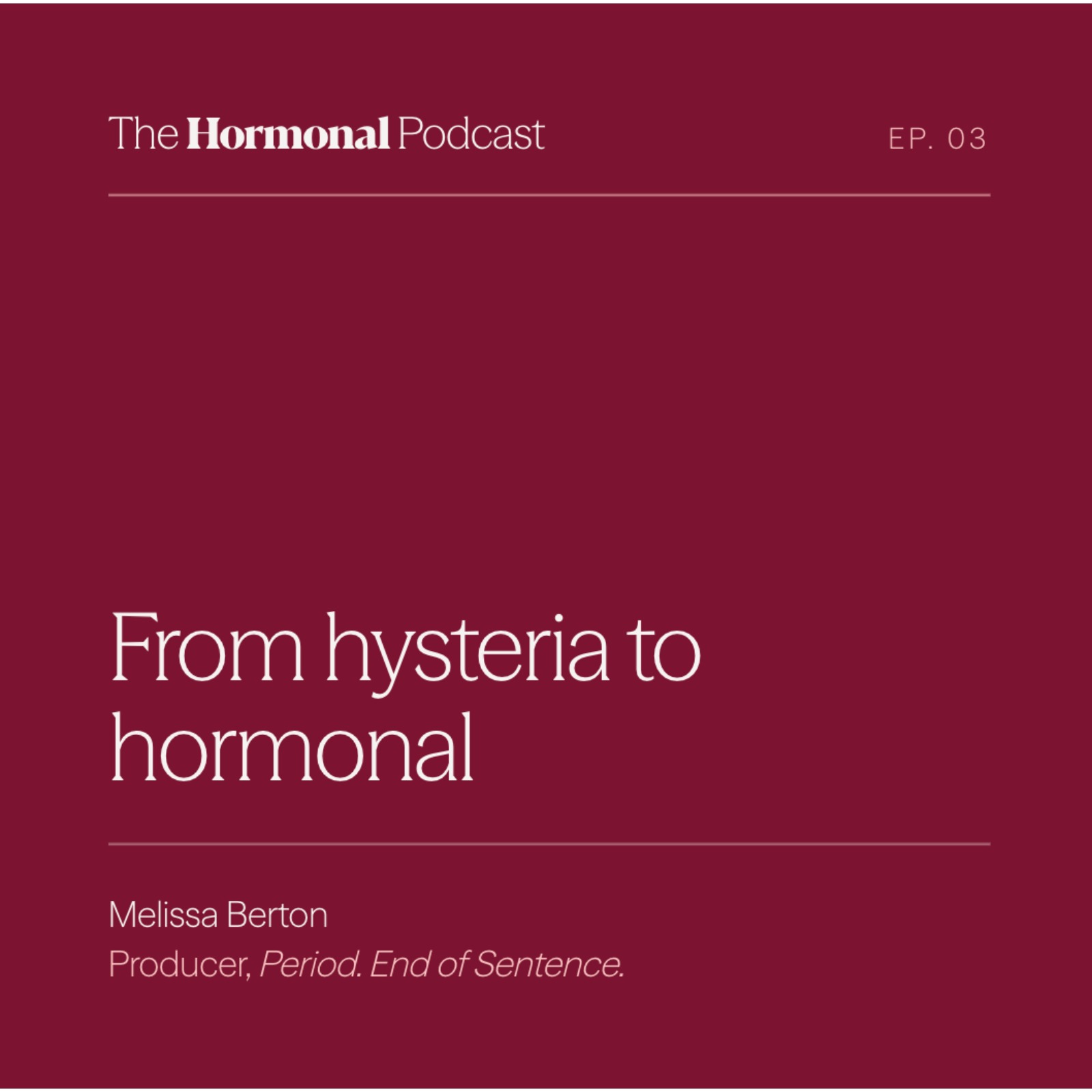
<p>In this episode, Melissa and I talk about where the origins of the word "hysterical" comes from, and its modern translation- which is calling women "hormonal". As we travel back through the pages of history with...

<p>There are so many aspects of hormones and reproductive health that we don't necessarily think of when introducing these conversations, for example, the intersections of law, medicine, technology, literature, and...

<p>In The Hormonal Podcast's first episode, Zarah Khondoker and Dr. Randi Hutter Epstein speak about their common interest in hormones and its inception. As Dr. Epstein talks about her book, Aroused: The History of...
Recent guests on The Hormonal Podcast. Study who booked and why before you pitch.
psychotherapist, AASECT-certified sex therapist, writer, and consultant
certified professional midwife, lactation consultant, activist, and birth center founder, Soft Corner Midwifery & Birth Center
Associate Professor of Sociology, History of Medicine, American Studies, and Public Health, Yale University
adjunct professor at Columbia University; lecturer at Yale University; writer in residence at Yale Medical School, Yale School of Medicine
PitchCentric classifies The Hormonal Podcast under these industries. Guests from them are the closest fit, and each links to the best podcasts in that industry.
Shows with the most semantically similar episode content. Pitch one, pitch all; producers cluster.
Is this podcast yours and you'd like to remove or correct details? Request removal or email privacy@pitchcentric.com.
Questions about the free trial? See the pricing FAQ