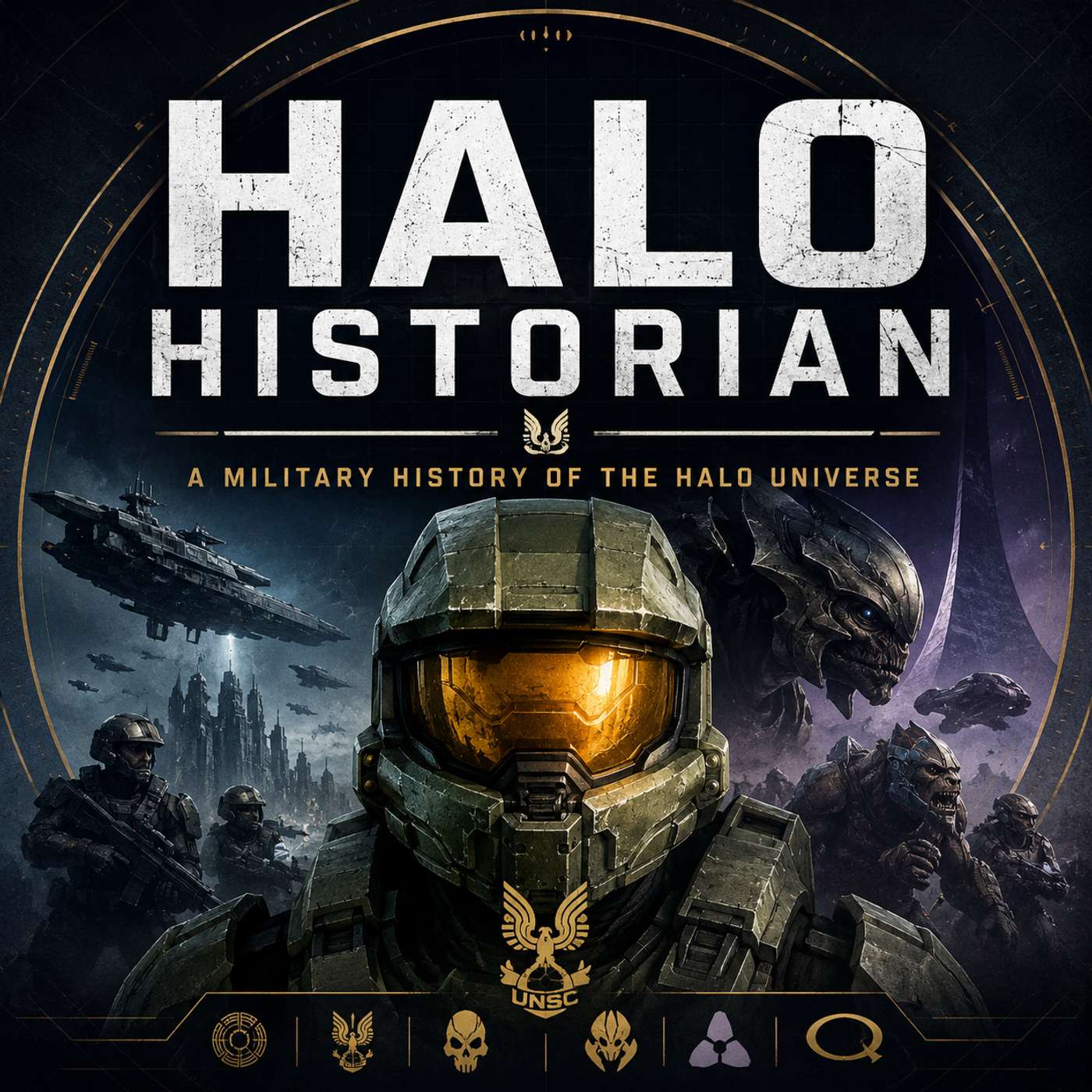
The Halo Historian approaches the Halo universe as military history rather than simply science-fiction lore. From the ancient wars of the Forerunners and Flood to the Human-Covenant War, the fall of Reach, the battles for Earth and the Ark, and the conflicts that followed, the series examines how armies, fleets, commanders, technologies, and political systems shaped the course of war across the galaxy. Each episode explores Halo through the questions a military historian would ask: How were forces organized and supplied? Why did commanders make the decisions they did? How did orbital warfare, intelligence, logistics, special operations, and technological superiority determine victory or defeat? Along the way, Halo Historian examines the UNSC, Covenant, Spartans, ODSTs, Forerunners, Banished, Flood, and the commanders and soldiers whose actions changed the history of the Halo universe. Halo Historian: A Military History of the Halo Universe is part of Imagined Battlefield, where fictional wars are studied with the same seriousness as real ones.
Pitch Analysis
Required Pod Score for this show. PitchCentric checks your profile against host openness, topical fit, and audience signals before you generate a pitch.
Contact path
Public web form
Booking probability
36%
Guest openness
Selective
80/100
Required Score
Sign up to generate a grounded pitch for The Halo Historian: A Military History of the Halo Universe.
What is The Halo Historian: A Military History of the Halo Universe?
The Halo Historian: A Military History of the Halo Universe is a fiction podcast hosted by Unknown Host, with 0 episodes on record and a Required Pod Score of 80. PitchCentric scores this show on Booking Probability, Listen Score, and live audience signals refreshed every 24 hours.
About the host
Unknown Host hosts The Halo Historian: A Military History of the Halo Universe, a fiction show with 0 episodes published.
Our AI reads these to draft pitches. Use them as grounding for a pitch that cites a real guest and a specific topic.
Episode #25
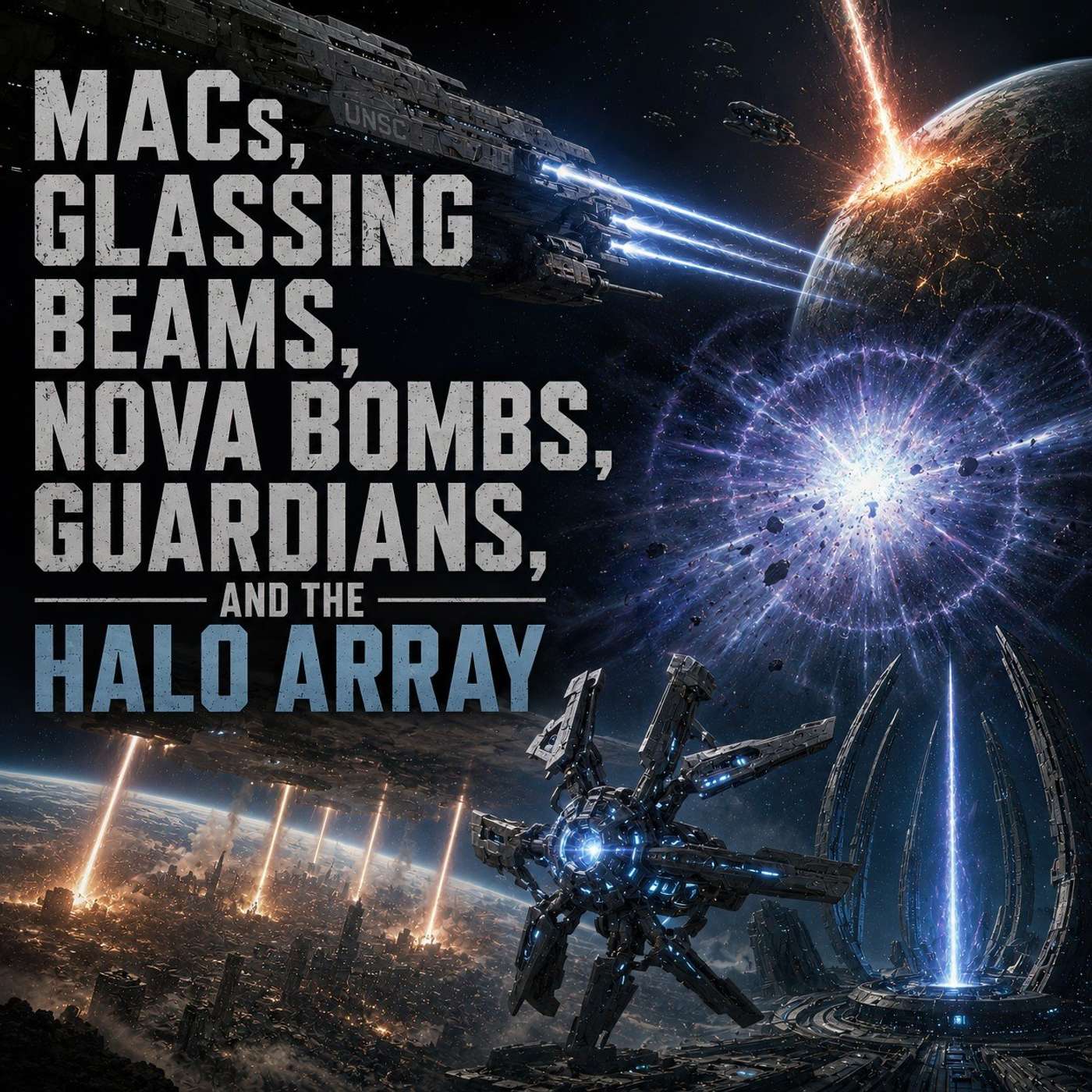
MACs, Glassing Beams, NOVA Bombs, Guardians, and the Halo Array
Aug 23, 202627 minS10
Halo’s largest weapons demonstrate how military technology escalates from destroying soldiers to threatening civilizations. Magnetic Accelerator Cannons turn kinetic energy into naval weapons capable of killing capital ships and defending planets. Covenant energy projectors can cut through spacecraft or glass the surface of human worlds. NOVA bombs push humanity’s nuclear arsenal toward destructive effects capable of annihilating fleets and devastating planetary systems. Forerunner Guardians operate on another scale again, suppressing entire civilizations through overwhelming strategic power and disabling the military infrastructure needed to resist. Above them all stands the Halo Array: weapons built not to defeat an enemy flee...
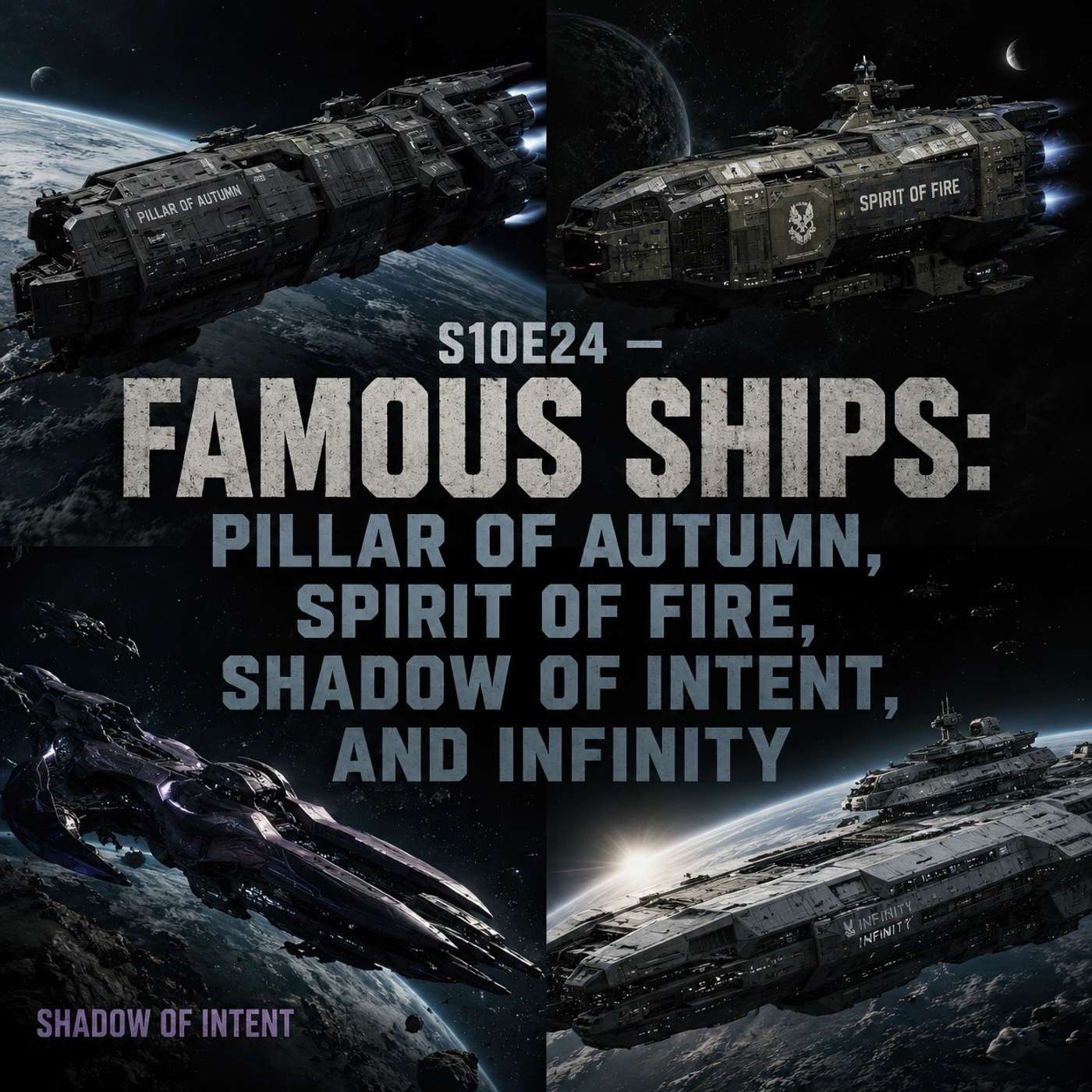
Famous Ships: Pillar of Autumn, Spirit of Fire, Shadow of Intent, and Infinity
Aug 23, 202626 minS10
Some warships become historically important because they are powerful. Others become important because of where they were when history changed. The Pillar of Autumn escapes Reach, discovers Alpha Halo, and becomes the weapon that destroys the ring. Spirit of Fire leaves the wider war behind after sacrificing its slipspace drive at Shield World 0459, then returns decades later to challenge the Banished on the Ark. Shadow of Intent carries Rtas ’Vadum and Sangheili forces through the alliance that destroys Truth and contains the Flood. Infinity embodies humanity’s postwar confidence as an enormous, technologically advanced flagship—only to be ambushed at Zeta H...
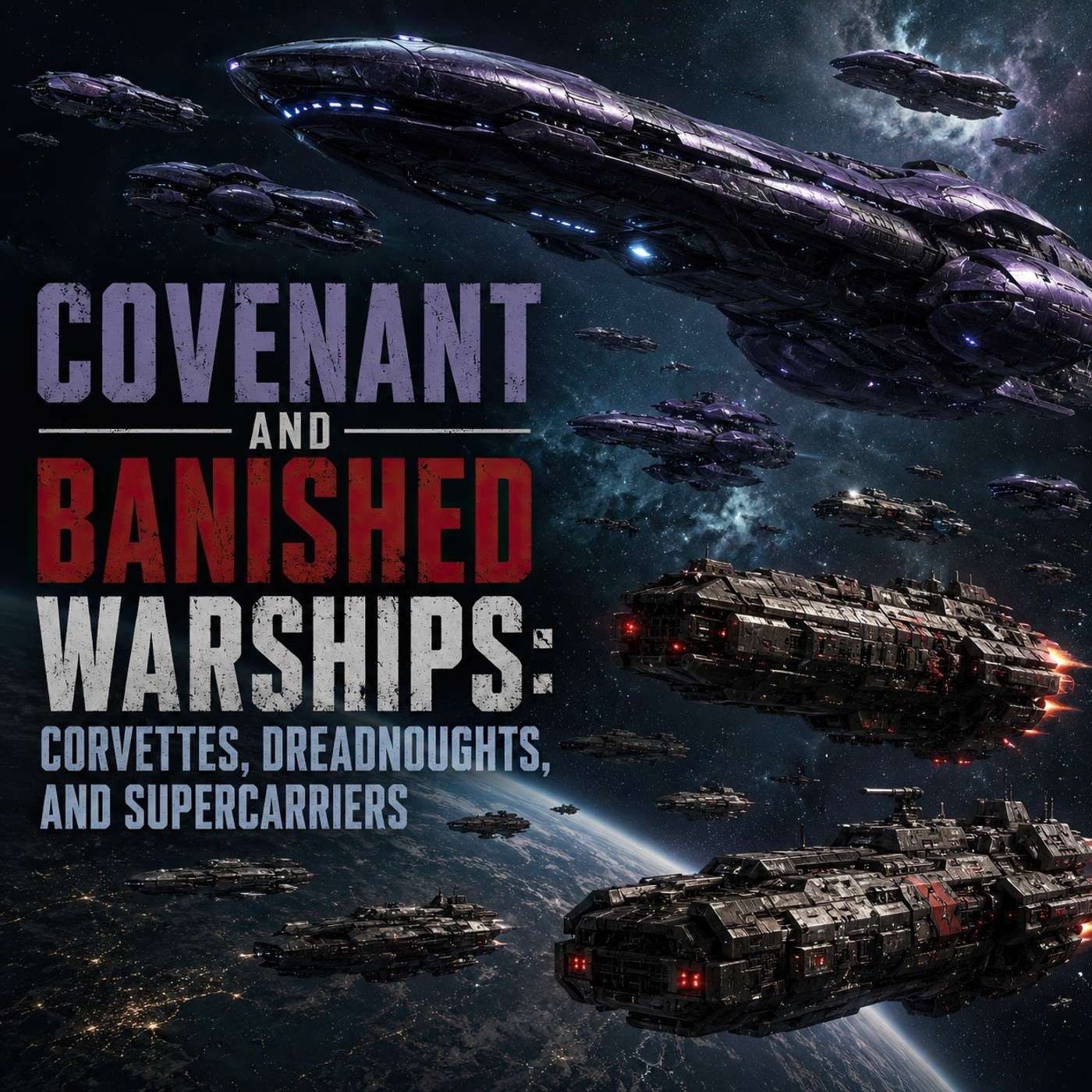
Covenant and Banished Warships: Corvettes, Dreadnoughts, and Supercarriers
Aug 23, 202626 minS10
Covenant naval power ranges from relatively small corvettes to enormous supercarriers capable of dominating entire planetary campaigns. This episode examines the progression from patrol and support vessels through battlecruisers, assault carriers, and the colossal ships that carry fleets of fighters, ground troops, and occupation forces. Covenant warships rely on energy shields, plasma weapons, precise slipspace drives, and technological systems that give them major advantages over most Human-Covenant War-era vessels. Their size also reflects mission. A corvette can scout, escort, or conduct limited operations; a carrier can support planetary invasion; a supercarrier such as Long Night of Solace becomes a campaign...
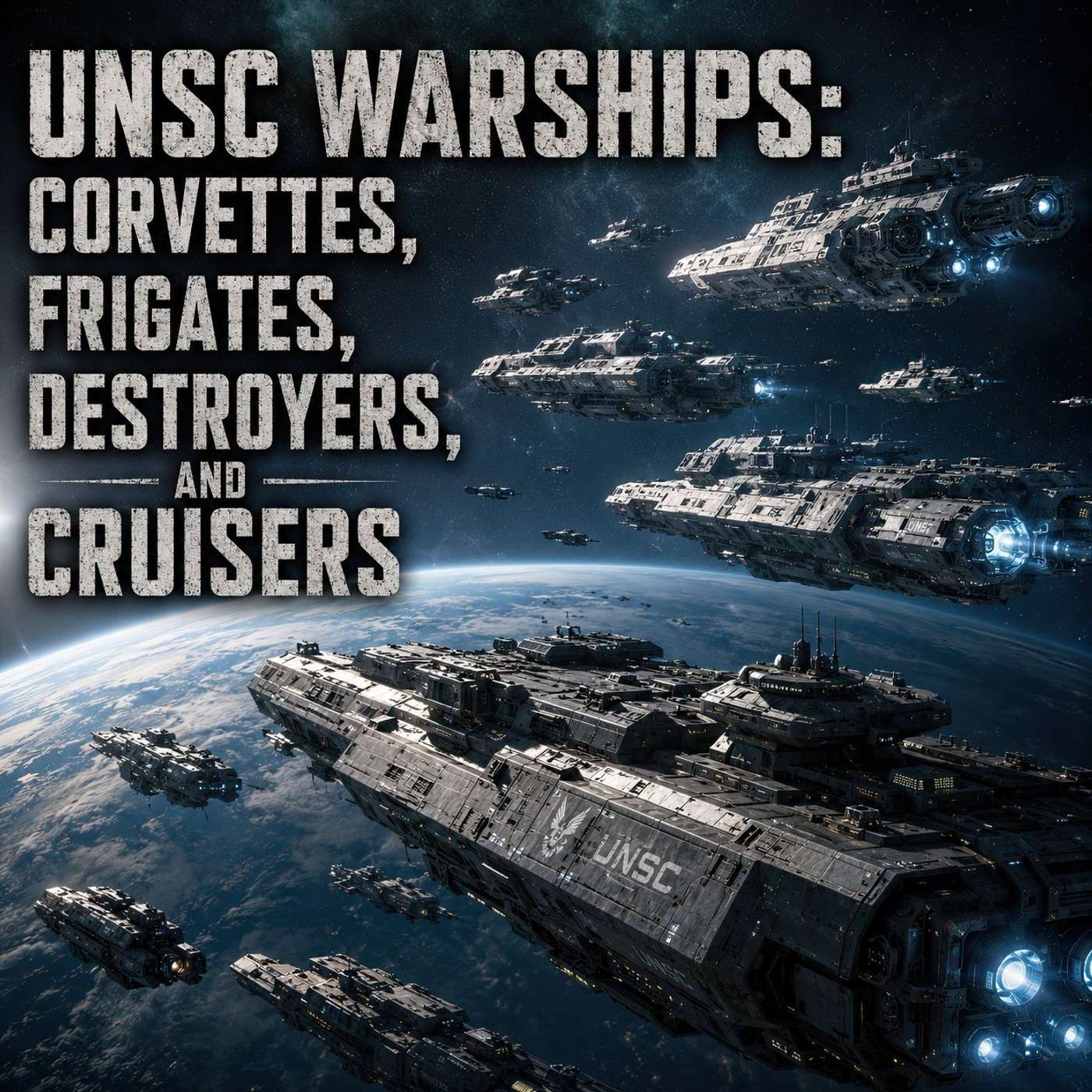
UNSC Warships: Corvettes, Frigates, Destroyers, and Cruisers
Aug 23, 202626 minS10
UNSC warships are built in different sizes because no single hull can perform every mission required across interstellar space. Corvettes provide patrol, escort, reconnaissance, and light combat capability without the cost of deploying a major capital ship. Frigates become some of humanity’s most versatile warships, escorting fleets, carrying Marines, supporting planetary operations, and fighting in numbers against stronger Covenant vessels. Destroyers increase armor and offensive power for heavier fleet combat, while cruisers bring larger MACs, command facilities, and the endurance expected of major line warships. This episode examines how these classes fit together around a common human philosophy: armor, mi...
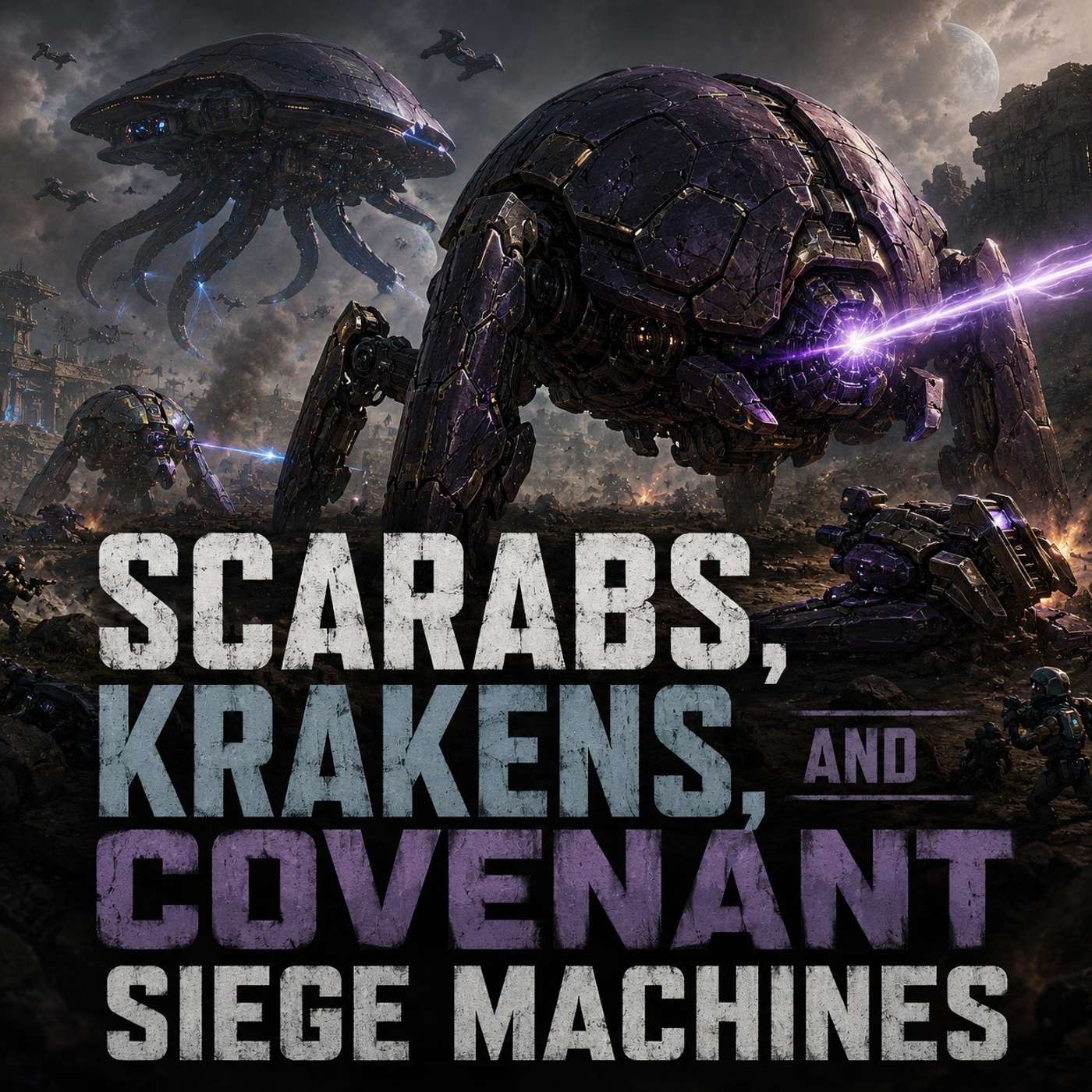
Scarabs and Krakens exist at the boundary between vehicle, mobile fortress, excavation machine, and siege weapon. Scarabs are enormous Lekgolo-operated platforms carrying destructive energy weapons and enough armor to dominate ordinary ground formations. Their mobility allows Covenant and Banished commanders to bring heavy firepower directly against fortified positions, cities, and strategic installations. Krakens push the concept toward an even larger mobile platform capable of supporting troops and heavy weapons across an enormous structure. This episode examines why such machines exist in an army already capable of orbital bombardment. Sometimes the objective cannot simply be destroyed. Forerunner artifacts must be recovered...
Every question we get asked before someone starts their trial.
If you have a concern about deliverability, AI quality, data privacy, or whether this will actually work for your specific situation, it's probably answered below.
What is the difference between Founder Solo and Founder Pro?
Founder Solo gives you 50 AI pitches per month using the credit model (Standard pitches cost 1 credit, Enriched pitches cost 2). Founder Pro raises that to 200 credits per month and adds full Booking Probability access, unlimited Magic Match, Apollo enrichment credits, and data export capabilities. Both plans use the same credit system, so you can stretch your monthly budget further by using Standard-mode drafting.
How do agency tiers work?
Agency tiers have no base fee. You pay per managed client and per talent profile. Agency Standard is $199 per client per month; Agency Pro is $399 per client per month. Both add $39 per talent profile per month. Your own team's user seats are always free.
What is a talent profile?
A talent profile represents one person (founder, executive, or spokesperson) you are booking onto podcasts. It includes their bio, topics, headshots, and outreach history. Team plans include 5 profiles; agency plans are pay-as-you-go.
Can I switch plans later?
Yes, at any time. Upgrades take effect immediately; downgrades apply at the end of the current billing period. Contact support if you need help migrating between plan families.
Do you offer a free trial?
Every paid plan includes a 15-day free trial. Your card is saved at signup but you will not be charged until day 16. Cancel any time from your dashboard.
What happens if I cancel?
You keep access until the end of your current billing period. No charges after that. Your data is retained for 30 days in case you reactivate.
Is the 20% annual discount automatic?
Yes. Select Annual on the pricing toggle and the discounted price is applied automatically at checkout. The annual price shown is the full year cost.
What if I have more than 50 profiles or 20 clients?
That is our Enterprise tier. Contact our sales team and we will build a custom plan with volume pricing, a dedicated account manager, and SLA guarantees.