Episode #17
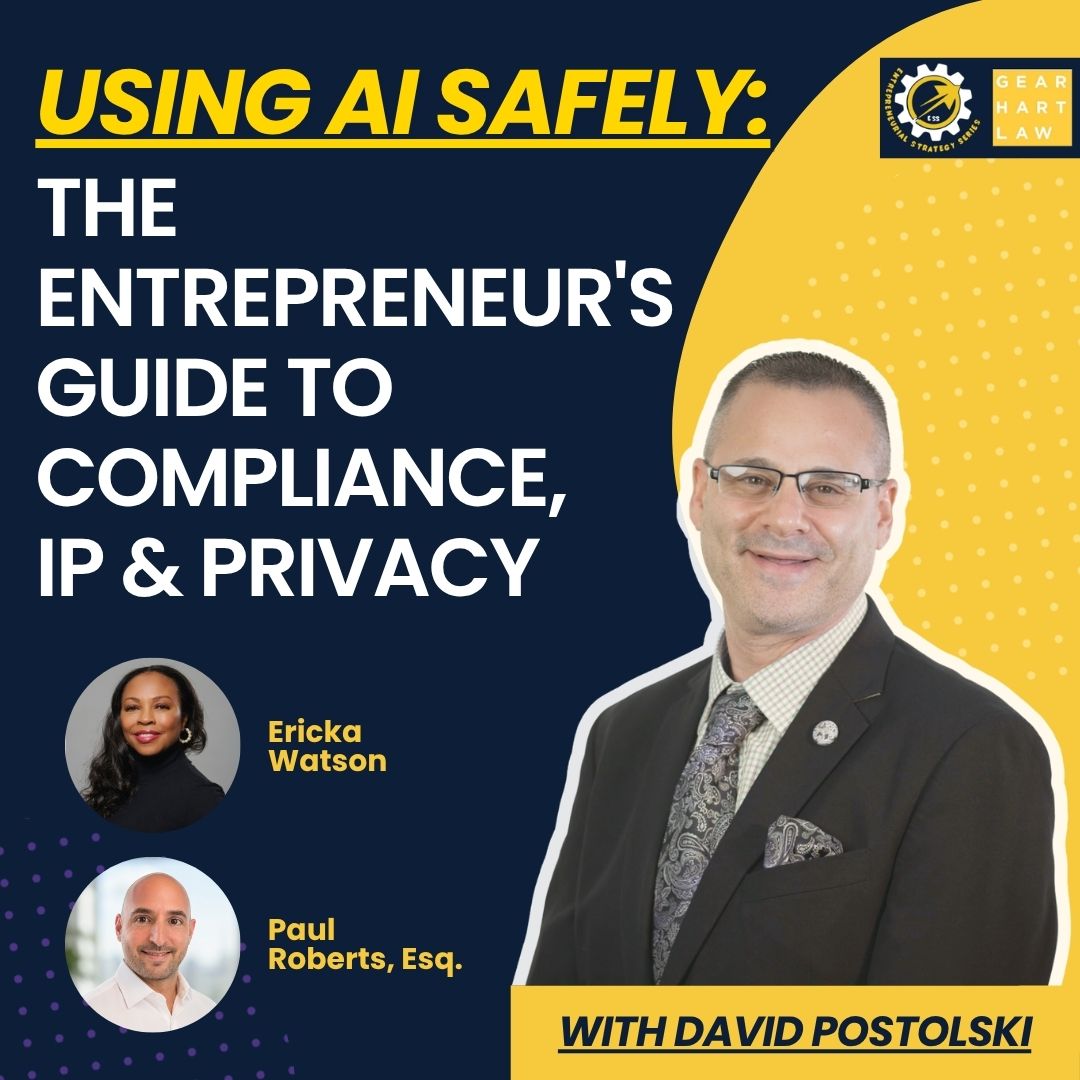
Using AI Safely: The Entrepreneur's Guide to Compliance, IP & Privacy
AI governance, AI compliance, AI privacy, intellectual property, AI law, cybersecurity, AI ethics, AI regulation, ChatGPT, entrepreneurs, startups, business owners AI can help entrepreneurs build faster, work smarter, and compete more effectively—but are you putting your business, intellectual property, confidential information, or customers at risk every time you use it? In this episode, host David Postolski and guests Paul Roberts Esq, director at TransUnion, and Erica Watson, CEO of Data Strategy Advisors break down how entrepreneurs and growing companies can use artificial intelligence safely while navigating AI compliance, privacy laws, intellectual property, patents, copyrights, trade secrets, cybersecurity, AI bias, vendor contracts, data usage, and governance. They explain what businesses should know before putting confidential information into tools like ChatGPT or Claude, how AI-generated content and software can affect IP protection, what to look for when negotiating AI vendor agreements, why human oversight matters, and how entrepreneurs can balance the risks of AI with the need to remain competitive. If you're building, launching, or growing a business with AI, this conversation offers practical guidance for protecting your company while taking advantage of the technology. Our Speakers: Ericka Watson , CEO of Data Strategy Advisors: https://www.linkedin.com/in/ericka-watson-data/ Paul Roberts, Esq. , Director at TransUnion and creator of IP Genie: https://www.linkedin.com/in/paulsoftwareip/ David D. Postolski, Esq. , Senior Partner at Gearhart Law: https://www.linkedin.com/in/davidpostolski/ Key Takeaways: AI Governance Needs to Be Proactive Businesses should establish AI governance policies and risk controls before problems arise, rather than treating compliance as an afterthought. Be Careful About What You Put Into AI Tools Entrepreneurs and employees should think carefully before entering sensitive information into third-party AI platforms. This can include trade secrets, confidential business information, customer or employee data, personal information, unpublished inventions, source code, proprietary strategies, and client or contractual information. Companies should establish clear rules about what information may—and may not—be submitted to external AI systems. AI Creates New Intellectual Property Questions Businesses need to distinguish between using AI to help create or develop intellectual property and understanding what legal rights actually exist in AI-assisted outputs. Privacy Cannot Be an Afterthought Companies using AI and data-driven technologies need to consider privacy obligations from the beginning, including how personal and customer information is collected, processed, stored, and shared. Responsible AI Includes Ethics and Transparency AI governance should address more than legal compliance. Businesses should consider bias, discrimination, transparency, human oversight, and the potential consequences of AI-generated decisions and outputs. AI Regulation Is Evolving Rapidly AI regulation continues to develop in the United States and internationally. Entrepreneurs should avoid treating compliance as a one-time project and instead build systems that can adapt as laws, regulations, industry standards, and AI technologies evolve. ... Chapters (00:00:00) - Inventing AI: David Postolski's Talk (00:00:39) - February Essentials: Using AI Safely (00:01:19) - In the Elevator With Paul Geico (00:03:18) - Ericka Watson on Startup Talk (00:03:54) - Ericka Watson on Data Privacy and AI (00:05:53) - GDPR and AI Compliance (00:08:24) - What Do We Have to Do About Personal Data? (00:11:06) - When to Talk About AI Governance? (00:14:37) - The Need for a AI Governance Program (00:17:40) - Should Companies Care About Having an AI Governance Policy? (00:20:16) - The Onus of AI Governance (00:20:50) - What onus Should AI Developers Have on Their Companies? (00:24:30) - Should AI Tools Have Blanket Liability? (00:26:32) - Do You Need Patents in AI? (00:29:43) - Paul Feist on the Intellectual Property of AI (00:33:52) - Can AI Inaccurately Read copyrighted Materials? (00:38:01) - How to Protect Company Confidential Information Using AI-based Tools (00:46:17) - AI Bias: The Ethics of the Technology (00:49:32) - AI Bias, Transparency, Ethics (00:53:00) - What To Look For In An AI Contract (00:57:21) - Questions for the Authors (00:57:55) - Microsoft Grammarly: Could the Input be discoverable in a (01:02:28) - replay of the record recording (01:03:07) - Lawyers on AI in Fintech (01:08:03) - Should I Launch a Product With AI? (01:12:19) - Should I hire a Lawyer to Review my Code? (01:17:01) - A Conversation on AI Governance (01:20:01) - Summer Fun