Episode #129
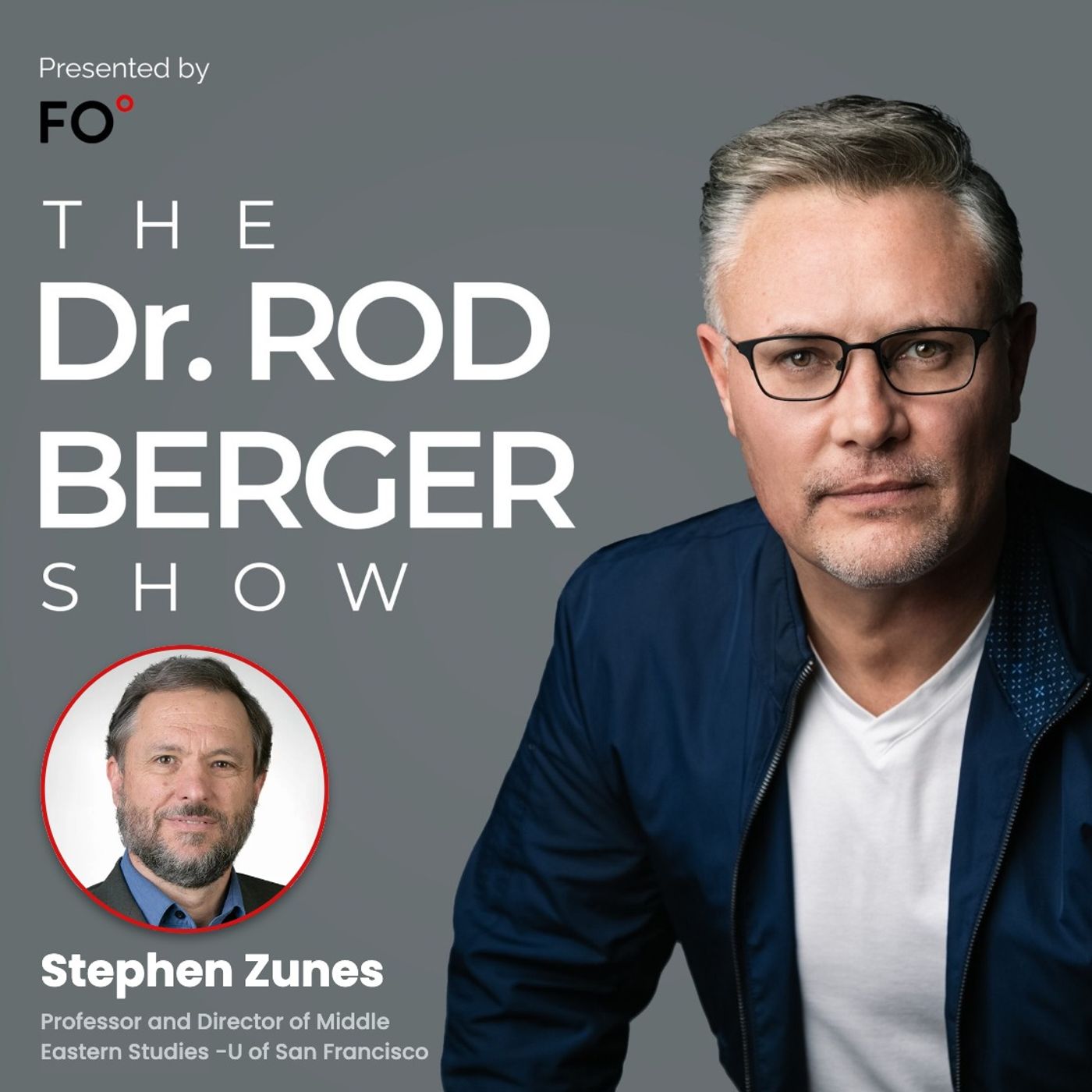
What John Bolton and a Debate on Democracy Revealed with Noted Professor Stephen Zunes
Dr. Rod Berger talks with Dr. Stephen Zunes on activism, civil resistance, and Western Sahara storylines. This conversation explores how Dr. Stephen Zunes’ upbringing in a Christian pacifist, politically engaged household shaped his lifelong focus on human rights, international law, and nonviolent resistance. Host Dr. Rod Berger, editor at large at Fair Observer, and Zunes also discuss Western Sahara, Israel-Palestine, democracy, polarization, and why Zunes still believes large-scale civic action can change history. Guest Dr. Stephen Zunes — Professor of politics and director of Middle Eastern Studies at the University of San Francisco, speaking about his background, scholarship, activism, and views on civil resistance Key topics In this episode: Zunes traces his worldview to a Christian pacifist household shaped by civil rights activism, anti-Vietnam War protests, environmental concern, and early Palestinian solidarity. We discuss: How his parents’ backgrounds—one from a Greek immigrant line and one from a conservative Southern family—led to an unusual but deeply consistent social justice ethic. Zunes shares: How growing up in Chapel Hill and reading the newspaper as a child helped make political curiosity and international affairs feel natural. In this episode: His decision to move from organizing into academia came from realizing he was better as an intellectual than a movement organizer. We discuss: Why Western Sahara became a central focus for him as a test case for international law, self-determination, and opposition to territorial conquest. Zunes shares: His view that Western Sahara and Palestine are two important examples of foreign belligerent occupation that are often treated very differently in public discourse. We discuss: How he sees support for Western Sahara as potentially strengthening the pro-Palestinian movement by centering international law rather than sectarian argument. Zunes shares: His experience debating John Bolton at the Oxford Union on whether military force is an effective way to promote democracy, and why he argues that civil society and nonviolent action are usually more effective. We discuss: Why the United States and Britain should examine their own support for authoritarian regimes before advocating military intervention abroad. Zunes shares: His optimism rooted in historical examples, including civil rights, Vietnam, South Africa, and East Timor, where sustained pressure changed policy. We discuss: The role of polarization, which he sees as dangerous but also potentially transformative, depending on how people shape it. Zunes shares: Why he remains hopeful about younger generations, whom he sees as more open to socialism, social democracy, and critiques of militarism. Timestamps 02:16 — Rod introduces the show and Stephen Zunes 03:37 — Zunes’ academic background and family roots 04:20 — A Christian pacifist household shaped by civil rights and anti-war politics 07:16 — Parents’ unusual pro-Palestinian stance in the Deep South 08:53 — Learning politics at the dinner table and from newspapers 11:26 — Chapel Hill, Oberlin, and becoming a political science scholar 13:35 — Why Western Sahara became a defining issue 14:34 — Civil rights, Namibia, East Timor, and the logic of solidarity 15:31 — Why Western Sahara matters for international law 16:55 — Comparing Western Sahara, Palestine, and U. S. double standards 19:17 — Why obscurity made Western Sahara a compelling cause 21:47 — Activism, voice, and how scholarship enters public debate 22:30 — The Oxford debate with John Bolton 24:44 — Why civil society beats foreign military intervention 26:33 — Why cynicism is hard to avoid in a militarized world 28:15 — Movements that changed history from Vietnam to South Africa 30:40 — Why these perspectives are becoming more mainstream 31:25 — Concern about U. S. civic fragility and democratic decline 33:25 — Why authoritarian systems can also produce skepticism and resistance 35:20 — Polarization as a force that can produce reform or reaction 39:07 — Grassroots voter mobilization and the importance of turnout 40:12 — Final reflection on whether nonviolent struggle still wins 41:20 — Why Zunes remains optimistic about the long term 43:13 — Younger generations, social democracy, and anti-militarism 44:10 — Closing thoughts on the value of debate and informed disagreement TOP INSIGHTS Universal principles are stronger than issue-by-issue loyalty Judge every occupation, annexation, or intervention by the same standard: international law. A consistent, principle-based approach is harder to dismiss as selective outrage and creates stronger coalitions across conflicts. Overlooked issues can offer meaningful opportunities for advocacy Western Sahara’s relative obscurity allowed focused expertise and advocacy to develop. Importance is not always reflected by the amount of public attention an issue receives. Nonviolent movements create sustainable political change Civil resistance is not merely symbolic. Organized citizens, durable networks, and sustained pressure can produce legitimacy and lasting policy change more effectively than military intervention. Polarization can lead to authoritarianism or reform Polarization is not inherently destructive. Its consequences depend on how social energy is organized and whether democratic institutions can channel conflict toward constructive change. Democracy depends on local participation Democratic decline often begins with disengagement from local institutions such as school boards, city councils, and community organizations. Participation is a form of democratic maintenance. Historical memory can produce realistic hope Optimism does not have to mean ignoring present challenges. Past movements—including civil rights, anti-war, anti-apartheid, and labor movements—show that organized pressure can change systems that once appeared permanent. Younger generations are questioning inherited political assumptions Younger people are increasingly willing to challenge conventional ideas about capitalism, militarism, socialism, and foreign policy. Their skepticism may represent a broader shift in political expectations. Dr. Rod Berger is a keynote speaker, moderator, producer, author, and expert in strategic storytelling. Berger’s book, The Narrative Edge: Authentic Storytelling That Meets The Moment (Wiley), hits bookstores in late 2025. He draws on more than 4,000 interviews conducted worldwide for Forbes , Entrepreneur Magazine , and Fair Observer , including a cover story about former Virgin Entertainment co-founder Jason Felts, for Los Angeles Magazine , as well as various podcasts. He has captured the narratives of investors, CEOs, renowned entrepreneurs, bestselling authors, scholars, and cultural icons such as NBA legends Magic Johnson and Charles Barkley, as well as United Nations officials and Van Halen’s Sammy Hagar, while also exploring the behind-the-scenes world of Formula 1. Berger has met with the Crown Princess of Sweden, Pope Francis, United Nations officials, and NGO leaders, covering stories of water insecurity with WaterAid, the intergenerational refugee crisis faced by displaced Sudanese in Uganda, and the impacts of child marriage in Western Africa with the Le Korsa Foundation. Berger served as a guest lecturer at Vanderbilt University’s Owen Graduate School of Management for nearly two decades, focusing on the power of storytelling in business. He has partnered with The Jim Henson Company to create a television show, The Ultimate GOAT , that combines his passion for distant lands and storytelling with culture, sports, and puppetry for family programming. Berger conducts moderated keynote events that blend storytelling with live, on-stage narratives featuring cultural icons such as Opal Lee, the recipient of the Presidential Medal of Freedom, a Nobel Peace Prize nominee, and recognized as the “Grandmother” of Juneteenth. In 2023, Berger received the inaugural Pangea International Literacy Prize and delivered his TEDx Talk, “ Story is Our Currency.” He lives in Franklin, Tennessee, with his wife and two children. Hosted by Simplecast, an AdsWizz company. See pcm.adswizz.com for information about our collection and use of personal data for advertising.