Digital Storm Weekly is your front row seat to the technologies reshaping the world of business, leadership, and innovation. Each episode explores the most important global trends in artificial intelligence and emerging technologies, not as abstract concepts, but as real strategies being applied inside today’s most forward thinking companies. We sit down with company founders, CEOs, operators, and senior decision makers who are actively building the future. These are leaders who do not just talk about innovation, they institutionalize it. From AI adoption and automation to data driven decision making, platform thinking, and new operating models, we uncover how modern organizations turn technology into a competitive advantage. Digital Storm Weekly goes beyond headlines. We decode why certain technologies matter, how companies are integrating them into daily operations, and what separates organizations that adapt early from those that fall behind. You will hear firsthand insights into how innovation becomes a habit, how culture evolves alongside technology, and how traditional industries are being quietly reinvented from the inside. Whether you are an entrepreneur, executive, investor, technologist, or strategist, this podcast is designed to sharpen your perspective and expand how you think about the future of work, leadership, and scale. The storm is already here. Digital Storm Weekly helps you understand it, and lead through it.
Pitch Analysis
Required Pod Score for this show. PitchCentric checks your profile against host openness, topical fit, and audience signals before you generate a pitch.
Contact path
Public web form
Booking probability
29%
Guest openness
Selective
80/100
Required Score
Sign up to generate a grounded pitch for The Digital Storm Weekly Podcast.
The Digital Storm Weekly Podcast is a technology podcast hosted by Unknown Host, with 0 episodes on record and a Required Pod Score of 80. PitchCentric scores this show on Booking Probability, Listen Score, and live audience signals refreshed every 24 hours.
About the host
Unknown Host hosts The Digital Storm Weekly Podcast, a technology show with 0 episodes published.
Our AI reads these to draft pitches. Use them as grounding for a pitch that cites a real guest and a specific topic.
Episode #21
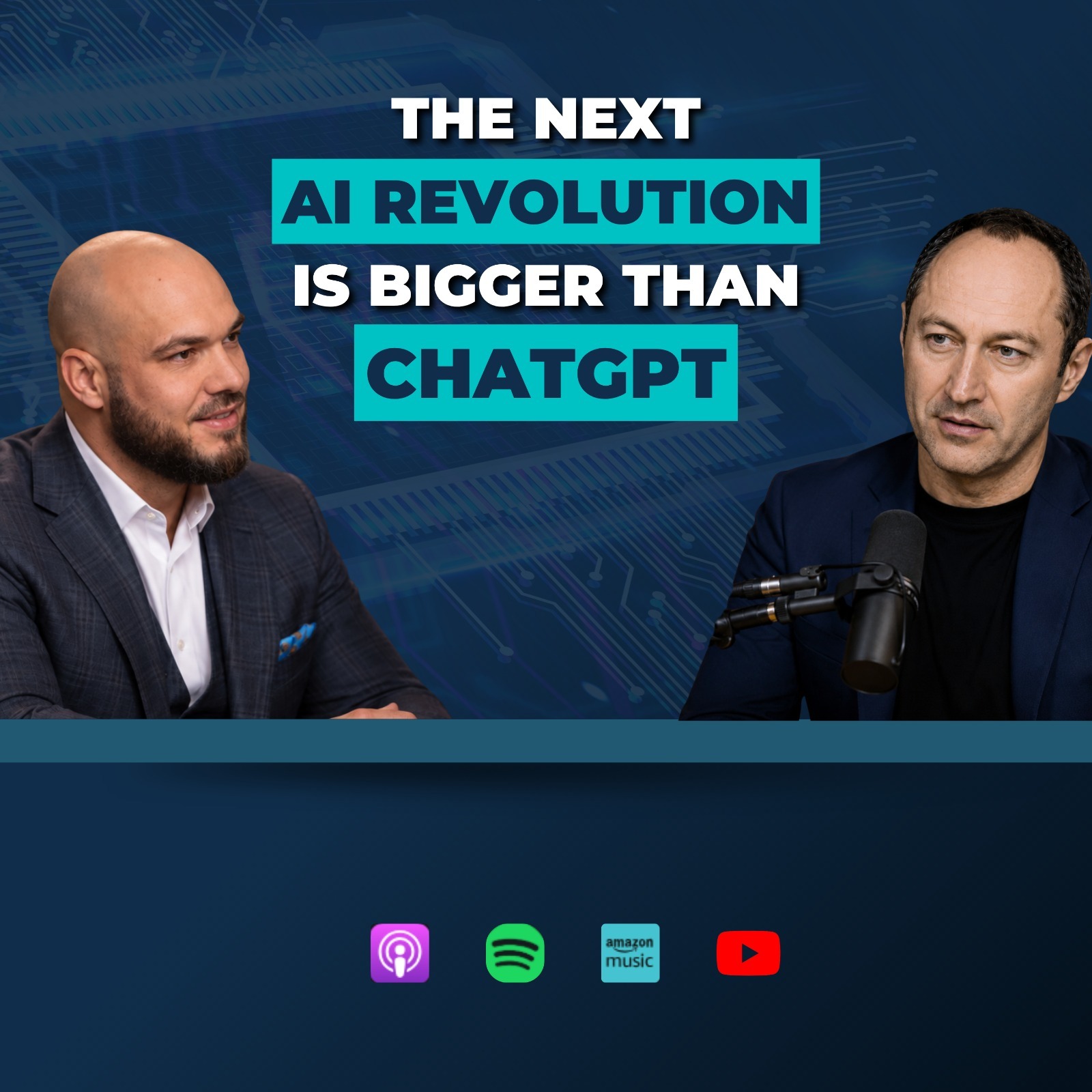
Ep 21:The Next AI Revolution Is Bigger Than ChatGPT | Jonas Anker | Anker Capital
Sep 11, 202633 minS1
Jonas Anker doesn't approach investing like someone who only studies companies from the outside. He approaches it like a builder who has spent the last decade creating them. From starting with very little to building three profitable companies, achieving successful exits, and now investing across AI, deep tech, and hard assets, Jonas has developed a perspective shaped by execution rather than theory. His experience in full-contact martial arts, including winning an amateur world championship, also shaped something central to how he operates: discipline, resilience, and the refusal to walk away when things get difficult. In this episode, Jonas discusses: ● How he went from studying law to becoming a self-made entrepreneur ● Why he considers himself a builder first and an investor second ● What martial arts taught him about fear, persistence, and pushing beyond limits ● Why Anker Capital takes a hands-on approach instead of simply deploying capital ● How he evaluates founders, their ambition, integrity, and ability to execute ● Why he spends more time understanding the downside than chasing a potential 100x return ● What separates genuinely defensible AI companies from businesses simply using AI as a label ● Why specialized AI solutions may have a stronger future than generalist products ● How his experience building companies influences the way he invests in them Jonas’ story offers a perspective that goes beyond venture capital: Capital can fund a company. Experience, judgment, and persistence help build one. —----------------------- YouTube: https://www.youtube.com/watch?v=Smu8hV9AUuk&list=PLIUBbSI0VTk1JbL_8U7AciTe-6nCLKaKT Amazon Music: https://music.amazon.com/podcasts/a8ccad06-05d4-45e9-9f69-a4b6eacd77c7/the-digital-storm-weekly-podcast Apple Podcasts: https://podcasts.apple.com/us/podcast/the-digital-storm-weekly-podcast/id1867227116 Spotify: https://open.spotify.com/show/779CC9Nn8coXth0tNjlt2d RSS: https://rss.com/podcasts/the-digital-storm-weekly-podcast/ ---- Love my content? Dr Joerg Storm: https://www.linkedin.com/in/joergstorm/ Lucas Storm: https://www.linkedin.com/in/lucas-storm/ Paul Storm: https://www.linkedin.com/in/paul-storm/ Follow Jonas Anker : https://www.linkedin.com/in/jonas-anker-37aa29213/
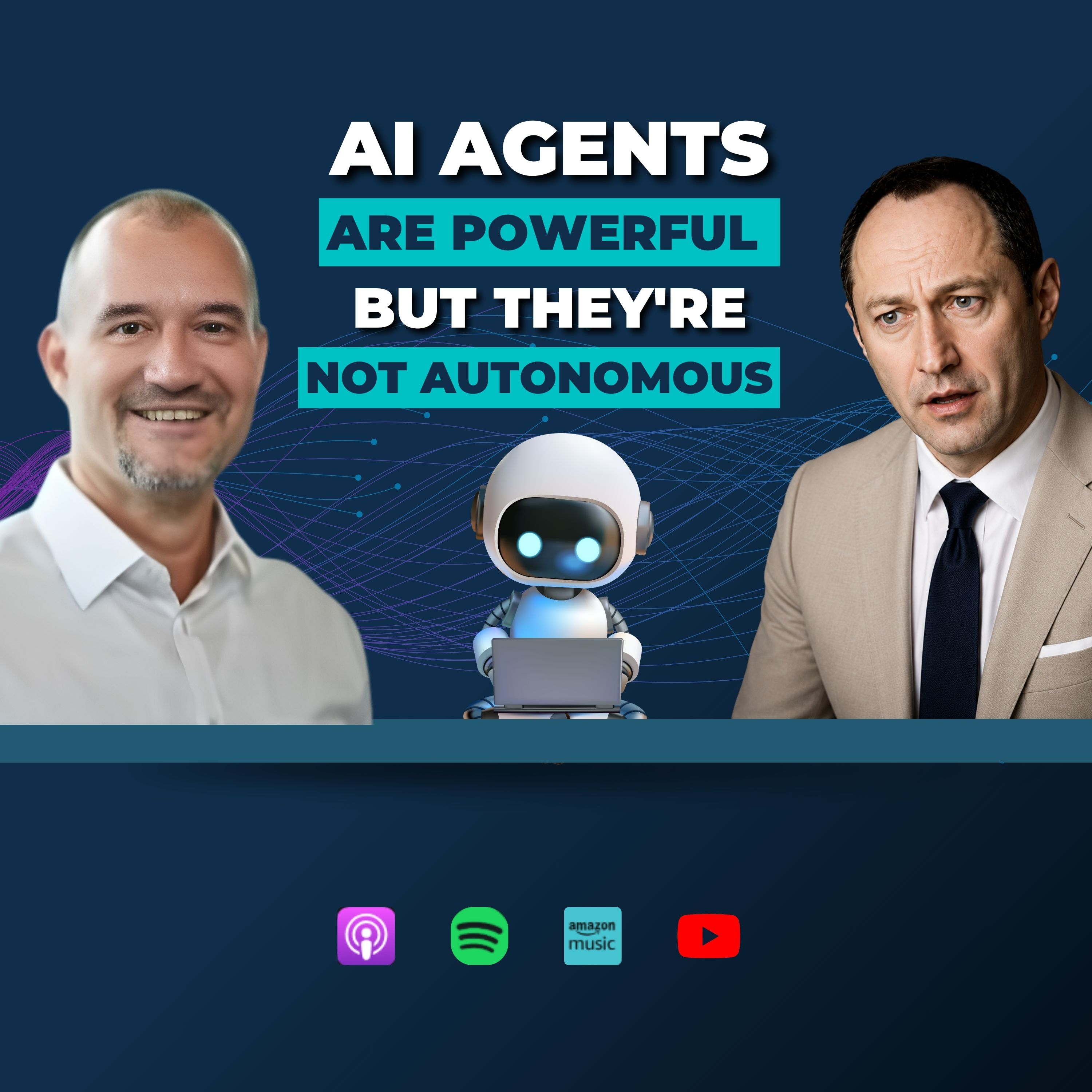
Ep 19: AI Agents Are Powerful, But They're Not Autonomous | Sven Denecken | SAP
Aug 31, 202637 minS1
AI is moving beyond chatbots and copilots. The bigger opportunity is embedding intelligence directly into the processes, systems, and physical operations that run an enterprise. Sven Denecken, Senior Vice President for SAP Industries, sees this shift from the perspective of someone working across enterprise architecture, industry value chains, and AI execution at global scale. In this episode of Digital Storm Weekly, Sven explains why the next phase of enterprise AI will depend less on chasing the newest model and more on connecting AI with trusted data, business processes, security, and real-world context. His central message is clear: Good architecture beats technology when AI reaches the real world. Sven shares practical perspectives on: • Why structured enterprise data can become a competitive advantage for AI • Why preserving data semantics and business context is critical for reliable automation • What changes when AI moves from screens into machines, networks, and industrial environments • Why security, governance, and cost need to be considered before scaling AI • How SAP approaches AI using customer data within its business context • Why small language models and local reasoning could become increasingly important in industrial environments • What separates AI experiments from systems that can actually operate at enterprise scale • Why combining different AI approaches may be more valuable than betting on a single methodology • How companies can use AI to transform entire workflows rather than simply accelerate individual tasks From manufacturing and supply chains to predictive maintenance, robotics, healthcare, and automotive, Sven highlights where AI is already beginning to change how industries operate. For executives thinking about the next stage of AI adoption, this conversation offers a practical perspective on moving from impressive demonstrations to AI that can safely operate inside the business. Don't just ask what AI can do. Ask where it can create measurable value, and whether your architecture is ready to support it. —----------------------- YouTube: https://www.youtube.com/watch?v=L_vZcEupdb4&list=PLIUBbSI0VTk1JbL_8U7AciTe-6nCLKaKT Amazon Music: https://music.amazon.com/podcasts/a8ccad06-05d4-45e9-9f69-a4b6eacd77c7/the-digital-storm-weekly-podcast Apple Podcasts: https://podcasts.apple.com/us/podcast/the-digital-storm-weekly-podcast/id1867227116 Spotify: https://open.spotify.com/show/779CC9Nn8coXth0tNjlt2d RSS: https://rss.com/podcasts/the-digital-storm-weekly-podcast/
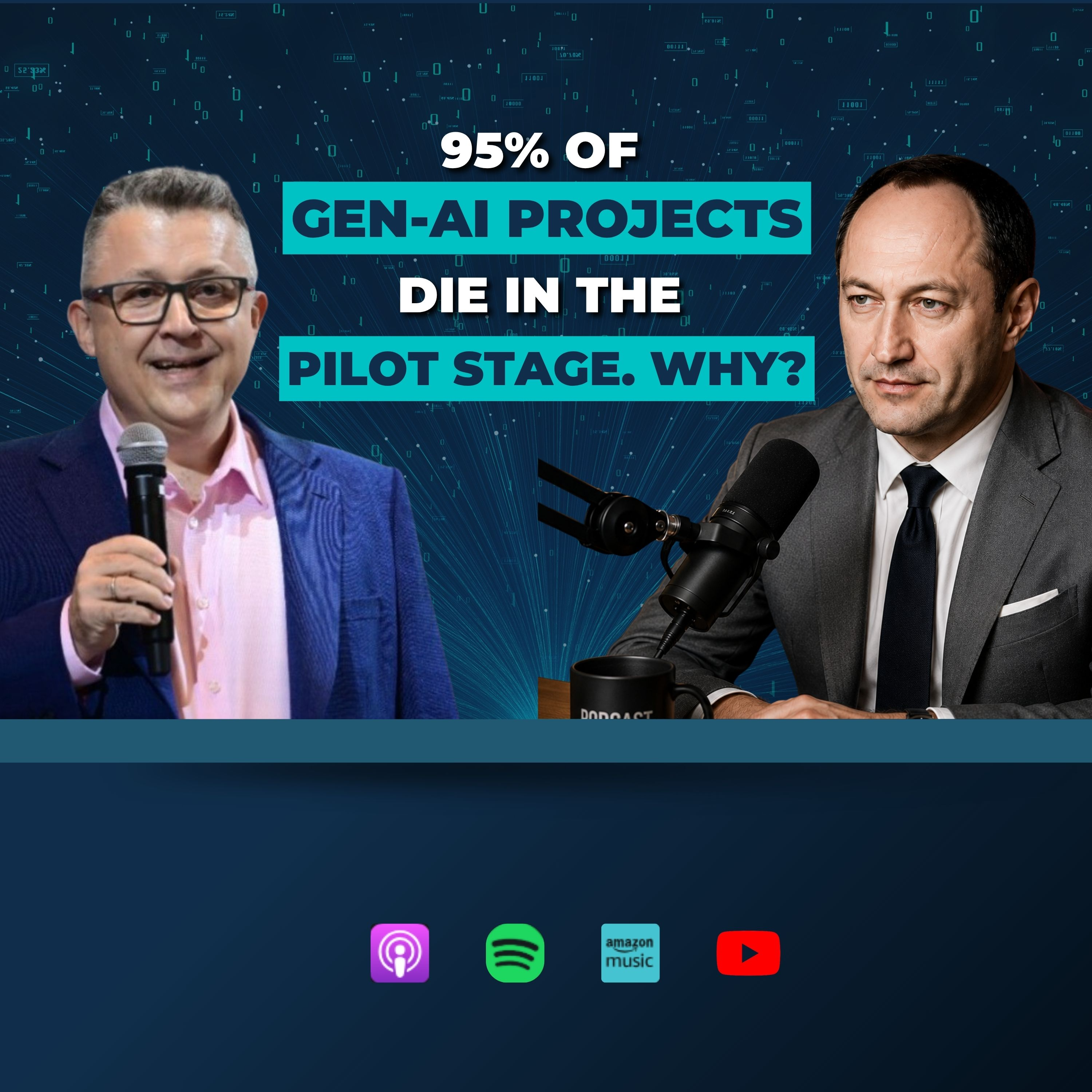
Ep 18: 95% of GenAI projects die in the pilot stage. Why? | Dr. Ralph Ostertag | HEINEKEN
Aug 11, 202626 minS1
AI adoption is moving fast. But turning AI experiments into real business impact is where most organizations struggle. Ralph Ostertag believes the biggest challenge isn't finding the right AI technology. It's creating the conditions that allow AI to scale. In this episode of Digital Storm Weekly, we spoke with Dr. Ralph Ostertag, CIO at HEINEKEN Asia Pacific and leader of HEINEKEN's global Gen AI Lab, about what it really takes to move AI from experimentation into business value. One of his strongest messages: Think big. Start small. Scale fast. Ralph shares practical lessons from deploying AI across a global organization, including why business ownership matters more than having the perfect technology, how HEINEKEN evaluates AI use cases, and what separates projects that scale from those that stall. From successful deployments to projects that stalled because of unclear ownership and insufficient business capacity, Ralph offers an honest look at what enterprise AI adoption actually looks like. If you're responsible for AI strategy, digital transformation, technology, or business operations, this conversation provides a grounded perspective on what it takes to turn AI from a promising experiment into measurable impact. —----------------------- YouTube: https://www.youtube.com/watch?v=a8IaPM6pPdg&list=PLIUBbSI0VTk1JbL_8U7AciTe-6nCLKaKT Amazon Music: https://music.amazon.com/podcasts/a8ccad06-05d4-45e9-9f69-a4b6eacd77c7/the-digital-storm-weekly-podcast Apple Podcasts: https://podcasts.apple.com/us/podcast/the-digital-storm-weekly-podcast/id1867227116 Spotify: https://open.spotify.com/show/779CC9Nn8coXth0tNjlt2d RSS: https://rss.com/podcasts/the-digital-storm-weekly-podcast/ ---- Love my content? Dr Joerg Storm: https://www.linkedin.com/in/joergstorm/ Lucas Storm: https://www.linkedin.com/in/lucas-storm/ Paul Storm: https://www.linkedin.com/in/paul-storm/ Found this helpful? Share it! ♻️ Subscribe now: https://drstorm.substack.com/subscribe
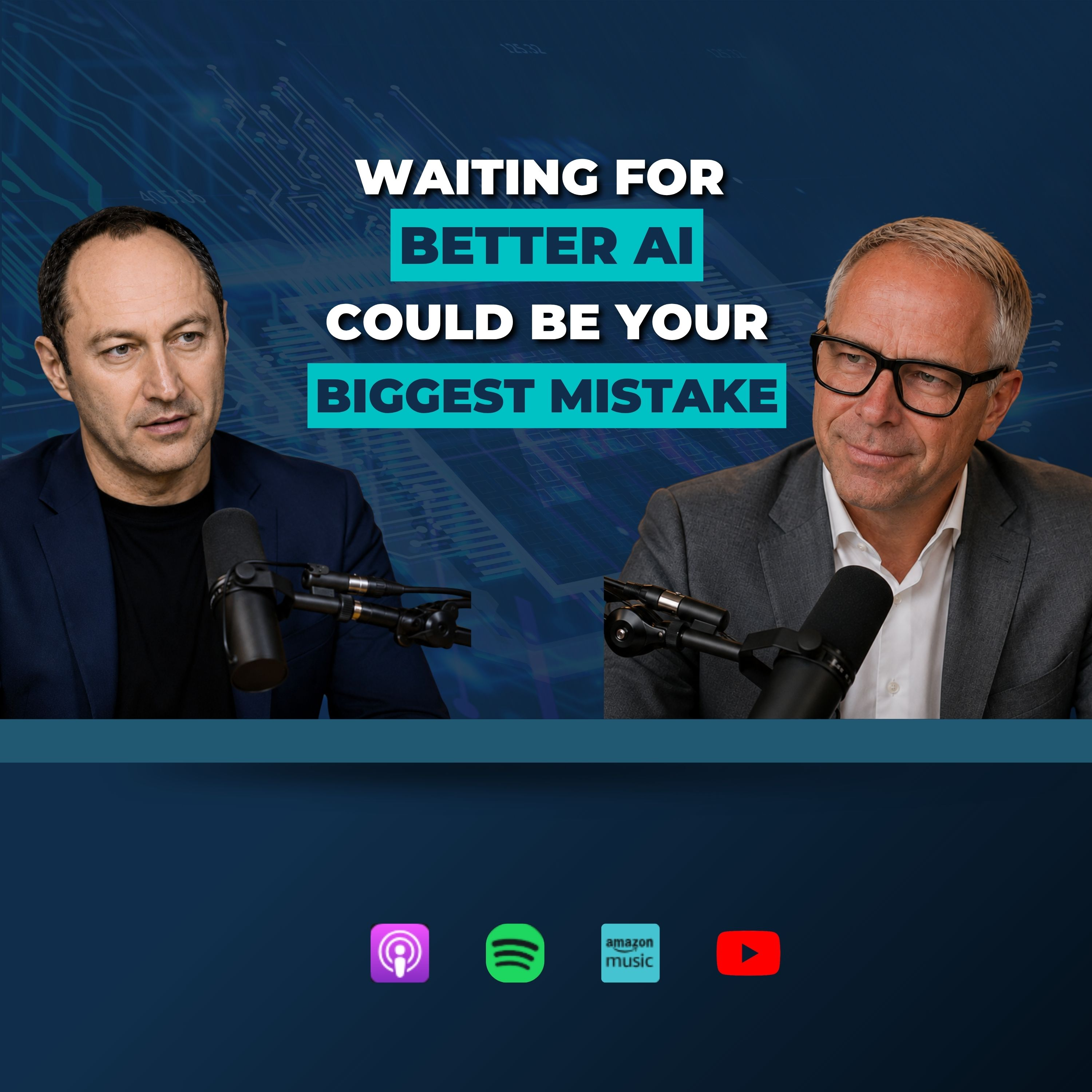
Ep 17: Waiting for Better AI Could Be Your Biggest Mistake | Dirk Ramhorst | ServiceNow
Jul 30, 202636 minS1
Many organizations believe deploying AI is the hard part. Dirk Ramhorst believes making AI work inside an organization is the real challenge. In this episode of Digital Storm Weekly, we sat down with Dirk Ramhorst, Chief Transformation Officer at ServiceNow, to discuss why enterprise AI success depends less on models and more on execution, governance, and organizational change. One of his strongest messages: Technology is ready. Most organizations aren't. Drawing on decades of transformation leadership across global industrial companies, Dirk explains why AI projects fail, how AI agents differ from copilots, and why companies need fewer experiments and more operational focus. Some key insights from Dirk: • AI agents execute work instead of simply assisting people • Data quality and governance determine AI success • Most AI pilots fail because they never create measurable business value • Organizations need platform strategies, not isolated AI experiments • Transformation is about preparing people, not just deploying technology • Companies that embed AI into real workflows will outperform those still experimenting If you're leading enterprise AI, digital transformation, or business operations, this conversation offers practical lessons on turning AI into measurable business outcomes. —----------------------- YouTube: https://www.youtube.com/watch?v=0Erf0JR1eJQ&list=PLIUBbSI0VTk1JbL_8U7AciTe-6nCLKaKT Amazon Music: https://music.amazon.com/podcasts/a8ccad06-05d4-45e9-9f69-a4b6eacd77c7/the-digital-storm-weekly-podcast Apple Podcasts: https://podcasts.apple.com/us/podcast/the-digital-storm-weekly-podcast/id1867227116 Spotify: https://open.spotify.com/show/779CC9Nn8coXth0tNjlt2d RSS: https://rss.com/podcasts/the-digital-storm-weekly-podcast/ ---- Love my content? Dr Joerg Storm: https://www.linkedin.com/in/joergstorm/ Lucas Storm: https://www.linkedin.com/in/lucas-storm/ Paul Storm: https://www.linkedin.com/in/paul-storm/ Subscribe now: https://drstorm.substack.com/subscribe
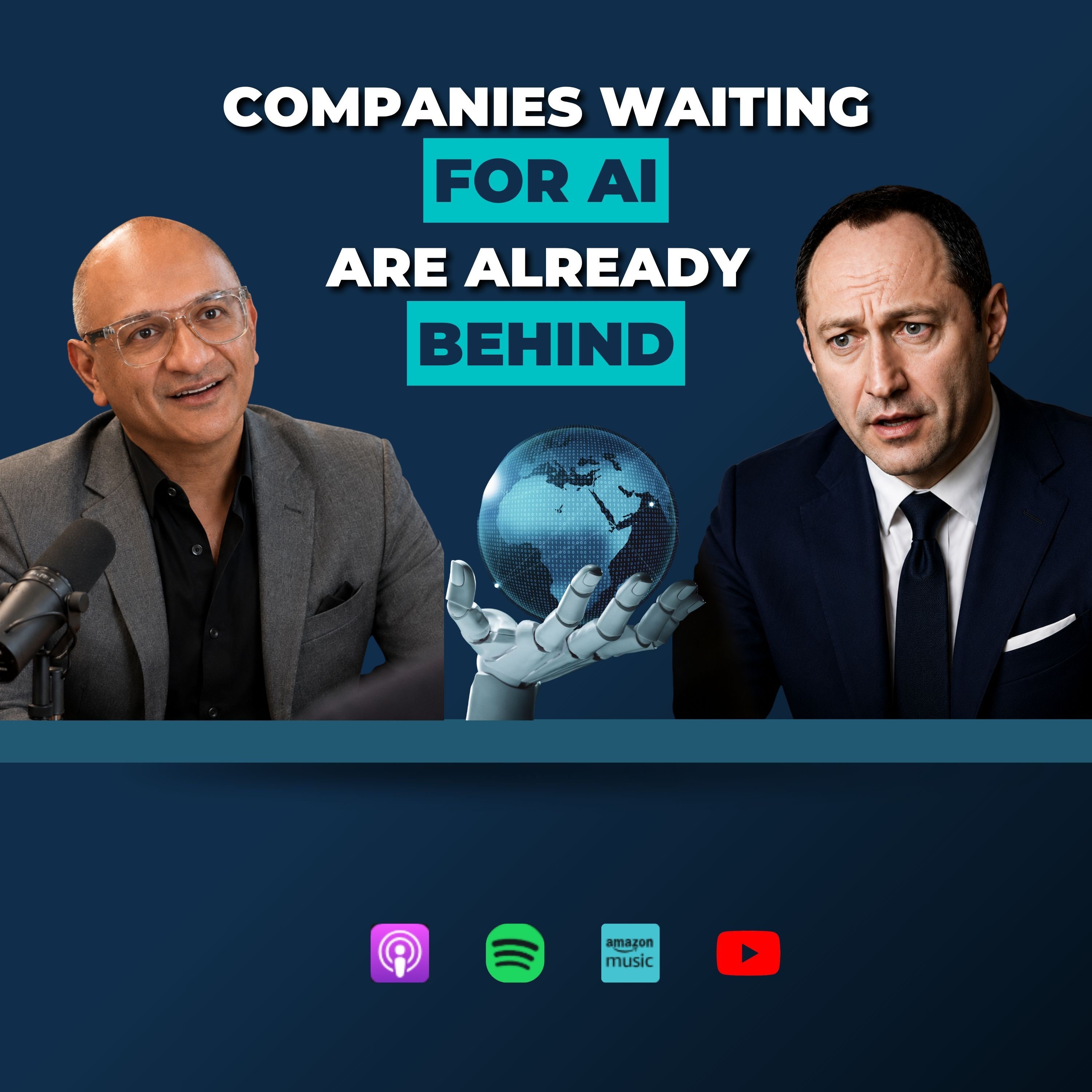
Ep 16: Companies Waiting for AI Are Already Behind | Jeetu Patel | Cisco
Jul 20, 202637 minS1
Many organizations are still treating AI as another productivity tool. Jeetu Patel believes we're entering an entirely different operating model for business. In this episode of Digital Storm Weekly, we sat down with Jeetu Patel, President and Chief Product Officer at Cisco , to discuss why AI is no longer about chatbots or automation, but about managing digital coworkers that fundamentally change how organizations operate. One of his strongest messages: You won't lose your job to AI. You'll lose it to someone who uses AI better than you. Drawing on Cisco's experience deploying AI across a 90,000-person organization, Jeetu explains why enterprises need to rethink workflows, leadership, infrastructure, and trust if they want to compete in the AI era. Some key insights from Jeetu: • AI agents should be treated as digital coworkers, not software tools • Every employee will increasingly become a manager of AI agents • Guardrails and trust matter more than intelligence alone • Organizations must redesign workflows instead of simply adding AI to existing processes • AI should expand ambition, not just improve efficiency • The companies moving fastest are the ones willing to experiment early If you're leading AI strategy, digital transformation, or enterprise technology, this conversation offers practical insights into what AI adoption actually looks like inside one of the world's largest technology companies. —----------------------- YouTube: https://www.youtube.com/watch?v=Yy7xP5gu2WI&list=PLIUBbSI0VTk1JbL_8U7AciTe-6nCLKaKT Amazon Music: https://music.amazon.com/podcasts/a8ccad06-05d4-45e9-9f69-a4b6eacd77c7/the-digital-storm-weekly-podcast Apple Podcasts: https://podcasts.apple.com/us/podcast/the-digital-storm-weekly-podcast/id1867227116 Spotify: https://open.spotify.com/show/779CC9Nn8coXth0tNjlt2d RSS: https://rss.com/podcasts/the-digital-storm-weekly-podcast/ ---- Love my content? Dr Joerg Storm: https://www.linkedin.com/in/joergstorm/ Lucas Storm: https://www.linkedin.com/in/lucas-storm/ Paul Storm: https://www.linkedin.com/in/paul-storm/ Found this helpful? Share it! ♻️ Subscribe now: https://drstorm.substack.com/subscribe
Every question we get asked before someone starts their trial.
If you have a concern about deliverability, AI quality, data privacy, or whether this will actually work for your specific situation, it's probably answered below.
What is the difference between Founder Solo and Founder Pro?
Founder Solo gives you 50 AI pitches per month using the credit model (Standard pitches cost 1 credit, Enriched pitches cost 2). Founder Pro raises that to 200 credits per month and adds full Booking Probability access, unlimited Magic Match, Apollo enrichment credits, and data export capabilities. Both plans use the same credit system, so you can stretch your monthly budget further by using Standard-mode drafting.
How do agency tiers work?
Agency tiers have no base fee. You pay per managed client and per talent profile. Agency Standard is $199 per client per month; Agency Pro is $399 per client per month. Both add $39 per talent profile per month. Your own team's user seats are always free.
What is a talent profile?
A talent profile represents one person (founder, executive, or spokesperson) you are booking onto podcasts. It includes their bio, topics, headshots, and outreach history. Team plans include 5 profiles; agency plans are pay-as-you-go.
Can I switch plans later?
Yes, at any time. Upgrades take effect immediately; downgrades apply at the end of the current billing period. Contact support if you need help migrating between plan families.
Do you offer a free trial?
Every paid plan includes a 15-day free trial. Your card is saved at signup but you will not be charged until day 16. Cancel any time from your dashboard.
What happens if I cancel?
You keep access until the end of your current billing period. No charges after that. Your data is retained for 30 days in case you reactivate.
Is the 20% annual discount automatic?
Yes. Select Annual on the pricing toggle and the discounted price is applied automatically at checkout. The annual price shown is the full year cost.
What if I have more than 50 profiles or 20 clients?
That is our Enterprise tier. Contact our sales team and we will build a custom plan with volume pricing, a dedicated account manager, and SLA guarantees.