The Crux of Medtech
The Brain Knows How to Heal, Medicine Just Hasn't Caught Up with Dr. Leo Petrossian
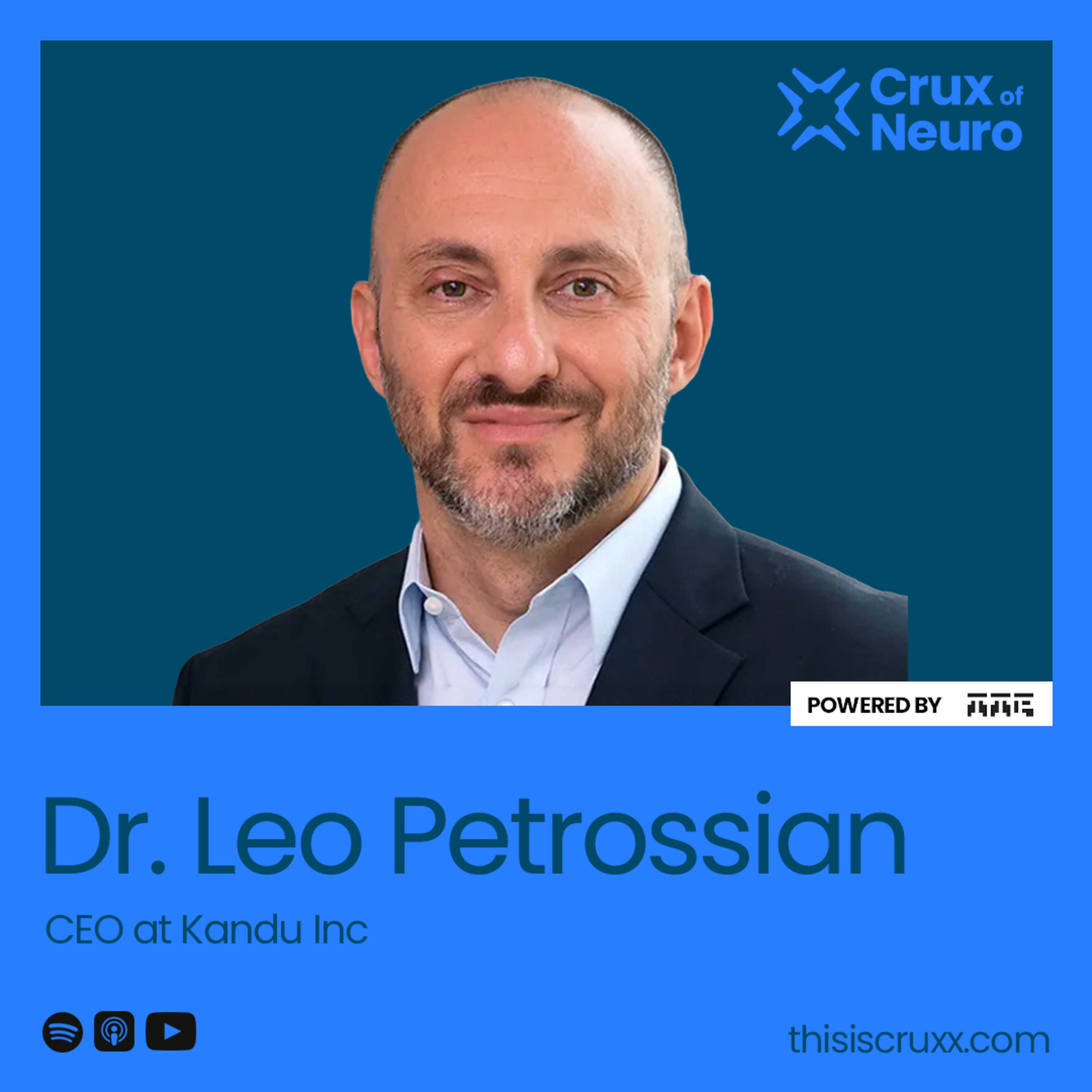
In this episode of Crux of Neuro, host Liz Moyles is joined by Dr. Leo Petrossian, CEO of Kandu, Inc. the company formed from the merger of Neurolutions and Kandu Health. Leo has spent over 20 years at the intersection of neurotech and clinical care, and under his leadership, Neurolutions secured FDA breakthrough clearance for the IpsiHand®: the first non-invasive, at-home brain-computer interface for stroke rehabilitation. He also navigated the first BCI-specific CMS billing code and led a randomised controlled trial that was stopped early for efficacy. In this conversation, Leo and Liz cover the systemic failures in post-stroke care, the science behind the IpsiHand®, the brutal realities of getting novel devices covered by insurance, and what it will take to give 8 million stroke survivors in the US a real shot at recovery. Key Topics The "level 10 to zero" problem: why stroke survivors are abandoned at discharge How the IpsiHand® uses non-invasive EEG and ipsilateral brain signals to restore arm function The real cost of neurological disease and why most people underestimate it Navigating FDA breakthrough designation, de novo clearance, and the first BCI billing code Why the RCT was stopped early and what an NNT of 2.2 actually means Building Kandu: why combining a clinical device with a virtual care platform changes outcomes The barriers to adoption: awareness, insurance coverage, and clinician education Related Insights Why neurological disease spend is already approaching cardiovascular and still climbing The indirect cost of stroke: pulling caregivers out of the workforce and what that costs the system Why "neurons that fire together, wire together" is more than a mantra, it's the therapeutic mechanism How CMS's "reasonable and necessary" standard creates a maze that FDA's "safe and effective" never prepared you for The case for collaboration over competition in neurotech and what Kandu is actively building toward Core Challenges Post-stroke care is structurally broken: patients go from 24/7 hospital monitoring to zero follow-up overnight, with no systematised path back to function. The IpsiHand® has FDA clearance and a CMS billing code, but formal coverage policy remains the "final frontier," leaving most patients navigating reimbursement case by case. Novel device makers face a gap that drug companies don't: FDA has a clear pathway for innovation, but reimbursement bodies haven't built the equivalent and two attempts (MCIT and TCET) were both cancelled. Tune in now to hear why one in four people will suffer a neurological disease and how the IpsiHand® is giving stroke survivors a genuine shot at recovery, years after they were told rehab had run its course. The Crux of MedTech podcast is brought to you by Cruxx, a specialist surgical robotics recruitment agency. To learn more about Cruxx, click here. A big thank you to our sponsors on this season of the podcast; TTP plc With a 35-year track record, TTP excels in turning innovative ideas into market-ready solutions. Their team of 300+ experts deliver breakthrough solutions in areas ranging from endoluminal robotics and navigation systems to ultrasound imaging. Whether you're a startup or a multinational, TTP plc can accelerate your development with the latest technologies. Learn more at TTP.com