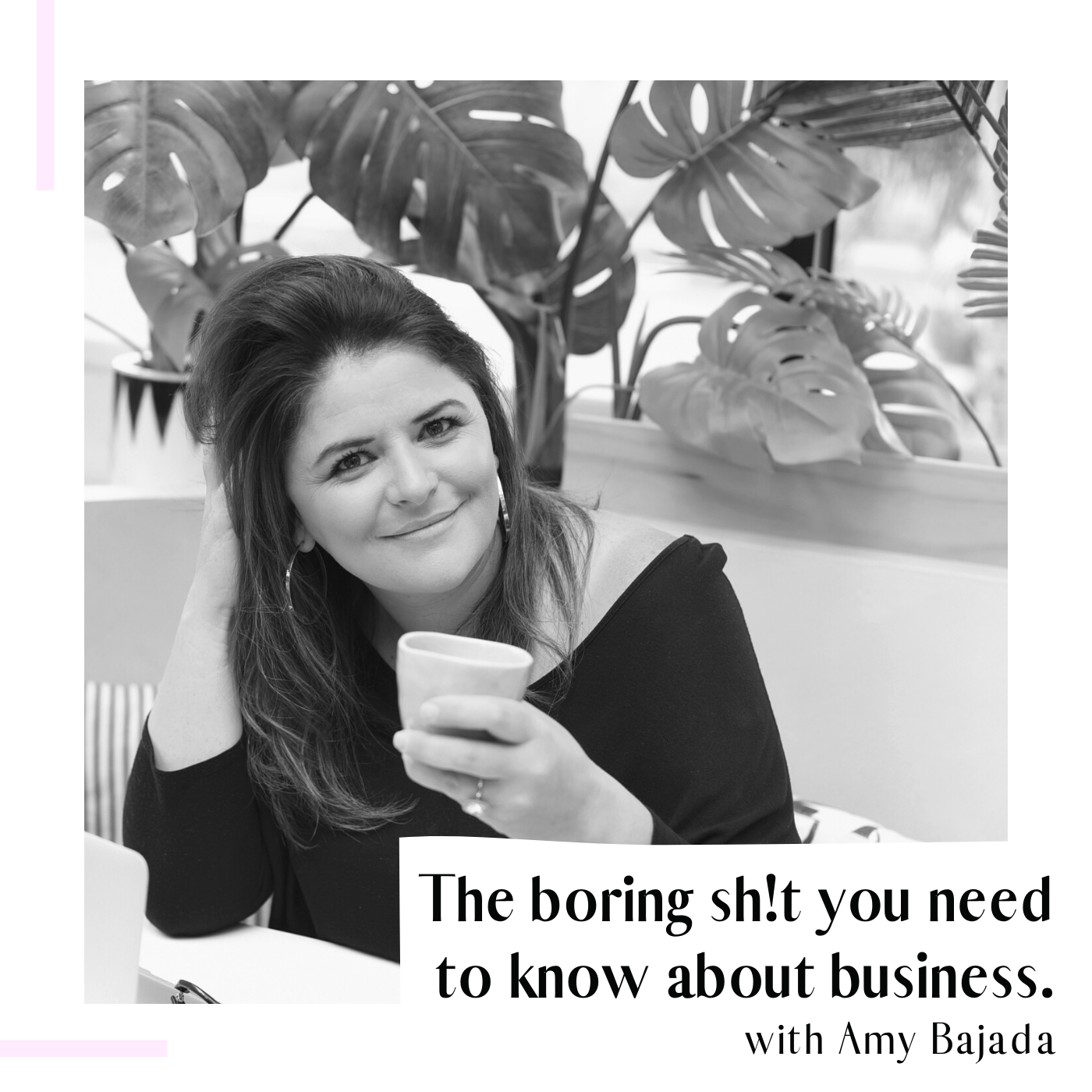
Ahh, the boring sh!t in business … you know the sh!t I’m talking about! Profit margins, cash flow, forecasting, strategy — the stuff that makes most business owners’ eyes roll. But here’s the truth: these numbers are the heart and soul of your business.This podcast is for small business owners who want to finally get clear on their cash flow, boost their profit, and build a business that lasts. Each episode breaks down complex financial concepts into straight-talking, practical tips you can actually use. Think of it as your no-BS guide to money management, pricing, and business growth.I’ve built this platform to bust the stigma that finance is boring. Here, you’ll find education, fun, a little sass, and plenty of real-world strategies that will change the way you look at your numbers. Don’t believe me? Hit play and see how cash flow can actually be kinda sexy. A x
Pitch Analysis
Required Pod Score for this show. PitchCentric checks your profile against host openness, topical fit, and audience signals before you generate a pitch.
Contact path
Verified email
Booking probability
42%
Guest openness
Selective
Verified email on file
80/100
Required Score
Sign up to generate a grounded pitch for The boring sh!t in business Podcast with Amy Bajada.
What is The boring sh!t in business Podcast with Amy Bajada?
The boring sh!t in business Podcast with Amy Bajada is a business podcast hosted by AmyBajada, with 100 episodes on record and a Required Pod Score of 80. PitchCentric scores this show on Booking Probability, Listen Score, and live audience signals refreshed every 24 hours.
About the host
AmyBajada hosts The boring sh!t in business Podcast with Amy Bajada, a business show with 100 episodes published.
Our AI reads these to draft pitches. Use them as grounding for a pitch that cites a real guest and a specific topic.
Episode #236
EPISODE 236 : Before you offer that discount .. do the maths!
Aug 18, 202622 min
“It’s only 10% off…” But what if that 10% discount actually wipes out a third of what you were going to make on the sale? That’s the conversation we’re having this week. Because discounting isn’t necessarily bad for business. Used strategically, it can help move stock, fill unused capacity, encourage commitment, improve cashflow or bring new customers through the door. The problem is when discounting becomes a reaction rather than a strategy. A customer asks for a better price. Sales are a little quiet. A competitor launches an offer. You’re worried they might say no. So you knock a little off. But did your costs come down too? Did the work reduce? Did the time involved suddenly become worth less? Probably not. In this episode, we’re looking at what a discount really costs your business, why a small reduction in price can have a much bigger impact on your margin, and how much extra you may need to sell just to get back to where you started. We’ll also talk about when discounting can make good commercial sense, what you should be getting in return, and the questions I want you to ask before offering your next deal, package or promotion. Because I’m not here to tell you to never discount. I just don't want you giving away your margin accidentally. Have a listen before you offer that next 10% off.
EPISODE 235 : Can your business actually afford you?
Aug 11, 202622 min
Can Your Business Actually Afford You? We ask whether our business can afford a new employee, new software, a bigger space or another investment all the time. But when was the last time you asked whether your business can actually afford you? Because if your business only works financially because you work for free, work ridiculous hours, take whatever money happens to be left, or continually absorb the jobs the business can't afford to pay someone else to do… we need to have a conversation about whether the business model actually works. In this episode, we're talking about the hidden “owner subsidy” that exists in so many small businesses — the unpaid time, energy and capacity business owners contribute without ever recognising it as a real cost. We'll look at the difference between what you take from your business and what it would actually cost to replace everything you do, why growth can sometimes make the problem worse, and the uncomfortable question every business owner should be asking: What would my business need to look like to afford me properly? This isn't about suddenly giving yourself a massive pay rise. It's about recognising that you are not the free resource in your business. Because at the end of the day, your business shouldn't only work because you do — it should work for you, too.
EPISODE 234 : GUEST EPISODE : Joanne Caruso from Joanne’s Temple Colonics and Wellness
Aug 7, 202631 min
What happens when you love what you do… but realise passion alone isn't enough to keep the business going? In this episode, I'm joined by the wonderful Joanne Caruso from Joanne's Temple Colonics and Wellness Centre. Joanne's journey into business is an incredibly personal one. After more than 30 years in corporate HR, and following some heartbreaking changes in her life, she made the decision at 50 to finally pursue work that meant something to her. Three years into running her own business, though, Joanne has discovered something so many small business owners eventually do: Being good at what you do and understanding how your business works financially are two very different things. We talk openly about what changed when Joanne started paying closer attention to her numbers — from realising that having a buffer in the bank didn't necessarily mean she was financially secure, to understanding her cashflow, reviewing her spending and making the difficult decision to increase her prices for the first time in three years. And I love that Joanne doesn't pretend that knowing her numbers suddenly made everything easy. Some of it still scares her. The difference? Now she can plan. She can see a quieter period coming and do something about it. She can make decisions about pricing based on what the business actually needs. And she can start thinking seriously about growth, including bringing another clinician into the business. This is such a real conversation about the evolution that happens when we stop avoiding the numbers and start using them. Because knowing your numbers isn't about having everything figured out. Sometimes it's simply about finally having something to work with. Take a listen .. Joanne's Details below https://joannestemplecolonics.com.au/ https://www.instagram.com/joannestemplecolonics/ https://www.facebook.com/JoannesTempleColonics https://www.tiktok.com/@joannes_temple
EPISODE 233 : Stop Watching Your Bank Balance (Watch These 5 Numbers Instead)
Jul 28, 202614 min
How many times have you checked your bank balance today? If you're like most small business owners... probably more than once. We often use our bank balance as the scoreboard for our business. If there's money in the account, we feel okay. If it's looking a little tight, we start questioning everything. But here's the truth... Your bank balance tells you where you've been. It doesn't tell you where you're going. In this episode, I'm cutting through the noise and challenging one of the biggest myths in small business. Forget the twenty KPIs Google tells you to track. Most business owners don't need another complicated dashboard... they simply need to understand the numbers that help them make better decisions. I'll walk you through the five numbers I believe every small business owner should know and, more importantly, why each one matters. We'll explore: Why your bank balance can give you a false sense of security (or unnecessary panic). The difference between having money in the bank and having cash available. Why a simple cash flow forecast can completely change your decision-making. The number that tells you whether you're actually making money, not just staying busy. How outstanding invoices quietly drain your cash flow. Why capacity is one of the most overlooked numbers in business. How asking five simple questions each week can replace uncertainty with confidence. Because the goal isn't to become an accountant. The goal is to become a better decision-maker. If you've ever felt overwhelmed by reports, confused by financial jargon, or wondered which numbers actually deserve your attention, this episode is for you. Tune in now and discover the five numbers that could completely change the way you run your business. — Connect with Me (Amy) If today's episode resonated with you, I'd love to help you build greater confidence around your business finances. Learn more about my Small Business Cashflow Course Book a Discovery Call Follow along on Instagram and Facebook for more practical business and cashflow tips.
EPISODE 232 : Hey Google ... Where's my Money Going?
Jul 21, 202613 min
"Where's my money going?" If you've ever found yourself typing those words into Google (or ChatGPT), you're certainly not alone. In fact, it's one of the most common questions business owners search for. The problem is... Google can give you thousands of possible answers, but it can't tell you what's actually happening in your business. In this episode, we're exploring why so many business owners are searching for quick fixes, why those answers often leave us feeling even more overwhelmed, and why understanding your numbers is about so much more than simply finding another expense to cut. We'll talk about: Why "Where's my money going?" might actually be the wrong question. The difference between information and understanding. Why business owners aren't really searching for answers—they're searching for certainty. How small financial decisions quietly compound over time. Why the real shortcut isn't another Google search... it's knowing what to look for. After almost 30 years working alongside small business owners, I've learnt that the biggest breakthroughs don't come from finding more information—they come from asking better questions and understanding what your numbers are really trying to tell you. If you've ever looked at your bank account and wondered where all your hard work has gone, this episode is for you. Ready to stop guessing? If you'd like to understand your business finances without spending months trying to piece everything together yourself, my Small Business Cashflow Course was created for exactly that. I've taken nearly 30 years of experience and distilled it into five practical, easy-to-follow modules designed specifically for small business owners—no accounting degree required. Because the real shortcut isn't finding more information... It's learning what actually matters. Thanks for listening! If this episode resonated with you, I'd love it if you subscribed, left a review, or shared it with another business owner who might need to hear this conversation.
Every question we get asked before someone starts their trial.
If you have a concern about deliverability, AI quality, data privacy, or whether this will actually work for your specific situation, it's probably answered below.
What is the difference between Founder Solo and Founder Pro?
Founder Solo gives you 50 AI pitches per month using the credit model (Standard pitches cost 1 credit, Enriched pitches cost 2). Founder Pro raises that to 200 credits per month and adds full Booking Probability access, unlimited Magic Match, Apollo enrichment credits, and data export capabilities. Both plans use the same credit system, so you can stretch your monthly budget further by using Standard-mode drafting.
How do agency tiers work?
Agency tiers have no base fee. You pay per managed client and per talent profile. Agency Standard is $199 per client per month; Agency Pro is $399 per client per month. Both add $39 per talent profile per month. Your own team's user seats are always free.
What is a talent profile?
A talent profile represents one person (founder, executive, or spokesperson) you are booking onto podcasts. It includes their bio, topics, headshots, and outreach history. Team plans include 5 profiles; agency plans are pay-as-you-go.
Can I switch plans later?
Yes, at any time. Upgrades take effect immediately; downgrades apply at the end of the current billing period. Contact support if you need help migrating between plan families.
Do you offer a free trial?
Every paid plan includes a 15-day free trial. Your card is saved at signup but you will not be charged until day 16. Cancel any time from your dashboard.
What happens if I cancel?
You keep access until the end of your current billing period. No charges after that. Your data is retained for 30 days in case you reactivate.
Is the 20% annual discount automatic?
Yes. Select Annual on the pricing toggle and the discounted price is applied automatically at checkout. The annual price shown is the full year cost.
What if I have more than 50 profiles or 20 clients?
That is our Enterprise tier. Contact our sales team and we will build a custom plan with volume pricing, a dedicated account manager, and SLA guarantees.