Where big feelings are welcome, tricky behaviour isn’t shamed, and early childhood educators finally feel seen. Are you an educator, teacher, or school leader navigating the messy, beautiful world of guiding children’s behaviour, emotions, and sense of belonging? You’ve just found your people. I’m Danica - early childhood mentor and consultant, and your go-to gal for honest, heart-led conversations about what actually works when supporting young children. Inside The Bloom Room, we go beyond sticker charts and surface-level strategies. Each week, I bring you fresh episodes packed with: ✨ Real, evidence-informed tools you can use tomorrow. ✨ Thoughtful chats with experts and educators doing the work. ✨ Practical guidance for supporting behaviour without shame. ✨ A whole lot of validation, nuance, and “OMG SAME” moments. Whether you're a seasoned leader or fresh out of uni, this is your space to grow, reflect, and reimagine what’s possible for the chil
Pitch Analysis
Required Pod Score for this show. PitchCentric checks your profile against host openness, topical fit, and audience signals before you generate a pitch.
Contact path
Verified email
Booking probability
33%
Guest openness
Selective
Verified email on file
80/100
Required Score
Sign up to generate a grounded pitch for The Bloom Room: An Early Childhood Podcast.
What is The Bloom Room: An Early Childhood Podcast?
The Bloom Room: An Early Childhood Podcast is a education podcast hosted by Danica See, with 65 episodes on record and a Required Pod Score of 80. PitchCentric scores this show on Booking Probability, Listen Score, and live audience signals refreshed every 24 hours.
About the host
Danica See hosts The Bloom Room: An Early Childhood Podcast, a education show with 65 episodes published.
Our AI reads these to draft pitches. Use them as grounding for a pitch that cites a real guest and a specific topic.
The Bloom Room: An Early Childhood Podcast
EP 65 | Is It Really the Child… or Is It the Environment?
Sep 7, 202633 min
Why can a child cope beautifully in one environment yet really struggle in another? Behaviour is incredibly contextual, and the spaces children spend their time in can have a much bigger influence on behaviour and regulation than we sometimes realise. In this episode, I’m unpacking why the environment is plays a major role in our behaviour support ecosystem - and why the most useful thing we can change is often what’s happening around the child. You’ll hear: ✨ How visual and auditory input can contribute to dysregulation ✨ Why opportunities for movement matter - and what happens when children are constantly asked to contain their bodies ✨ How spatial flow and bottlenecks can accidentally create behaviour hotspots ✨ Why felt safety, relational safety and belonging shape the emotional climate of a space The more we pay attention to where and when behaviour is happening, the better placed we are to notice potential mismatches and to make small, intentional changes that can make things easier for children and educators. Please note - very (very) mild coarse language in this episode. I cover the environment in much greater detail in my guide ‘The Stories of the Space’ - check it out here Let's Connect! Want to feel joy in your teaching again (and not like you're spending every moment putting out behaviour spot fires)? Join the waitlist for my course: The Behaviour Reset Want to know how to respond to baffling behaviours better? Download my free guide with 90 behaviour scripts Join me on Instagram: @littlebloom.consultancy
EP 64 | The Behaviour Cheat Code: Understanding Childhood Temperament
Aug 31, 202626 min
Why can two children experience exactly the same thing... and respond completely differently? Temperament gives us a really useful window into how children experience and respond to the world around them, and understanding it can change the way we make sense of behaviour. In this episode, I’m unpacking why I think temperament is one of the closest things we have to a behaviour cheat code. You’ll hear: ✨ The three broad temperament types: slow-to-warm, easygoing and spirited ✨ The assumptions we can make about each (and why we need to question them) ✨ Why understanding temperament gives us some pretty powerful predictive information ✨ What goodness of fit means and how we can adapt our support to the child in front of us The more we understand about the child showing us the behaviour, the better placed we are to anticipate what they might find tricky - and support them through it. I cover temperament in much greater detail in my guide 'Tuning In To Temperament' - check it out here Let's Connect! Want to feel joy in your teaching again (and not like you're spending every moment putting out behaviour spot fires)? Join the waitlist for my course: The Behaviour Reset Want to know how to respond to baffling behaviours better? Download my free guide with 90 behaviour scripts Join me on Instagram: @littlebloom.consultancy
Consequences get a pretty bad rap in behaviour support. Sometimes, fairly so. They’re widely misused, often completely disconnected from learning, and becoming more and more punitive - b ut consequences and punishment are not the same thing. In this episode, I’m unpacking how consequences can have a place in rights-affirming behaviour support - and become powerful teaching tools - when we use them intentionally. You’ll hear: ✨ Three common misconceptions about consequences and accountability ✨ The difference between natural, logical and illogical consequences ✨ Why consequences are only one tool in a much bigger toolkit ✨ When logical consequences can actually support learning (and when they probably won’t) ✨ The Five Rs Framework (from Amy McReady) for creating teachable consequences If you've ever felt lost with implementing effective consequences, this one’s for you. Let's start to shift our focus from whether consequences are "good" or "bad" to whether they actually help children learn. Let's Connect! Want to feel joy in your teaching again (and not like you're spending every moment putting out behaviour spot fires)? Join the waitlist for my course: The Behaviour Reset Want to know how to respond to baffling behaviours better? Download my free guide with 90 behaviour scripts Join me on Instagram: @littlebloom.consultancy
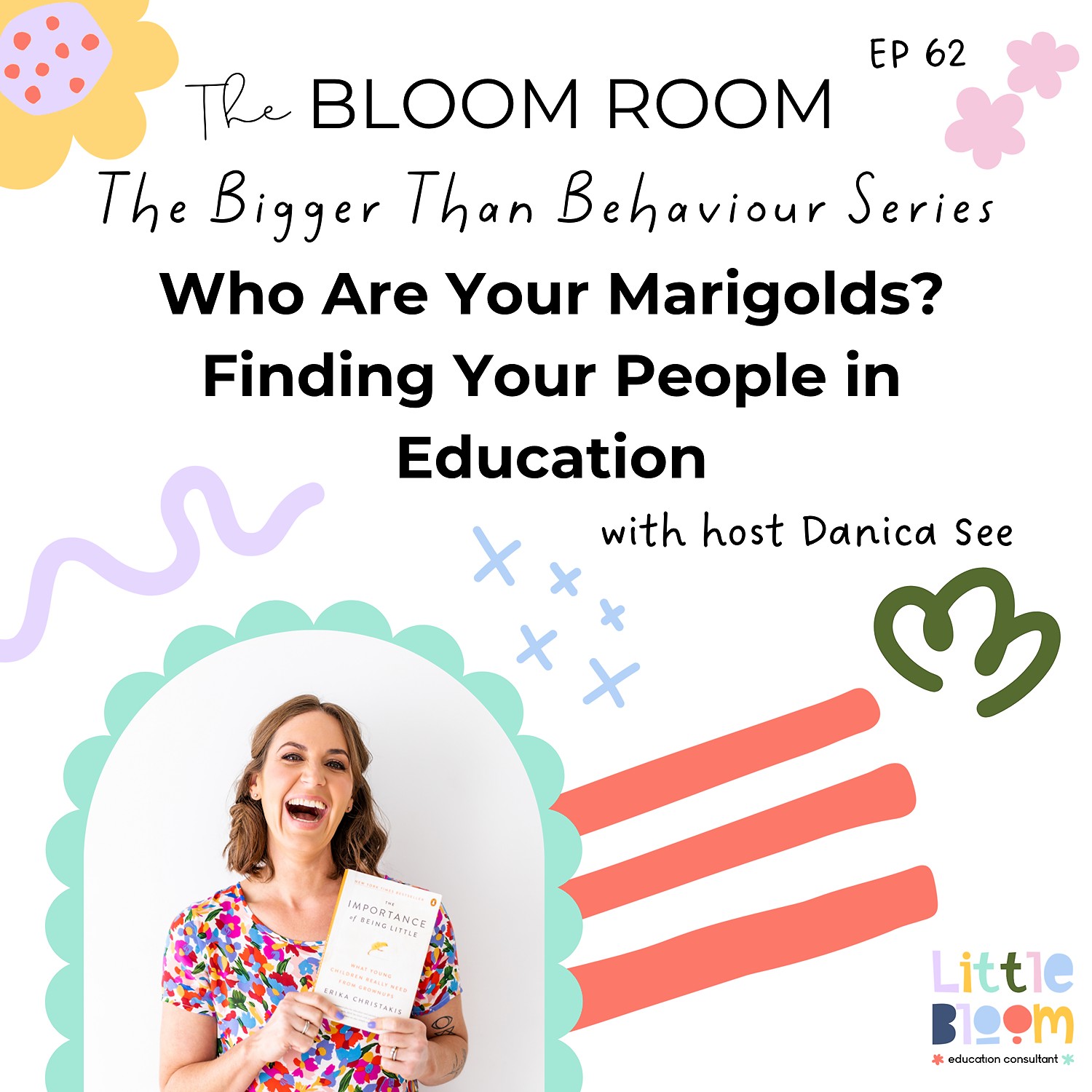
EP 62 | Who Are Your Marigolds? Finding Your People in Education
Aug 17, 202628 min
This is the final episode of The Bigger Than Behaviour Series! There’s a lot about education that feels heavy right now, and this series has made space for that heaviness - but there’s something else I think we need to talk about: the people we move through the system with. In this episode, I’m exploring the idea of finding your Marigolds - the people who help us grow, remind us who we are when things get hard, and give us somewhere safe to put the messy parts of this work. You’ll hear: ✨ Why finding your people matters when you’re working within systems you can’t always change ✨ Who our Marigolds are - and why we need to look out for pesky walnut trees ✨ What my own experiences with both marigolds and walnut trees taught me about whose voices we allow to shape our own ✨ Why I believe I wouldn’t be the teacher I am today without my marigolds This isn’t a conversation about surrounding ourselves with positive people and pretending the hard stuff isn’t hard. Our people can’t fix the education system, and they can’t remove every barrier or answer the questions we’re carrying. BUT They can sit beside us in the messy middle without making us more hopeless. They can help us stay connected to our values, our voice, our hope, and the reasons we chose this work in the first place. Please note - very (very) mild coarse language in this episode. Read Find Your Marigold: The One Essential Rule for New Teachers from Jenn Gonzalez Let's Connect! Join the waitlist my course: The Behaviour Reset Want to know how to respond to baffling behaviours better? Download my free guide with 90 behaviour scripts Join me on Instagram: @littlebloom.consultancy
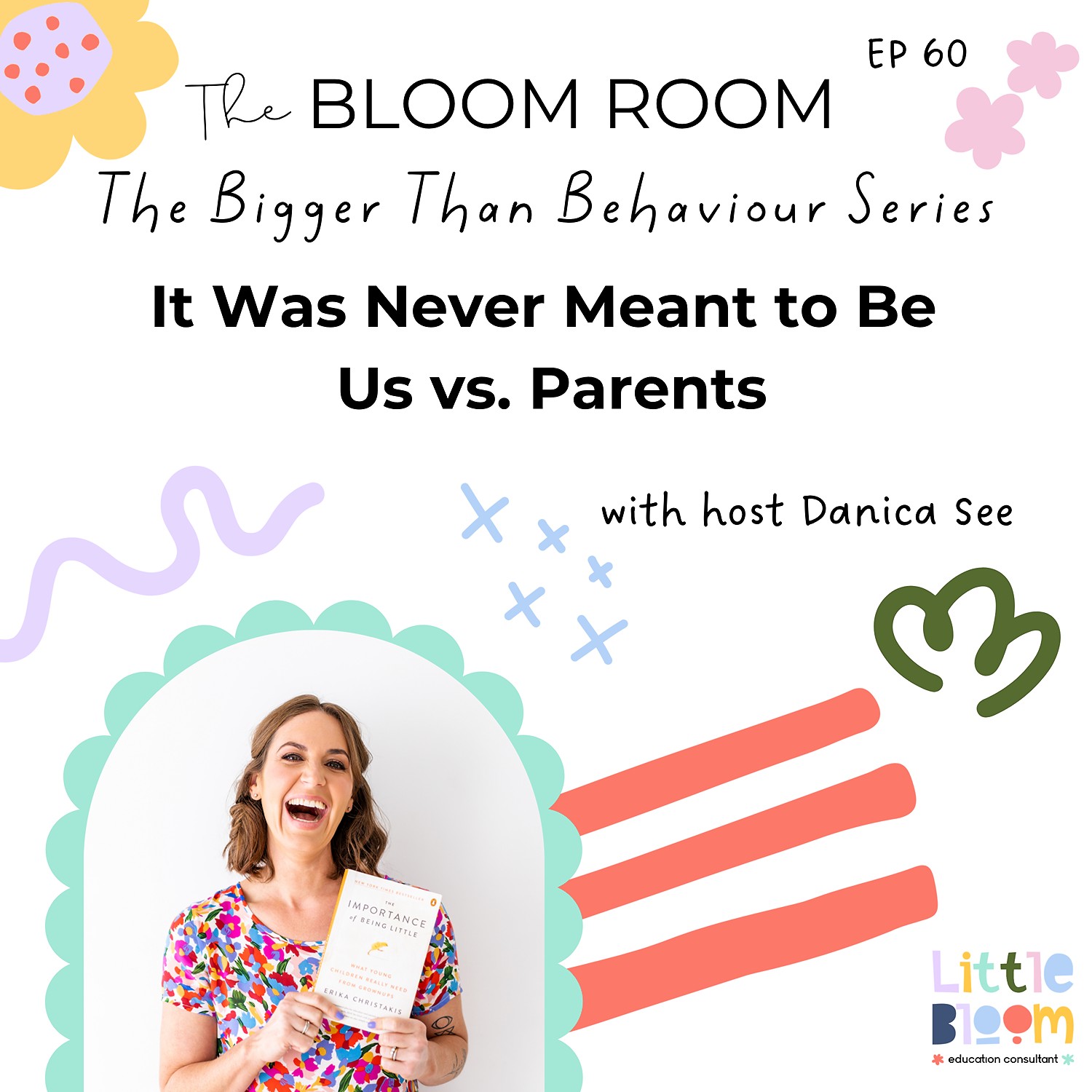
EP 60 | It Was Never Meant to Be Us vs. Parents with Abby Thomason
Aug 3, 20261h 12m
It's easy it is to fall into blame - parents blaming educators, educators blaming parents. And when we do? The children miss out. In this episode, I sit down with Abby Thomason from Early Emotions to explore what happens when we stop searching for who's at fault and start exploring what children - and the adults around them - actually need. Together, we unpack why children's mental health is still treated differently from every other area of development, why early intervention shouldn't stop at speech or motor skills, and what happens when educators are expected to carry more than they were ever trained or supported to. We also explore the growing rates of preschool suspension and expulsion, the importance of supporting adults to respond to children's emotions, and why meaningful partnerships between families and educators have never been more important. You'll hear: ✨ Why children's mental health deserves the same attention as physical and developmental milestones ✨ The gap between identifying concerns and accessing meaningful support ✨ Why supporting children starts with supporting the adults around them ✨ What rising preschool suspension and expulsion rates reveal about our systems ✨ How blame creates distance between educators and families ✨ Why genuine partnership is one of the most powerful protective factors for children ✨ What gives Abby hope for the future of early childhood education This conversation is a reminder that behaviour is never just about the child. Creating better outcomes for children has never been about choosing between parents and educators; it's about building systems where both feel supported enough to stand on the same side. Connect with Abby on Insta @earlyemotions Download Abby's free guide - Navigating Little People's Big Emotions Want to know how to respond to baffling behaviours better? Click here to download my free guide with 90 behaviour scripts inside! Let's Connect! Join me on Instagram @littlebloom.consultancy Learn more about my course The Behaviour Reset
Every question we get asked before someone starts their trial.
If you have a concern about deliverability, AI quality, data privacy, or whether this will actually work for your specific situation, it's probably answered below.
What is the difference between Founder Solo and Founder Pro?
Founder Solo gives you 50 AI pitches per month using the credit model (Standard pitches cost 1 credit, Enriched pitches cost 2). Founder Pro raises that to 200 credits per month and adds full Booking Probability access, unlimited Magic Match, Apollo enrichment credits, and data export capabilities. Both plans use the same credit system, so you can stretch your monthly budget further by using Standard-mode drafting.
How do agency tiers work?
Agency tiers have no base fee. You pay per managed client and per talent profile. Agency Standard is $199 per client per month; Agency Pro is $399 per client per month. Both add $39 per talent profile per month. Your own team's user seats are always free.
What is a talent profile?
A talent profile represents one person (founder, executive, or spokesperson) you are booking onto podcasts. It includes their bio, topics, headshots, and outreach history. Team plans include 5 profiles; agency plans are pay-as-you-go.
Can I switch plans later?
Yes, at any time. Upgrades take effect immediately; downgrades apply at the end of the current billing period. Contact support if you need help migrating between plan families.
Do you offer a free trial?
Every paid plan includes a 15-day free trial. Your card is saved at signup but you will not be charged until day 16. Cancel any time from your dashboard.
What happens if I cancel?
You keep access until the end of your current billing period. No charges after that. Your data is retained for 30 days in case you reactivate.
Is the 20% annual discount automatic?
Yes. Select Annual on the pricing toggle and the discounted price is applied automatically at checkout. The annual price shown is the full year cost.
What if I have more than 50 profiles or 20 clients?
That is our Enterprise tier. Contact our sales team and we will build a custom plan with volume pricing, a dedicated account manager, and SLA guarantees.