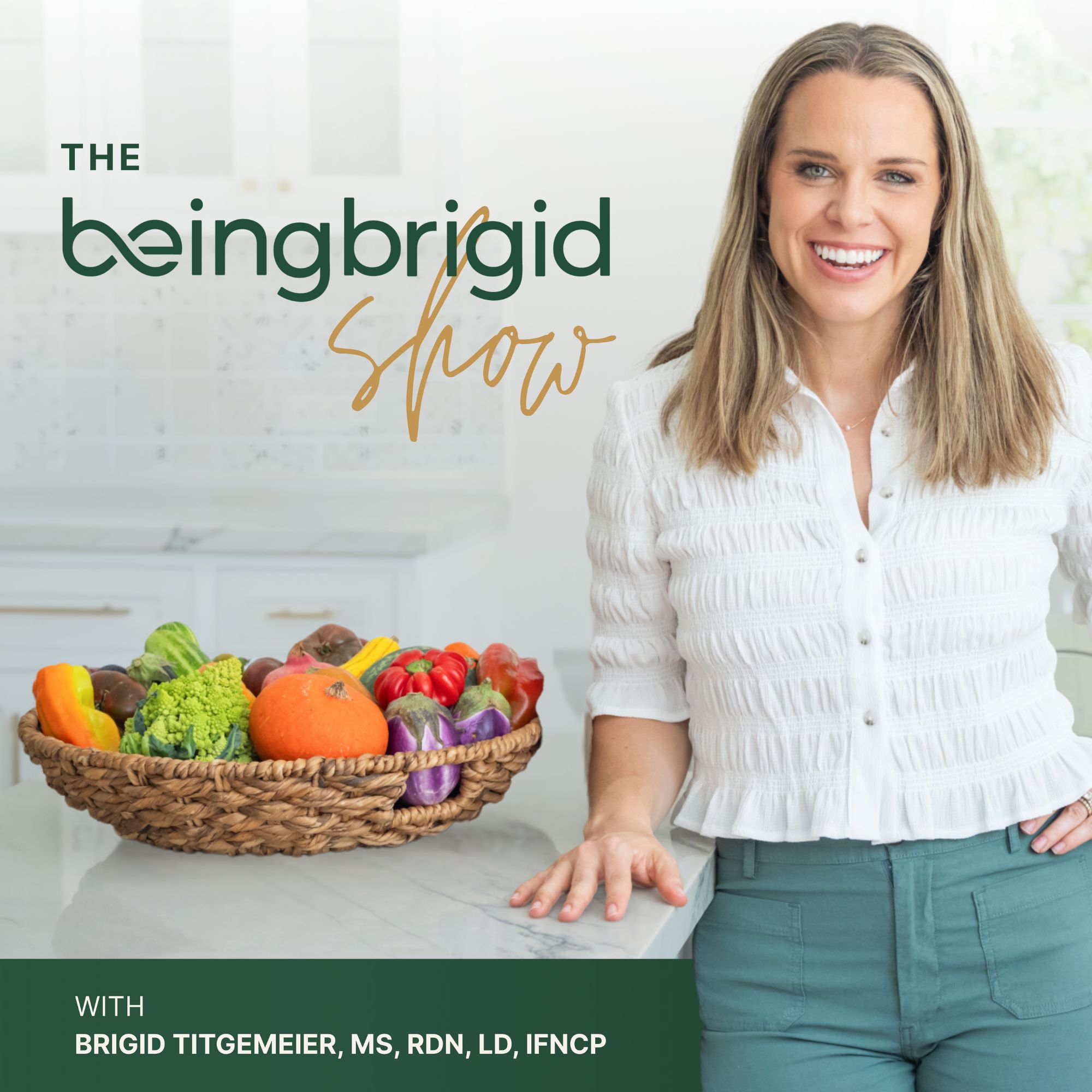
The BeingBrigid Podcast is a candid, empowering, and deeply practical show for women in their mid-30s to 60s who are done with surface-level health advice. Hosted by Functional Medicine Dietitian Brigid Titgemeier, this podcast provides the missing piece in most women’s health conversations: context, clarity, and compassion. If you're struggling with energy crashes, hormonal changes, weight gain, chronic inflammation, or thyroid dysfunction, this show meets you where you are—with science-backed strategies that actually work, without the fads, fluff, or fearmongering. Brigid takes complex topics like blood sugar, muscle loss, perimenopause, and gut health and breaks them down into actionable guidance that fits your life. After a decade of helping thousands of women transform their health, Brigid uncovers what truly works, pulling back the curtain on the real, personalized solutions that make a difference. Conventional care isn’t broken, but it doesn’t offer the time, depth, or personalization most women need. The BeingBrigid Podcast bridges that gap with grounded expertise and conversations that respect your lived experience. What you’ll hear: - Deep dives into metabolic health, cravings, mental clarity, and perimenopause - Real client transformation stories - Expert interviews with leaders in functional medicine, women's health, and mindset If you're asking the following questions, you're in the right place: - How can I balance my hormones and manage perimenopause naturally? - What strategies can help me manage chronic inflammation and boost my energy? - How do I stabilize my blood sugar and avoid cravings? - How do I avoid diet burnout and stay consistent with my health journey? - Can functional medicine help with thyroid dysfunction or Hashimoto’s? - What’s the best way to eat for sustainable weight loss and longevity? - How do I heal my gut naturally and support my digestion? This is the podcast for when you’re ready to take control of your health, understand your body more deeply, and take action to feel truly supported on your journey.
Pitch Analysis
Required Pod Score for this show. PitchCentric checks your profile against host openness, topical fit, and audience signals before you generate a pitch.
Contact path
Public web form
Booking probability
31%
Guest openness
Selective
81/100
Required Score
Sign up to generate a grounded pitch for The BeingBrigid Show: Top Science-Backed Women’s Health Podcast for Hormones, Inflammation, Gut Health & More.
What is The BeingBrigid Show: Top Science-Backed Women’s Health Podcast for Hormones, Inflammation, Gut Health & More?
The BeingBrigid Show: Top Science-Backed Women’s Health Podcast for Hormones, Inflammation, Gut Health & More is a health podcast hosted by Unknown Host, with 59 episodes on record and a Required Pod Score of 81. PitchCentric scores this show on Booking Probability, Listen Score, and live audience signals refreshed every 24 hours.
About the host
Unknown Host hosts The BeingBrigid Show: Top Science-Backed Women’s Health Podcast for Hormones, Inflammation, Gut Health & More, a health show with 59 episodes published.
Our AI reads these to draft pitches. Use them as grounding for a pitch that cites a real guest and a specific topic.
Episode #58
How to Protect Against Alzheimer's & Calm Hidden Brain Inflammation with Dr. David Perlmutter
Aug 17, 20261h 7m
What if the way you eat, sleep, move, and manage your blood sugar today is quietly shaping your brain health decades from now? According to neurologist and bestselling author Dr. David Perlmutter, the conversation around Alzheimer's prevention needs to start much earlier—and it starts with metabolism. In this episode of The BeingBrigid Show, Brigid sits down with Dr. Perlmutter to unpack the groundbreaking connection between metabolism, inflammation, blood sugar, and the brain's immune system. They explore how metabolic dysfunction can influence microglial cells, why insulin resistance may be a major threat to long-term brain health, and what you can do now to build your own "brain defense system." Dr. Perlmutter also explains the science behind his new book, Brain Defenders, and shares practical strategies around nutrition, exercise, muscle mass, sleep, environmental toxins, and continuous glucose monitoring that can support cognitive health and longevity. What You’ll Learn In This Episode: Why blood sugar, insulin resistance, and metabolic health have such profound implications for brain health The connection between chronic inflammation, gut health, the blood-brain barrier, and cognitive decline Why Alzheimer's prevention needs to begin decades before cognitive symptoms appear How ultra-processed foods can challenge metabolism and potentially affect the brain's immune system Why muscle mass is an important part of brain health and longevity The role of both aerobic exercise and resistance training in protecting the brain How air pollution and other environmental exposures can contribute to inflammation Why supplements can't compensate for an inflammatory, high-glycemic diet How lifestyle changes may help support brain health even in people with an APOE4 genetic predisposition Why prevention—and taking ownership of your health—is so important for long-term cognitive function Timestamps: 00:00 Introduction to Brain Immunity and Neurodegeneration 02:09 The Science of Immunometabolism and Brain Cells 04:00 Metabolic Compromise and Microglial Activation 05:27 The Connection Between Metabolism and Alzheimer's Risk 07:49 Early Prevention and Lifestyle Choices 09:17 Microglia M1 and M2 States Explained 12:10 Ultra-Processed Foods and Brain Health 14:07 PET Imaging and Microglial Activation 16:00 Blood-Brain Barrier and Gut-Brain Connection 18:12 Imaging Microglia in Living Humans 19:50 The Cost of Neurodegenerative Diseases 21:47 Controlling Body and Brain Metabolism 24:02 Personal Motivation and Family Impact 28:01 Genetic Risks and Lifestyle Strategies 37:03 Lifestyle Interventions and Cognitive Preservation 41:09 Environmental Toxins and Brain Health 45:02 Air Quality and Inflammation 48:01 The Power of Diet and Exercise 56:04 Exercise Types for Brain Health 01:00:00 Building Muscle and Brain Benefits 01:01:50 Preventive Strategies for Brain Aging Your brain health isn't something you have to wait until your 70s to think about. The metabolic choices you make today can become part of your long-term strategy for eating for longevity, reducing inflammation, improving energy, and protecting cognitive health. Resources & Links: + Watch the full episode on YouTube + Dr. Perlmutter’s Website + Preorder Dr. Perlmutter’s Newest Book, Brain Defenders + Dr. Perlmutter’s Instagram + Dr. Perlmutter’s Youtube + Dr. Perlmutter’s Podcast
5 Things I Got Wrong About Nutrition, Food Sensitivities, and Hormones
Aug 10, 202641 min
What if the nutrition advice you followed five years ago isn't what your body needs today? Science evolves—and so should we. In this honest and vulnerable solo episode, Brigid shares five nutrition beliefs she has completely changed her mind about after more than 12 years as a functional medicine dietitian helping over 30,000 women improve their health. From hormones and GLP-1 medications to calorie counting, ketogenic diets, and food sensitivity testing, she explains why changing your mind isn't a weakness—it's what evidence-based healthcare should look like. If you've ever felt confused by conflicting nutrition advice, this episode will help you understand what the latest research says and how to make informed decisions that support your hormones, blood sugar, gut health, body composition, and long-term wellness. What You’ll Learn In This Episode: Why Brigid now believes hormone health deserves a much bigger role in women's nutrition The surprising way her perspective on GLP-1 medications has changed Why calories matter—but calorie obsession doesn't What she learned after personally following a ketogenic diet Why very low-carb diets aren't the answer for many women in perimenopause and menopause How food sensitivity testing can unintentionally create food fears The importance of blood sugar balance, metabolic health, and personalized nutrition Why great practitioners should never stop learning Timestamps: 00:00 – Why I'm sharing what I got wrong 02:10 – Lesson #1: Hormones deserve far more attention than I realized 08:55 – Lesson #2: My evolving opinion on GLP-1 medications 20:25 – Lesson #3: Calories matter—but not in the way you think 27:20 – Lesson #4: Why I no longer recommend very low-carb diets for most women 34:20 – Lesson #5: My biggest shift on food sensitivity testing 38:50 – Final thoughts on staying open to new science Resources & Links: + Watch the full episode on YouTube + Join The Being Collective + Brigid’s Website + Brigid’s Instagram Nutrition science is always evolving, and the best healthcare providers evolve with it. I hope this episode helps you feel empowered to ask questions, stay curious, and make nutrition decisions that support your unique body.
6 Things Wrecking Your Recovery, Sleep & HRV (According to Millions of Data Points) | Dr. Kristen Holmes
Aug 3, 20261h 15m
Could improving your health be less about doing more—and more about recovering better? What if one of the biggest predictors of your future health isn't your latest workout or diet... but how well your body recovers from stress? In this episode of The BeingBrigid Show, Brigid sits down with Dr. Kristen Holmes, Global Head Scientist at WHOOP and author of Aligned, to unpack what millions of data points reveal about recovery, heart rate variability (HRV), sleep, stress, and longevity. Together they explore practical habits that can improve recovery, support hormone health, optimize blood sugar, and help women navigate perimenopause and menopause with greater resilience. If you've ever wondered why you're exhausted despite eating well, why your blood sugar seems harder to control under stress, or how to actually improve your HRV, this episode is full of science-backed answers you can start using today. What You’ll Learn In This Episode: Why recovery is the foundation of long-term health What heart rate variability (HRV) actually measures—and why it matters The six biggest habits that improve sleep and recovery Why sleep consistency may matter more than sleep duration How alcohol affects HRV, recovery, and long-term health The surprising relationship between stress and blood sugar Why circadian rhythms play a critical role in hormone health The connection between recovery and healthy aging What WHOOP data reveals about women during perimenopause and menopause Why shift workers face higher risks for chronic disease—and what helps The role of Zone 2 exercise in improving recovery How time-restricted eating supports metabolic health and better sleep Practical ways to improve recovery without expensive biohacking Timestamps: 00:00 Introduction to Dr. Kristen Holmes and her work 01:25 Understanding recovery and sleep as foundational to health 02:44 Behavioral factors influencing recovery: alcohol, hydration, and sleep consistency 05:09 The importance of light exposure and circadian alignment 07:00 Impact of eating timing and digestion on sleep quality 09:46 Role of zone two activity and physical movement in recovery 11:04 Stress management and modern lifestyle challenges 13:12 The significance of heart rate variability (HRV) and its measurement 25:27 What HRV indicates about overall health and aging 37:29 Research on amplitude of circadian rhythms and menopause symptoms 43:09 Strategies for shift workers and their unique challenges 49:07 Supplementation and lifestyle tips for shift workers 52:25 The impact of sleep and lifestyle on cravings and metabolic health 55:29 The power of naps and managing sleep debt 01:00:40 Alcohol consumption, recovery, and HRV insights 01:04:27 The effects of alcohol on autonomic nervous system responsiveness 01:07:11 Blue zones, alcohol, and longevity myths 01:09:18 Where to find Dr. Kristen Holmes and her upcoming book Resources & Links: + Watch the full episode on YouTube + Dr. Kristen’s LinkedIn + Dr. Kristen’s Instagram + Dr. Kristen’s Upcoming Book, Aligned (available for purchase August 25, 2026) + Join The Being Collective + Brigid’s Website + Brigid’s Instagram Recovery isn't just something athletes need—it's something every woman needs to prioritize. Whether you're working on improving your energy, balancing hormones, supporting blood sugar, or simply feeling your best, the habits discussed in this episode can create lasting improvements in your health. If this episode helped you, be sure to subscribe, leave a review, and share it with someone who could benefit from these science-backed insights.
Leaky Gut, Brain Fog & Autoimmune Risk in Menopause with Cynthia Thurlow
Jul 27, 20261h 3m
What if the missing piece to your menopause symptoms isn't your hormones—but your gut? If you've been struggling with bloating, brain fog, fatigue, anxiety, constipation, inflammation, weight changes, or food sensitivities during perimenopause or menopause, this episode will completely change the way you think about women's health. Brigid sits down with nurse practitioner, bestselling author, and host of the Everyday Wellness Podcast, Cynthia Thurlow, to explore why the gut microbiome may be one of the most overlooked drivers of hormonal health. Together they unpack how declining estrogen affects your gut, why chronic stress and modern lifestyles can worsen inflammation, and the simple nutrition and lifestyle strategies that help support your microbiome through every stage of midlife. Whether you're navigating perimenopause, menopause, or simply want to protect your long-term health, this conversation is packed with practical, science-backed insights rooted in functional nutrition and the belief that food truly is medicine. What You’ll Learn In This Episode: Why gut health becomes increasingly important during perimenopause and menopause How estrogen influences the gut microbiome What the estrobolome is and why it matters for hormone health The connection between leaky gut, inflammation, and autoimmune disease Why gut health affects mood, anxiety, brain fog, and cognitive function How the vagus nerve connects your gut and brain Why blood sugar balance supports both gut and hormone health Foods and lifestyle habits that damage the microbiome How fiber, polyphenols, and plant diversity improve gut health Why protein alone isn't enough for healthy aging Practical strategies for reducing toxin exposure The role of gluten, alcohol, stress, and sleep in chronic inflammation Simple daily habits to improve gut health and support longevity Timestamps: 00:00 Introduction to Cynthia Thurlow and the focus on women's gut health 01:25 Why gut health is crucial during menopause 02:25 Hormonal changes and their impact on the microbiome 04:03 Effects of antibiotics and toxins on gut health 06:23 Blood sugar, inflammation, and gut health 09:15 Gut-brain connection and neurological symptoms 12:30 Leaky gut and its role in autoimmune disease 16:14 Autoimmune conditions and microbiome health 17:42 Lifestyle factors affecting gut health in midlife women 21:03 Changing lifestyle and diet as hormones decline 23:19 Estrobilum and estrogen detoxification 27:16 Toxin exposure and microbiome health 34:27 Supporting microbiome diversity during menopause 38:22 The importance of fiber and plant diversity 43:15 Supplements and practical tips for gut health 47:06 Foods to avoid and inflammatory triggers 50:38 The impact of gluten and leaky gut 55:25 Stress management and vagus nerve stimulation 58:36 Reflections on lifestyle changes and menopause 01:00:17 Resources and ways to connect with Cynthia Thurlow Resources & Links: + Watch the full episode on YouTube + Cynthia’s Website + Cynthia’s Instagram + Cynthia’s Facebook + Cynthia’s Twitter/X + Cynthia’s Youtube + Cynthia’s Podcast + Cynthia’s Substack + Join The Being Collective + Brigid’s Website + Brigid’s Instagram If this episode helped you better understand the powerful connection between your gut and your hormones, be sure to subscribe, leave a review, and share this conversation with a woman who deserves to feel her best. Every review helps us reach more women with science-backed strategies rooted in functional nutrition and food as medicine.
Hills I’ll Die On As a Dietitian When It Comes to Losing Weight & Belly Fat in Midlife
Jul 20, 202629 min
Why does belly fat suddenly become so much harder to lose—even when you're eating less and exercising more? If you've ever wondered why the strategies that worked in your 20s and 30s suddenly stop working during perimenopause or menopause, this episode is for you. Brigid breaks down the science behind insulin resistance, hormones, inflammation, and blood sugar—and explains why stubborn belly fat is about much more than calories. You'll learn the root causes behind metabolic changes as you age and the practical strategies that actually support sustainable fat loss, improved energy, and better hormone health. What You’ll Learn In This Episode: Why insulin resistance often develops years before pre-diabetes How estrogen impacts blood sugar and fat storage Why eating less and exercising more can backfire The surprising connection between cortisol, inflammation, and belly fat Why blood sugar balance matters more than calorie counting alone The role of muscle in improving insulin sensitivity Research on low-fat vs. low-carbohydrate diets Simple daily habits that support healthy metabolism Why belly fat increases inflammation—and vice versa How to reverse insulin resistance through Functional Nutrition Timestamps: 00:00 Introduction to Brigid and her mission 01:21 Why traditional weight loss advice often fails women 02:42 The role of estrogen in insulin sensitivity 03:40 Understanding insulin resistance and prediabetes 05:02 Why eating less and exercising more can backfire 07:15 Blood sugar balanced diet and its benefits 11:22 Hormonal changes during menopause and their impact 14:32 Visceral fat, inflammation, and metabolic risk 16:25 The cycle of insulin resistance and belly fat 18:19 Strategies to stabilize blood sugar and improve insulin sensitivity 20:12 Reversibility of insulin resistance and metabolic health 22:25 Lifestyle tips: movement, sleep, and stress management 24:13 Join the Blood Sugar Reset program 25:08 Success stories and motivation 26:30 Final thoughts and encouragement Resources & Links: + Watch the full episode on YouTube + Join The Summer Blood Sugar Reset + Join The Being Collective + Brigid’s Website + Brigid’s Instagram If this episode helped you better understand your body, be sure to subscribe, leave a review, and share it with someone who has been struggling with stubborn weight gain, blood sugar, or hormonal changes.
Recent guests on The BeingBrigid Show: Top Science-Backed Women’s Health Podcast for Hormones, Inflammation, Gut Health & More. Study who booked and why before you pitch.
Every question we get asked before someone starts their trial.
If you have a concern about deliverability, AI quality, data privacy, or whether this will actually work for your specific situation, it's probably answered below.
What is the difference between Founder Solo and Founder Pro?
Founder Solo gives you 50 AI pitches per month using the credit model (Standard pitches cost 1 credit, Enriched pitches cost 2). Founder Pro raises that to 200 credits per month and adds full Booking Probability access, unlimited Magic Match, Apollo enrichment credits, and data export capabilities. Both plans use the same credit system, so you can stretch your monthly budget further by using Standard-mode drafting.
How do agency tiers work?
Agency tiers have no base fee. You pay per managed client and per talent profile. Agency Standard is $199 per client per month; Agency Pro is $399 per client per month. Both add $39 per talent profile per month. Your own team's user seats are always free.
What is a talent profile?
A talent profile represents one person (founder, executive, or spokesperson) you are booking onto podcasts. It includes their bio, topics, headshots, and outreach history. Team plans include 5 profiles; agency plans are pay-as-you-go.
Can I switch plans later?
Yes, at any time. Upgrades take effect immediately; downgrades apply at the end of the current billing period. Contact support if you need help migrating between plan families.
Do you offer a free trial?
Every paid plan includes a 15-day free trial. Your card is saved at signup but you will not be charged until day 16. Cancel any time from your dashboard.
What happens if I cancel?
You keep access until the end of your current billing period. No charges after that. Your data is retained for 30 days in case you reactivate.
Is the 20% annual discount automatic?
Yes. Select Annual on the pricing toggle and the discounted price is applied automatically at checkout. The annual price shown is the full year cost.
What if I have more than 50 profiles or 20 clients?
That is our Enterprise tier. Contact our sales team and we will build a custom plan with volume pricing, a dedicated account manager, and SLA guarantees.