Slavery.
50 - Abolitionism.
Abolitionism. Slavery has existed, in one form or another, throughout recorded human history – as have, in various periods, movements to free large or distinct groups of slaves. In antiquity. Emperor Ashoka, who ruled...


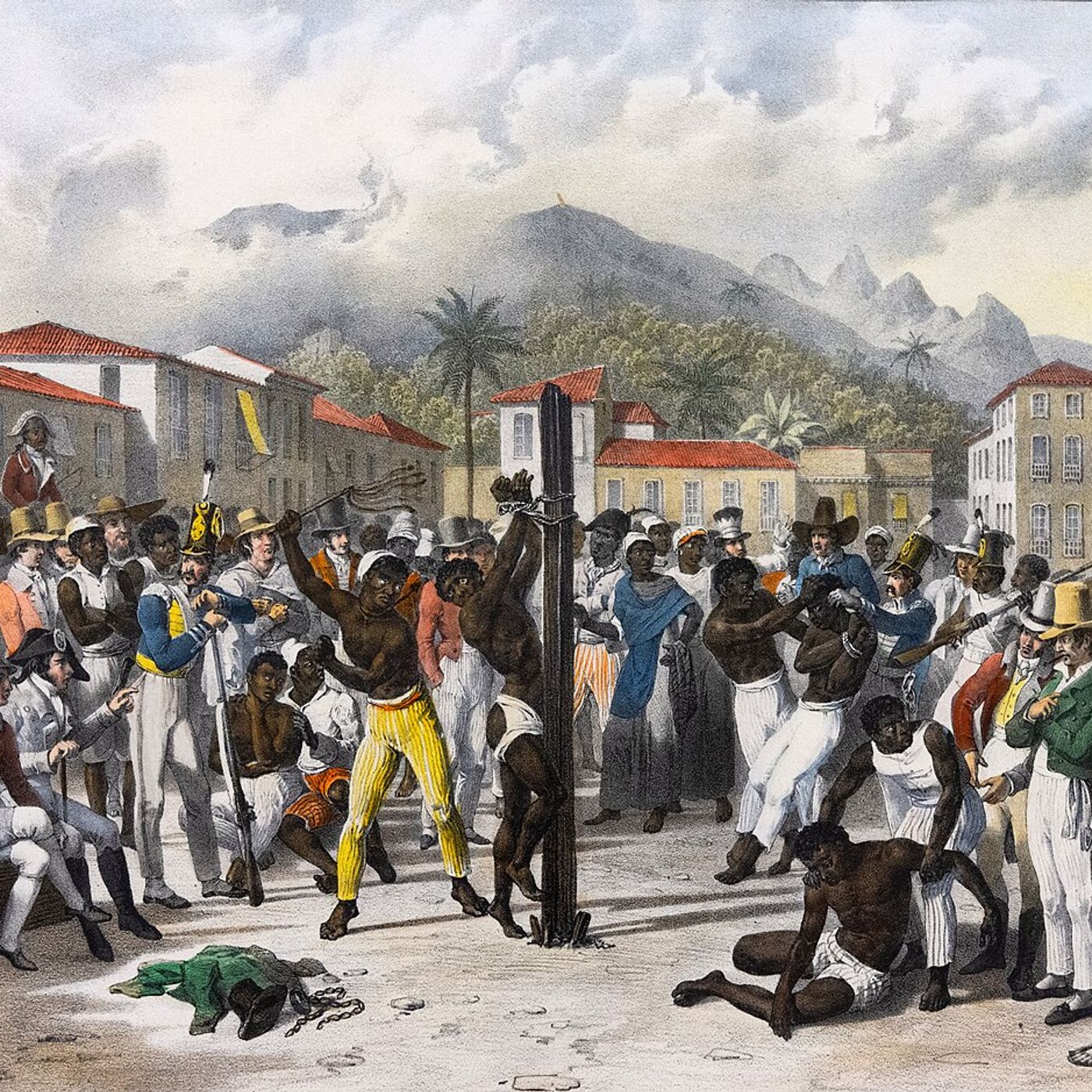
Slavery. Slavery is a socioeconomic institution in which individuals are treated as property, deprived of personal liberty, and compelled to provide unpaid labor or services to owners under coercion, often involving violence or the threat thereof, with the legal right to buy, sell, inherit, or punish the enslaved. This practice, rooted in the exercise of power over war captives, debtors, or conquered peoples, has manifested across diverse forms—from chattel systems denying all autonomy to debt bondage retaining nominal freedoms—but consistently entails the owner's absolute control over the slave's body, labor, and reproduction. Historically, slavery underpinned economies and societies in nearly every major civilization, from ancient Mesopotamia and Egypt through classical Greece and Rome—where slaves comprised 20-30% of urban populations and drove mining, agriculture, and domestic work—to medieval Islamic empires, sub-Saharan African kingdoms, Indian caste systems, and Ottoman domains. In Africa, internal enslavement of war prisoners and criminals predated external trades, with slaves integrated into households, farms, or as status symbols in societies like those of the Ashanti and Dahomey, often fueling exports to Arab and later European markets. In terms of the scale, empirical data reveal the transatlantic trade's shipment of about 12 million Africans to the Americas from 1500 to 1866, alongside roughly 6 million via trans-Saharan, Red Sea, and Indian Ocean routes to the Islamic world over centuries, highlighting slavery's global, multi-directional causality rather than confinement to any single region or ideology. These trades, sustained by African elites capturing and selling rivals alongside foreign demand, generated vast wealth but entrenched cycles of violence, depopulation, and underdevelopment in source areas. Abolition emerged unevenly from the late 18th century, propelled by Enlightenment critiques of absolutism, evangelical moralism, and industrial shifts reducing reliance on coerced labor, culminating in legal bans by Western powers—Britain in 1833, the U.S. in 1865—though enforcement lagged and modern variants like forced labor and trafficking persist, affecting an estimated 50 million people today amid uneven global progress. Controversies endure over slavery's legacies, including economic disparities traceable to trade intensities and debates on reparative justice, yet causal analysis underscores its roots in universal human incentives for domination and resource extraction, not unique cultural pathologies.

Required Pod Score for this podcast. PitchCentric checks your profile against host openness, topical fit, and audience signals before you generate a pitch.
Contact path
Verified email
Booking probability
30%
Guest openness
Selective
Sign up to generate a grounded pitch for Slavery..
Signup to Generate a PitchSlavery. Slavery is a socioeconomic institution in which individuals are treated as property, deprived of personal liberty, and compelled to provide unpaid labor or services to owners under coercion, often involving violence or the threat thereof, with the legal right to buy, sell, inherit, or punish the enslaved.
Recent episodes include "50 - Abolitionism." (19 May 2026, 13 minutes), "49 - History, Contemporary slavery." (18 May 2026, 7 minutes), and "48 - History, Contemporary slavery." (18 May 2026, 4 minutes).
Slavery. publishes roughly daily, with episodes averaging 5 minutes across 50 episodes.
Booking probability for Slavery. is 30%, and the host is rated Selective on guests. Slavery. requires a Pod Score of 80 or higher. Slavery.'s contact route on record: verified email.
Slavery. is a history podcast with 50 episodes published.
Our AI reads these to draft pitches. Use them as grounding for a pitch that cites a real guest and a specific topic.

Slavery.
Abolitionism. Slavery has existed, in one form or another, throughout recorded human history – as have, in various periods, movements to free large or distinct groups of slaves. In antiquity. Emperor Ashoka, who ruled...

History, Contemporary slavery. China. In March 2020, the Chinese government was found to be using the Uyghur minority for forced labour, inside sweat shops. According to a report published then by the Australian...

History, Contemporary slavery. Even though slavery is now outlawed in nearly every country, with the sole exception of Afghanistan, the number of slaves today is estimated as between 12 million and 29.8 million...

History, Nazi Germany and Communist states. During the Second World War, Nazi Germany effectively enslaved about 12 million people, both those considered undesirable and citizens of conquered countries, with the avowed...

History, Medieval and early modern Europe. Medieval Spain and Portugal were the scene of almost constant Muslim invasion of the predominantly Christian area. Periodic raiding expeditions were sent from Al-Andalus to...

History, Medieval and early modern Europe. Slavery in early medieval Europe was so common that the Catholic Church repeatedly prohibited it, or at least the export of Christian slaves to non-Christian lands, as for...

Slavery.
History, Europe. Ancient Greece and Rome. Records of slavery in Ancient Greece begin with Mycenaean Greece. Classical Athens had the largest slave population, with as many as 80,000 in the 6th and 5th centuries BC. As...

Slavery.
History, South Asia. Slavery in India was widespread by the 6th century BC, and perhaps even as far back as the Vedic period. Slavery intensified during the Muslim domination of northern India after the 11th century...

Slavery.
History, Asia-Pacific. East Asia. Slavery existed in ancient China as early as the Shang dynasty. Slavery was employed largely by governments as a means of maintaining a public labour force. After the Southern and...

Slavery.
History, United States. Slavery in the United States was the legal institution of human chattel enslavement, primarily of Africans and African Americans, that existed in the United States of America in the 18th and 19th...

Slavery.
History, Haiti. Slavery in Haiti began at an unknown time with slavery being already practiced by the native populations when Christopher Columbus on the island in 1492. European colonists would go and institutionalize...

Slavery.
History, Brazil. Slavery in Brazil began long before the first Portuguese settlement was established in 1532, as members of one tribe would enslave captured members of another. Later, Portuguese colonists were heavily...

History, English and Dutch Caribbean. In the early 17th century, the majority of the labour in Barbados was provided by European indentured servants, mainly English, Irish and Scottish, with African and native American...

History, Spanish colonial America. In Jamaica and elsewhere in the Caribbean area, the Spanish enslaved many of the Taino natives. Some of them escaped, and some hurled themselves and their children off of cliffs to...

Slavery.
History, Americas. Enslavement in the Americas existed before European arrival and was used for numerous reasons. Slavery in Mexico can be traced back to the Aztecs. Other Amerindians, such as the Inca of the Andes, the...

Slavery.
History, Middle East. In the earliest known records, slavery is treated as an established institution. The Code of Hammurabi (c. 1760 BC), for example, prescribed death for anyone who helped a slave escape or who...

Slavery.
History, Africa. ... Keltie believes that for every slave the Arabs brought to the coast at least six died on the way or during the slavers' raid. Livingstone puts the figure as high as ten to one. Systems of servitude...

Slavery.
History, Africa. The Zanj who were taken as slaves to the Middle East were often used in strenuous agricultural work. As the plantation economy boomed and the Arabs became richer, agriculture and other manual labour...

Slavery.
History, Africa. Slavery predates written records and has existed in many cultures. Slavery is rare among hunter-gatherer populations because it requires economic surpluses and a substantial population density. Thus...

Slavery.
Legal aspects. Private versus state-owned slaves. Slaves have been owned privately by individuals but have also been under state ownership. For example, the kisaeng were women from low castes in pre modern Korea, who...
Based on semantic analysis of episode topics and host coverage, this podcast is a strong guest fit for executives in:
Industry fit is computed by PitchCentric using vector embeddings of the podcast's episode catalog.
Shows with the most semantically similar episode content. Pitch one, pitch all; producers cluster.

Servile State

The Servile State by Hilaire Belloc

Wrong of Slavery, the Right of Emancipation

Servile State

American Slavery Remembered

Human Resources
Is this podcast yours and you'd like to remove or correct details? Request removal or email privacy@pitchcentric.com.
Questions about the free trial? See the pricing FAQ