Oct 1, 20261h 5mS7
Eastern white pine is making a comeback, but as experienced field foresters know, much of this second-growth timber can be challenging from a quality standpoint. In this episode of SilviCast, we talk with Rene Germain...


SilviCast is a podcast devoted to silviculture: the science, practice, and art of forestry. We explore current topics in forest management, highlight innovative practices, and interview practitioners and researchers aiming to solve challenges facing today’s managers. The show is tailored for foresters and other land managers, whether it’s listening at the office or in the truck on the way to the field. SilviCast is hosted by Wisconsin Department of Natural Resources silviculturists Greg Edge and Brad Hutnik and produced by the University of Wisconsin-Stevens Point’s Wisconsin Forestry Center .
Required Pod Score for this podcast. PitchCentric checks your profile against host openness, topical fit, and audience signals before you generate a pitch.
Contact path
Verified email
Booking probability
33%
Guest openness
Selective
Sign up to generate a grounded pitch for SilviCast.
Signup to Generate a PitchSilviCast is a podcast devoted to silviculture: the science, practice, and art of forestry. We explore current topics in forest management, highlight innovative practices, and interview practitioners and researchers aiming to solve challenges facing today’s managers.
Recent episodes include "S.7 Ep.10 - Growing Quality White Pine: Knot What You Think!" (1 October 2026, 65 minutes), "S.7 Ep.10 - Growing Quality White Pine: Knot What You Think!" (1 October 2026, 65 minutes), and "S.7 Ep.9 - Plant the Seed" (1 September 2026, 68 minutes).
SilviCast publishes roughly monthly, with episodes averaging 59 minutes across 71 episodes.
Booking probability for SilviCast is 33%, and the host is rated Selective on guests. SilviCast requires a Pod Score of 80 or higher. SilviCast's contact route on record: verified email.
The strongest fits for SilviCast are Forestry Services. SilviCast has a science audience.
SilviCast is a science podcast with 71 episodes published.
Our AI reads these to draft pitches. Use them as grounding for a pitch that cites a real guest and a specific topic.
Eastern white pine is making a comeback, but as experienced field foresters know, much of this second-growth timber can be challenging from a quality standpoint. In this episode of SilviCast, we talk with Rene Germain...
<p>Eastern white pine is making a comeback, but as experienced field foresters know, much of this second-growth timber can be challenging from a quality standpoint. In this episode of SilviCast, we talk with Rene...

Episode #9
<p>In this episode of SilviCast, we talk with regeneration experts Mike Reinikainen, Roger Bohringer, and Tom Hill about direct seeding—a challenging and often misunderstood approach to reforestation that establishes...

Episode #8
Black locust doesn't have many fans among foresters in North America. It's often criticized for growing crooked, spreading aggressively, and producing poor-quality stems. But is the problem really the tree, or is it how...
Episode #8
<p>Black locust doesn't have many fans among foresters in North America. It's often criticized for growing crooked, spreading aggressively, and producing poor-quality stems. But is the problem really the tree, or is it...

Episode #7
<p>Beavers are often seen as a nuisance, but what if they're actually some of nature's most effective forest managers? In this episode of SilviCast, we welcome renowned ecohydrologist Dr. Emily Fairfax to explore the...
Episode #7
Beavers are often seen as a nuisance, but what if they're actually some of nature's most effective forest managers? In this episode of SilviCast , we welcome renowned ecohydrologist Dr. Emily Fairfax to explore the...

<p> What tree begins life looking more like a tuft of grass, survives repeated fires for years on the forest floor, and then suddenly bolts toward the canopy in a remarkable growth spurt? The longleaf pine (Pinus...

Episode #5
<p>Good silviculture isn’t just about knowing the science—it’s about building strong partnerships. One of the most critical relationships in forestry is the collaboration between foresters and loggers. Successfully...

<p>Managing forests for carbon—and navigating emerging carbon markets—can feel overwhelming, especially for family forest owners managing smaller parcels. So how can landowners with just a couple forty-acre parcels...

Episode #3
<p> Many of us in forestry remember the spotted owl controversy of the 1980s — a pivotal moment that put old-growth forests of the Pacific Northwest in the national spotlight. But what’s less often told is how that same...
Episode #2
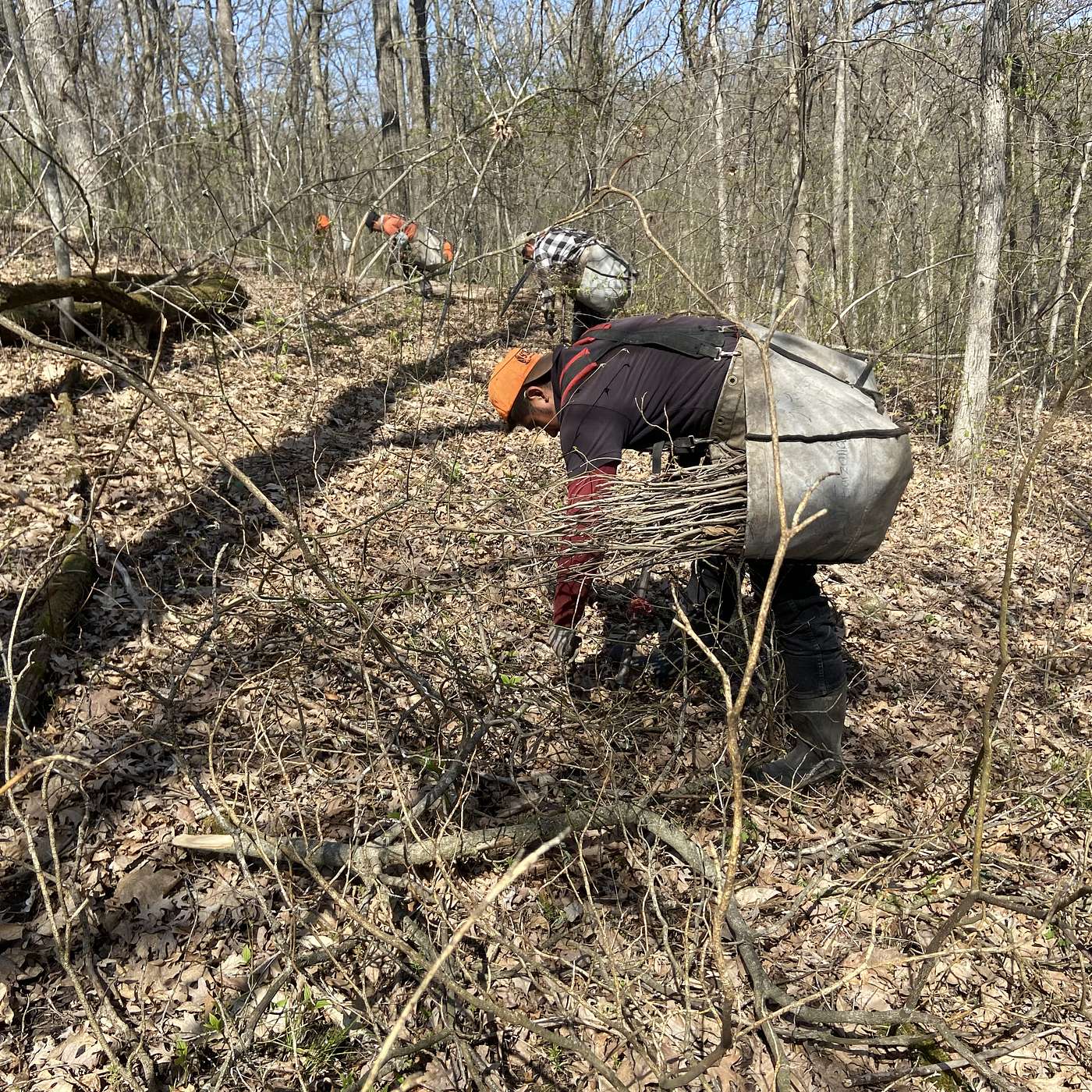
<p>Foresters know degraded forests all too well. You’re out on a woods-walk with an enthusiastic landowner, but your eyes go straight to the poor growing stock, invasive plants, and eroded forest soils – the...

Episode #1
<p>A dead tree is not truly dead. As trees die, they become snags, downed logs, and eventually return to the soil as organic matter. Along this journey, they host a wide range of organisms and play essential roles in...

Episode #11
<p>Sometime the hardest thing and the right thing are the same. It is true of relationships, and it is true of forests. In this episode, we talk with author Ethan Tapper about his new book, How to Love a Forest. A...

Episode #10
<p>The legacy of the “cutover” has left much of the Lake States—and many other regions—with a dominance of even-aged forest stands. Today, both landowners and foresters increasingly consider converting these stands to...

Episode #9
<p>Restoring and reforesting floodplain forests is no small feat—these ecosystems are as fascinating as they are complex. While they face many of the same disturbances as upland forests, bottomland ecosystems are...

Episode #8
<p>Sometimes, a simple “silvicultural tweak” can make a big difference in achieving diverse forest management goals. The real challenge lies in knowing when—and how—to make those adjustments. To help with that, several...

Episode #7
<p>Eastern black walnut holds an almost legendary reputation as one of the most valuable timber species in central and eastern North America. A single, high-quality tree can fetch thousands of dollars—sometimes even...

<p>Foresters are pretty good at stand-level silviculture. But what if we want to make changes to forest vegetation at a much larger scale? Silviculture at scale to impact landscape-level change is much trickier, whether...

<p>Garlic mustard blooms, panic ensues! Many foresters in the eastern hardwood forests of North America can appreciate this sentiment as they see yet another invasive plant, garlic mustard, colonize their woodlands and...
Recent guests on SilviCast. Study who booked and why before you pitch.
SUNY College of Environmental Science and Forestry
Alliance for a Green Economy
University of Minnesota
PitchCentric classifies SilviCast under these industries. Guests from them are the closest fit, and each links to the best podcasts in that industry.
Shows with the most semantically similar episode content. Pitch one, pitch all; producers cluster.
Is this podcast yours and you'd like to remove or correct details? Request removal or email privacy@pitchcentric.com.
Questions about the free trial? See the pricing FAQ