PitchCentric
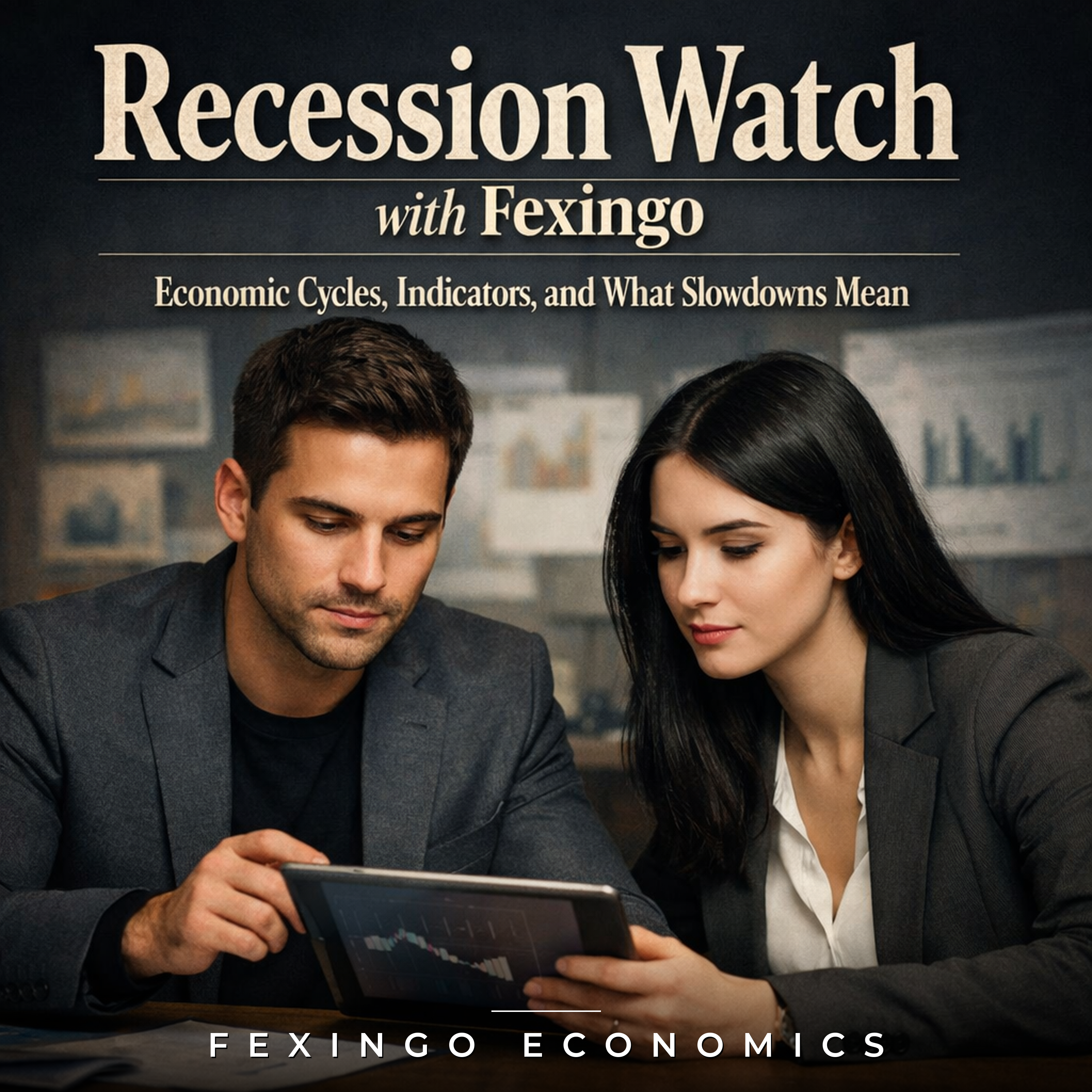
Recession Watch with Fexingo: Economic Cycles, Indicators, and What Slowdowns Mean
Updated 10 days ago · Refreshed hourly
Business

Recession Watch with Fexingo: Economic Cycles, Indicators, and What Slowdowns Mean

Hosted by Unknown Host · EN

Where this show ranks

Last ep.
15 days ago
Avg length
8m
Booking Probability™
35
Stretch.
Sign in to score against your profile.
Estimated audience
,
Audience size not yet estimated
Listen Score
12
Niche reach.
Virality (30d)
43
Steady cadence.

Pitch Analysis

Sign in to see how your Guest Score compares to this show's Required Pod Score and get a Stretch / Match-fit / Anchor verdict.
Required Pod Score
80/ 100
Premium

Established thought leaders with verified media credentials.

Contact path
Verified email on file
Unlock verified contacts
Guest openness
Not signalled recently
Best topics to pitch
Business

About this podcast

When the yield curve inverts, when payrolls soften, when the Fed chair uses the word 'transitory' again — Lucas and Luna sit down with the data to ask what it actually means. This is not a panic desk or a cheerleading session; it's a methodical reading of the economic cycle through the lens of real indicators: ISM manufacturing PMI, the Conference Board Leading Index, the Sahm Rule, credit spreads, housing starts, and the Federal Reserve's own dot-plot projections. Every episode takes one or two fresh data points from the week's releases — jobs reports, GDP revisions, consumer sentiment surveys — and traces their implications for inflation, interest rates, corporate earnings, and the probability of a recession in the next 12 months. Lucas brings the historical context and institutional knowledge; Luna presses on the human consequences: what does this mean for a small business owner's borrowing costs, for a mid-career professional's job security, for a retiree's portfolio? They name the sectors most exposed (regional banks, commercial real estate, discretionary retail) and the ones that might weather a downturn (utilities, healthcare, discount grocers). They compare the current cycle to past recessions (1990, 2001, 2008, 2020) with enough specifics to make the comparison useful, not sensational. The listener comes away with a clearer view of where the economy actually stands — and the handful of numbers they should watch next. Because if a recession is coming, the real question isn't if, but when, and how bad?

Business

About the host

Unknown Host hosts Recession Watch with Fexingo: Economic Cycles, Indicators, and What Slowdowns Mean.

Verified host email:████████@████.comSign in to unlock →

Recent episodes

Our AI reads these to draft pitches

The Recession Signal Hidden in ADP vs BLS Payroll Gaps

Jun 6, 20266mEp. 34S1

With the May jobs report dropping tomorrow, Lucas and Luna drill into a recession indicator most analysts overlook: the widening gap between ADP's private payroll estimate and the official BLS nonfarm payroll count. In A

The Recession Signal Hidden in Long-Term Unemployment

Jun 5, 20265mEp. 33S1

Episode 33 of Recession Watch examines the surge in long-term unemployment, a lagging indicator that may be flashing a recession warning the market is ignoring. Lucas and Luna discuss the latest JOLTS data showing job op

The Long-Term Unemployment Signal the Market Is Ignoring

Jun 5, 20267mEp. 32S1

With the May jobs report due Friday and long-term unemployment surging, Lucas and Luna dig into why the share of workers out of work for 27 weeks or more is hitting levels that historically preceded recessions. They exam

The Long-Term Unemployment Signal the Market Is Ignoring

Jun 4, 20268mEp. 31S1

While job openings surged to 7.6 million in April—the highest in nearly two years—long-term unemployment is quietly rising. Lucas and Luna dig into the Bureau of Labor Statistics data to show why the share of jobless wor

The Recession Signal Hidden in Bank Lending Standards

Jun 4, 20269mEp. 30S1

In Episode 30 of Recession Watch, Lucas and Luna examine a slow-moving but historically reliable recession indicator: the Senior Loan Officer Opinion Survey, or SLOOS. They dig into why tightening bank lending standards

The Recession Signal Hidden in the VIX Term Structure

Jun 3, 20267mEp. 29S1

Episode 29 of Recession Watch with Fexingo dives into the VIX term structure — a recession indicator that gets less attention than the yield curve but has a strong track record. Lucas and Luna examine why the VIX at 16.3

The Recession Signal Hidden in Trucking Freight Volumes

Jun 3, 20268mEp. 28S1

Episode 28 of Recession Watch with Fexingo. Lucas and Luna dig into the Cass Freight Index, which just hit its lowest reading since the pandemic recovery began in 2021. While job openings surged and the VIX is calm, truc

The Job Openings Surge That Changes the Recession Debate

Jun 2, 20266mEp. 27S1

New data shows job openings surged to 7.6 million in April, the highest in nearly two years. Lucas and Luna unpack what this means for the recession debate. Is a hot labor market the final piece for a soft landing, or do

Why Corporate Cash Hoarding Signals Caution Not Confidence

Jun 2, 20267mEp. 26S1

Lucas and Luna examine a recession signal that rarely makes headlines: the rapid buildup of non-financial corporate cash reserves. With S&P 500 companies sitting on record liquidity, they ask whether this is a sign of st

The Recession Signal Hidden in Wage vs Productivity Divergence

Jun 1, 20268mEp. 25S1

For most of 2025 and into 2026, the US economy has been running a quiet but growing divergence: average hourly earnings are rising at around 4 percent annually, while productivity growth has stalled near 1 percent. In Ep

The Recession Signal Hidden in Corporate Capital Expenditure

Jun 1, 20267mEp. 24S1

Lucas and Luna break down why corporate capital expenditure plans are flashing a subtle recession warning that most GDP-based models miss. With the latest data showing spending on equipment and structures growing at its

The Recession Signal Hidden in Job Openings Data

May 31, 20265mEp. 23S1

The labor market has been a bright spot, but JOLTS data tells a different story. Lucas and Luna examine why job openings have fallen to 6.9 million, the lowest since early 2021, despite low unemployment. They discuss wha

The Double Scar Is Reshaping Consumer Spending

May 31, 20267mEp. 22S1

Lucas and Luna dig into the 'double scar' hypothesis—how the inflation trauma of 2021-2023 and the current Iran war energy shock are combining to permanently alter consumer behavior. With household gas costs up $450 per

The Double Scar Is Reshaping Consumer Spending

May 30, 20267mEp. 21S1

Lucas and Luna examine how the 'double scar' from past inflation and ongoing geopolitical shocks is altering consumer behavior in 2026. With core PCE inflation at 3.3% and an extra $450 per household from Iran war energy

The Iran War Cost Hitting Consumer Confidence Hard

May 30, 20267mEp. 20S1

In this episode of Recession Watch, Lucas and Luna examine how the Iran war is quietly reshaping consumer confidence and recession risk. They break down the $450 average annual hit to U.S. households from higher energy c

The Trade War Legacy That Is Still Reshaping Supply Chains

May 29, 20268mEp. 19S1

Episode 19 of Recession Watch with Fexingo examines how the tariffs and trade disruptions from the mid-2020s continue to reshape global supply chains, with lasting effects on inflation, corporate margins, and recession r

Why Commercial Real Estate Is the Next Recession Test

May 29, 20268mEp. 18S1

Episode 18 of Recession Watch tackles the $11 trillion commercial real estate market, where $2.1 trillion in loans come due by 2028. Lucas and Luna break down why office vacancy rates near 20% in major cities haven't cau

Why the Housing Market Is Signaling a Recession

May 28, 20269mEp. 17S1

Lucas and Luna dig into a recession signal that doesn't get enough airtime: the housing market. With the 30-year fixed mortgage rate still above 7% and homebuilder sentiment at its lowest since 2023, they explore how hou

The Small Business Recession Signal the Data Is Missing

May 28, 20267mEp. 16S1

Lucas and Luna explore a blind spot in recession forecasting: small business cash flow. While headline indicators like GDP growth and unemployment look solid, data from payment processors and invoice platforms tells a di

Why Corporate Bond Spreads Are Flashing a Recession Warning

May 27, 20268mEp. 15S1

Lucas and Luna dig into the corporate bond market, where spreads have widened 40 basis points since March despite stocks hitting new highs. They explain why high-grade and high-yield spreads are diverging, what that says

Sponsors and advertisers

Sponsor detection runs nightly. Check back soon.

Audience demographics

Age
25-54
Consumer type
Professionals & Founders

Topics covered

Business

Successful pitch examples

No public pitch examples yet for this show.

Generate your own personalised pitch

If you're pitching Recession Watch with Fexingo: Economic Cycles, Indicators, and What Slowdowns Mean, also consider

Shows with the most semantically similar episode content. Pitch one, pitch all; producers cluster.


Frequently asked questions

How do I pitch Recession Watch with Fexingo: Economic Cycles, Indicators, and What Slowdowns Mean as a podcast guest?

Recession Watch with Fexingo: Economic Cycles, Indicators, and What Slowdowns Mean has a verified contact on file. Create a free PitchCentric account to access it and generate a personalised pitch in seconds. Research at least 3 recent episodes first and lead with a specific angle that serves their business audience.

Who is the host of Recession Watch with Fexingo: Economic Cycles, Indicators, and What Slowdowns Mean?

Recession Watch with Fexingo: Economic Cycles, Indicators, and What Slowdowns Mean is hosted by Unknown Host. The show is categorised under Business and has published 0 episodes.

What topics does Recession Watch with Fexingo: Economic Cycles, Indicators, and What Slowdowns Mean cover?

Recession Watch with Fexingo: Economic Cycles, Indicators, and What Slowdowns Mean regularly covers Business. It sits in the Business category.

Is it hard to get booked on Recession Watch with Fexingo: Economic Cycles, Indicators, and What Slowdowns Mean?

Recession Watch with Fexingo: Economic Cycles, Indicators, and What Slowdowns Mean is accessible for guests with genuine business expertise. A personalised, episode-aware pitch will still outperform a generic one every time.

Is Recession Watch with Fexingo: Economic Cycles, Indicators, and What Slowdowns Mean currently accepting guest pitches?

Recession Watch with Fexingo: Economic Cycles, Indicators, and What Slowdowns Mean hasn't explicitly signalled guest openness in recent episodes. That doesn't rule out pitching. your hook just needs to be especially compelling and relevant to their recent content.

How long are Recession Watch with Fexingo: Economic Cycles, Indicators, and What Slowdowns Mean episodes?

Episodes of Recession Watch with Fexingo: Economic Cycles, Indicators, and What Slowdowns Mean average 8 minutes. a focused format where a clear narrative arc and tight preparation matter most.

What guest credentials does Recession Watch with Fexingo: Economic Cycles, Indicators, and What Slowdowns Mean typically look for?

Our data rates Recession Watch with Fexingo: Economic Cycles, Indicators, and What Slowdowns Mean's guest bar at 80/100 (Premium tier). Established thought leaders with verified media credentials. Sign in to PitchCentric to see how your own Pod Score compares against this show.

Methodology. Booking Probability™ blends Listen Score, 30-day Virality, open-to-guests detection, and Apple ratings. Data refreshed every 60 minutes. Listen Score and Booking Probability are calculated by PitchCentric. Last enriched 10 days ago.

Is this podcast yours and you'd like to remove or correct details? Request removal or email privacy@pitchcentric.com.