Episode #19
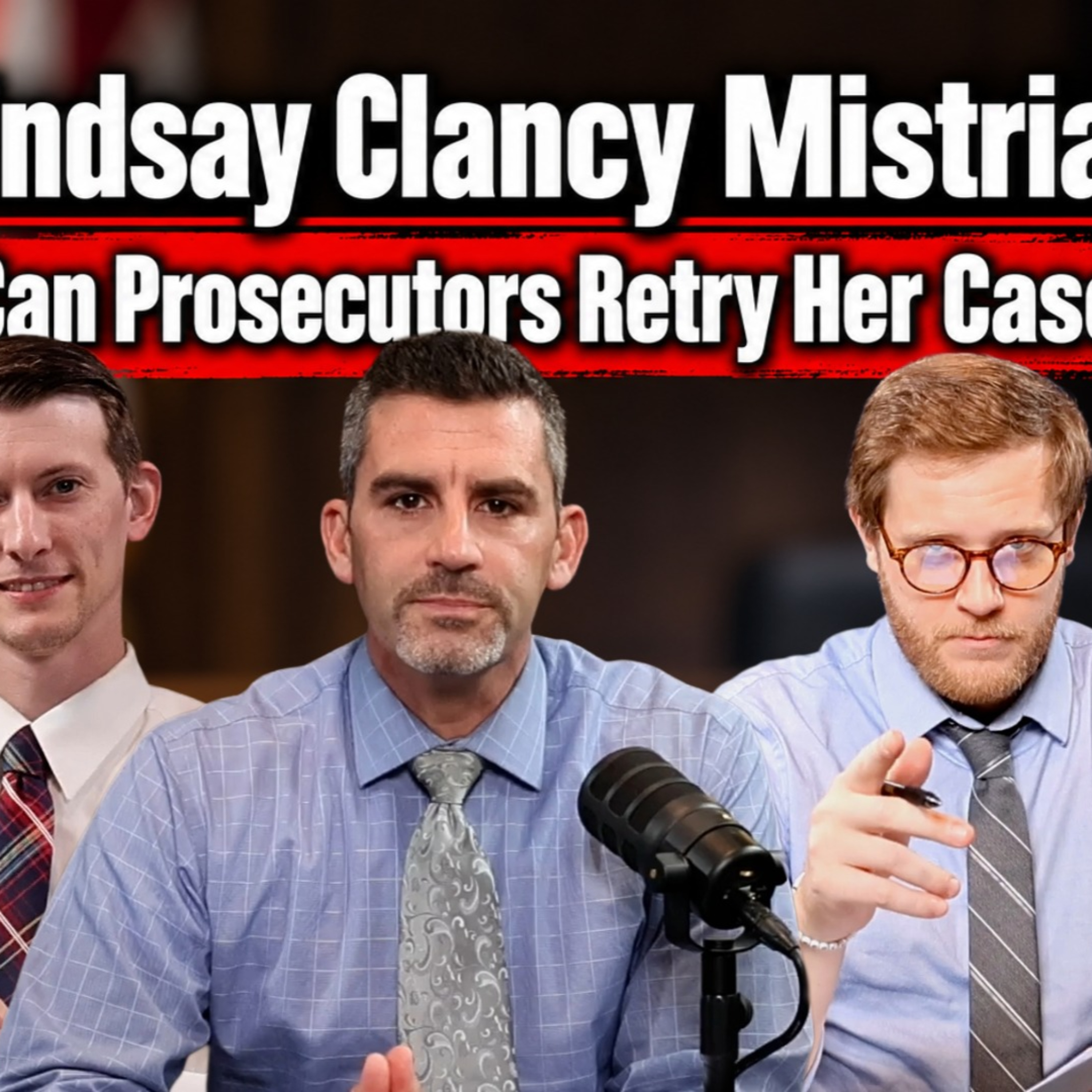
Lindsay Clancy Mistrial: Can Prosecutors Retry Her Case?
Yes. After a hung jury forces a mistrial, prosecutors almost always have the right to try the case again in front of a new jury, and there's no set limit on how many times they can do it, though a string of repeated mistrials can eventually give the defense grounds to push back.Lindsay Clancy's murder trial in Massachusetts ended in a mistrial after the jury deadlocked for days and the judge gave what's known as a dynamite instruction (or Allen charge), a push for holdout jurors to reconsider without abandoning their honest judgment. Pennsylvania courts use the same tool for the same reason: a jury has to be unanimous, all 12 people, and if they truly can't get there, a mistrial is the result and the Commonwealth generally gets to retry the case.Clancy's defense hinged on being found not guilty by reason of insanity, so T.L., Tim, and Justin use it as the jumping off point for how that defense actually works in Pennsylvania. PA follows the McNaughton rule: the defendant has to prove, by a preponderance of the evidence, that a mental defect kept them from understanding what they were doing or knowing it was wrong. That's a very different, and much narrower, standard than being found guilty but mentally ill.✅ How Pennsylvania's insanity defense (the McNaughton rule) works and who has to prove what✅ The difference between not guilty by reason of insanity and guilty but mentally ill✅ How diminished capacity can knock a first-degree murder charge down to third-degree✅ Why voluntary intoxication is almost never a defense, except to first-degree murder✅ What actually happens after a hung jury, and whether there's a limit on retrialsFacing a serious charge in Central Pennsylvania? Call Kearney Law at 717-668-8159.0:00 - Intro: The Lindsay Clancy Mistrial as a Springboard1:06 - Not Guilty by Reason of Insanity, Explained1:57 - Pennsylvania's McNaughton Rule vs. the Model Penal Code3:36 - Why the Burden of Proof Shifts to the Defense4:39 - The Philosophy and Backlash Behind the Insanity Defense11:38 - What Victims and Their Families Go Through15:39 - Faith, Justice, and the Human Wreckage of These Cases23:26 - Dependency Court and Where It Overlaps With Criminal Cases36:16 - What Makes a Good Judge (and the "God Complex" That Doesn't)56:10 - Reading Pennsylvania's Insanity Standard Word for Word57:12 - Diminished Capacity: From First-Degree to Third-Degree Murder1:00:20 - Voluntary Intoxication Is (Almost) Never a Defense1:05:01 - No Contest Pleas, Alford Pleas, and Guilty But Mentally Ill1:09:28 - After Commitment: Release, Relapse, and State Hospitals1:18:17 - What a Mistrial Actually Is, and How Many Times You Can Retry a CaseFollow Us: Spotify: https://open.spotify.com/show/6br0rM1j6KiQ3T6EsGAopp?si=c3ec460eb74a45dcAmazon Podcast: https://music.amazon.com/podcasts/ad6a66e1-131f-4752-9c7f-6e0bbfb350d7/now-we-defendApple Podcast: https://podcasts.apple.com/us/podcast/now-we-defend/id1896671175iHeartRadio: https://www.iheart.com/podcast/269-now-we-defend-334011621?filter=UNPLAYED&sort=descLinkedIn: https://www.linkedin.com/company/kearney-law-paInstagram: https://www.instagram.com/kearneylawpa/Tiktok: https://www.tiktok.com/@kearneylawpaFacebook: https://www.facebook.com/kearneylaw