Episode #8
How to Crack YC & Build AI Startups | ft. Kshitiz Sanghi | S7 Ep8
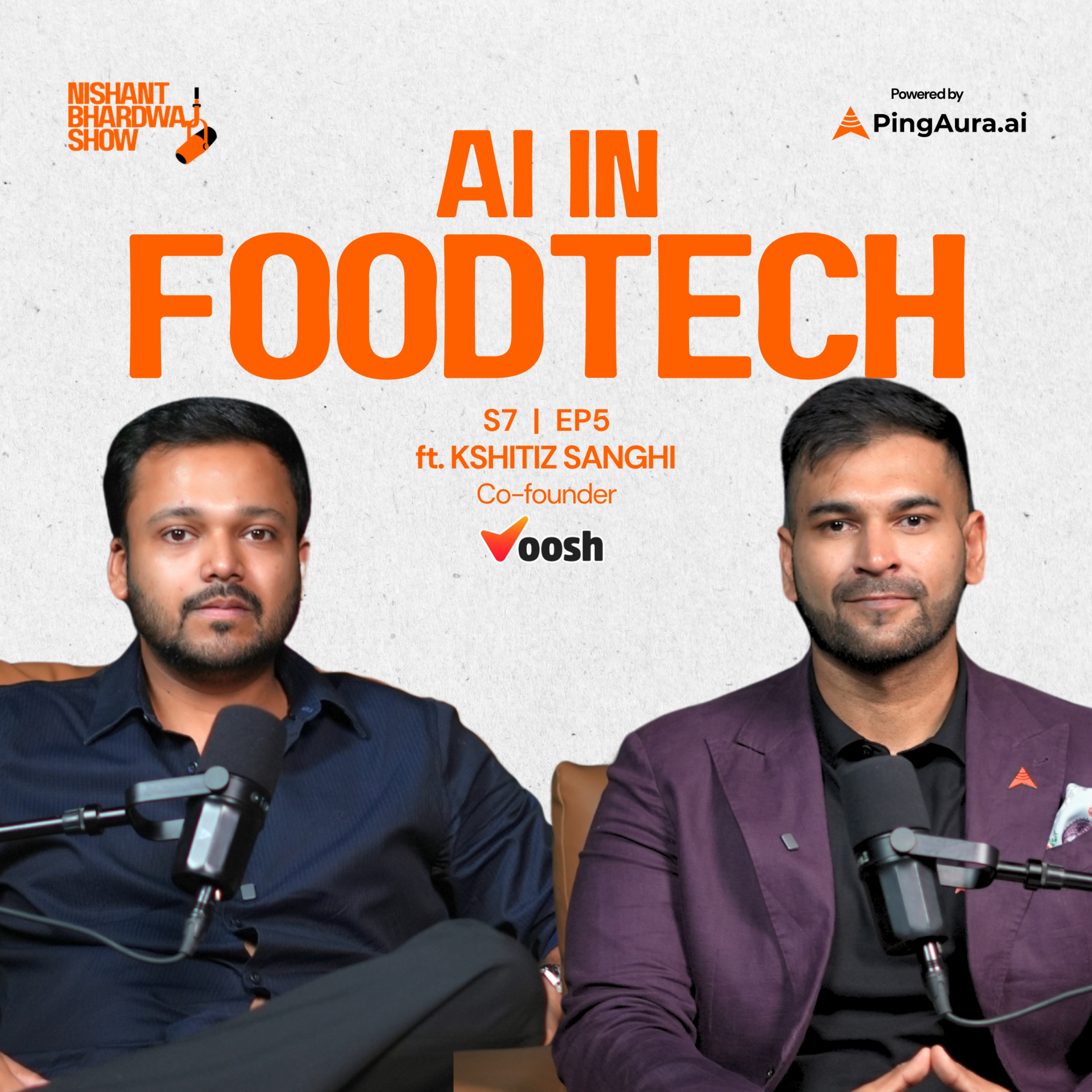
Voosh helps restaurant chains across North America run their delivery business profitably, but the company only found that focus after two full pivots. Kshitiz, the founder, started by building something closer to OYO for restaurants in India, working with more than 200 outlets in Bangalore and uncovering massive operational leakages along the way. The second attempt was 10-minute food delivery, abandoned once the capital requirements proved too heavy. What stuck was software: automating back-of-house restaurant operations across DoorDash, Uber Eats, and Grubhub, including financial reconciliation, reputation management, ad spend, and dispute management. He moved the business to target the US market, citing higher software purchasing propensity there, and landed his first customer through cold outreach alone. That customer became a design partner, shaped the product through direct feedback, and referred others. His advice for early-stage founders targeting the US centres on knowing your ideal customer profile precisely. For Voosh, pizza chains with under 20 outlets in Texas converted ten times faster than broader outreach. He pairs a tightly defined ICP with messaging focused on the transformation a product delivers, not a feature list. Until a startup hits real product-market fit, customers paying repeatedly and unable to live without the product- he argues founders should be willing to do things that don't scale. On mentorship and fundraising, his view is blunt: take full responsibility for your own decisions before leaning on mentors, and remember conviction matters more than capital when raising. His filter for whether to raise VC money at all: wait until you already have traction and paying customers. He got into Y Combinator on his first attempt by being completely honest in the application, on the theory that YC can detect exaggeration easily across the tens of thousands of applicants it reviews each batch. On what actually creates a defensible business now that software is easy to build, his answer is genuine customer obsession: understanding a client's actual workflow deeply enough to deliver outcomes competitors can't easily replicate. Join our WhatsApp community for updates on AI and agentic marketing, and let's monetise AI together - https://chat.whatsapp.com/ERT8JAHJBkp1L5Vf7zTtuz Subscribe to our newsletter for weekly podcast roundups and more news and updates - https://pingaura.ai/newsletter?utm_source=youtube&utm_medium=description&utm_campaign=s7ep8 Follow Kshitiz - LinkedIn - https://www.linkedin.com/in/kshitizsanghi/ Check out Voosh - https://www.voosh.ai?utm_source=youtube&utm_medium=description&utm_campaign=Nishant-Bhardwaj-Show-s7ep8 Follow the podcast on - Instagram - https://www.instagram.com/nishantbhardwajshow/ Website - https://nishantbhardwaj.media?utm_source=spotify&utm_medium=description&utm_campaign=s7ep8 Follow Nishant on - LinkedIn - https://www.linkedin.com/in/nishantbhardwaj11 Instagram - https://www.instagram.com/nishantbhardwajofficial Check your AI visibility for free, build your new distribution channel inside AI, and monetise AI with PingAura - https://pingaura.ai?utm_source=spotify&utm_medium=description&utm_campaign=s7ep8 FAQs What is Voosh.ai ? A food-tech company that helps restaurant chains in North America automate back-of-house delivery operations across platforms like DoorDash, Uber Eats, and Grubhub, including reconciliation, reputation management, and dispute handling. What does product-market fit actually mean? Customers paying repeatedly for a product and being unable to function without it, rather than just expressing interest or trying it once. When should a startup raise venture capital? Once it already has traction and paying customers, rather than raising early based on an idea alone. #startups #venturecapital #foodtech #founders #podcast