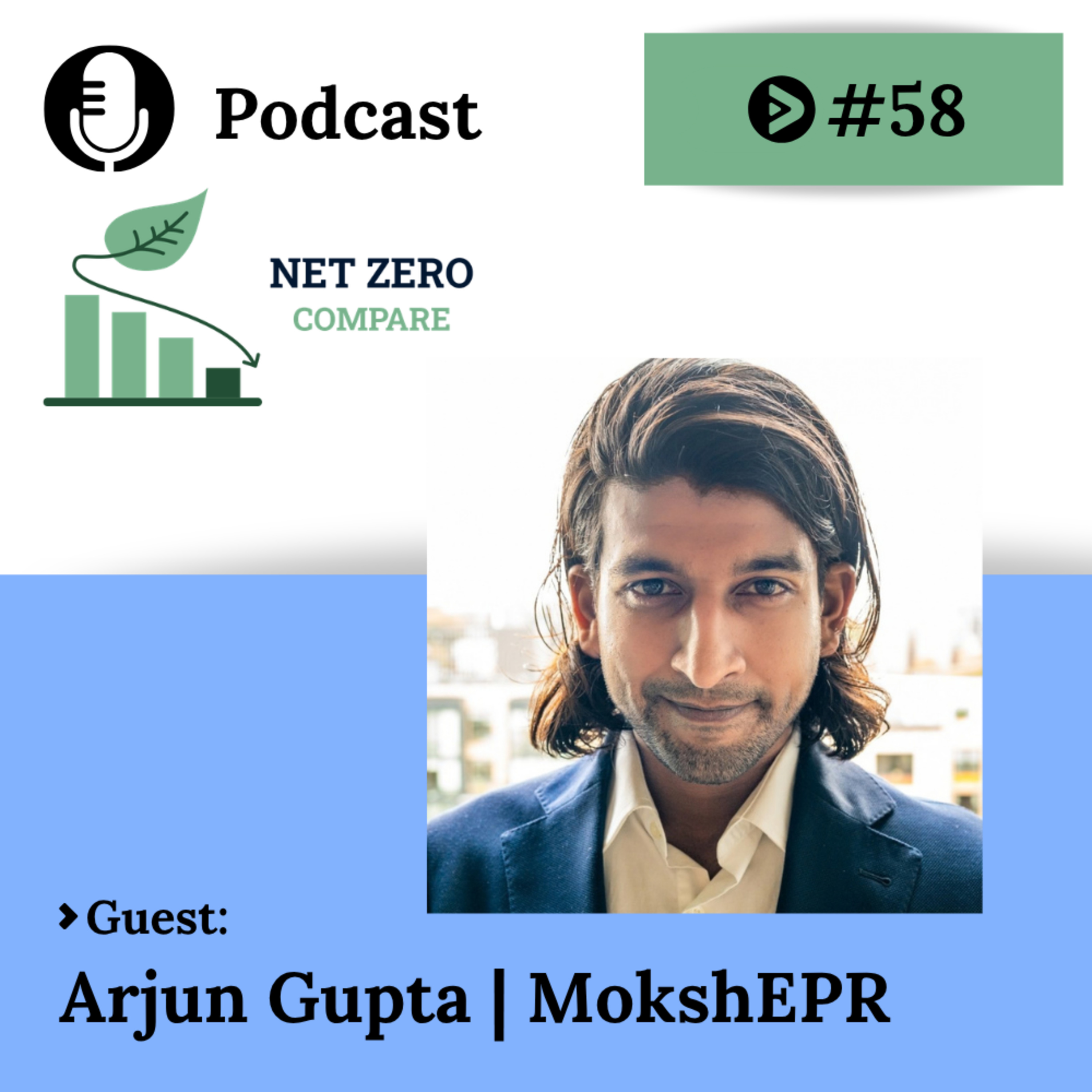
Episode #58
Arjun Gupta on Packaging EPR in the US: How AI Is Changing Compliance, Data Management, and Cost Forecasting
In this episode: Arjun Gupta, Founder and CEO of MokshEPR, joins Net Zero Compare to discuss how packaging Extended Producer Responsibility (EPR) is changing compliance, data management, and cost planning for companies selling packaged goods in the United States. The conversation explores why packaging EPR is becoming increasingly complex as more US states introduce their own reporting methodologies, classifications, exemptions, and fee structures. Arjun explains how the same product or packaging component may be treated differently depending on where it is sold, requiring companies to apply different regulatory logic to the same underlying product data. A major focus of the episode is packaging data. Information on material composition, weight, dimensions, packaging components, and sales locations is often distributed across procurement systems, supplier spreadsheets, logistics files, and product databases. Arjun discusses why improving the quality and structure of this data is often the first practical step toward more reliable EPR compliance. The episode also examines how AI can support this process. Arjun explains how MokshEPR uses AI-assisted classification, data cleaning, and pre-filled decisions to reduce repetitive manual work while keeping human review at the center of the workflow. Traceability is particularly important in a regulatory context, as companies still need to understand how classifications and reported figures were produced and retain responsibility for their final submissions. Beyond compliance, the conversation looks at the financial implications of EPR. Small differences in packaging weight, material type, or classification can become significant when multiplied across large product portfolios. Better packaging data can therefore help companies forecast future fees, compare alternative packaging designs, and evaluate the cost implications of material changes before they are implemented. Arjun also discusses how structured packaging data can support wider operational decisions, including right-sizing, logistics efficiency, supplier management, waste reduction, and packaging redesign. The episode highlights why EPR increasingly requires collaboration between sustainability, compliance, procurement, packaging, logistics, sales, and finance teams rather than being managed as an isolated reporting exercise. A key takeaway is that packaging EPR is becoming as much a data and operational challenge as a regulatory one. AI can reduce manual processing, but reliable source data, clear ownership, human judgment, and traceability remain essential for both compliance and longer-term decision-making. Read the full article: https://netzerocompare.com/podcasts/net-zero-compare-podcast/arjun-gupta-mokshepr Guest: Arjun Gupta, Founder and CEO of MokshEPR https://www.linkedin.com/in/thearjungupta Interview by: Karol Kaczmarek, Co-Founder of Net Zero Compare https://www.linkedin.com/in/karol-kaczmarek-39a29651/ #ArjunGupta #MokshEPR #ExtendedProducerResponsibility #EPR #PackagingEPR #Packaging #CircularEconomy #ArtificialIntelligence #Compliance #Sustainability #NetZero #NetZeroCompare *** At Net Zero Compare, we deliver clear, data-backed insights for decision-makers navigating ESG reporting, net-zero compliance, and clean energy adoption. https://netzerocompare.com Contact us: info@netzerocompare.com Explore the Academy: https://netzerocompare.com/academy Read more insights: https://netzerocompare.com/articles