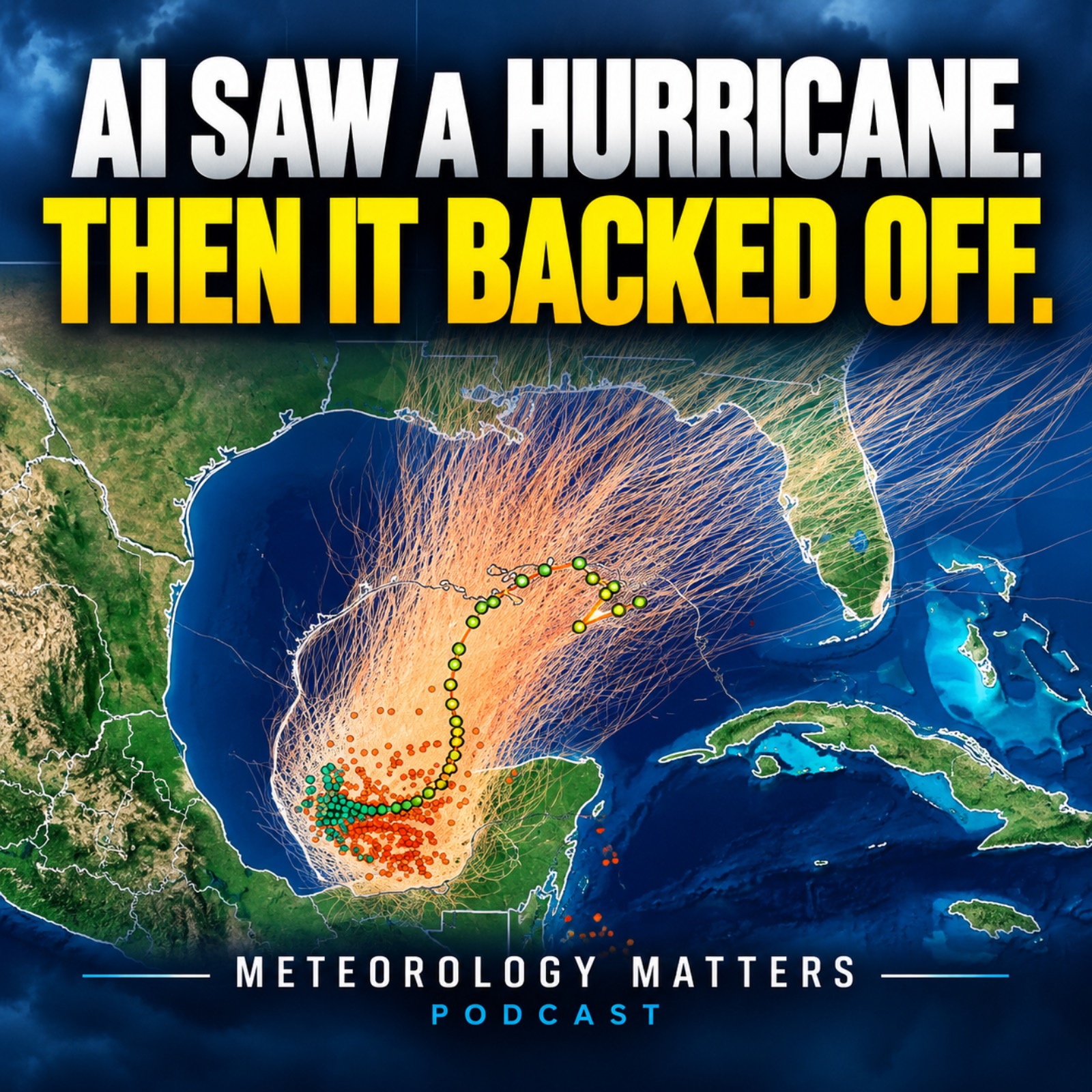
Episode #41
AI Saw a Hurricane. Then It Backed Off. What Changed?
One of the world’s most advanced AI hurricane models saw a growing tropical threat in the Bay of Campeche. Google DeepMind’s WeatherNext system can generate 1,000 possible atmospheric futures, and its development signal climbed sharply before suddenly backing off. So did the AI get it wrong, or is changing the forecast exactly what a good probabilistic model should do? In this episode of Meteorology Matters, we follow the forecast as it evolves and examine why wind shear, uncertain storm organization, a stalled frontal pattern, and changes elsewhere in the tropics may be shifting the odds. We also explain what those 1,000 ensemble members actually mean, why a major-hurricane signal can appear even when overall development remains uncertain, and whether precise probabilities can sometimes make an uncertain forecast look more confident than it really is. Then we look at the bigger question facing modern meteorology: AI weather models are becoming dramatically more powerful, but they still depend on observations of the real atmosphere. As NOAA modernizes its forecasting systems while dealing with staffing and observational challenges, how much does the quality of the data going into these models ultimately determine the quality of what comes out? The Bay of Campeche may or may not produce a storm. But the way this forecast has changed offers a fascinating look at how hurricane forecasting itself is changing. #HurricaneSeason #AIWeather #Meteorology #DeepMind #TropicalWeather