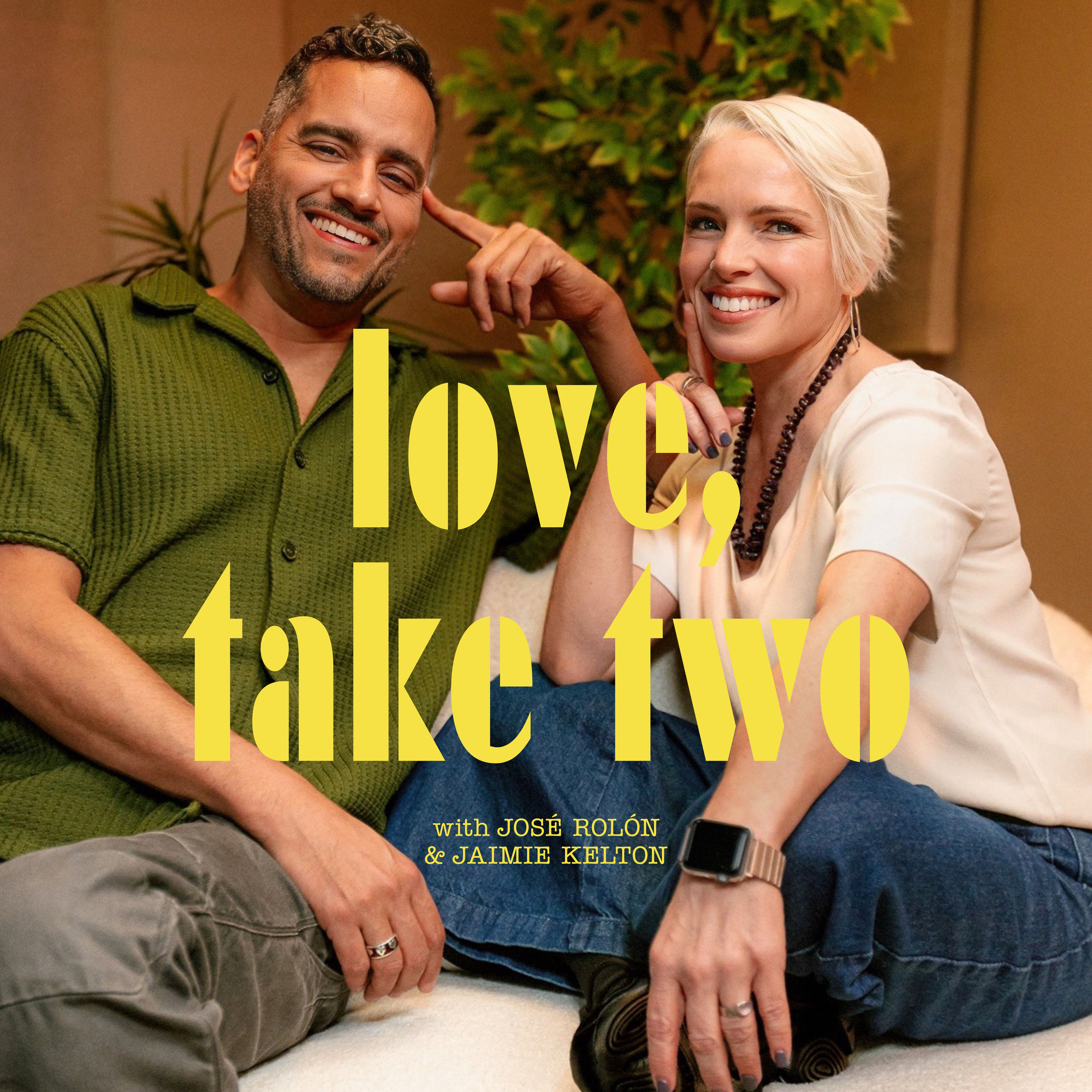
What happens when life doesn’t go according to plan?You take it again.Love, Take Two is a conversation-driven podcast about second acts, fresh starts, and the unexpected turns that lead us to who we’re meant to become. Hosted by José Rolón and Jaimie Kelton, each episode dives into candid, funny, and deeply human stories of love, loss, pivots, and plot twists.From breakups to breakthroughs, Love, Take Two is about choosing yourself, rewriting the narrative, and proving that when it comes to life and love, sometimes the sequel is better than the original.
Pitch Analysis
Required Pod Score for this show. PitchCentric checks your profile against host openness, topical fit, and audience signals before you generate a pitch.
Contact path
Verified email
Booking probability
30%
Guest openness
Selective
Verified email on file
80/100
Required Score
Sign up to generate a grounded pitch for Love, Take Two.
Love, Take Two is a society podcast hosted by José Rolón and Jaimie Kelton, with 25 episodes on record and a Required Pod Score of 80. PitchCentric scores this show on Booking Probability, Listen Score, and live audience signals refreshed every 24 hours.
About the host
José Rolón and Jaimie Kelton hosts Love, Take Two, a society show with 25 episodes published.
Our AI reads these to draft pitches. Use them as grounding for a pitch that cites a real guest and a specific topic.
Episode #4
Anthony Luciano on Failure, Family Traditions and His Fashion Empire
Sep 8, 202639 minS2
Most people think reinvention has to be a leap into the unknown. Anthony Luciano found his by doing the opposite. He just followed the current. In this episode of Love, Take Two, Anthony takes us through the version of success nobody puts on a mood board: getting fired three times from fashion jobs in his twenties, stitching costumes in the belly of a cruise ship for five years, and finally walking away from a design director job with no plan except to start making bags in his apartment the next morning. What followed was two decades of hand building a luxury handbag business from scratch. He landed in Bergdorf's and Neiman Marcus, all before the industry itself pulled the floor out from under him. He talks about watching retail collapse around him well before the pandemic finished the job, and the moment he realized he would rather close his own business than go work for someone else again. Anthony gets into what it actually took to rebuild, without treating it like a rebuild at all. No dramatic pivot, no five year plan. Just workshops in his studio one night a week that a Today Show segment turned into Sip and Stitch, the leather and wine experience that's now filled with strangers, celebrities, and his own extended family of regulars. He opens up about growing up the son of a carpenter and a homemaker in a small upstate New York town, watching his mother and grandmother sew and embroider by hand, and the tradition his late father kept alive for him: collecting pennies from the whole town so Anthony could put one into every bag he ever made, for luck. For Anthony, turning 60 didn't feel like an ending. It felt like proof that you don't have to fight your way upstream to end up exactly where you're supposed to be. This is a conversation about freedom, patience, and what happens when you stop treating a second act like it has to be a reinvention at all. Key Takeaways How getting fired three times in the fashion industry became the redirection that mattered most What five years of costuming cruise ships taught him about freedom over security The Today Show segment that turned a one night a week workshop into a full business overnight The penny his father collected from an entire town, and why every bag still carries one Why he believes the best second act isn't a leap. It's following the current you're already in If this episode resonated, send it to someone who needs a reminder that reinvention doesn't have to look like a comeback. Sometimes it just looks like paying attention to where you're already headed. Come hang out with us on social.
John Frria on Shyness, Shedding and Self Actualization
Aug 31, 202636 min
John Frria spent his twenties chasing the on camera career local news kept telling him to leave New York to find, until the pandemic handed him a strange kind of shortcut. Laid off from the newsroom grind and stuck inside with nowhere to go, he started walking around the city filming the history hiding in plain sight, and Here in New York was born almost by accident. In this episode of Love, Take Two, John talks about growing up shy on Long Island, always sensing he was different, and slowly becoming the extroverted, unbothered version of himself that his younger self would not even recognize. He gets into the reporting career that came before the fame, the managing director who told him he would need to leave the New York market to ever make it in New York, and the moment he realized his path forward looked nothing like the one he had been taught to expect. But the real Take Two of this conversation is not professional. After a long relationship ended, John found himself living completely alone for the first time in his life, and he talks candidly about what it took to sign a lease with no guarantor, build an apartment around only his own needs, and start dating with the strange, uncomfortable task of figuring out what he actually wants instead of what keeps the peace. He also shares the wisdom of his 103 year old great aunt, who told him never to hold a grudge, and what it has meant to finally put himself first after a lifetime of being a people pleaser. This is a conversation about the quiet, unglamorous work of becoming your own priority, and what happens when you finally stop performing for everyone else's comfort. Key Takeaways How a pandemic layoff and a habit of walking around New York turned into the Here in New York account Why he left local news instead of following the traditional path to on camera work What it meant to live completely alone for the first time at 31, after a lifetime of never being on his own The lesson his 103 year old great aunt taught him about grudges, and why he has chosen to let go instead of hold on How John is learning to put himself first after years of being a people pleaser If this episode resonated, send it to someone who is learning what it looks like to finally choose themselves, and come hang out with us on social.
Pop Star Jordy on Anxiety, Relationships and the Material that Makes his Music
Aug 24, 202643 min
Jordy signs his own name to gay love without hedging on it, and that has been the whole point since his breakout song "Long Distance" turned a pandemic era hookup into an anthem people from every kind of relationship saw themselves in. In this episode of Love, Take Two, Jordy walks us through what he calls his Take One: a childhood shaped by bullying, a middle child's craving for attention, and years spent chasing boys who treated him badly because their approval felt like the only kind worth having. He talks about leaving his college boyfriend behind to chase music in LA, the anxious attachment style that followed him into every relationship after, and how that pattern showed up again on his new single "Sick," a song about mistaking intensity for love. He gets honest about texting compulsively, needing constant reassurance just to get through a day, and how therapy slowly untangled where all of that actually came from. Now 31, single, and living alone by choice, Jordy talks about what changed. He no longer chases the high of somebody playing hard to get. He has stopped confusing how someone makes him feel with who they actually are. And he has learned that the quiet, uneventful kind of love, the kind that does not come with a chase, might be the whole point he was writing toward all along. This is a conversation about growing out of a pattern instead of just naming it, and what it looks like to finally choose peace over passion. Key Takeaways How years of chasing approval from boys who mistreated him shaped Jordy's early relationships and his anxious attachment style The real story behind "Long Distance," the song that became an unexpected pandemic anthem What "Sick" is really about, and how Jordy learned to spot the difference between intensity and love Why he no longer confuses how someone makes him feel with who they actually are What being single and happy at 31 taught him about validation and self worth If this episode resonated, send it to someone who is learning the difference between chasing a feeling and choosing a person, and come hang out with us on social.
Jeff Hiller on Theology, Improv and Finally Landing in the Spotlight
Aug 17, 202644 minS2
Most people wait for the world to tell them they're ready. Jeff Hiller waited for himself, for over twenty years, while everyone else assumed he already knew when to quit. In this episode of Love, Take Two, Jeff takes us back through the decades before the breakthrough, temping between auditions, teaching improv for free, and telling himself the work still counted even when no one else could see it. His resume now includes an Emmy win for Somebody Somewhere, a second Emmy nomination this year, and a memoir about the twenty-year road it took to get there. None of it came easily, and none of it came on schedule. Jeff gets into what it actually felt like to turn 40 with a career that hadn't landed yet, the shame he carried about still chasing it, and the moment that finally convinced him the sequel really can be better than the original. He also opens up about his upbringing in a conservative religious household, the parents whose love became the thing that got him through it, and how faith and queerness never felt like a contradiction to him, no matter how loudly other people insisted they should. For Jeff, success was never about the timeline. It was about refusing to let embarrassment talk him out of the thing he loved. This is a conversation about patience, self-worth, and what it means to let your own definition of success be the only one that counts. Key Takeaways How Jeff went from social work to two decades of scraping by as a working actor and improv teacher What it took to keep believing in the work even when the world called it embarrassing The role that finally broke through at 45, and what it felt like to be seen after decades of being overlooked How his faith and his queerness coexist without contradiction, and what that took to arrive at Why he believes success was never about hitting a deadline If this episode resonated, send it to someone who needs a reminder that it is never too late to become who you are, and come hang out with us on social.
The babies aren't babies anymore. While you wait for Season 2 of Love, Take Two, we're dropping a little bonus episode into your feed—a crossover conversation from The Queer Family Podcast featuring your Love, Take Two hosts, Jaimie Kelton and José Rolón. In this candid conversation, Jaimie and José talk about parenting preteens and teenagers as LGBTQ+ parents. From puberty and emotional regulation to first crushes, social media, and navigating the outside world's assumptions about queer families, this episode explores what changes—and what stays the same—as our kids get older. They share honest stories about raising confident kids, keeping communication open during the middle school years, helping children navigate questions about their families, and finding humor in the chaos of parenting adolescents. They also discuss what it's like when your family exists in the public eye and how to empower kids to feel proud of who they are and where they come from. Consider this a little bonus Jaimie-and-José time while we get Season 2 ready for you. Because it turns out building the family was only the beginning.
Every question we get asked before someone starts their trial.
If you have a concern about deliverability, AI quality, data privacy, or whether this will actually work for your specific situation, it's probably answered below.
What is the difference between Founder Solo and Founder Pro?
Founder Solo gives you 50 AI pitches per month using the credit model (Standard pitches cost 1 credit, Enriched pitches cost 2). Founder Pro raises that to 200 credits per month and adds full Booking Probability access, unlimited Magic Match, Apollo enrichment credits, and data export capabilities. Both plans use the same credit system, so you can stretch your monthly budget further by using Standard-mode drafting.
How do agency tiers work?
Agency tiers have no base fee. You pay per managed client and per talent profile. Agency Standard is $199 per client per month; Agency Pro is $399 per client per month. Both add $39 per talent profile per month. Your own team's user seats are always free.
What is a talent profile?
A talent profile represents one person (founder, executive, or spokesperson) you are booking onto podcasts. It includes their bio, topics, headshots, and outreach history. Team plans include 5 profiles; agency plans are pay-as-you-go.
Can I switch plans later?
Yes, at any time. Upgrades take effect immediately; downgrades apply at the end of the current billing period. Contact support if you need help migrating between plan families.
Do you offer a free trial?
Every paid plan includes a 15-day free trial. Your card is saved at signup but you will not be charged until day 16. Cancel any time from your dashboard.
What happens if I cancel?
You keep access until the end of your current billing period. No charges after that. Your data is retained for 30 days in case you reactivate.
Is the 20% annual discount automatic?
Yes. Select Annual on the pricing toggle and the discounted price is applied automatically at checkout. The annual price shown is the full year cost.
What if I have more than 50 profiles or 20 clients?
That is our Enterprise tier. Contact our sales team and we will build a custom plan with volume pricing, a dedicated account manager, and SLA guarantees.