Kutxi is a podcast that brings together people from endangered, Indigenous, and minoritized language communities to share their experiences, perspectives, and hopes for the future. Born out of conversations sparked at HIGA 2025 , the International Meeting of Young Speakers of Minority Languages, Kutxi was created as a space to continue those exchanges beyond the summit itself. Through honest and thoughtful conversations, the podcast explores themes such as language, identity, community, revitalization, and belonging. Each episode focuses on a specific topic and features guests speaking from their own lived experiences. Kutxi does not aim to present single, definitive narratives about entire communities; instead, it highlights the diversity, complexity, and richness of individual voices within endangered and minoritized language spaces. Currently, Kutxi is recorded in English, with hopes to expand into Spanish in the future.
Pitch Analysis
Required Pod Score for this show. PitchCentric checks your profile against host openness, topical fit, and audience signals before you generate a pitch.
Contact path
Public web form
Booking probability
27%
Guest openness
Selective
80/100
Required Score
Sign up to generate a grounded pitch for Kutxi — Voices from Endangered Language Communities.
What is Kutxi — Voices from Endangered Language Communities?
Kutxi — Voices from Endangered Language Communities is a education podcast hosted by Unknown Host, with 10 episodes on record and a Required Pod Score of 80. PitchCentric scores this show on Booking Probability, Listen Score, and live audience signals refreshed every 24 hours.
About the host
Unknown Host hosts Kutxi — Voices from Endangered Language Communities, a education show with 10 episodes published.
Our AI reads these to draft pitches. Use them as grounding for a pitch that cites a real guest and a specific topic.
Episode #10
Mythology and Folklore: Basque, Irish and Scottish Gaelic (Season Finale)
Aug 17, 20261h 3mS1
For our Season 1 finale, we’re exploring mythology and folklore. What legends have been passed down through our communities? Which stories and characters did we grow up with, and which mythological beings were admired, and which, feared? We’re joined by Anna Garvin, a member of the Scottish Gaelic community, as well as a musician and language activist. We’re also joined by Maddi Kintana, a Basque speaker from Donostia, a Basque language teacher, and a PhD candidate in Basque linguistics. Our third guest is Una McGeough, an Irish speaker and alumna of the University of Cambridge and Pompeu Fabra University, who currently works for the Northern Ireland Civil Service. Together, they explore the mythology and folklore of the Scottish Gaelic, Basque, and Irish communities, sharing the stories and supernatural beings that shaped their childhoods. From duck-footed Lamiak and the haunting Banshee to Scottish Selkies and the Basque deity Mari , they discuss the creatures they feared or admired, the similarities that emerge across different traditions, and what these stories can tell us about the beliefs, landscapes, and lives of our ancestors. Join us for a journey through folklore, memory, and mythology as we close out the first season of Kutxi. Music by AudioCoffee (Denys Kyshchuk): https://www.audiocoffee.net/
Immigrant and Minoritised Language Communities: Laz & Salish
Aug 3, 20261h 10mS1
What does it mean to belong to a community when you have grown up far from it or when migration has placed you far from home? In part two of our series on immigrant and minoritized language communities, Tori Wynecoop and Okan Dale reflect on identity, belonging, and the different ways people remain connected to their communities. Tori shares her perspective as a member of the Spokane-Salish Tribe of Indians who lives and works on the Spokane Reservation, while Okan discusses growing up in the Laz diaspora in Europe and later immigrating to the United States. Together, they explore the common threads that can connect Indigenous, minoritized, and migrant communities, while also acknowledging the important differences between their experiences. They discuss growing up within and outside one’s community, finding familiarity in unexpected places, and how relationships with other migrant communities can help ease homesickness and create a sense of belonging away from home. Correction: Near the beginning of the episode, Tori refers to legislation passed in 1994. He is referring to the Native American Languages Act of 1990, passed under President George H. W. Bush. Music by AudioCoffee (Denys Kyshchuk): https://www.audiocoffee.net/
How Majority Languages Shape Minoritized Languages: Basque, Laz, and Welsh
Jul 20, 20261h 20mS1
How much can a dominant language reshape the way a minoritized language is spoken? In this episode, we examine the influence of majority languages on grammar, pronunciation, vocabulary, and everyday speech across three different communities. Felix Parker-Price shares how English affects contemporary Welsh, including grammatical patterns that may increasingly mirror English. Felix is a Welsh language translator at Aberystwyth University Students’ Union and International Officer for Cymdeithas yr Iaith, the Welsh language activist organization founded in the 1960s. Maddi Kintana, a Basque language teacher and PhD candidate in Basque linguistics from Donostia, discusses the influence of French on Basque phonology and the differences that contact with dominant languages can create across regions. Okan Dale, a member of the Laz diaspora involved in teaching Laz and developing language-learning materials, explores code-switching between Laz and Turkish, including the patterns and unwritten rules speakers follow when moving between the two languages. Together, they consider whether these influences should be viewed as natural language change, a consequence of language shift, or something more complex—and what they may mean for the future of minoritized languages. Music by AudioCoffee (Denys Kyshchuk): https://www.audiocoffee.net/
How Majority Languages Shape Minoritized Languages: Basque, Laz, and Welsh
Jul 20, 20261h 20mS1
<p>How much can a dominant language reshape the way a minoritized language is spoken?</p><p>In this episode, we examine the influence of majority languages on grammar, pronunciation, vocabulary, and everyday speech across three different communities.</p><p>Felix Parker-Price shares how English affects contemporary Welsh, including grammatical patterns that may increasingly mirror English. Felix is a Welsh language translator at Aberystwyth University Students’ Union and International Officer for Cymdeithas yr Iaith, the Welsh language activist organization founded in the 1960s.</p><p>Maddi Kintana, a Basque language teacher and PhD candidate in Basque linguistics from Donostia, discusses th...
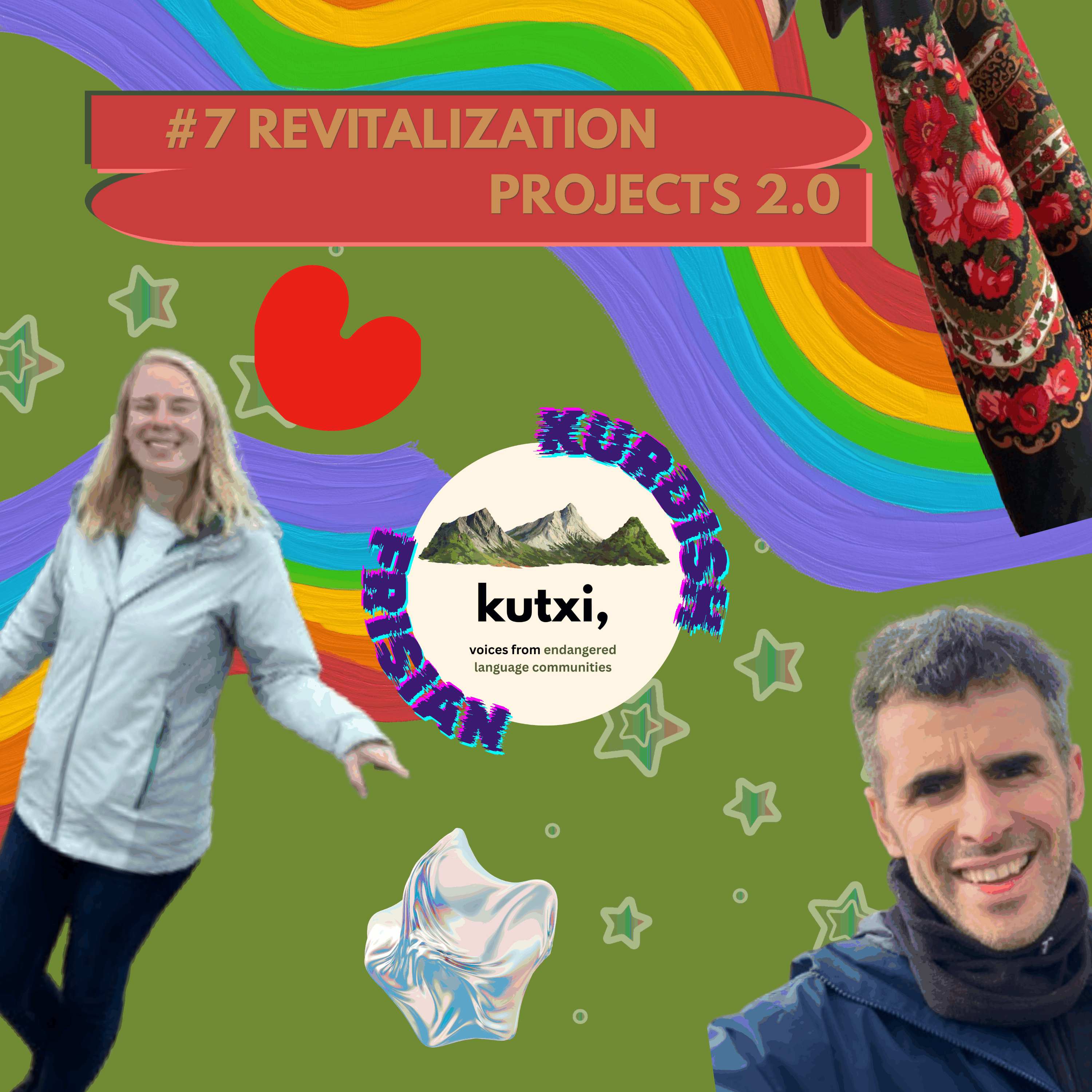
In this episode, we continue our conversation on language revitalization by looking at the projects, people, and ideas helping communities keep their languages strong. Welmoed Sjoerdstra joins us to talk about her work with Afûk, the organisation for the Frisian language, as well as her research at NHL Stenden University of Applied Sciences, where she develops curricula for secondary and vocational education within the Multilingualism & Literacy research group. We’re also joined by Çiya Tabar, a member of the Kurdish community currently living in Bilbao, who shares his perspective on language, identity, and community-driven efforts to keep Kurdish culture visible across borders. Together, we reflect on how revitalization can start with small initiatives, why community involvement matters, and how local projects can grow into something much bigger over time. Enjoy! Music by AudioCoffee / Denys Kyshchuk: https://www.audiocoffee.net/
Every question we get asked before someone starts their trial.
If you have a concern about deliverability, AI quality, data privacy, or whether this will actually work for your specific situation, it's probably answered below.
What is the difference between Founder Solo and Founder Pro?
Founder Solo gives you 50 AI pitches per month using the credit model (Standard pitches cost 1 credit, Enriched pitches cost 2). Founder Pro raises that to 200 credits per month and adds full Booking Probability access, unlimited Magic Match, Apollo enrichment credits, and data export capabilities. Both plans use the same credit system, so you can stretch your monthly budget further by using Standard-mode drafting.
How do agency tiers work?
Agency tiers have no base fee. You pay per managed client and per talent profile. Agency Standard is $199 per client per month; Agency Pro is $399 per client per month. Both add $39 per talent profile per month. Your own team's user seats are always free.
What is a talent profile?
A talent profile represents one person (founder, executive, or spokesperson) you are booking onto podcasts. It includes their bio, topics, headshots, and outreach history. Team plans include 5 profiles; agency plans are pay-as-you-go.
Can I switch plans later?
Yes, at any time. Upgrades take effect immediately; downgrades apply at the end of the current billing period. Contact support if you need help migrating between plan families.
Do you offer a free trial?
Every paid plan includes a 15-day free trial. Your card is saved at signup but you will not be charged until day 16. Cancel any time from your dashboard.
What happens if I cancel?
You keep access until the end of your current billing period. No charges after that. Your data is retained for 30 days in case you reactivate.
Is the 20% annual discount automatic?
Yes. Select Annual on the pricing toggle and the discounted price is applied automatically at checkout. The annual price shown is the full year cost.
What if I have more than 50 profiles or 20 clients?
That is our Enterprise tier. Contact our sales team and we will build a custom plan with volume pricing, a dedicated account manager, and SLA guarantees.