Episode #60
King Sejong Institutes look beyond language to build bridges between Korea and the world From Korean Wave to deeper ties New direction, broader vision
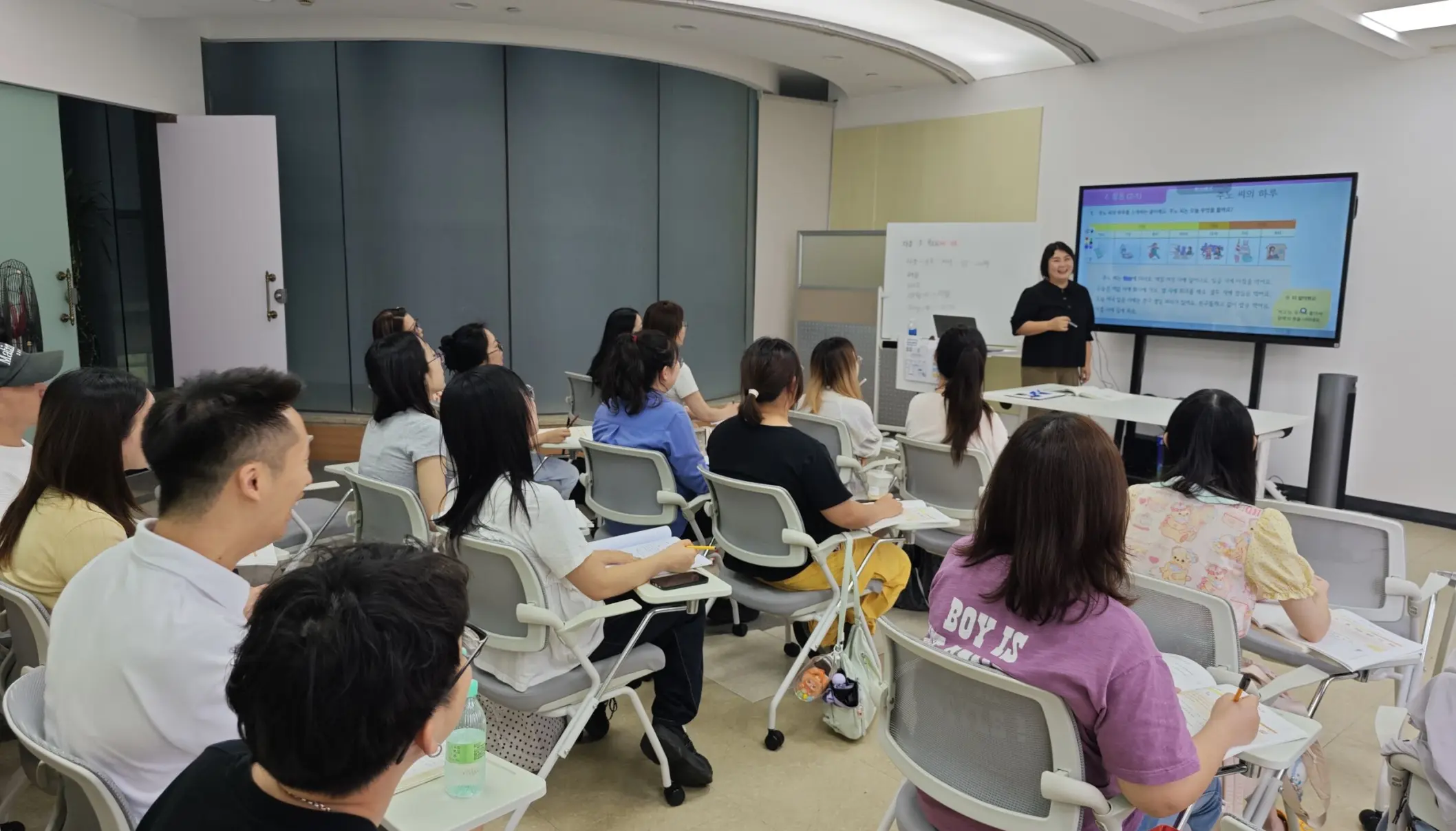
Once driven largely by interest in K-pop and Korean dramas, the network is expanding its role as a platform for academic, career and business exchanges. HANGZHOU, China — In a modest but newly opened classroom in Hangzhou, China, rows of desks and whiteboards sit alongside displays of Korean culture, including colorful hanbok (traditional Korean dress) and musical instruments like janggu (double-headed drum). At the center of the room, a student listens intently as a passionate instructor introduces him to the Korean language and culture. The classroom may be small, but the curiosity behind it reflects a much broader phenomenon: As interest in Korea spreads through popular culture, more people are seeking ways to pursue academic and career-related opportunities and build connections between Korea and their own countries. Sheng Tianjia, a student in the pilot program at the Hangzhou King Sejong Institute ahead of its official opening, is learning Korean not only because of his interest in K-pop and dramas, but also because he sees the language as a gateway to deeper exchanges between Korea and China and to new academic and career opportunities. "I had only had this cool image of Korea that I had seen in the media. But as I learned the Korean language and culture, I came to see broader things," Sheng told the Korea JoongAng Daily, recalling his first trial class at the institute. "Now, I'm seeking opportunities to pursue academic opportunities in Korea through exchanges with Korean universities and to explore other possibilities for my future as I learn more deeply about Korea." Sheng's experience offers a glimpse into a broader evolution in the way people engage with Korea. For many learners, Korean pop culture remains the gateway. But what starts as curiosity is increasingly developing into a desire to learn Korean culture more deeply and build sustainable connections with Korea. The early expansion reflected a relatively straightforward need: As more people encountered Korean dramas, pop music and other cultural content, they needed accessible places to learn the language and gain a deeper understanding of Korea, according to the King Sejong Institute Foundation. Riding on this momentum was the Shanghai branch, which was launched during the second expansion of King Sejong Institutes in the early 2010s. Officially designated as a King Sejong Institute at the Shanghai Korean Cultural Center in January 2011, the Shanghai branch has spent more than a decade combining Korean language education with cultural programs. "The Hallyu influence from K-pop and dramas has been among the main reasons many people initially decided to learn Korean and came to our institute," Ren Wendi, the Shanghai King Sejong Institute's lead director, told the Korea JoongAng Daily. But over time, institutes such as Shanghai have also sought to broaden learners' understanding of Korea beyond contemporary popular culture. "On top of mainstream trends, we have also been incorporating traditional culture, such as traditional music and hanbok, as well as contemporary art and other diverse Korean cultural content into our programs for local learners," Ren said. "Today, while cultural interest remains a major gateway, more and more students from various age groups, from teenagers to people in their 60s, come to our classes with many different motivations." That evolution mirrors the broader growth of the King Sejong Institute network. The network had grown from the original 13 locations in 2007 to 248 sites in 85 countries by 2023, while more than 216,000 students studied at the institutes that year. The foundation has also noted that more than half of its offline learners in 2022 were studying Korean for purposes including studying in Korea, pursuing academic opportunities or finding Korea-related employment — a sign that learners were increasingly moving beyond simply consuming Korean culture. If the first phase of the King Sejong Institute network was l...