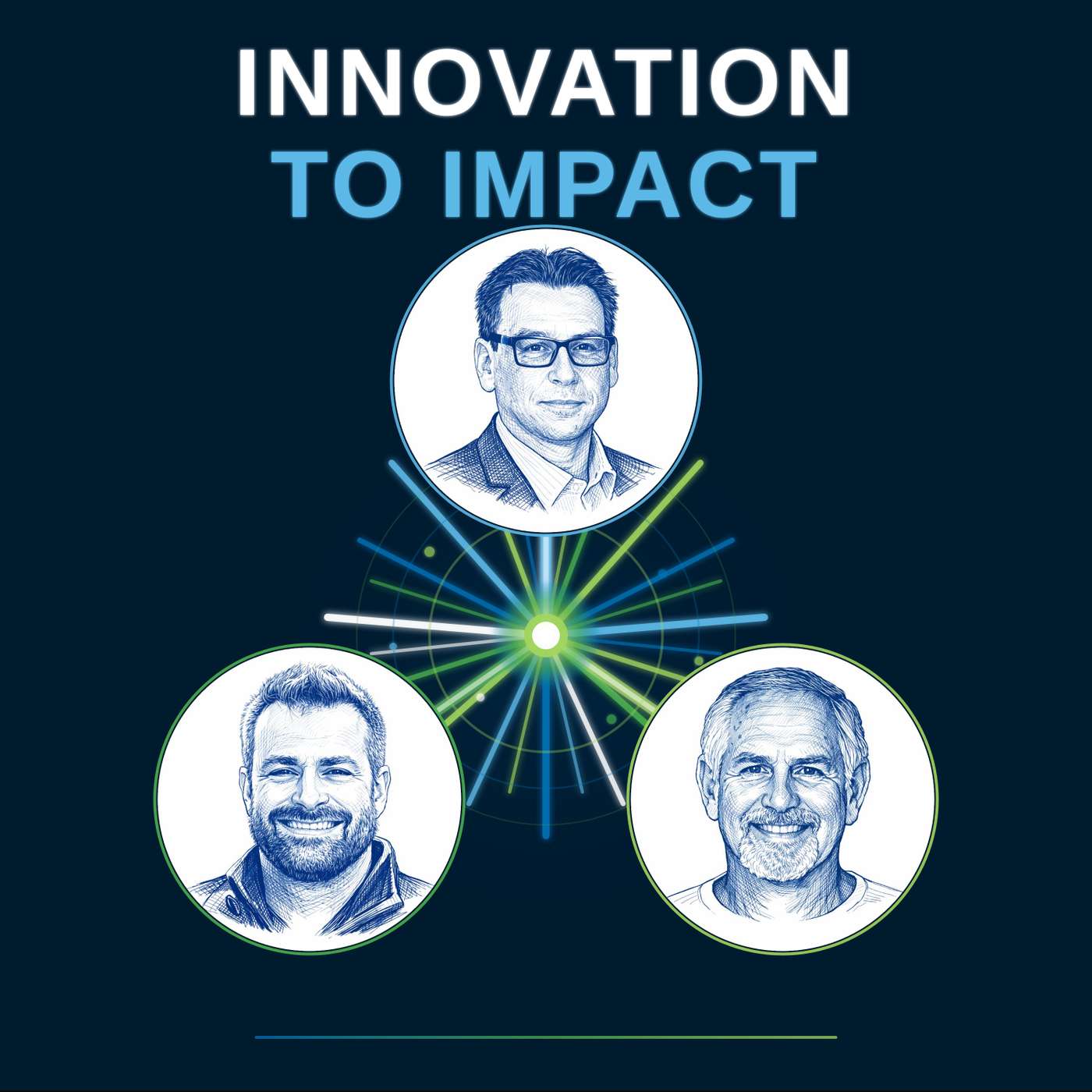
Innovation to Impact is a podcast on decision-grade drug development in regulated environments. We examine how high-stakes go/no-go calls are made inside pharma and biotech, and what evidence is required for new tools to change those decisions without creating hidden risk. Each episode focuses on predictivity, translational risk, decision rights, and accountability (what breaks, who owns it, and what triggers a stop). This is not a podcast about technology trends. It is about disciplined innovation that can survive audit, scale, and real-world biology.
Pitch Analysis
Required Pod Score for this show. PitchCentric checks your profile against host openness, topical fit, and audience signals before you generate a pitch.
Contact path
Verified email
Booking probability
27%
Guest openness
Selective
Verified email on file
80/100
Required Score
Sign up to generate a grounded pitch for Innovation to Impact: Drug Development, AI, and Regulatory Strategy.
What is Innovation to Impact: Drug Development, AI, and Regulatory Strategy?
Innovation to Impact: Drug Development, AI, and Regulatory Strategy is a science podcast hosted by Unknown Host, with 7 episodes on record and a Required Pod Score of 80.
About the host
Unknown Host hosts Innovation to Impact: Drug Development, AI, and Regulatory Strategy, a science show with 7 episodes published.
Our AI reads these to draft pitches. Use them as grounding for a pitch that cites a real guest and a specific topic.
Episode #2
De-Risking What Matters
May 19, 202637 minS2
<p>In this episode of Innovation to Impact: Ruminations & Ramblings, Szczepan Baran, Brian Berridge, and Nick Kelley tackle one of the biggest problems in modern drug development: we keep adding more technology, more data, and more complexity, yet clinical attrition remains painfully high. Across discussions on AI, NAMs, digital biomarkers, animal models, translational science, and organizational culture, they argue that innovation fails when tools become the strategy instead of serving clearly defined patient-centered decisions. The conversation explores why reverse translation matters, how AI should function as a decision-support system rather than a magic oracle, why “decision warranties” may become essential in A...
Innovation That Earns Deletion (Subtractive Trust)
Feb 15, 202633 minS2
<p>Click here to watch a video of this episode.<br>
Drug development workflows only get heavier, and subtractive change requires predictivity and decision-grade evidence that can survive regulatory science scrutiny. In this episode we talk about how AI and translational science can earn the right to delete steps, not decorate them. The tension is uncomfortable: are you willing to remove something you have always done, or will you just add another layer and call it progress? We introduce the idea of a Predictivity Ledger, a simple way to make miss rates visible and force clarity about what is being...
<p>Click here to watch a video of this episode.<br>
In drug development, go/no-go decisions concentrate translational risk and expose real consequences. When AI or digital biomarkers influence that call, decision-grade evidence in a regulated environment is not optional. This episode sits in the moment every executive recognizes: the slide is on the screen and someone asks, “Do we advance?” Here’s the tension. We love the word validated, but what happens when the next dataset disagrees? We introduce a practical discipline we call the decision warranty: clear scope, clear evidence chain, clear boundaries, and explicit triggers for pause...
<p>Click here to watch a video of this episode.<br>
In drug development, ROI debates can drown out decision-grade evidence and the hard work of translational science. This episode asks a blunt question: when AI, digital biomarkers, or new assays change the work, who actually gets the return and who carries the downside? The tension is that finance wants clean numbers, while biology delivers messy truth. We challenge the habit of treating ROI as a single scoreboard and propose a more honest framing: financial return, return on intention for patients, and return on learning for the next decision. When...
Predictivity Is the New Currency of Drug Development
Feb 15, 202623 minS1
<p>Click here to watch a video of this episode.<br>
Drug development punishes optimism, and predictivity is one of the few defenses we have against translational risk. In this episode we connect translational science and regulatory science to a simple operating idea: treat attrition as data, not embarrassment. The tension is real. Do you want a model that explains the past beautifully, or one that helps you be less wrong before the next big spend? We unpack why “validation” after the fact is not enough, and how forecast accuracy, calibration, and honest miss rates should travel across programs instead of d...
Every question we get asked before someone starts their trial.
If you have a concern about deliverability, AI quality, data privacy, or whether this will actually work for your specific situation, it's probably answered below.
What is the difference between Founder Solo and Founder Pro?
Founder Solo gives you 50 AI pitches per month using the credit model (Standard pitches cost 1 credit, Enriched pitches cost 2). Founder Pro raises that to 200 credits per month and adds full Booking Probability access, unlimited Magic Match, Apollo enrichment credits, and data export capabilities. Both plans use the same credit system, so you can stretch your monthly budget further by using Standard-mode drafting.
How do agency tiers work?
Agency tiers have no base fee. You pay per managed client and per talent profile. Agency Standard is $199 per client per month; Agency Pro is $399 per client per month. Both add $39 per talent profile per month. Your own team's user seats are always free.
What is a talent profile?
A talent profile represents one person (founder, executive, or spokesperson) you are booking onto podcasts. It includes their bio, topics, headshots, and outreach history. Team plans include 5 profiles; agency plans are pay-as-you-go.
Can I switch plans later?
Yes, at any time. Upgrades take effect immediately; downgrades apply at the end of the current billing period. Contact support if you need help migrating between plan families.
Do you offer a free trial?
Every paid plan includes a 15-day free trial. Your card is saved at signup but you will not be charged until day 16. Cancel any time from your dashboard.
What happens if I cancel?
You keep access until the end of your current billing period. No charges after that. Your data is retained for 30 days in case you reactivate.
Is the 20% annual discount automatic?
Yes. Select Annual on the pricing toggle and the discounted price is applied automatically at checkout. The annual price shown is the full year cost.
What if I have more than 50 profiles or 20 clients?
That is our Enterprise tier. Contact our sales team and we will build a custom plan with volume pricing, a dedicated account manager, and SLA guarantees.