IDEAS IN MOTION
Decoding the Annotated Bibliography: Your Blueprint for SOCA2400 Success
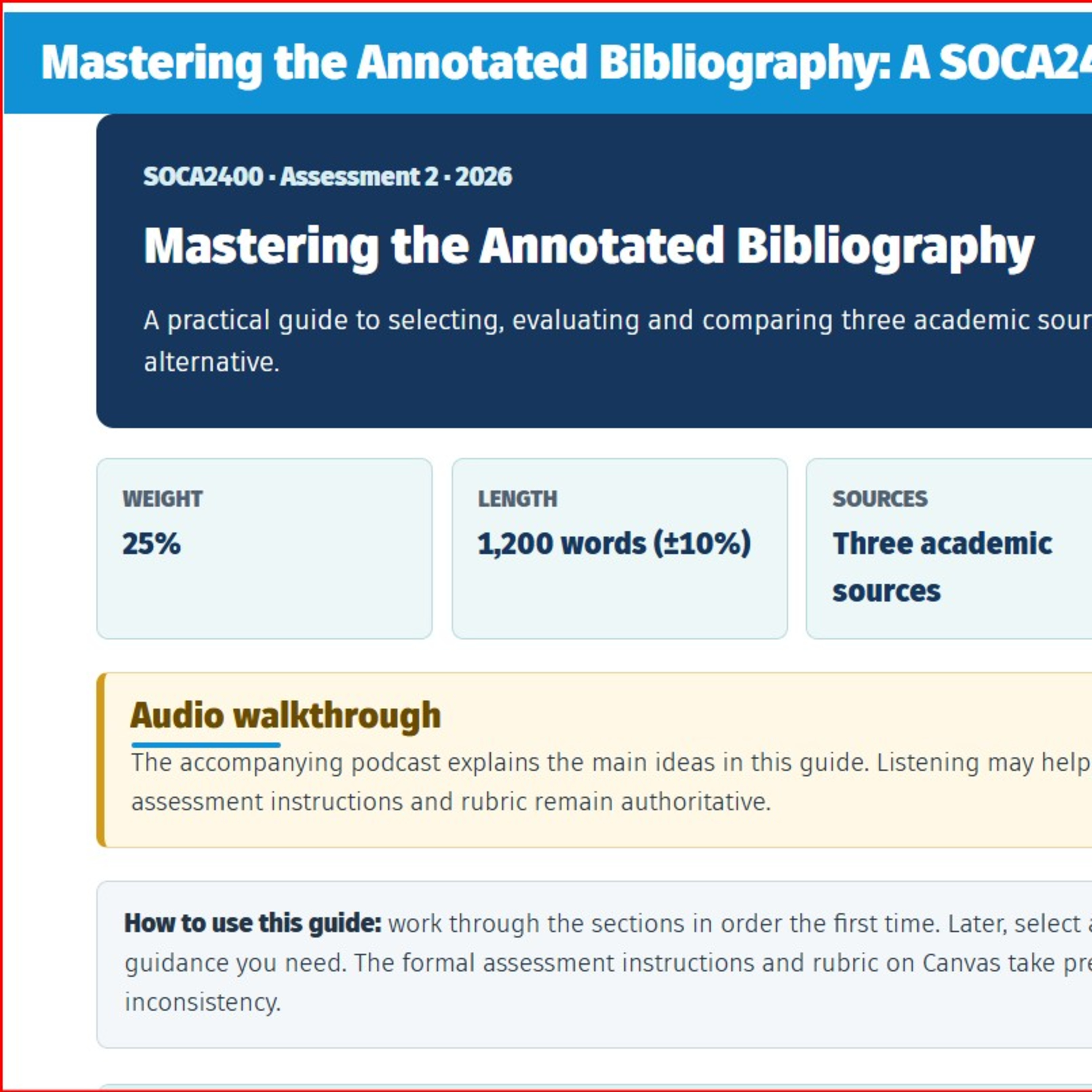
Are you ready to tackle your next big milestone in SOCA2400 ? In this episode, we break down "Mastering the Annotated Bibliography: A SOCA2400 Guide" , authored by your Course Coordinator, Dr S. A. Hamed Hosseini . This practical guide is your ultimate roadmap to choosing, evaluating, and comparing three academic sources on a post-capitalist alternative.Whether you are feeling overwhelmed or just want to make sure you are on track for a High Distinction, this episode demystifies the assignment requirements—which is worth 25% of your grade and has a target length of 1,200 words . We explain why this task is not just "three separate book reports" but a vital, strategic preparation stage for your final Research Essay. What we cover in this episode: Strategic Topic Selection: How to select a single post-capitalist alternative from the three broad course streams: justice-oriented, democracy-oriented, or ecologically oriented alternatives. Building a Complementary Trio: Why you should select a theoretical, empirical, and critical mix of sources to cover all your bases. The Six Essay Elements: How to read purposefully using these analytical lenses (such as contrasting with neoliberalism and exploring transformational roles). The Recommended Structure: A breakdown of the recommended word count, from the 200-word introduction to the 250-word annotations and the crucial 250-word comparative synthesis. Avoiding Major Pitfalls: From avoiding "descriptive book reports" and over-quoting to understanding the strict course policies on academic integrity and generative AI . A Four-Session Workflow: A step-by-step, stress-free timeline to take you from topic selection to a submission-ready draft. Get ready to transform your research from a routine task into a powerful intellectual toolkit! Hashtagged Keywords: #SOCA2400 #AnnotatedBibliography #AcademicWriting #PostCapitalistAlternatives #UniversityOfNewcastle #StudentSuccess #CriticalThinking #ResearchSkills #ActiveLearning