Episode #197
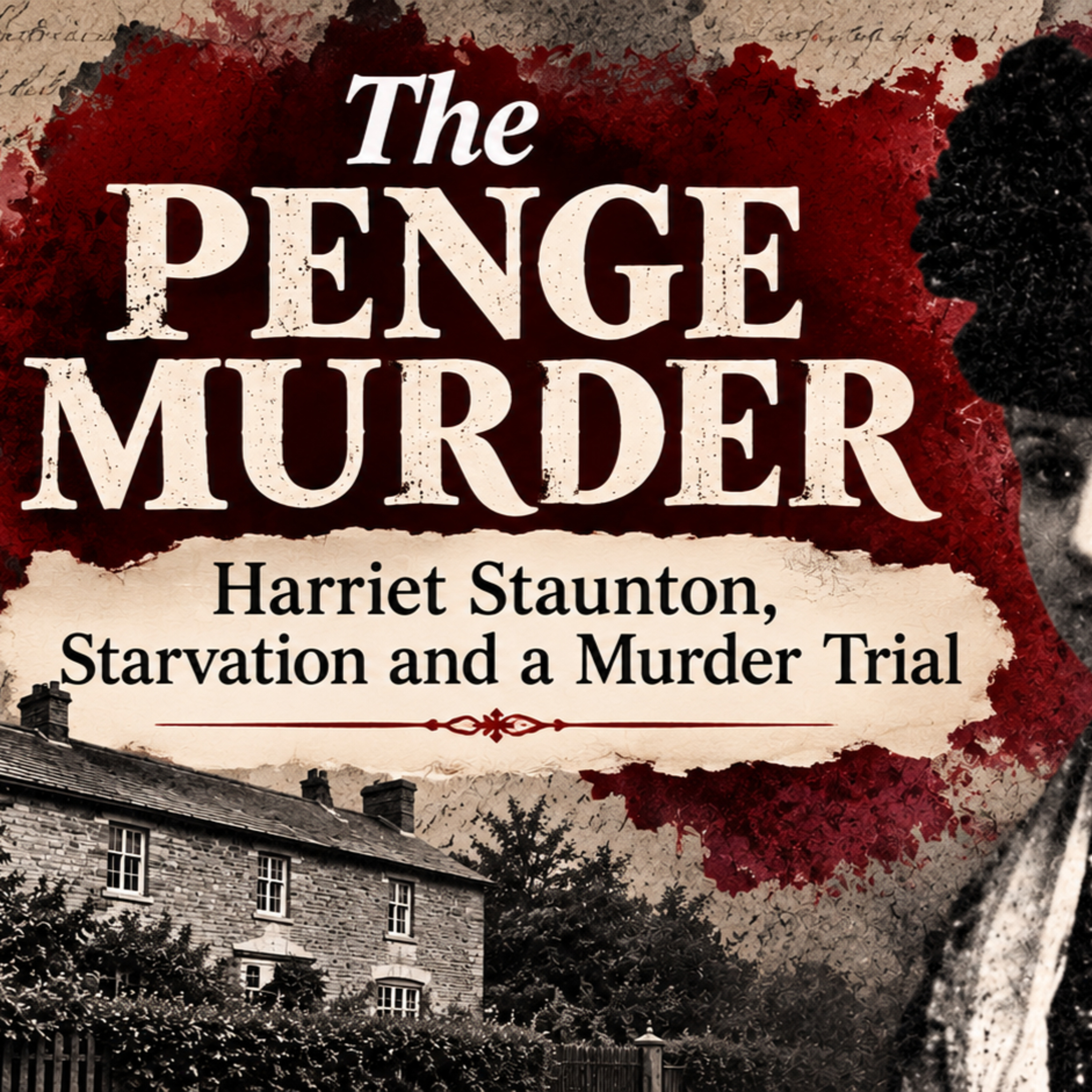
The Penge Murder: Harriet Staunton, Starvation and a Murder Trial
In 1877, Harriet Staunton died after months of isolation at a cottage in Kent. Her husband, his brother, sister-in-law and mistress were charged with her murder in a case that became known as the Penge Murder. But when doctors disagreed over whether Harriet had died from starvation or disease, the verdict sparked a controversy that would change the fate of all four defendants. Love Historical True Crime? Join us on Patreon for bonus episodes, extra historical mysteries and more stories that don’t make it onto the main feed. Your support helps keep the podcast going and means so much to me. You can find us at patreon.com/historicaltruecrime.Source Materials J. B. Atlay, Trial of the Stauntons (1911) Old Bailey Proceedings, Trial of Louis Staunton, Patrick Staunton, Elizabeth Staunton and Alice Rhodes (September 1877) J. E. Wilkinson et al., “Report of Post Mortem Examination, and on the Cause of Death, of Harriet Staunton, Aged Thirty-Five,” The British Medical Journal (October 27, 1877) Dr. J. F. Payne, commentary on the Staunton case, The British Medical Journal (October 27, 1877) Dr. W. S. Greenfield, “Some Remarks on the Medical Evidence in the Staunton Case,” The Lancet (October 6, 1877) The Lancet, contemporary commentary on the Staunton verdict and medical evidence (1877) The Daily Telegraph, contemporary reporting and correspondence on the Penge Murder (1877) Lilly Library, Indiana University, Off the Pedestal: Images of Women in Victorian Broadsides, Ephemera, and Books