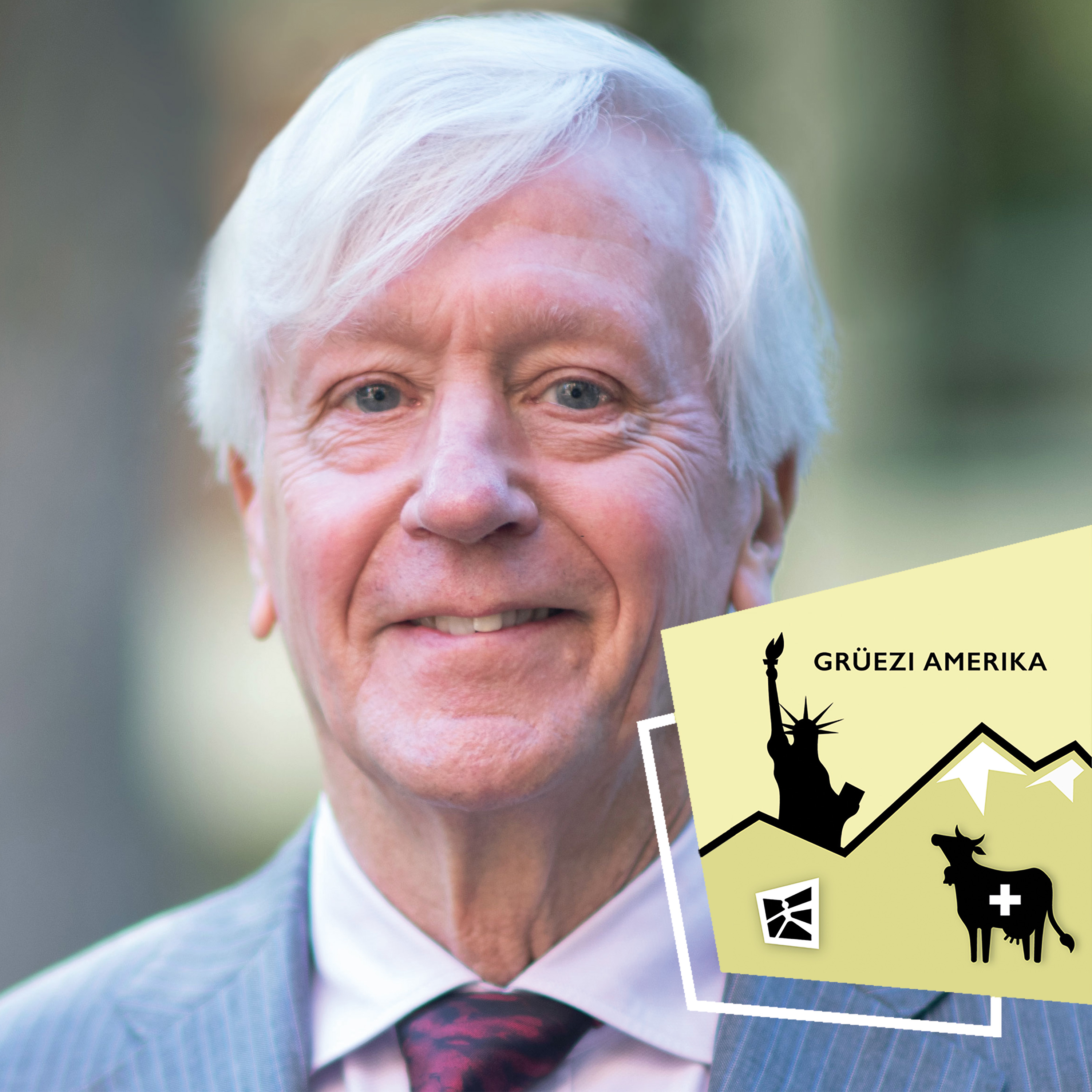
Since January 20, 2025, we are officially in the era of Trump 2.0. But is it, will it be any different from Trump 1.0? And what do the events across the Atlantic mean for us in Europe? My name is Claudia Franziska Brühwiler, and I am a professor of American Political Thought and Culture at the University of St.Gallen. This podcast will take a closer look at current events through the lens of American history, politics, and culture. Sometimes, I will keep it short and share with you my analysis, thoughts, or some background story to what is happening. At other occasions, we will hear from guests from across the HSG community and beyond, who give us new insights into US politics, business, culture, and society. We will look at the US from the perspective of its sister republic Switzerland. We often get hung up on what separates the US from Switzerland, while in fact we share not only great economic relations. Did you know, for instance, that America’s longest serving finance minist
Pitch Analysis
Required Pod Score for this show. PitchCentric checks your profile against host openness, topical fit, and audience signals before you generate a pitch.
Contact path
Verified email
Booking probability
32%
Guest openness
Selective
Verified email on file
80/100
Required Score
Sign up to generate a grounded pitch for Grüezi Amerika. Views from the Sister Republic.
What is Grüezi Amerika. Views from the Sister Republic?
Grüezi Amerika. Views from the Sister Republic is a society podcast hosted by Claudia Franziska Brühwiler, with 51 episodes on record and a Required Pod Score of 80. PitchCentric scores this show on Booking Probability, Listen Score, and live audience signals refreshed every 24 hours.
About the host
Claudia Franziska Brühwiler hosts Grüezi Amerika. Views from the Sister Republic, a society show with 51 episodes published.
Our AI reads these to draft pitches. Use them as grounding for a pitch that cites a real guest and a specific topic.
Episode #49
Episode 49 – Soccer in a Football Nation II – Going the College Route
Jun 12, 202638 minS1
While the odds of the United States men's national soccer team winning the 2026 FIFA World Cup are much lower than many Americans believe, the women’s team (USWNT) has long been a force to be reckoned with. The USWNT won the World Cup four times and became five times Olympic champions. Mia Hamm, Megan Rapino, and Abby Warmbach are household names – and they all honed their skills as college players. Why is collegiate soccer still the most popular route to take for female players? What difference thus it make to play soccer in college instead of a club? Emmental native Alina Brühlmeier has started her soccer career in a Swiss club, but then seized the opportunity to join a US College team: after her commercial apprenticeship (KV), she joined the Hawkeye RedTails in Iowa. Now she is finishing her Bachelor’s degree in finance – and playing soccer at Webber International University in Florida.
Episode 48 – Soccer in a Football Nation I – US Soccer History
May 31, 202648 minS1
On June 11, the 2026 FIFA World Cup kicks off with Mexico playing against South Africa. While Mexico, Canada, and the United States are hosting this World Cup together, the majority of matches will take place on American soil in stadiums that have originally been built for different sports. Already the fact that Americans call the world’s favorite sports “soccer” underlines its peculiar status in a “football nation.” But while earlier professional soccer leagues struggled to attract both spectators and investors, the MLS has started to gain supporters and the number of American kids playing soccer keeps rising. President Donald J. Trump even suggested a year ago that American football should rename itself and allow soccer to become football. Might the 2026 World Cup propel men’s soccer to the same status currently held by baseball and football? And why did soccer fail to launch when other pastimes became established at American colleges? Is American soccer any different from the way Europeans play? Who better to ask than the author of Soccer in American Culture: The Beautiful Game’s Struggle for Status (University of Missouri Press, 2022), a Choice Outstanding Academic Title. Professor White used to play soccer himself for Andover and Amherst, and also coached girls’ soccer. G. Edward White is David and Mary Harrison Distinguished Professor of Law at the University of Virginia Law School. He has been a Guggenheim Fellow, and twice a senior fellow of the National Endowment for the Humanities. He is a fellow of the American Academy of Arts & Sciences, a fellow of the Society of American Historians, and a member of the American Law Institute. White’s 20 published books have won numerous honors and awards, among them a final listing for the Pulitzer Prize in history. His academic career included appointments across the United States as well as at the University of Auckland (New Zealand) and at the London School of Economics. He originally studied at Amherst College, went on to Yale University for a doctorate in American Studies, before he obtained his J.D. from Harvard Law School.
Episode 47 – Ein neues transatlantisches Verhältnis?
May 22, 202642 minS1
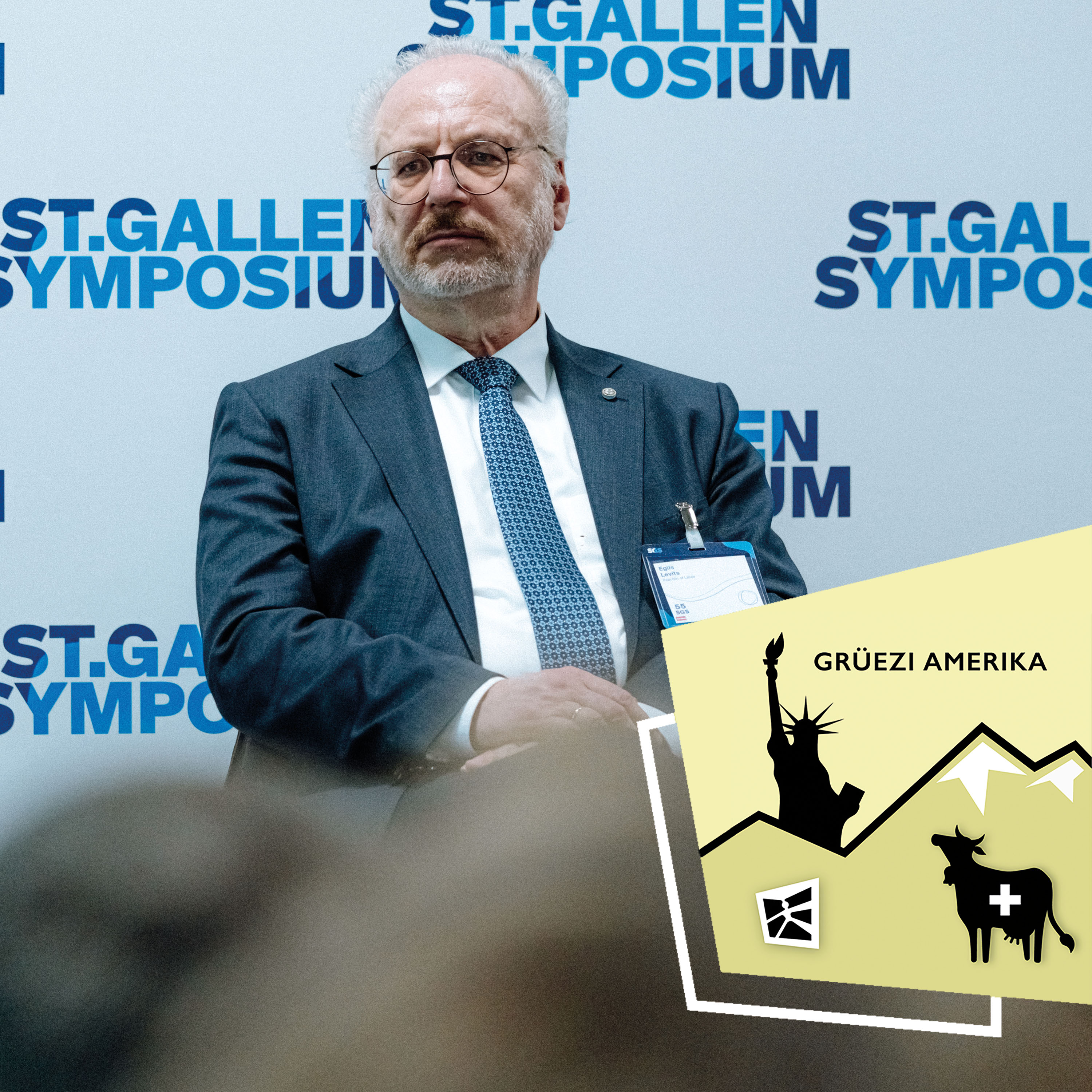
Manche Menschen sind nicht einfach Zeitzeugen, sondern Mitgestalter ihrer Zeit und deren Umbrüche: Egils Levits, 1955 geboren in der Lettische Sozialistische Sowjetrepublik, erlebte die Ausweisung seiner Familie nach Deutschland, studierte dort und fasste Fuss als Jurist – um dann 1990 in seine alte Heimat zurückzukehren und deren demokratische Zukunft mitzuprägen. Neben vielen anderen Stationen diente er unter anderem als Richter am Europäischen Gerichtshof für Menschenrechte und am Europäischen Gerichtshof, bevor er von 2019 bis 2023 Präsident Lettlands wurde. Heute beobachtet er kritisch das Zeitgeschehen. Anlässlich des 55. St.Gallen Symposiums sprachen wir über die Herausforderungen Europas, insbesondere der baltischen Staaten, der geopolitischen Veränderungen Herr zu werden. Wie kann das transatlantische Verhältnis neu definiert werden? Welche Rolle kann, muss die NATO heute haben? Wie schafft es Europa, sich von den USA zu emanzipieren? Diese Fragen treiben auch Egils Levits um. Lesetipps Veith Selk, Demokratiedämmerung Carlo Masala, Wenn Russland gewinnt
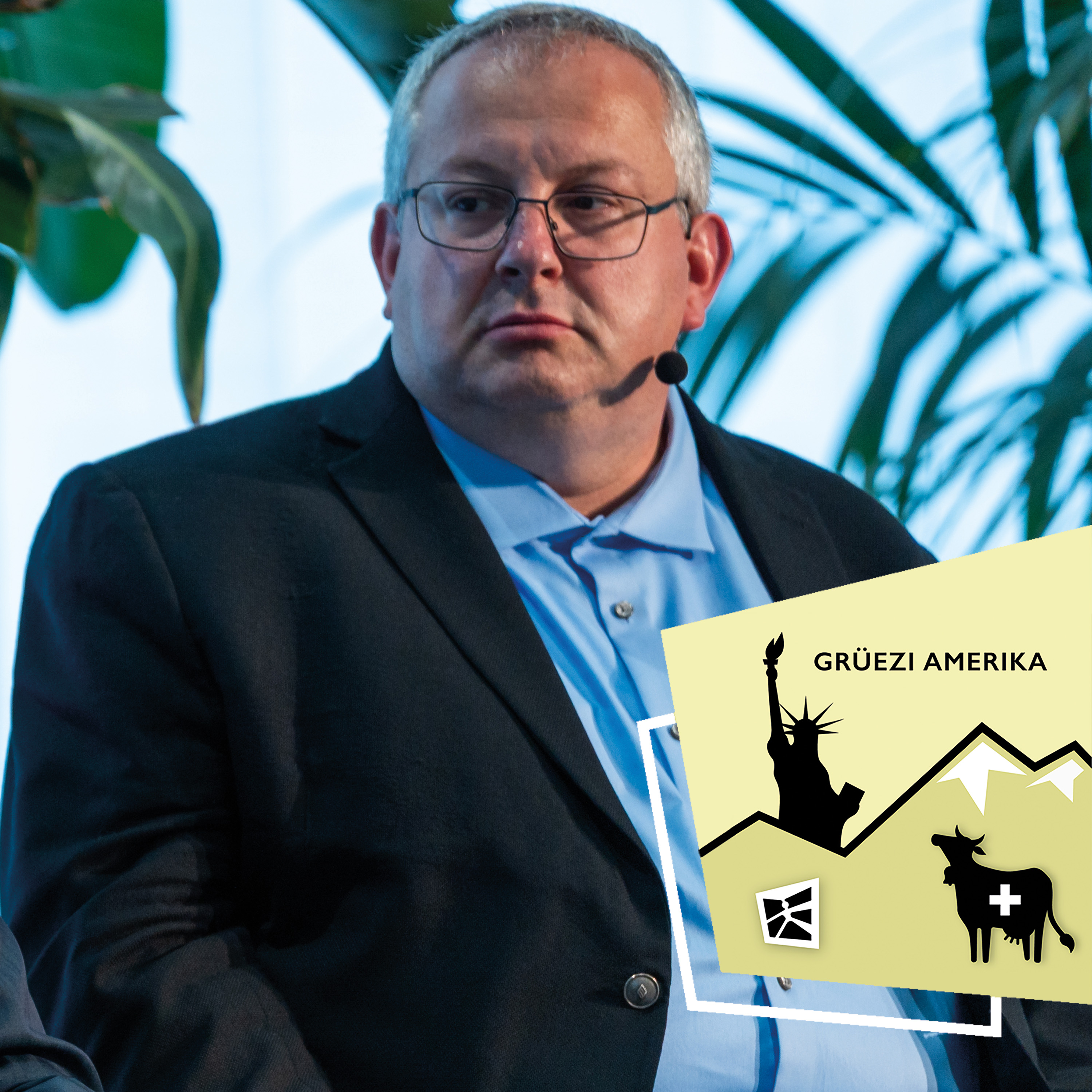
Uncertainty on the tariff front, the war in Iran with the blockage of the strait of Hormuz, and a dissatisfied population: 61 percent of Americans feel that the economy is getting worse , and many wonder how the president wants to turn the situation around prior to the Midterm elections on November 3. Is there anything in the toolbox of Trumponomics 2.0 that can remedy the current situation? Or are things not as bleak as people feel? At the occasion of the 55th St.Gallen Symposium, "Grüezi Amerika" seized the opportunity to discuss these questions with Rüdiger Bachmann. Professor Rüdiger Bachmann is a renowned economist with a truly transatlantic career: after his studies at the University of Mainz, he went to Yale University and started his academic career in the Midwest, at the University of Michigan. Before returning to Ann Arbor as a full professor, he held positions at RWTH Aachen, the University of Frankfurt and at the University of Notre Dame, in addition to several guest appointments. He regularly provides commentary on US politics and economics in media outlets such as Deutschlandfunk, ARD, and Phoenix.
Episode 45 – Der amerikanische Traum «made in China»?
Apr 26, 202648 minS1
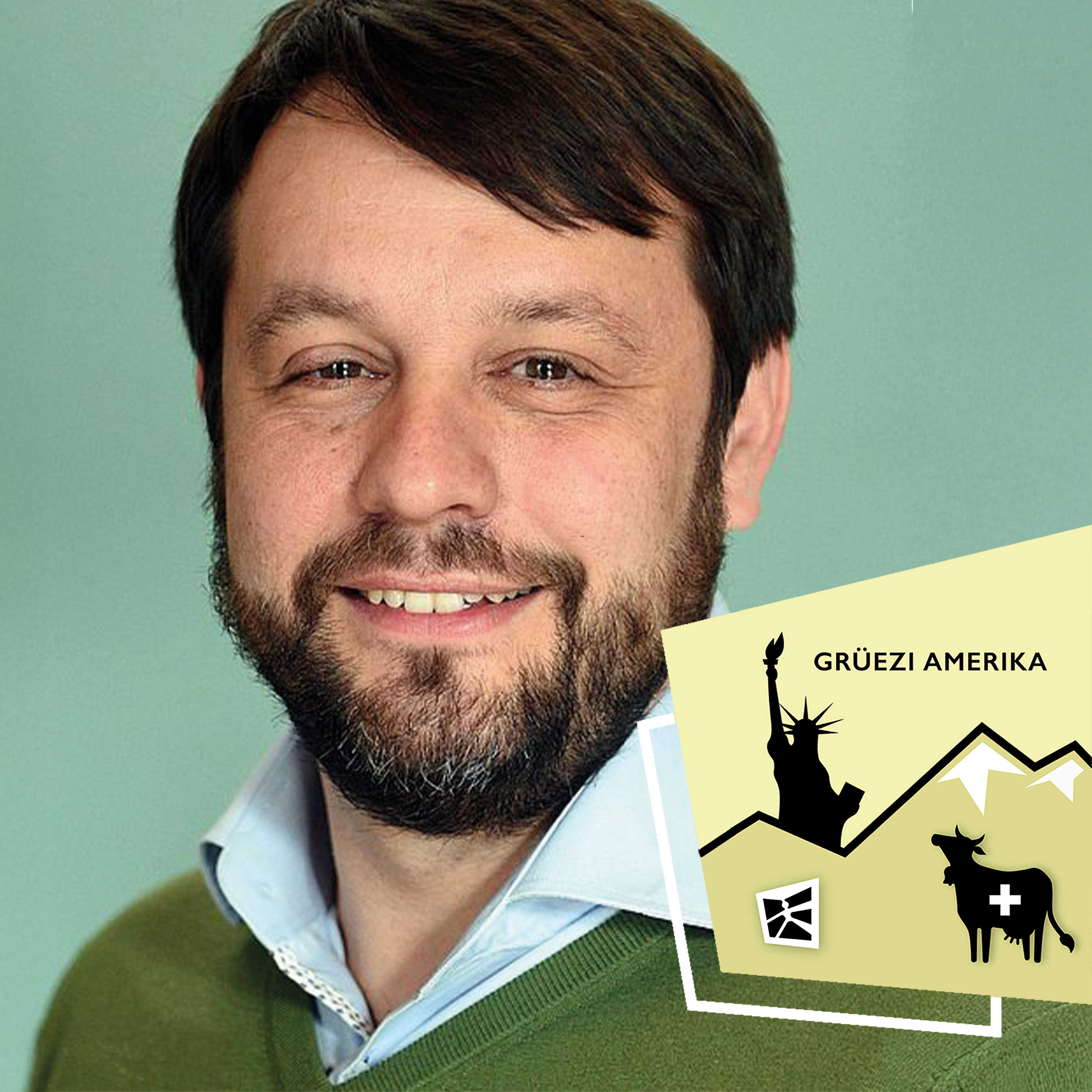
Als der Historiker und Autor James T. Adams 1931 den Begriff des «amerikanischen Traums» prägte, war dieser in materieller Hinsicht für die Mehrheit der Amerikaner tot: Das Land steckte inmitten der Grossen Depression, statt auf Aufstieg hoffte man in erster Linie auf Überleben. Gerade deshalb betonte Adams, dass es beim amerikanischen Traum um mehr gehe als ein schickes Auto oder andere Besitztümer. Und tatsächlich betonen auch heute noch die Amerikaner unterschiedliche Aspekte, wenn sie den amerikanischen Traum definieren. Ob es um Stabilität oder Aufstieg geht, noch glaubt knapp die Mehrheit an die Erfüllbarkeit ihres Traums – aber die Totsagungen werden immer lauter. Derweil ist andernorts ein grosser Traum erwacht: 2012 sprach Xi Jinping, Präsident der Volksrepublik China, erstmals vom chinesischen Traum und dessen Erfüllung in der Great Rejuvenation . Wie amerikanisch ist dieser chinesische Traum? Und kann er dieselbe Sogkraft entwickeln, wie es der amerikanische Traum getan hat? Antworten weiss Professor Ralph Weber von der Universität Basel: Einst studierte er an der Universität St.Gallen Staatswissenschaften und promovierte bei uns zur politischen Philosophie von Tu Weiming. Nach einer Oberassistenz an der Universität Zürich führte ihn sein Weg ans Europainstitut Basel, wo er mittlerweile als Associate Professor lehrt und forscht. In seiner Arbeit setzt sich Ralph unter anderem auch mit dem Verhältnis Schweiz-China auseinander, nachzulesen beispielsweise im Bericht zur «Situation der tibetischen und uigurischen Gemeinschaften in der Schweiz: Effektive und wahrgenommene Druckausübung» oder in «Unified message, rhizomatic delivery: A preliminary analysis of PRC/CCP influence and the united front in Switzerland» . Gemeinsam mit PD Dr. Ariane Knüsel hat er eine Geschichte der schweizerisch-chinesischen Beziehungen verfasst, Die Schweiz und China: Von den Opiumkriegen bis zur Neuen Seidenstrasse (2024) . Buchempfehlung von Ralph Weber: Ling Li, Governance of a Party-state: Corruption, Law, and the Modus Operandi of the Chinese Communist Party .
Every question we get asked before someone starts their trial.
If you have a concern about deliverability, AI quality, data privacy, or whether this will actually work for your specific situation, it's probably answered below.
What is the difference between Founder Solo and Founder Pro?
Founder Solo gives you 50 AI pitches per month using the credit model (Standard pitches cost 1 credit, Enriched pitches cost 2). Founder Pro raises that to 200 credits per month and adds full Booking Probability access, unlimited Magic Match, Apollo enrichment credits, and data export capabilities. Both plans use the same credit system, so you can stretch your monthly budget further by using Standard-mode drafting.
How do agency tiers work?
Agency tiers have no base fee. You pay per managed client and per talent profile. Agency Standard is $199 per client per month; Agency Pro is $399 per client per month. Both add $39 per talent profile per month. Your own team's user seats are always free.
What is a talent profile?
A talent profile represents one person (founder, executive, or spokesperson) you are booking onto podcasts. It includes their bio, topics, headshots, and outreach history. Team plans include 5 profiles; agency plans are pay-as-you-go.
Can I switch plans later?
Yes, at any time. Upgrades take effect immediately; downgrades apply at the end of the current billing period. Contact support if you need help migrating between plan families.
Do you offer a free trial?
Every paid plan includes a 15-day free trial. Your card is saved at signup but you will not be charged until day 16. Cancel any time from your dashboard.
What happens if I cancel?
You keep access until the end of your current billing period. No charges after that. Your data is retained for 30 days in case you reactivate.
Is the 20% annual discount automatic?
Yes. Select Annual on the pricing toggle and the discounted price is applied automatically at checkout. The annual price shown is the full year cost.
What if I have more than 50 profiles or 20 clients?
That is our Enterprise tier. Contact our sales team and we will build a custom plan with volume pricing, a dedicated account manager, and SLA guarantees.