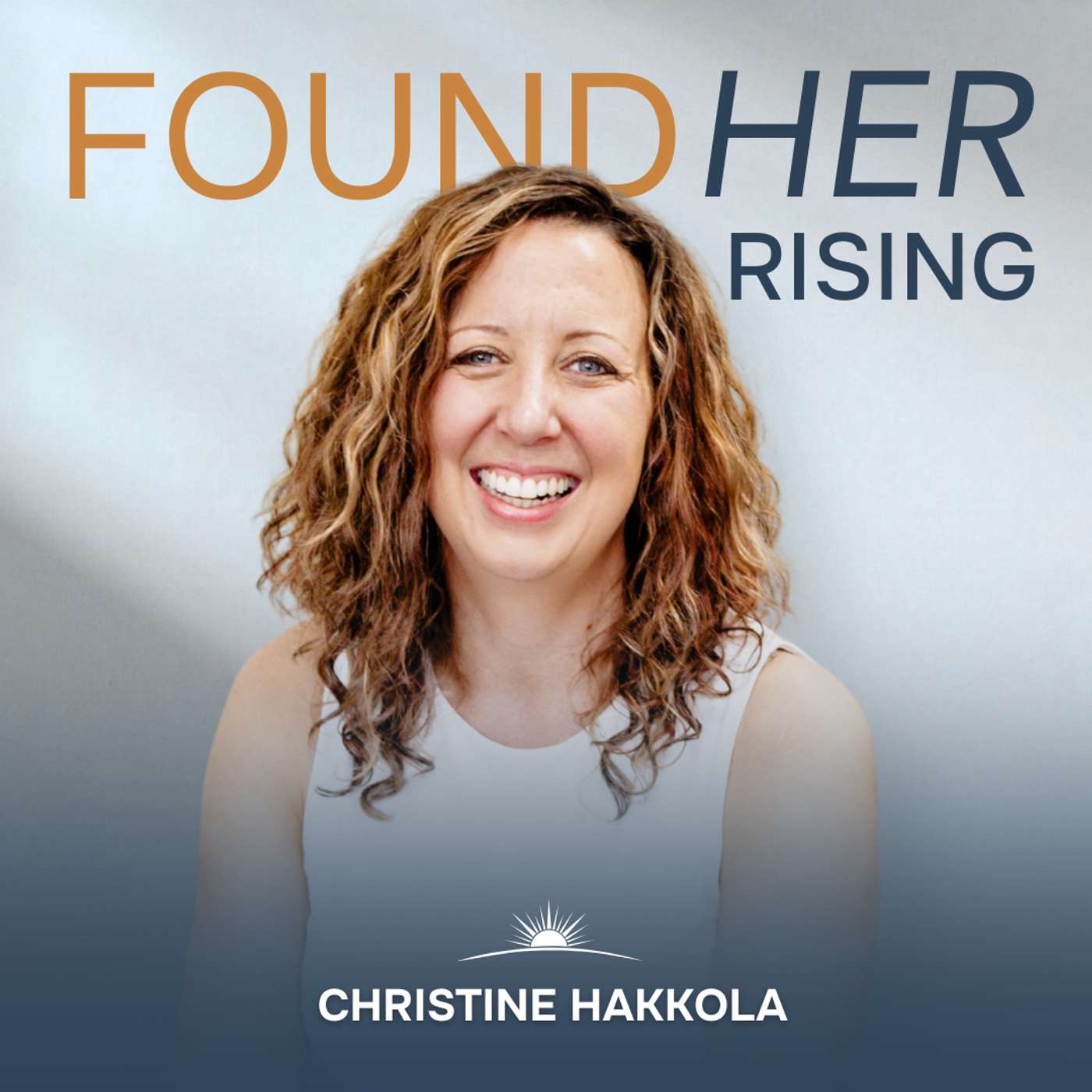
Your business didn’t fail.It outgrew the way it was built.FoundHer Rising is for women founders in wellness, coaching, and consulting who’ve built successful service-based businesses, and are now feeling the weight of growth that depends too much on them.You’ve done the right things.You’ve built demand, filled your calendar, and proven your expertise.But instead of ease, growth brought more pressure, complexity, and responsibility.This isn’t a podcast for beginners, hustle culture, or quick fixes.It’s a space for honest conversations about what scaling actually requires: leadership shifts, identity changes, and building a business that can grow without burning you out.Hosted by Christine Hakkola, this show helps experienced, heart-centered founders think differently about their businesses so decisions get clearer and growth becomes more intentional.If this stage feels familiar, you’re in the right place.Learn more at hakkolahorizons.com.
Pitch Analysis
Required Pod Score for this show. PitchCentric checks your profile against host openness, topical fit, and audience signals before you generate a pitch.
Contact path
Verified email
Booking probability
28%
Guest openness
Selective
Verified email on file
80/100
Required Score
Sign up to generate a grounded pitch for FoundHer Rising with Christine Hakkola.
FoundHer Rising with Christine Hakkola is a business podcast hosted by Christine Hakkola, with 19 episodes on record and a Required Pod Score of 80. PitchCentric scores this show on Booking Probability, Listen Score, and live audience signals refreshed every 24 hours.
About the host
Christine Hakkola hosts FoundHer Rising with Christine Hakkola, a business show with 19 episodes published.
Our AI reads these to draft pitches. Use them as grounding for a pitch that cites a real guest and a specific topic.
Episode #38
How This Practice Owner Built a Team She Could Trust with Caroline Adelman | FoundHer Rising S01 E38
Sep 15, 202636 min
Most new founders think their biggest problem is finding leads. Alexis Garrison, founder of AG Digital Group, found out the hard way that the network she already had was worth more than she realized. In this episode, she and Christine talk about the real challenges of year one, why narrowing your services is what makes a business scalable, and why letting go of doing everything yourself is harder, and more necessary, than it looks. If you're at the crossroads of growing your business without losing what makes it yours, this conversation is for you. KEY TAKEAWAYS Most founders already have a warm network worth more than they think. The work is trusting it, not building a new one from scratch. Narrowing your services isn't a limitation. It's usually what makes a business scalable in the first place. Growth and quality control aren't opposites. The right systems and the right people let your standards scale with you. TIMESTAMPS 0:00 – Welcome and meet Alexis Garrison 6:01 – What sets B2B marketing apart from everything she'd learned 13:11 – The network she almost forgot she had 18:46 – Why niching down changed her business 26:03 – The hiring decision every scaling founder faces 34:17 – Where to find Alexis CONNECT WITH ALEXIS GARRISON Website: https://www.counsellingandco.com/ Instagram: https://www.instagram.com/counselling_and_co/ CONNECT WITH CHRISTINE HAKKOLA Website: hakkolahorizons.com LinkedIn: https://www.linkedin.com/in/christine-hakkola If this episode resonated, follow the show, share it with another founder, and leave a quick review. It helps more women find these conversations. HASHTAGS #FoundHerRising #WomenFounders #GroupPractice #ScalingYourBusiness #Delegation #WellnessBusiness #PrivatePractice #BusinessSystems #TeamBuilding #ServiceBasedBusiness
How to Delegate When You Are the Face of Your Business with Jodi Rouah | FoundHer Rising S01 E37
Sep 8, 202633 min
You hired someone good and your clients still want you. That's the wall most service-based founders hit, and it's not a hiring problem. It's a structure problem. If the business is built around one person, growth stops at that person's calendar. Jodi Rouah built Counselling & Co. from a solo caseload into a hybrid team of roughly a dozen clinicians in Oakville, Ontario. In this conversation with Christine Hakkola, she walks through the specific shift that made it possible: removing herself from the client conversation entirely, and building a practice clients could choose without her in it. KEY TAKEAWAYS Referral trust transfers when you step back. Client trust usually doesn't, and those require two different fixes. Onboarding is not paperwork. Jodi's process starts two months before a clinician's first day and is where the culture actually gets installed. Letting go of control is not blind faith. The move is removing yourself from the execution while keeping your finger on the pulse. TIMESTAMPS 00:00 Welcome to FoundHer Rising 05:24 The first contractor who asked to be hired 10:40 Why clients wouldn't book with anyone else 15:40 Onboarding as the system that protects culture 22:09 Slow to hire and why the front end matters most 27:18 Oversight versus execution CONNECT WITH JODI ROUAH Website: https://www.counsellingandco.com/ Instagram: https://www.instagram.com/counselling_and_co/ CONNECT WITH CHRISTINE HAKKOLA Website: hakkolahorizons.com LinkedIn: https://www.linkedin.com/in/christine-hakkola If you're the bottleneck in your own business right now, tell us in the comments what you've tried handing off, and what happened. Subscribe for new conversations with women scaling service-based businesses. #FoundHerRising #WomenFounders #GroupPractice #ScalingYourBusiness #Delegation #WellnessBusiness #PrivatePractice #BusinessSystems #TeamBuilding #ServiceBasedBusiness
How To Lead a Small Team Without Losing the Human Side with Yael Eiserike | FoundHer Rising S01 E36
Sep 1, 202636 min
Most advice about growing a service business assumes bigger is the goal. But what happens when you've built something good, you have a small team, and you realize that going massive would break the exact thing that makes the work worth doing? Yael Eiserike left a career in law to become a therapist, then built a private practice serving attorneys and high-achieving professionals. Today she leads a small team and is deliberate about keeping it that way. In this conversation she and Christine Hakkola get into the real mechanics of that choice: when to hire, how to decide, which clients to turn down, and how to keep the human part of leadership intact once you're no longer working alone. KEY TAKEAWAYS You do not need to become an expert in every part of your business. Hiring specialists early costs less than the hours you burn learning what they already know. The most useful hiring filter is trust, not credentials. If someone makes you feel foolish for asking a question, you will stop asking, and the questions you stop asking become the problems you discover too late. Boundaries are not the opposite of being humane. Clearly communicated limits are what make warmth reliable for the people who work with you. TIMESTAMPS 0:00 — Introduction 5:20 — The Real Reason She Left a Job She Liked 10:33 — Why Working Inside Someone Else's Practice Came First 16:16 — Hire Experts Instead of Becoming One 21:27 — Building Around a Niche You Actually Come From 26:31 — Two Team Members Two Completely Different Needs 31:41 — Why Boundaries Are Not the Opposite of Humane CONNECT WITH YAEL EISERIKE Website: https://yaeleiserike.com/ LinkedIn: https://www.linkedin.com/in/yaeleiserike CONNECT WITH CHRISTINE HAKKOLA Website: hakkolahorizons.com LinkedIn: https://www.linkedin.com/in/christine-hakkola If this one landed, subscribe and leave a review. It helps more women founders find these conversations. Interested in being a guest on FoundHer Rising? Apply through the link on HakkolaHorizons.com. #FoundHerRising #WomenFounders #ServiceBusiness #ScalingABusiness #SmallBusinessLeadership #WellnessBusiness #CoachingBusiness #BusinessBoundaries #TeamBuilding #PrivatePractice
How to Market a Group Practice When Clients Only Want You | FoundHer Rising S01 E35
Aug 18, 202632 min
You filled your caseload, hired an associate, and discovered the hard part. Clients still only want to see you. The reputation that built your practice was personal, and personal reputation doesn't transfer to a new hire on request. Rebecca Gerlach built Being Human Group after filling her solo therapy caseload in four months. A year in, she rebuilt her entire website to move her associates to the top of the page and herself to the bottom. In this conversation she walks through what actually grew the practice, the hire that finally bought her time back, and why she made a deliberate decision to stop growing at a certain size. KEY TAKEAWAYS Marketing individual associates creates five or six small businesses instead of one. Rebranding around the practice means every future hire inherits the reputation on day one. Systems and automation redistribute your workload. Hiring is what actually removes it. A single clinical supervisor hire was what let Rebecca step out of the day to day after years of not being able to. Refusing poor-fit clients and referring them elsewhere is what keeps a practice full, not what empties it. Trust travels further than availability. TIMESTAMPS 00:00 — Welcome and how Rebecca got started 05:03 — When clients only want to see you 10:24 — The network most practice owners never build 15:32 — Saying no to the wrong fit 20:48 — The hire that bought her time back 26:16 — Why she chose not to get bigger 31:13 — Advice for founders in the middle of it CONNECT WITH REBECCA GERLACH Website: https://www.beinghumangroup.com/ LinkedIn: https://www.linkedin.com/in/becca-gerlach Instagram: https://www.instagram.com/thebeinghumangroup CONNECT WITH CHRISTINE HAKKOLA Website: hakkolahorizons.com LinkedIn: https://www.linkedin.com/in/christine-hakkola If you're at the point where the practice can't grow past you, tell me in the comments what's holding it there. And if this episode was useful, follow the show so more women founders find these conversations. Interested in being a guest on FoundHer Rising? Apply through the link on HakkolaHorizons.com. #FoundHerRising #WomenFounders #GroupPractice #PrivatePractice #TherapistEntrepreneur #ScalingYourBusiness #WellnessBusiness #HiringAndDelegation #ServiceBasedBusiness #BusinessCoaching
Why 70% of Leaders Struggle With Imposter Syndrome with Lin Coughlin | FoundHer Rising S01 E34
Aug 4, 202632 min
Eighty percent of her clients have come through referrals for twenty years. Now she is building a group program, and the network that built the practice cannot fill it. Lin Coughlin spent 25 years in corporate America, including 15 years in C-suite operating roles leading integrations, turnarounds, and the spin-off of four divisions of a $20 billion conglomerate. She left to build her own executive coaching practice and stood it up in months using her warm network alone. Twenty years later she is launching her first group offering, and running straight into the ceiling that almost every service based founder eventually hits. In this conversation with Christine Hakkola, Lin is candid about what referrals can and cannot do, why she now screens every client for imposter syndrome, and the slow visibility channel that took years to compound. KEY TAKEAWAYS A referral engine scales with your relationships, not with your offer. It is the right mechanism for high touch one on one work and the wrong one for filling a cohort, and the gap only becomes visible once you launch something new. Imposter syndrome affects roughly 70% of leaders, and in Lin's experience men and women at similar rates. She stopped waiting for clients to raise it and built it into her discovery process as a default screening question. Consistent public posting, not pitching, is what produced her media coverage. Leadership publications found her online and approached her, and those features then became the raw material for the next round of content. TIMESTAMPS 00:00 — Welcome and who Lin actually serves 06:15 — Standing up the business and the first six clients 12:18 — The Strengths Report Card and where imposter syndrome shows up 19:29 — Building the first group offer after 20 years of one on one 25:08 — Once a client always a friend, and the AI learning curve 30:26 — Where to find Lin CONNECT WITH LIN COUGHLIN Website: www.GreatCircleAssociates.com Email: lin.coughlin@greatcircleassociates.com Blog: https://greatcircleassociates.com/blog/ LinkedIn: https://www.linkedin.com/in/lincoughlin/ CONNECT WITH CHRISTINE HAKKOLA Website: hakkolahorizons.com LinkedIn: https://www.linkedin.com/in/christine-hakkola Want to be a guest on FoundHer Rising? Apply through the link on our site. If this episode gave you something useful, subscribe and leave a review. It helps more women find these conversations. #FoundHerRising #WomenFounders #ExecutiveCoaching #ScalingYourBusiness #ImposterSyndrome #ServiceBasedBusiness #WomenInLeadership #BusinessGrowth #CoachingBusiness
Every question we get asked before someone starts their trial.
If you have a concern about deliverability, AI quality, data privacy, or whether this will actually work for your specific situation, it's probably answered below.
What is the difference between Founder Solo and Founder Pro?
Founder Solo gives you 50 AI pitches per month using the credit model (Standard pitches cost 1 credit, Enriched pitches cost 2). Founder Pro raises that to 200 credits per month and adds full Booking Probability access, unlimited Magic Match, Apollo enrichment credits, and data export capabilities. Both plans use the same credit system, so you can stretch your monthly budget further by using Standard-mode drafting.
How do agency tiers work?
Agency tiers have no base fee. You pay per managed client and per talent profile. Agency Standard is $199 per client per month; Agency Pro is $399 per client per month. Both add $39 per talent profile per month. Your own team's user seats are always free.
What is a talent profile?
A talent profile represents one person (founder, executive, or spokesperson) you are booking onto podcasts. It includes their bio, topics, headshots, and outreach history. Team plans include 5 profiles; agency plans are pay-as-you-go.
Can I switch plans later?
Yes, at any time. Upgrades take effect immediately; downgrades apply at the end of the current billing period. Contact support if you need help migrating between plan families.
Do you offer a free trial?
Every paid plan includes a 15-day free trial. Your card is saved at signup but you will not be charged until day 16. Cancel any time from your dashboard.
What happens if I cancel?
You keep access until the end of your current billing period. No charges after that. Your data is retained for 30 days in case you reactivate.
Is the 20% annual discount automatic?
Yes. Select Annual on the pricing toggle and the discounted price is applied automatically at checkout. The annual price shown is the full year cost.
What if I have more than 50 profiles or 20 clients?
That is our Enterprise tier. Contact our sales team and we will build a custom plan with volume pricing, a dedicated account manager, and SLA guarantees.