Energy News Beat Podcast
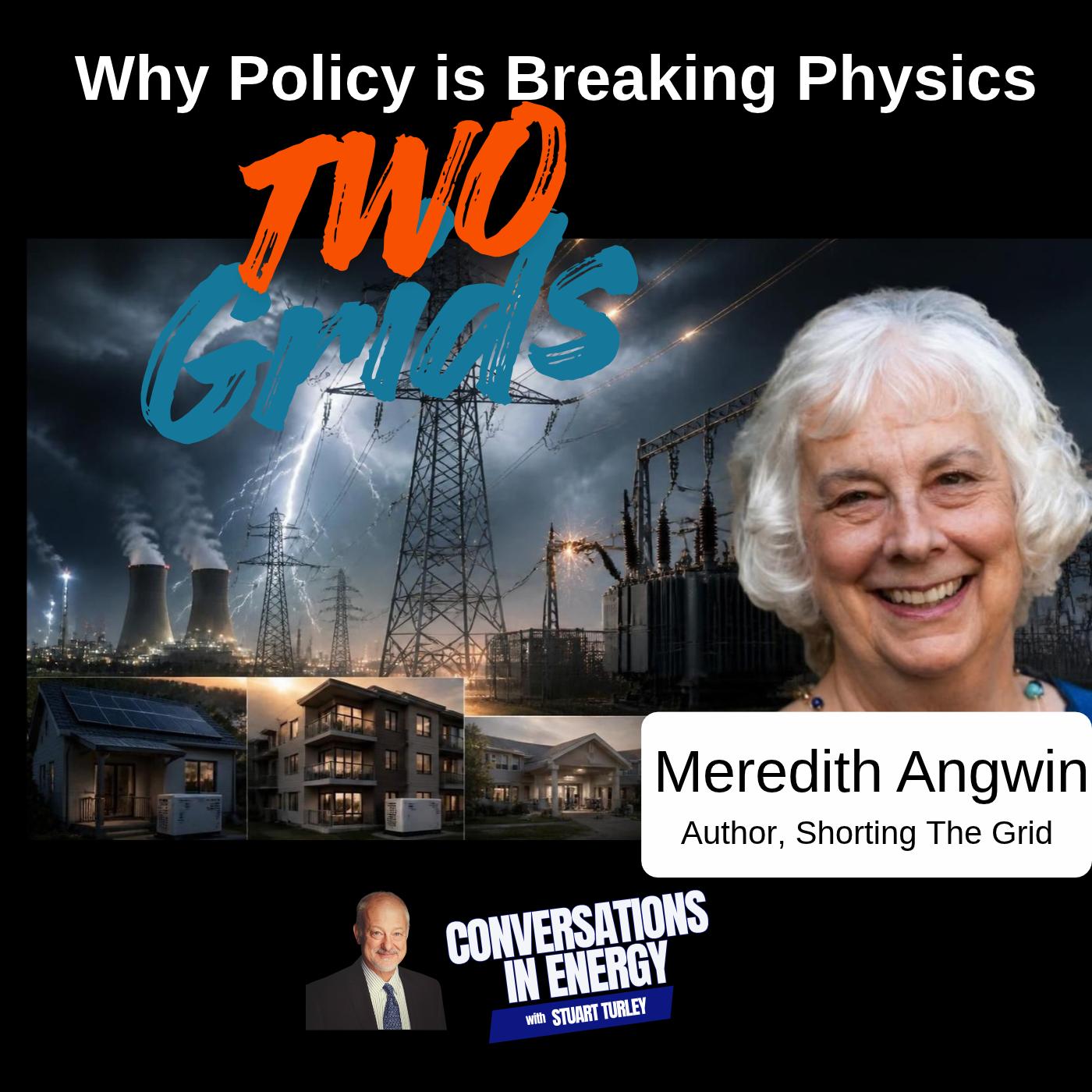
The Two Grids: Why Policy is Breaking Physics - Meredith Angwin Stops by the Energy News Beat Podcast
Welcome back to the Energy Newsbeat podcast. Today, we’re diving deep into one of the most critical—and misunderstood—issues facing America’s energy future. Most people think the grid is just the wires and power plants they see. But what if I told you two grids are operating at the same time, and they’re increasingly working against each other? One is governed by the laws of physics. The other is governed by policy papers. And right now, policy is winning—with dangerous consequences. Our guest today is Meredith Angwin, author of “Shorting the Grid” and what we call the national treasure of energy. She’s here to explain why your electricity bills are skyrocketing, why rolling blackouts are coming, and why the $10.3 trillion we’ve spent on wind and solar hasn’t made our grid more reliable—it’s made it more fragile. If you care about keeping the lights on, affording your power bill, or understanding the real state of America’s energy infrastructure, you need to hear this conversation. We absolutely think the world of Meredith Angwin and her work. Check out her Substack here: https://meredithangwin.substack.com/ Check out her book here: Shorting The Grid 1. The Two Grids Concept Meredith explains her theory that there are two distinct grids operating simultaneously: The Physical Grid: The actual infrastructure you can see (transmission lines, substations) governed by immutable physics and laws The Policy Grid: A set of regulations and policies (net metering, renewable portfolio standards, net-zero mandates, renewable energy certificates) that determine how the physical grid is paid for The key insight is that policy decisions often ignore physical realities, creating conflicts between what regulations demand and what physics allows. 2. The Fatal Trifecta of Grid Errors Meredith identifies three critical mistakes grids can make, with a focus on: Installing too many renewables without adequate backup systems Failing to account for inertia and support from rotating machinery Not understanding the grid’s need for reliable baseload power 3. Renewable Energy Limitations and Common-Mode Failure Solar’s Common-Mode Failure: All solar installations shut down simultaneously at sunset, creating a predictable vulnerability unlike traditional power plants Wind Variability: Wind doesn’t always blow when needed Storage Requirements: Wind and solar must be paired with expensive storage systems to be grid-viable, yet these costs aren’t factored into affordability claims 4. Grid Resilience and Baseload Power Traditional grids are designed with 110-120% capacity to handle plant outages Nuclear, coal, natural gas, and hydro provide reliable baseload power The grid cannot function reliably with high percentages of intermittent renewables without massive backup infrastructure 5. International Energy Policy Failures Germany: Shut down nuclear reactors, closed coal plants, and is flooding its last surface coal mine—creating energy dependence France: Neglected nuclear maintenance, reducing operational capacity from 35 reactors to 25% Norway & Canada: Prioritizing domestic energy needs over exports; Quebec and Norway are reconsidering power exports to neighboring regions New York: Spent $6 billion on a hydroelectric interconnect with Canada that provides only 30 minutes of power daily 6. The Cost of Renewable Subsidies $10.3 trillion spent globally on wind and solar could have built 170 new nuclear reactors in the US alone Wind and solar are not truly “renewable”—less than 1% of solar panels are recycled, and wind turbines create a $93 billion land reclamation liability Approximately 70,000 aging wind turbines in the US are approaching end-of-life with no funded decommissioning plan 7. Grid Vulnerability and Emergency Preparedness Utilities and CEOs are warning of imminent rolling blackouts Vulnerable populations (elderly in assisted living, those dependent on oxygen generators) lack backup power plans Apartment buildings cannot easily accommodate backup power solutions like Tesla batteries or generators Affordable backup solutions (like Jackery portable power units) are being explored for apartment complexes 8. The Path Forward Nuclear energy is the most viable long-term solution Multiple nuclear CEOs indicate significant reactor deployments within 10 years Africa and developing nations want reliable baseload power, not just renewables Energy independence and reliability must be prioritized over ideological commitments to 100% renewables 9. Political and Regional Disparities Blue states have 38% higher energy costs than Republican states Policy-driven energy decisions are creating economic disadvantages The assumption that “all good people want 100% renewable grids” is becoming outdated as people recognize the need for reliability and affordability Thanks again to Merideth for all of her great work and for advocating for consumers. We all need to harden our homes, supplies, and be ready for disasters, and her book is a must-read for any policymakers or investors wondering how things work. Meredith's leadership has helped me personally and helped get Energy News Beat where it is today. Check out the World's Greatest Podcast Show Notes at EnergyNewsBeat.co or EnergyNewsBeat.com , and the Energy News Beat Substack at: https://theenergynewsbeat.substack.com/ A shout-out to Steve Reese and the Reese Energy Consulting group for sponsoring the Podcast https://reeseenergyconsulting.com/. Data2 if you have any business systems, can you trust A? Well, they have the patent on validation. . https://data2.zoholandingpage.com/energy And we have WellDatabase rolling, and we use their tools for the Energy News Beat weekly Rig Reports: https://welldatabase.com/ Also entering Sponsor Rey Trevino, Pecos Operating https://pecos.energy/