
PitchCentric
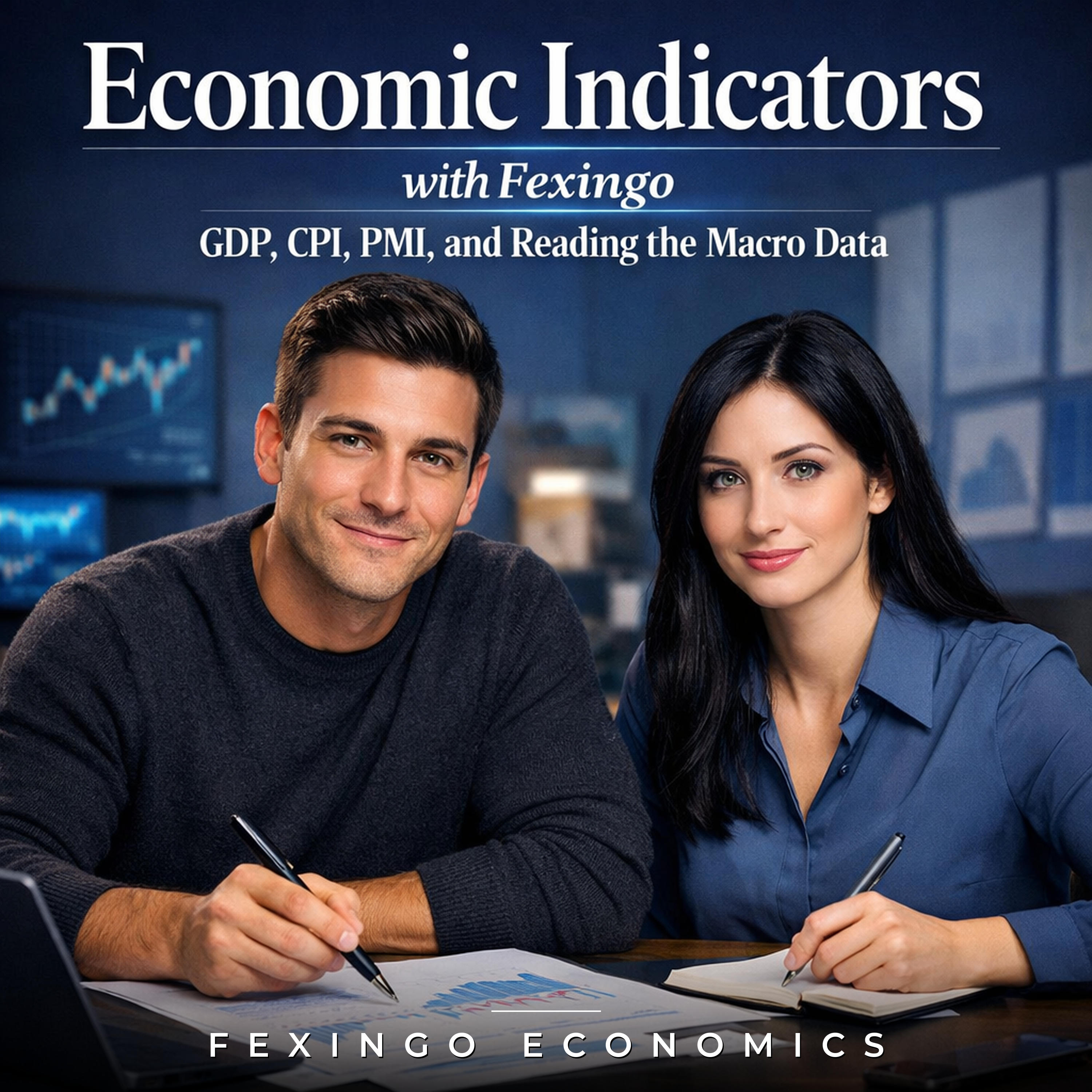
Economic Indicators with Fexingo: GDP, CPI, PMI, and Reading the Macro Data
Updated 10 days ago · Refreshed hourly
Business

Economic Indicators with Fexingo: GDP, CPI, PMI, and Reading the Macro Data

Hosted by Unknown Host · EN

Where this show ranks

Last ep.
15 days ago
Avg length
8m
Booking Probability™
35
Stretch.
Sign in to score against your profile.
Estimated audience
,
Audience size not yet estimated
Listen Score
12
Niche reach.
Virality (30d)
43
Steady cadence.

Pitch Analysis

Sign in to see how your Guest Score compares to this show's Required Pod Score and get a Stretch / Match-fit / Anchor verdict.
Required Pod Score
80/ 100
Premium

Established thought leaders with verified media credentials.

Contact path
Verified email on file
Unlock verified contacts
Guest openness
Not signalled recently
Best topics to pitch
Business

About this podcast

Lucas and Luna sit down each day with the latest releases of GDP, CPI, and PMI data, reading the macro tea leaves for what they actually mean for markets, policy, and business decisions. In each episode, Lucas traces a specific indicator—say, the core PCE deflator or the ISM manufacturing index—while Luna challenges the consensus interpretation, pushing toward the second-order effects that get lost in the headline numbers. They never just report the data; they argue about its signal-to-noise ratio, its revisions history, and its predictive track record. This is a show for the analyst, the portfolio manager, the economist, or the business leader who needs to interpret economic releases faster and more skeptically than the press releases. Lucas and Luna hold each other accountable to the numbers, calling out the difference between statistical noise and genuine turning points. Each episode closes with one unresolved tension: a data point that defies easy narrative, a lagging indicator that might be about to flip, or a policy response that could scramble the forecast. If you want to know not just what the data said today, but whether it matters for your next decision, this is the conversation you need to overhear.

Business

About the host

Unknown Host hosts Economic Indicators with Fexingo: GDP, CPI, PMI, and Reading the Macro Data.

Verified host email:████████@████.comSign in to unlock →

Recent episodes

Our AI reads these to draft pitches

Why Business Inventories Are a Leading Recession Signal

Jun 6, 20267mEp. 34S1

Episode 34 of Economic Indicators with Fexingo dives into total business inventories—the $2.71 trillion number that often flashes warning before a downturn. Lucas and Luna break down why inventories rose 0.9% in March 20

Long-Term Unemployment Is Spiking What It Means

Jun 5, 20267mEp. 33S1

Lucas and Luna dig into the latest data showing long-term unemployment is surging in the U.S., even as headline job numbers look solid. With the unemployment rate stuck at 4.3% and initial jobless claims rising to 225,00

Why Capacity Utilisation Is Stuck Below 77 Percent

Jun 5, 20267mEp. 32S1

In this episode of Economic Indicators with Fexingo, Lucas and Luna dig into a number that keeps catching Lucas's eye: capacity utilisation at 76.1 percent. Even as real GDP growth rebounded to 1.6 percent annualised and

Why Industrial Production Is Beating GDP This Cycle

Jun 4, 20267mEp. 31S1

GDP is growing at just 1.6 percent annualized, but industrial production has jumped 0.7 percent in a single month. Lucas and Luna unpack why factories, refineries, and utilities are outperforming the broader economy — an

How the GDP Deflator Reveals Hidden Inflation Pressures

Jun 4, 20268mEp. 30S1

In episode 30 of Economic Indicators with Fexingo, Lucas and Luna dig into the GDP deflator—a measure of economy-wide inflation that often gets overshadowed by CPI and PCE. They explain why the deflator can signal broade

Why the GDP Deflator Is the Inflation Signal You Are Missing

Jun 3, 20268mEp. 29S1

Lucas and Luna dive into the GDP deflator, a broad measure of inflation that the Fed monitors closely but most people overlook. With nominal GDP at $31.8 trillion and real GDP growth at just 1.6%, they explain how the de

How Job Openings Surged to 7.6 Million in April 2026

Jun 3, 20267mEp. 28S1

Lucas and Luna break down the surprise jump in job openings to 7.6 million in April 2026, the highest in nearly two years. They explore why this number jumped despite a flat unemployment rate and what it means for the Fe

How JOLTS Surprise Reshapes the Fed Rate Outlook

Jun 2, 20266mEp. 27S1

Job openings surged to 7.6 million in April 2026, the highest in nearly two years, complicating the Federal Reserve's path forward. Lucas and Luna dig into the JOLTS data, unpacking why a hot labor market doesn't necessa

What Producer Prices Signal About Fed Policy Better Than CPI

Jun 2, 20268mEp. 26S1

In this episode of Economic Indicators with Fexingo, Lucas and Luna break down why producer prices—specifically the producer price index—may be a more accurate leading indicator of Fed policy than the consumer price inde

How Producer Prices Signal Fed Policy Better Than CPI

Jun 1, 20266mEp. 25S1

In this episode of Economic Indicators with Fexingo, Lucas and Luna explore why producer price index (PPI) data may offer a timelier signal of inflationary pressure than the consumer-focused CPI. With core PCE running at

Why Real vs Nominal GDP Divergence Matters Now

Jun 1, 20268mEp. 24S1

In this episode of Economic Indicators with Fexingo, Lucas and Luna dig into the growing gap between nominal and real GDP growth. As of Q1 2026, nominal GDP hit $31.82 trillion while real GDP (chained 2017 dollars) reach

Why Nominal GDP Growth Matters for Your Portfolio

May 31, 20266mEp. 23S1

In this episode, Lucas and Luna explore the gap between nominal and real GDP growth, using the latest data (Q1 2026 nominal GDP at $31.82 trillion, real at $24.15 trillion) to explain why inflation-adjusted figures can p

How the Iran War Is Distorting Inflation Data

May 31, 20268mEp. 22S1

On this episode of Economic Indicators with Fexingo, Lucas and Luna break down how the ongoing Iran war is creating a distortion in core inflation readings. With the Fed's preferred PCE gauge showing core inflation at 3.

How the Jobs-Openings Puzzle Complicates the Fed Rate Outlook

May 30, 20267mEp. 21S1

This episode digs into the JOLTS data released on May 30, 2026, which shows job openings falling to 6.866 million, the lowest since early 2021. Lucas and Luna explore what this decline means for the Fed's rate path—espec

Wage Growth Isnt Keeping Pace with Core Inflation

May 30, 20269mEp. 20S1

Lucas and Luna dive into the April 2026 inflation and wage data, showing that while average hourly earnings rose to $37.40, core CPI climbed to 335.4 and core PCE hit a 3.3% annual rate. They explain why real wage growth

How Energy Inflation Is Distorting the Core CPI Picture

May 29, 20265mEp. 19S1

In this episode of Economic Indicators with Fexingo, Lucas and Luna break down why energy inflation is skewing the way we read core CPI and the Fed's preferred PCE gauge. With the Iran war pushing household energy costs

How Inventory Cycles Are Reshaping GDP in 2026

May 29, 20268mEp. 18S1

Business inventories have surged to $2.7 trillion, adding a volatile twist to GDP growth. Lucas and Luna break down how inventory accumulation boosted first-quarter growth to 1.6 percent annualized, why the build-up may

What Durable Goods Orders Tell Us About the Economy

May 28, 20268mEp. 17S1

Lucas and Luna dive into the durable goods orders report, which dropped a surprise 6.2% in April. But they explain why the headline number is misleading—transportation orders can swing wildly. Core capital goods orders,

Core PCE vs CPI Which Inflation Number Matters More

May 28, 20268mEp. 16S1

Lucas and Luna break down the difference between the Consumer Price Index and the Personal Consumption Expenditures price index — and why the Fed prioritises Core PCE. With CPI at 332.4 and Core PCE at 129.3, they explai

How Capacity Utilisation Leads GDP in Predicting the Cycle

May 27, 20267mEp. 15S1

Lucas and Luna explore why capacity utilisation, currently at 76.1 percent, may be a more reliable leading indicator of economic turning points than GDP itself. They discuss the latest industrial production data, the gap

Sponsors and advertisers

Sponsor detection runs nightly. Check back soon.

Audience demographics

Age
25-54
Consumer type
Professionals & Founders

Topics covered

Business

Successful pitch examples

No public pitch examples yet for this show.

Generate your own personalised pitch

If you're pitching Economic Indicators with Fexingo: GDP, CPI, PMI, and Reading the Macro Data, also consider

Shows with the most semantically similar episode content. Pitch one, pitch all; producers cluster.

Frequently asked questions

How do I pitch Economic Indicators with Fexingo: GDP, CPI, PMI, and Reading the Macro Data as a podcast guest?

Economic Indicators with Fexingo: GDP, CPI, PMI, and Reading the Macro Data has a verified contact on file. Create a free PitchCentric account to access it and generate a personalised pitch in seconds. Research at least 3 recent episodes first and lead with a specific angle that serves their business audience.

Who is the host of Economic Indicators with Fexingo: GDP, CPI, PMI, and Reading the Macro Data?

Economic Indicators with Fexingo: GDP, CPI, PMI, and Reading the Macro Data is hosted by Unknown Host. The show is categorised under Business and has published 0 episodes.

What topics does Economic Indicators with Fexingo: GDP, CPI, PMI, and Reading the Macro Data cover?

Economic Indicators with Fexingo: GDP, CPI, PMI, and Reading the Macro Data regularly covers Business. It sits in the Business category.

Is it hard to get booked on Economic Indicators with Fexingo: GDP, CPI, PMI, and Reading the Macro Data?

Economic Indicators with Fexingo: GDP, CPI, PMI, and Reading the Macro Data is accessible for guests with genuine business expertise. A personalised, episode-aware pitch will still outperform a generic one every time.

Is Economic Indicators with Fexingo: GDP, CPI, PMI, and Reading the Macro Data currently accepting guest pitches?

Economic Indicators with Fexingo: GDP, CPI, PMI, and Reading the Macro Data hasn't explicitly signalled guest openness in recent episodes. That doesn't rule out pitching. your hook just needs to be especially compelling and relevant to their recent content.

How long are Economic Indicators with Fexingo: GDP, CPI, PMI, and Reading the Macro Data episodes?

Episodes of Economic Indicators with Fexingo: GDP, CPI, PMI, and Reading the Macro Data average 8 minutes. a focused format where a clear narrative arc and tight preparation matter most.

What guest credentials does Economic Indicators with Fexingo: GDP, CPI, PMI, and Reading the Macro Data typically look for?

Our data rates Economic Indicators with Fexingo: GDP, CPI, PMI, and Reading the Macro Data's guest bar at 80/100 (Premium tier). Established thought leaders with verified media credentials. Sign in to PitchCentric to see how your own Pod Score compares against this show.

Methodology. Booking Probability™ blends Listen Score, 30-day Virality, open-to-guests detection, and Apple ratings. Data refreshed every 60 minutes. Listen Score and Booking Probability are calculated by PitchCentric. Last enriched 10 days ago.

Is this podcast yours and you'd like to remove or correct details? Request removal or email privacy@pitchcentric.com.