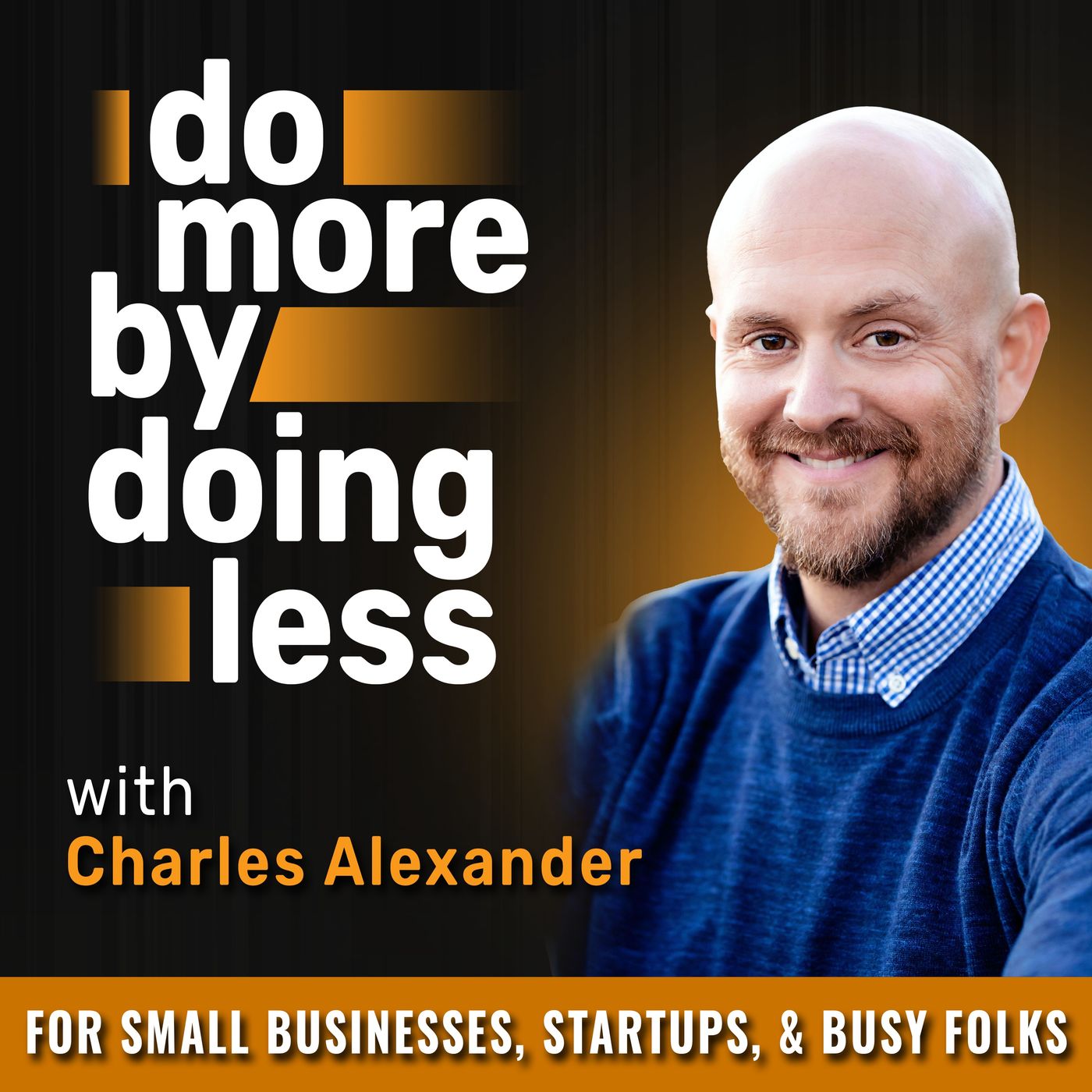
Welcome to the Do More by Doing Less podcast with Charles Alexander, the show for Small Business Owners, Start Ups, and Busy Folks! This is not another productivity, hustle, and grind podcast. I literally want you to do less. Many of us are overwhelmed, frustrated, and need a break. The good news is that we can accomplish much more than now. Once we focus on the vital few, and prioritize things that make our lives and the lives of people around us better, we can “do more by doing less”. This podcast is funny, simple, and has real-world stories. The episodes alternate between my solo podcasts and guest podcasts. In the solo episodes I share stories and frameworks from my experience in coaching small business owners and my own entrepreneurship endeavors. Oh, and any other story that can get a laugh while sticking to the theme of the podcast😊 In the guest podcasts, I will bring on oth
Pitch Analysis
Required Pod Score for this show. PitchCentric checks your profile against host openness, topical fit, and audience signals before you generate a pitch.
Contact path
Verified email
Booking probability
34%
Guest openness
Selective
Verified email on file
82/100
Required Score
Sign up to generate a grounded pitch for Do More By Doing Less - Time Freedom for Entrepreneurs, Small Business Owners, and Solopreneurs.
What is Do More By Doing Less - Time Freedom for Entrepreneurs, Small Business Owners, and Solopreneurs?
Do More By Doing Less - Time Freedom for Entrepreneurs, Small Business Owners, and Solopreneurs is a business podcast hosted by Charles Alexander, with 105 episodes on record and a Required Pod Score of 82. PitchCentric scores this show on Booking Probability, Listen Score, and live audience signals refreshed every 24 hours.
About the host
Charles Alexander hosts Do More By Doing Less - Time Freedom for Entrepreneurs, Small Business Owners, and Solopreneurs, a business show with 105 episodes published.
Our AI reads these to draft pitches. Use them as grounding for a pitch that cites a real guest and a specific topic.
Episode #104
When You Try to Sell to Everyone, You Sell to No One
Jun 30, 20265 minS1
Show Summary: In this episode, I share the story of a liquor store owner who was convinced high-end wine accessories would transform his business. A simple one-day customer tracking experiment revealed something completely different. The lesson is one I see repeatedly with small business owners: when you try to market to everyone, you usually end up connecting with no one. The businesses that grow fastest understand exactly who their best customers are and focus their time, money, and energy there. Takeaways: • Your best customers are often easier to identify than you think. • Assumptions are dangerous. Data beats opinions every time. • Trying to serve everyone usually weakens your marketing. • The customers who generate the most revenue are not always the customers you enjoy serving most. • Narrowing your focus often increases sales instead of limiting them. Action For You To Take: Review your customer list and answer two questions: Which customers generate the most revenue? Which customers do you enjoy working with the most? Then look for common characteristics such as age, industry, income level, company size, location, or buying behavior. Write them down instead of relying on memory. What To Do Next: If you want help building time freedom while still growing your business, schedule a quick, non-sales, chat with me at yourcharlesalexander.com.
Show Summary: In this episode, I challenge one of the most common pieces of business advice out there: "Follow your passion." Through stories of entrepreneurs who loved what they did but struggled to build sustainable businesses, I explain why passion alone is rarely enough. More often, successful business owners start with a skill they're good at, create value with it, and develop a deeper passion as they see the results. Takeaways: • Passion without the right skills can lead to frustration and failure. • Running a business requires doing many things you may never love, including sales, bookkeeping, and managing people. • Skills create value. Value creates customers. Customers create opportunities. • Success often creates passion, not the other way around. • Autonomy, flexibility, and control are passions many entrepreneurs share, regardless of their industry. Action For You To Take: Make a list of three things you're genuinely skilled at. Then ask yourself which of those skills solves a problem people would pay to have solved. Start there instead of chasing a passion that has no clear market demand. What To Do Next: If you want help building time freedom while still growing your business, schedule a quick, non-sales, chat with me at yourcharlesalexander.com.
Show Summary: In this episode, I explain why offering too many products or services can actually hurt your sales. Using examples from Netflix, a famous Columbia University study, and my time working with SERVPRO, I break down why confused customers rarely buy. The businesses that grow the fastest are usually the ones known for one or two simple things instead of twenty complicated options. Takeaways: • Too many choices create overwhelm and reduce sales. • Simplicity helps customers remember what you actually do. • Businesses grow faster when they focus on one or two core offers. • Packages and clear messaging outperform endless customization. • Attention does not always equal conversions. Action For You To Take: Write down every product or service you currently offer. Then circle the top one or two things you want to be known for or that generate the most revenue. Simplify your messaging around those first and introduce the rest later. What To Do Next: If you want help building time freedom while still growing your business, schedule a quick, non-sales, chat with me at yourcharlesalexander.com.
It Is Riskier to Work for Someone Else Than to Work For Yourself
May 12, 20267 minS1
Is owning a business actually riskier than having a job? By the way, I have both, so I'm not exactly a "burn the boats" kind of guy:) Show Summary: In this episode, I share the story of turning down a “safe” corporate job at John Deere during a recession and why that decision completely changed how I think about risk. Most people assume entrepreneurship is unstable, but after years of coaching and business ownership, I’ve realized depending on one paycheck can be just as risky. Takeaways: • A steady paycheck does not always equal security. • Multiple income streams can reduce long-term risk. • Friends and family often discourage entrepreneurship because it feels unfamiliar to them. • Modern business owners have more tools, automation, and flexibility than ever before. • Starting a business while working full-time can lower financial pressure and help you test ideas safely. Action For You To Take: Look at your current income situation honestly. Ask yourself where all your financial security currently comes from. Then identify one small way to create an additional stream of income, even if it starts as a side project. What To Do Next: If you want help building time freedom while still growing your business or even starting one, schedule a quick, non-sales, chat with me at yourcharlesalexander.com.
What actually matters after 100 episodes of doing more by doing less? Show Summary: This 100th episode is a reflection on the biggest lessons I’ve learned from conversations with people like Bob Burg, Jason Elkins, Emily Heard, and others. The common thread is simple. Success does not come from doing more. It comes from focusing on what actually creates value, protecting your time, and being intentional with your effort. Takeaways: • Value drives results. Focus on helping people, not chasing money. • Small wins and perspective shifts can reset a bad week fast. • Most distractions come from dopamine chasing, not real progress. • Simple, meaningful goals outperform complex long-term plans. • Consistent relationships and serving others compound over time. Action For You To Take: Pick one area this week to simplify. Cut one unnecessary task. Double down on one activity that creates real value for someone else. What To Do Next: If you want help building time freedom while still growing your business, schedule a quick, non-sales, chat with me at yourcharlesalexander.com.
Every question we get asked before someone starts their trial.
If you have a concern about deliverability, AI quality, data privacy, or whether this will actually work for your specific situation, it's probably answered below.
What is the difference between Founder Solo and Founder Pro?
Founder Solo gives you 50 AI pitches per month using the credit model (Standard pitches cost 1 credit, Enriched pitches cost 2). Founder Pro raises that to 200 credits per month and adds full Booking Probability access, unlimited Magic Match, Apollo enrichment credits, and data export capabilities. Both plans use the same credit system, so you can stretch your monthly budget further by using Standard-mode drafting.
How do agency tiers work?
Agency tiers have no base fee. You pay per managed client and per talent profile. Agency Standard is $199 per client per month; Agency Pro is $399 per client per month. Both add $39 per talent profile per month. Your own team's user seats are always free.
What is a talent profile?
A talent profile represents one person (founder, executive, or spokesperson) you are booking onto podcasts. It includes their bio, topics, headshots, and outreach history. Team plans include 5 profiles; agency plans are pay-as-you-go.
Can I switch plans later?
Yes, at any time. Upgrades take effect immediately; downgrades apply at the end of the current billing period. Contact support if you need help migrating between plan families.
Do you offer a free trial?
Every paid plan includes a 15-day free trial. Your card is saved at signup but you will not be charged until day 16. Cancel any time from your dashboard.
What happens if I cancel?
You keep access until the end of your current billing period. No charges after that. Your data is retained for 30 days in case you reactivate.
Is the 20% annual discount automatic?
Yes. Select Annual on the pricing toggle and the discounted price is applied automatically at checkout. The annual price shown is the full year cost.
What if I have more than 50 profiles or 20 clients?
That is our Enterprise tier. Contact our sales team and we will build a custom plan with volume pricing, a dedicated account manager, and SLA guarantees.