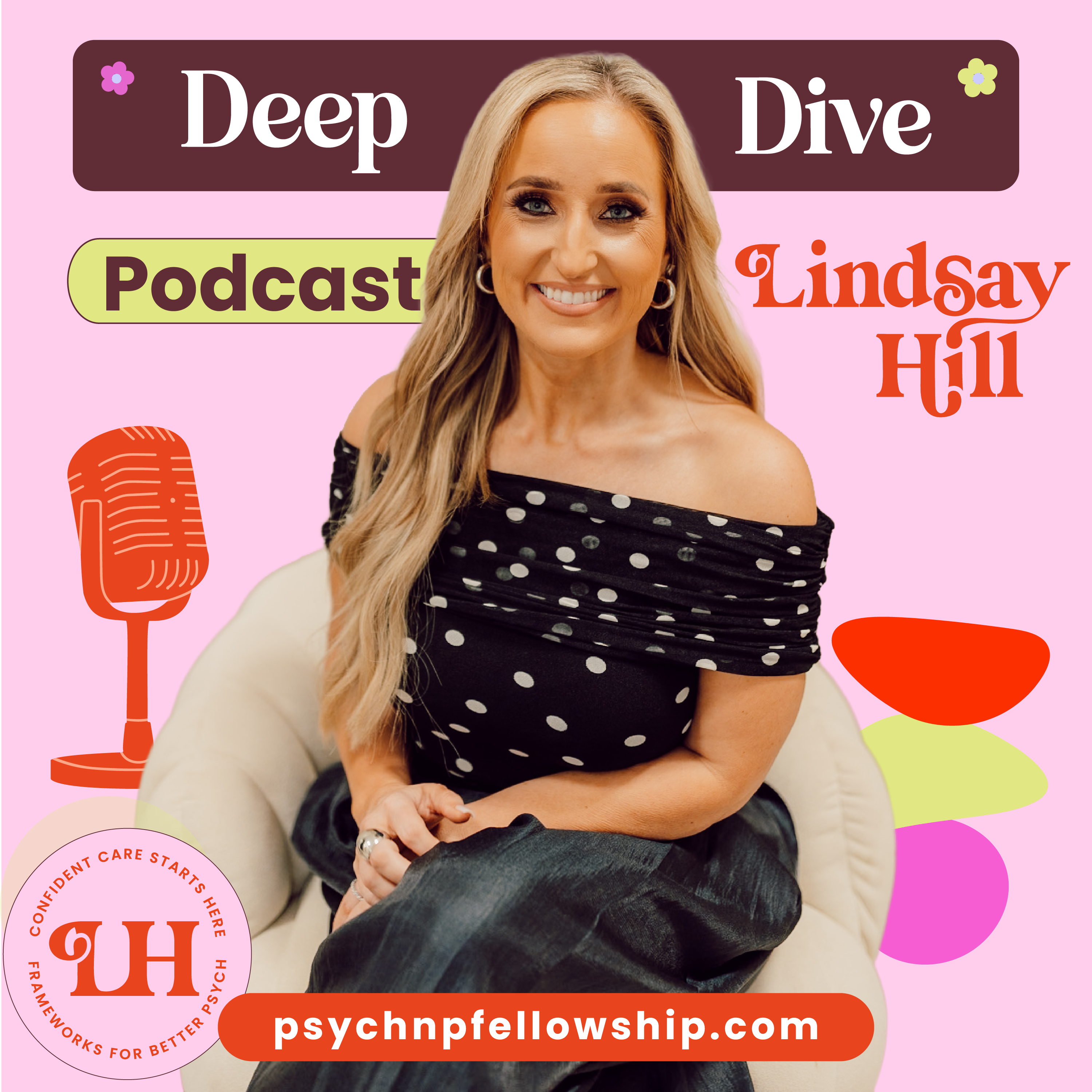
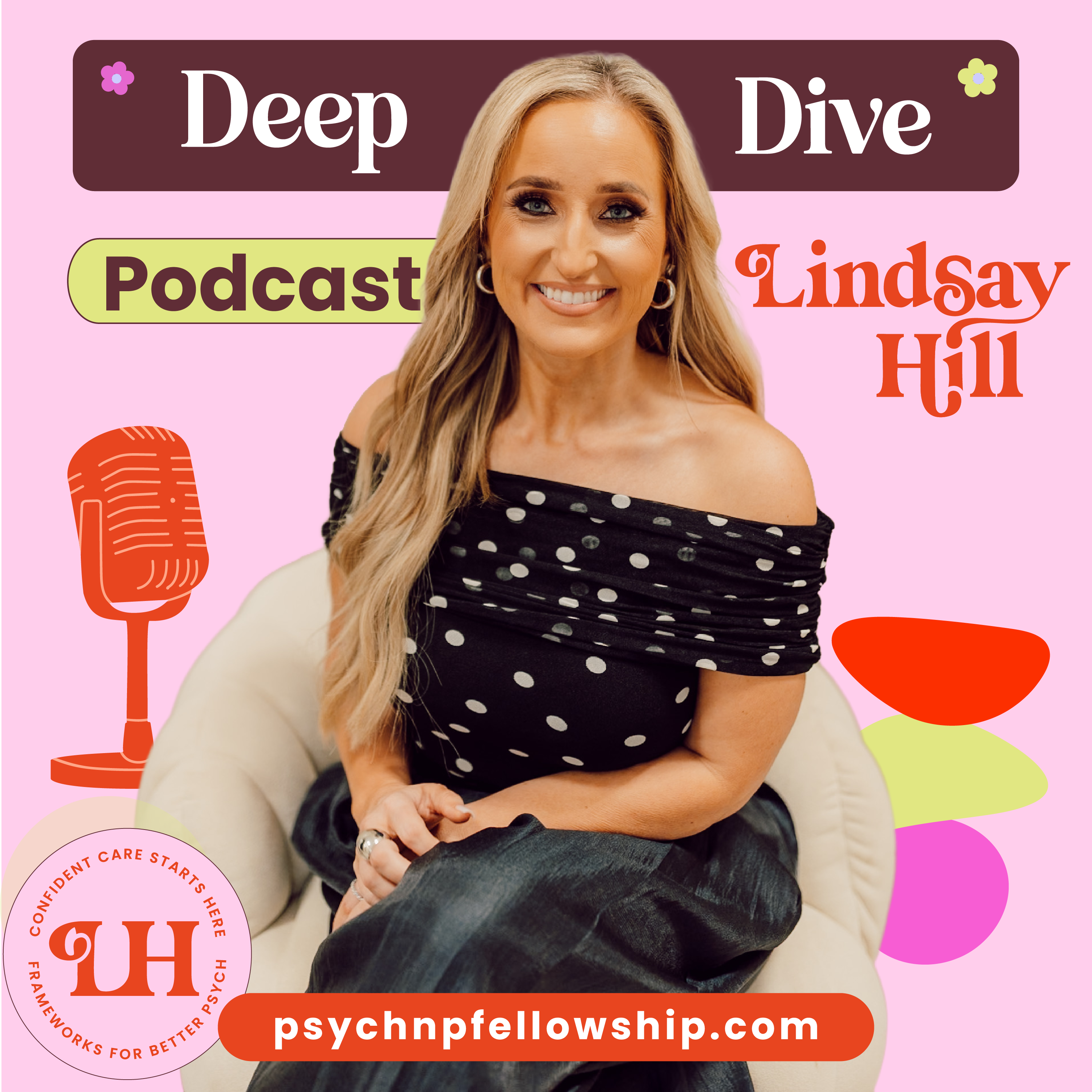
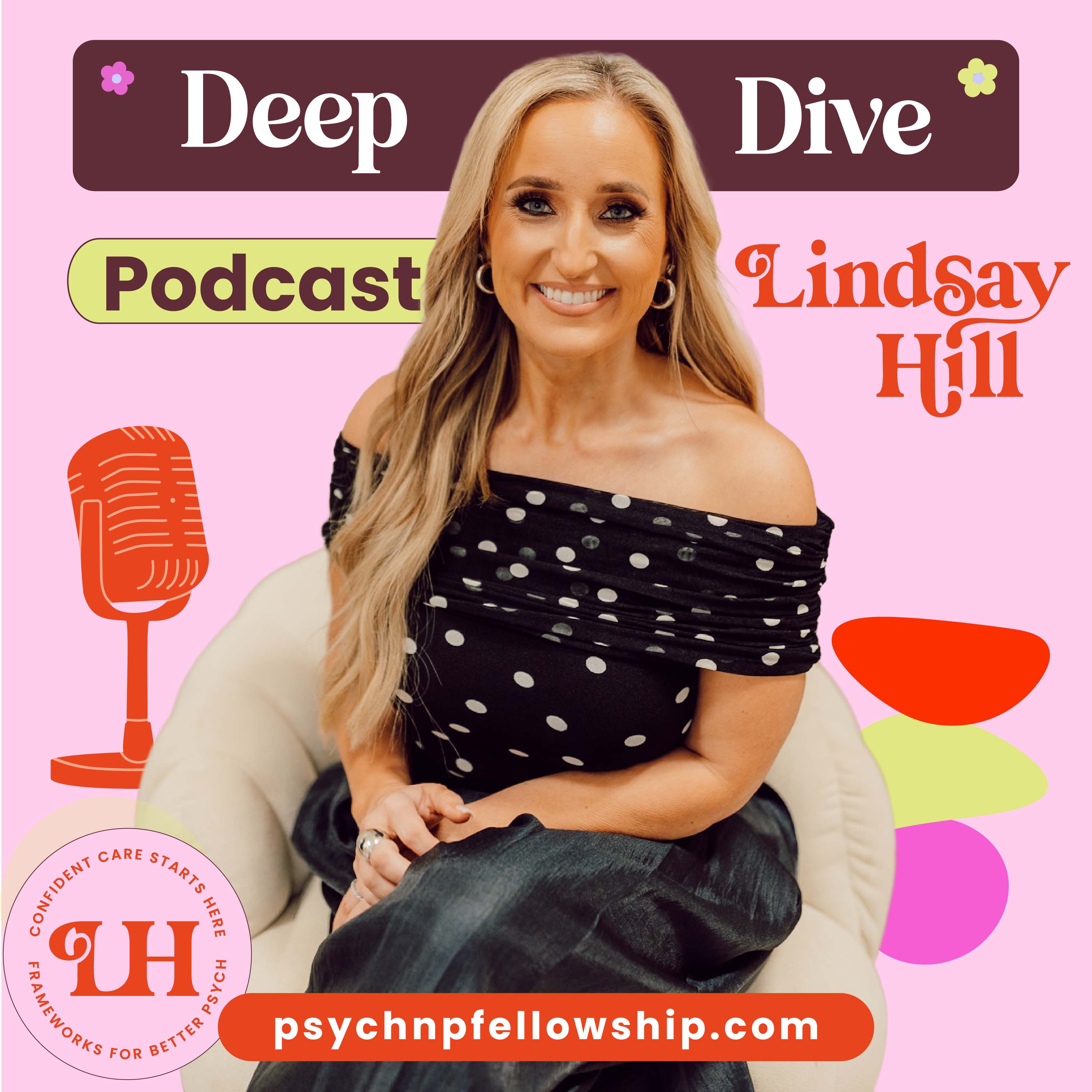
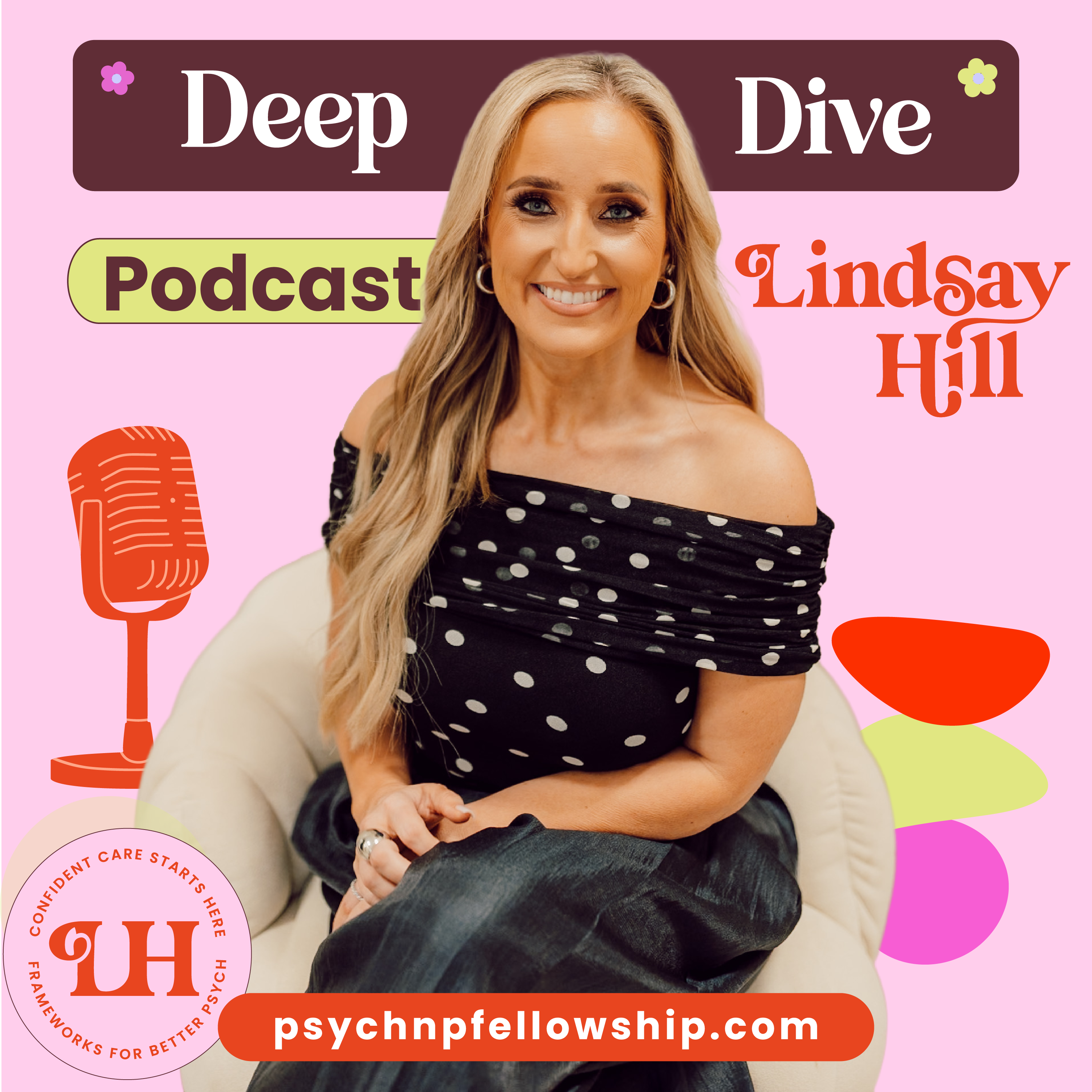
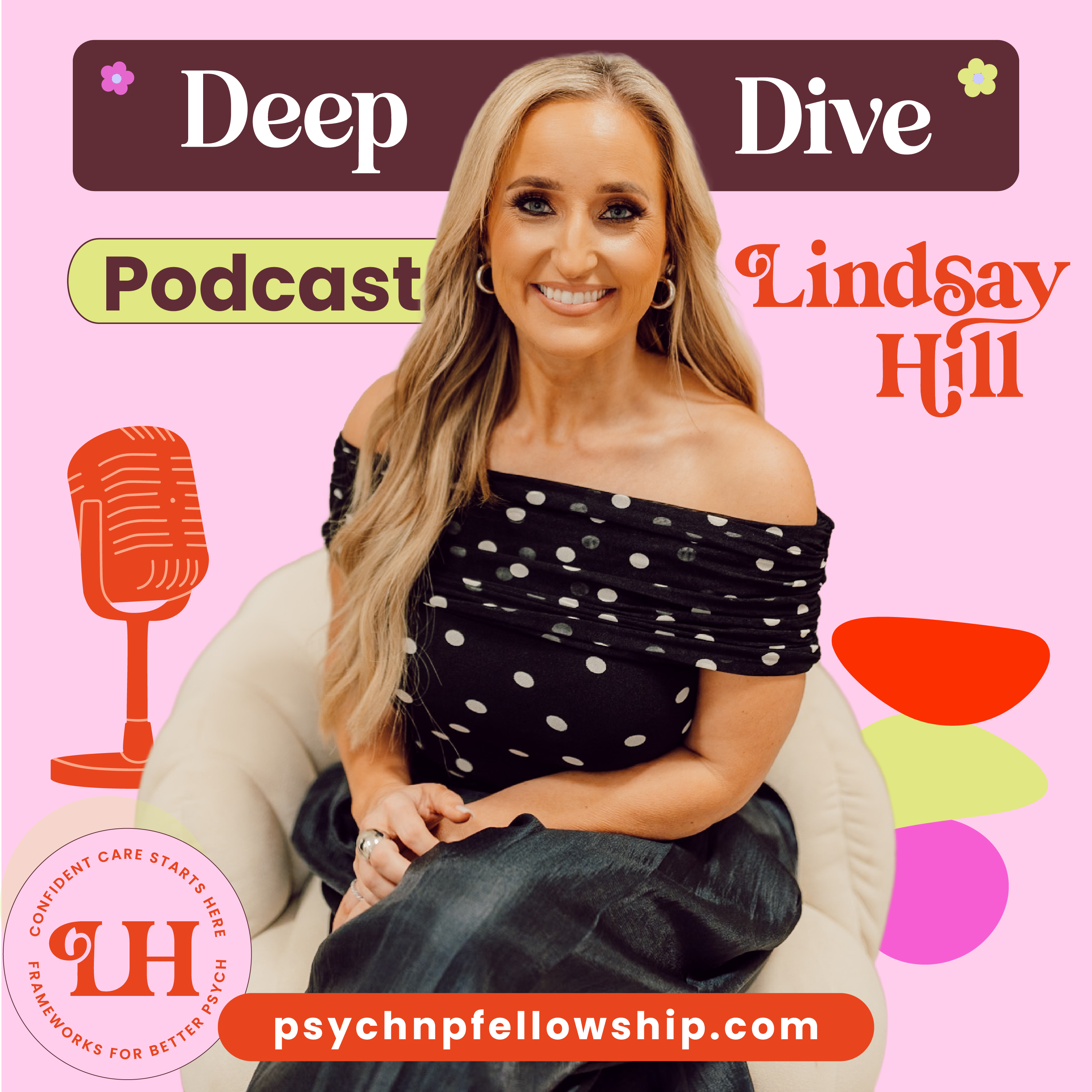
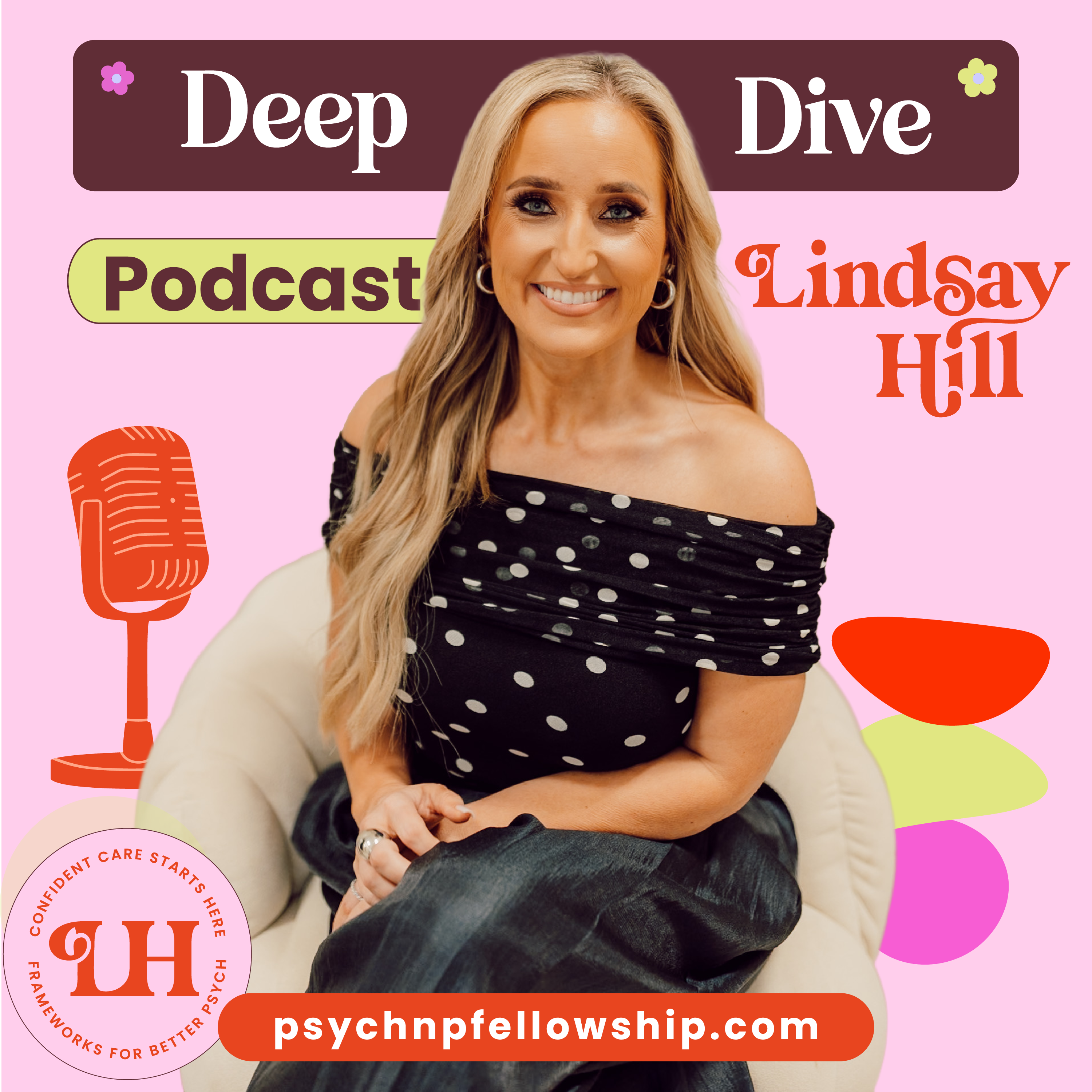
Welcome to my podcast. I am Lindsay Hill, DNP, PMHNP BC, and this show is my space to slow down and really unpack what psychiatric care looks like in real life. Each episode is built from the learning that shapes our work in mental health: lectures, clinical meetings, medication updates, webinars, books, and the conversations that make you stop and think. We will dig into the details that matter, like diagnostic clarity, treatment planning, psychopharmacology, side effects and monitoring, comorbidities, therapeutic approaches, patient communication, and the practical judgment calls that rarely fit into a tidy script. My goal is simple: take complex topics and make them feel understandable, usable, and grounded. Whether you are a student, a clinician, or someone who loves learning about the mental health field, you will leave with clearer frameworks, helpful reminders, and takeaways you can bring back to your practice and your life. Thanks for being here. Let’s dive in. This podcast is for education and discussion only and is not medical advice.
Pitch Analysis
Required Pod Score for this show. PitchCentric checks your profile against host openness, topical fit, and audience signals before you generate a pitch.
Contact path
Public web form
Booking probability
32%
Guest openness
Selective
80/100
Required Score
Sign up to generate a grounded pitch for Deep Dive with Lindsay Hill, DNP, PMHNP - Psych NP Mentor - PMHNP Mentor.
What is Deep Dive with Lindsay Hill, DNP, PMHNP - Psych NP Mentor - PMHNP Mentor?
Deep Dive with Lindsay Hill, DNP, PMHNP - Psych NP Mentor - PMHNP Mentor is a education podcast hosted by Unknown Host, with 110 episodes on record and a Required Pod Score of 80. PitchCentric scores this show on Booking Probability, Listen Score, and live audience signals refreshed every 24 hours.
About the host
Unknown Host hosts Deep Dive with Lindsay Hill, DNP, PMHNP - Psych NP Mentor - PMHNP Mentor, a education show with 110 episodes published.
Our AI reads these to draft pitches. Use them as grounding for a pitch that cites a real guest and a specific topic.
Episode #63
S2E63: PMHNP Collaborative Care Consultant: 2026 Career Guide
Sep 15, 202622 minS2
Medicare's Collaborative Care model needs a psychiatric consultant, and most PMHNPs qualify. How the role works, who bills, and how to contract for it. In this Deep Dive episode, two hosts walk through “PMHNP Collaborative Care Consultant: 2026 Career Guide” from the Psych NP Fellowship blog by Lindsay Hill, DNP, PMHNP-BC. Key takeaways: • CMS defines the Collaborative Care psychiatric consultant as a medical provider trained in psychiatry and qualified to prescribe the full range of medications. Most PMHNPs meet that definition. • The consultant usually never meets the patient. The job is a weekly caseload review with a behavioral health care manager, typically done remotely, plus quick questions between reviews. • The primary care practice bills CPT 99492, 99493, 99494, or G2214. The consultant gets paid by that practice under a contract or employment agreement and does not bill Medicare for these codes. • The University of Washington AIMS Center budgets 2 to 3 hours of consultant time per week for each full-time care manager. • In the IMPACT trial, 45% of older adults in Collaborative Care had at least a 50% drop in depressive symptoms at 12 months, compared with 19% in usual care. • The risk sits in the contract: scope rules in restricted-practice states, malpractice coverage for indirect consultation, and licensure where the patients live. Read the full article: https://psychnpfellowship.com/pmhnp-collaborative-care-psychiatric-consultant-2026/ Explore the Psych NP Fellowship: https://psychnpfellowship.com/programs/ This content is for educational purposes and does not replace individualized clinical judgment or supervision.
S2E62: PMHNP No-Show Policy: A 2026 Private Practice Playbook
Sep 14, 202612 minS2
Medicare allows no-show fees, Medicaid doesn't, and a missed psych visit can signal real risk. The 2026 PMHNP no-show policy playbook for private practice. In this Deep Dive episode, two hosts walk through “PMHNP No-Show Policy: A 2026 Private Practice Playbook” from the Psych NP Fellowship blog by Lindsay Hill, DNP, PMHNP-BC. Key takeaways: • At a 15 percent no-show rate, a solo PMHNP with 60 weekly follow-ups loses about 9 visits a week. At $150 a visit, that is roughly $65,000 a year. • Medicare allows a missed-appointment fee only when one written policy and one dollar amount apply to every patient. Bill the patient directly and never submit it to Medicare. • CMS policy bars billing Medicaid beneficiaries for missed appointments, whatever they signed. Exempt them, and dual-eligible patients, in writing. • Patients with long-term mental health conditions who missed more than two primary care appointments a year had over 8 times the all-cause mortality risk of those who missed none, in a Scottish national study. • Two text reminders cut missed appointments at four London community mental health clinics from 36 percent to 26 to 27 percent. • Sequence matters: a clinician reviews high-risk no-shows the same day, and billing waits until that check is done. Read the full article: https://psychnpfellowship.com/pmhnp-no-show-policy-private-practice-2026/ Explore the Psych NP Fellowship: https://psychnpfellowship.com/programs/ This content is for educational purposes and does not replace individualized clinical judgment or supervision.
S2E61: Countertransference as Clinical Data: A PMHNP Field Guide
Jul 17, 202620 minS2
In this deep-dive episode, we unpack Countertransference as Clinical Data: A PMHNP Field Guide. Audio Overview Listen to an in-depth podcast of this post Two hosts break down the full article — no reading required. Your browser does not support audio playback. TL;DR Countertransference is the clinician’s emotional reaction to a patient. It is not a professional failing — it is clinical data. Four reaction patterns (dread, savior pull, boredom, over-familiarity) signal specific diagnostic dynamics. A three-step in-session protocol — Notice, Name, Neutralize — takes under 90 seconds and builds a pattern library over months. Acting on countertransference without supervision is the clinical risk. Having it is not. Early-career PMHNPs who track reactions and bring them to supervision move from reactive to formulated practice within 18 months. In this guide What countertransference actuall Read the full post: https://psychnpfellowship.com/countertransference-clinical-data-pmhnp/
S2E60: Saying No to Controlled Substances: A New PMHNP Confidence Script
Jul 16, 202622 minS2
In this deep-dive episode, we unpack Saying No to Controlled Substances: A New PMHNP Confidence Script. New PMHNPs get pressured, manipulated, and sometimes bullied into writing controlled substances they would not otherwise prescribe. Confidence is not about having a perfect answer — it is about having a rehearsed one. This post delivers a five-step refusal framework, exact patient-facing language, documentation pearls, and the mental reframe that stops most clinicians from caving under pressure. Read the full post: https://psychnpfellowship.com/saying-no-controlled-substances-new-pmhnp-confidence-script/
S2E58: Modern Lithium Monitoring: The 2026 PMHNP Protocol
Jul 14, 202619 minS2
In this deep-dive episode, we unpack Modern Lithium Monitoring: The 2026 PMHNP Protocol. Audio Overview Listen to an in-depth podcast of this post Two hosts break down the full article — no reading required. Your browser does not support audio playback. TL;DR Lithium remains the gold standard for bipolar maintenance and suicide prevention, but the 2026 monitoring protocol has evolved. New PMHNPs should narrow the maintenance target to 0.6-0.8 mEq/L, draw trough levels exactly 12 hours post-dose, screen every patient for GLP-1 agonist use before starting lithium, and coach hydration and sodium behavior as part of the monitoring plan. This post walks through the complete modern protocol — baseline workup, dosing strategy, draw timing, red flags, and the medication interactions that matter most right now. In This Guide Why Lithium Still Wins in 2026 The 2026 Baseline Workup Dosin Read the full post: https://psychnpfellowship.com/lithium-monitoring-protocol-pmhnp-2026/
Every question we get asked before someone starts their trial.
If you have a concern about deliverability, AI quality, data privacy, or whether this will actually work for your specific situation, it's probably answered below.
What is the difference between Founder Solo and Founder Pro?
Founder Solo gives you 50 AI pitches per month using the credit model (Standard pitches cost 1 credit, Enriched pitches cost 2). Founder Pro raises that to 200 credits per month and adds full Booking Probability access, unlimited Magic Match, Apollo enrichment credits, and data export capabilities. Both plans use the same credit system, so you can stretch your monthly budget further by using Standard-mode drafting.
How do agency tiers work?
Agency tiers have no base fee. You pay per managed client and per talent profile. Agency Standard is $199 per client per month; Agency Pro is $399 per client per month. Both add $39 per talent profile per month. Your own team's user seats are always free.
What is a talent profile?
A talent profile represents one person (founder, executive, or spokesperson) you are booking onto podcasts. It includes their bio, topics, headshots, and outreach history. Team plans include 5 profiles; agency plans are pay-as-you-go.
Can I switch plans later?
Yes, at any time. Upgrades take effect immediately; downgrades apply at the end of the current billing period. Contact support if you need help migrating between plan families.
Do you offer a free trial?
Every paid plan includes a 15-day free trial. Your card is saved at signup but you will not be charged until day 16. Cancel any time from your dashboard.
What happens if I cancel?
You keep access until the end of your current billing period. No charges after that. Your data is retained for 30 days in case you reactivate.
Is the 20% annual discount automatic?
Yes. Select Annual on the pricing toggle and the discounted price is applied automatically at checkout. The annual price shown is the full year cost.
What if I have more than 50 profiles or 20 clients?
That is our Enterprise tier. Contact our sales team and we will build a custom plan with volume pricing, a dedicated account manager, and SLA guarantees.