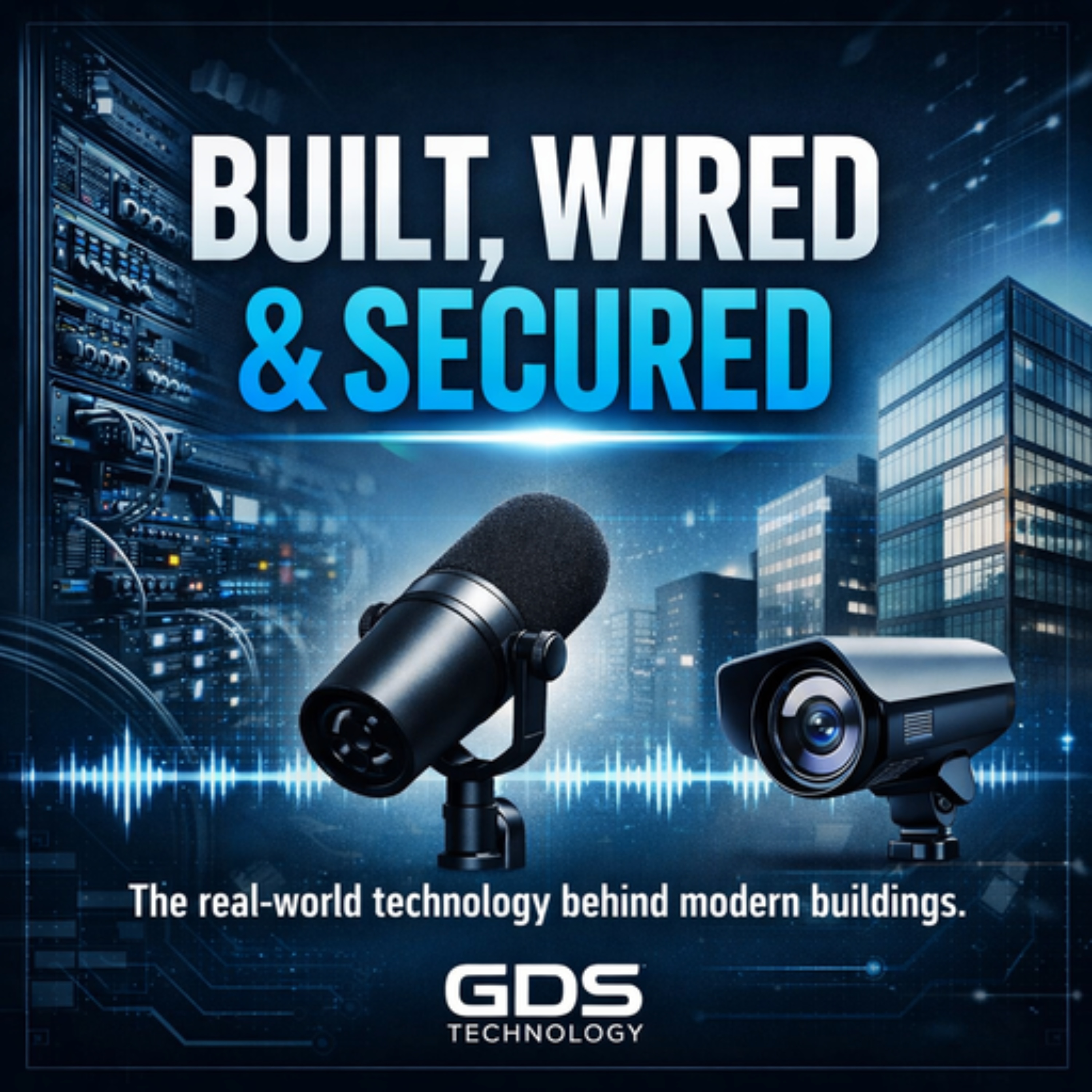
Built, Wired & Secured explores the technology decisions that shape modern workplaces, campuses, and commercial buildings long before users ever plug in a device.Hosted by GDS Technology, this podcast dives into real-world conversations on infrastructure, low-voltage systems, cybersecurity, and operational IT. We break down what actually works (and what fails) in office buildouts, property technology, network design, access control, and security without the marketing fluff.Each episode features practical insights from industry professionals, project leaders, and technology partners, focused on how buildings are designed, installed, secured, and operated in the real world. Whether you’re a property owner, GC, IT leader, or facilities decision-maker, Built, Wired & Secured gives you the clarity to make smarter technology decisions that last.
Pitch Analysis
Required Pod Score for this show. PitchCentric checks your profile against host openness, topical fit, and audience signals before you generate a pitch.
Contact path
Verified email
Booking probability
43%
Guest openness
Selective
Verified email on file
80/100
Required Score
Sign up to generate a grounded pitch for Built, Wired & Secured.
Built, Wired & Secured is a business podcast hosted by GDS Technology, with 133 episodes on record and a Required Pod Score of 80. PitchCentric scores this show on Booking Probability, Listen Score, and live audience signals refreshed every 24 hours.
About the host
GDS Technology hosts Built, Wired & Secured, a business show with 133 episodes published.
Our AI reads these to draft pitches. Use them as grounding for a pitch that cites a real guest and a specific topic.
Episode #136
The Room Nobody Owns: Why Telecom Closets Become Operational Black Holes
Sep 14, 20265 min
Most building owners can point to the main electrical room, but ask them about the telecom closet and you'll likely get a shrug. These small rooms house the switches, controllers, and cabling that keep a building connected, secure, and automated—yet they're frequently hot, messy, unlocked, and undocumented. In this episode, Alex Morgan sits down with facilities leader James Rogers to explore why telecom closets become operational black holes, what happens when they fail, and how to bring order to these forgotten spaces. They discuss the hidden costs of poor cooling and housekeeping, the security risks of unmanaged access, and why clear ownership and documentation matter more than fancy equipment. Listeners will learn a practical framework for auditing telecom closets, assigning accountability, and preventing small problems from becoming building-wide outages. If you've ever wondered why your building's network behaves unpredictably, this episode will help you look at the one room that usually holds the answer.
The 9 AM Test: Why Buildings Fail at Peak Occupancy
Sep 13, 20265 min
Every weekday at 9:00 AM, a building's infrastructure faces its toughest test—not during a crisis, but during the ordinary morning rush. Elevators, HVAC, access control, and network systems all ramp up together, and small weaknesses that go unnoticed at 7:00 AM become tenant-facing problems by 9:15. In this episode, host Alex Morgan talks with property manager Michael Harrington and facilities leader James Rogers about why peak occupancy is the real stress test for modern buildings. They break down what actually happens during morning startup, how HVAC setback recovery and elevator sequencing can create unexpected surges, and why power quality and access control problems often surface at the worst possible moment. You'll learn how to spot the hidden dependencies that make buildings fragile at peak, how to separate normal morning friction from systemic issues, and what facilities and property teams can do to make the daily rush less disruptive. If you've ever wondered why complaints spike at 9 AM, this episode will change how you look at your building.
The Redundancy Illusion: Why Backup Systems Fail When You Need Them Most
Sep 12, 20264 min
Backup generators, dual power feeds, redundant network paths—they all look great on paper. But when a real outage hits, many buildings discover their safety nets have hidden holes. In this episode, we explore why redundancy creates a false sense of security, from overlooked single points of failure to backup systems that haven't been tested under load in years. Host Alex Morgan is joined by property management expert Michael Harrington and facilities leader James Rogers to break down the difference between having backup equipment and having a truly resilient building. They share real-world lessons about failed failovers, the uncomfortable tradeoff between upfront cost and downtime risk, and practical steps to validate your redundancy before you need it. If you're responsible for keeping a building operational, this episode will change how you think about backup systems—and help you avoid the illusion of protection.
The Knowledge Transfer Gap: When Building Technology Depends on One Person
Sep 7, 202610 min
What happens when the facilities engineer, project manager, or trusted vendor who understands a building’s technology is suddenly unavailable? The risk is not limited to missing passwords or outdated drawings. It can include undocumented sequences of operation, informal workarounds, unclear escalation paths, and maintenance decisions that exist only in someone’s memory. In this interview, Alex Morgan speaks with Michael Harrington and James Rogers about the operational cost of tribal knowledge across building systems. They examine how organizations can identify knowledge concentration, distinguish essential operating knowledge from excessive documentation, and create practical handoff routines without turning every project into a paperwork exercise. The conversation connects BAS, physical security, connectivity, and tenant operations to one central question: can the next qualified person safely operate and support the building? Listeners will leave with a practical way to test knowledge continuity before a departure, service transition, or emergency exposes the gap.
The Maintenance Window Problem: Keeping Building Systems Safe to Service
Sep 6, 202610 min
Planned maintenance is supposed to reduce risk, yet a poorly coordinated service window can interrupt access control, affect HVAC sequences, trigger alarms, or leave teams unsure whether a system is truly back online. In this interview, Alex Morgan speaks with Michael Harrington and James Rogers about the operational discipline behind safe maintenance in connected buildings. The conversation examines why routine work becomes risky when system dependencies are undocumented, stakeholders are notified too late, or testing focuses on individual components instead of occupant-facing outcomes. Guests will compare the priorities of property operations and facilities engineering, discuss how to define a maintenance window, and share practical questions teams should ask before, during, and after service activity. Listeners will leave with a lightweight coordination framework for scheduling work, assigning decision owners, validating recovery, and capturing lessons learned—without relying on product recommendations, sensitive site details, or deep configuration guidance.
Every question we get asked before someone starts their trial.
If you have a concern about deliverability, AI quality, data privacy, or whether this will actually work for your specific situation, it's probably answered below.
What is the difference between Founder Solo and Founder Pro?
Founder Solo gives you 50 AI pitches per month using the credit model (Standard pitches cost 1 credit, Enriched pitches cost 2). Founder Pro raises that to 200 credits per month and adds full Booking Probability access, unlimited Magic Match, Apollo enrichment credits, and data export capabilities. Both plans use the same credit system, so you can stretch your monthly budget further by using Standard-mode drafting.
How do agency tiers work?
Agency tiers have no base fee. You pay per managed client and per talent profile. Agency Standard is $199 per client per month; Agency Pro is $399 per client per month. Both add $39 per talent profile per month. Your own team's user seats are always free.
What is a talent profile?
A talent profile represents one person (founder, executive, or spokesperson) you are booking onto podcasts. It includes their bio, topics, headshots, and outreach history. Team plans include 5 profiles; agency plans are pay-as-you-go.
Can I switch plans later?
Yes, at any time. Upgrades take effect immediately; downgrades apply at the end of the current billing period. Contact support if you need help migrating between plan families.
Do you offer a free trial?
Every paid plan includes a 15-day free trial. Your card is saved at signup but you will not be charged until day 16. Cancel any time from your dashboard.
What happens if I cancel?
You keep access until the end of your current billing period. No charges after that. Your data is retained for 30 days in case you reactivate.
Is the 20% annual discount automatic?
Yes. Select Annual on the pricing toggle and the discounted price is applied automatically at checkout. The annual price shown is the full year cost.
What if I have more than 50 profiles or 20 clients?
That is our Enterprise tier. Contact our sales team and we will build a custom plan with volume pricing, a dedicated account manager, and SLA guarantees.