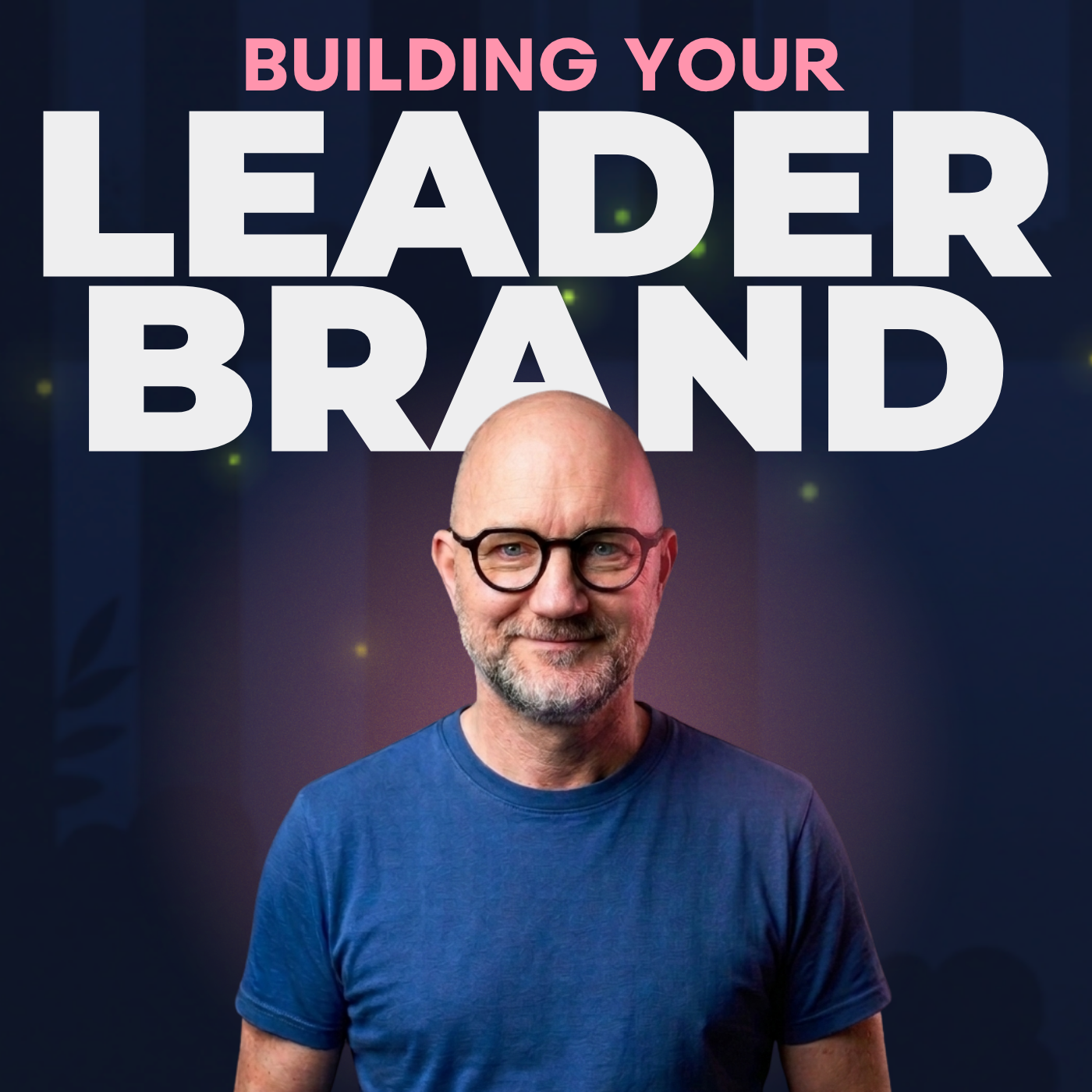
Building a business around your personal brand comes with its unique set of challenges, but it’s also an opportunity to create massive impact. Join Bob Gentle as he sits down with leading Entrepreneurs, Consultants, Creators, Leaders and Marketers from around the globe to uncover the strategies behind their successful Personal Brand Businesses. You’ll hear real stories of what it takes to thrive in today’s market—without the fluff. This isn’t just another podcast about business success. Every guest is a trailblazer, redefining traditional business models and discovering innovative ways to deliver value, scale their brands, and make a lasting impact—all while building wealth and influence through the power of their personal brands. From up-and-coming entrepreneurs to industry veterans, every episode opens a new window into the dynamic world of expert business owners, creators, and leaders. Each conversation offers fresh insights, actionable takeaways, and the inspiration you need to continue your journey as both a business leader and a person. About Your Host: Bob Gentle is a globally recognized Personal Brand strategist, coach, and the driving force behind AmplifyMe, helping expert business owners scale their brands and businesses worldwide. He’s also the creator of the Personal Brand Business Roadmap™, a step-by-step guide to starting, scaling, or refining your expert business. Download it for free at amplifyme.agency/roadmap. Tune in to Building Your LeaderBrand, rated in the top 2.5% of podcasts globally by ListenNotes, and discover how you, too, can lead with impact and grow your personal brand into a powerful business.
Pitch Analysis
Required Pod Score for this show. PitchCentric checks your profile against host openness, topical fit, and audience signals before you generate a pitch.
Contact path
Verified email
Booking probability
37%
Guest openness
Selective
Verified email on file
80/100
Required Score
Sign up to generate a grounded pitch for Building your LeaderBrand - Personal Branding, Digital Marketing, Sales, Leadership & Linkedin for Expert Business Owners & Executives..
What is Building your LeaderBrand - Personal Branding, Digital Marketing, Sales, Leadership & Linkedin for Expert Business Owners & Executives.?
Building your LeaderBrand - Personal Branding, Digital Marketing, Sales, Leadership & Linkedin for Expert Business Owners & Executives. is a business podcast hosted by Unknown Host, with 300 episodes on record and a Required Pod Score of 80.
About the host
Unknown Host hosts Building your LeaderBrand - Personal Branding, Digital Marketing, Sales, Leadership & Linkedin for Expert Business Owners & Executives., a business show with 300 episodes published.
Our AI reads these to draft pitches. Use them as grounding for a pitch that cites a real guest and a specific topic.
Episode #357
How Leaders Can Stop Getting Left Behind by AI, with Martin Wheatley
Sep 27, 202640 min
Most of the leaders I speak to are somewhere between curious and quietly anxious about AI. They know it matters. They're not entirely sure where to start. And the public narrative - redundancies, replacement, disruption - isn't helping anyone think clearly. Martin Wheatley works with senior leaders to rethink how work gets done with AI. His background is financial services - large teams, process improvement, regulated environments at scale. He brings a grounded, practical lens to a conversation that often generates more heat than light. If you've been dabbling with ChatGPT and wondering whether there's more to this than a slightly clever search engine, this one's worth your full attention. Three things we got into: ✳️ Psychological safety is the leader's first job with AI - before your team can experiment, they need to know it's safe to try, fail, and learn in the open. Leaders who build that environment move faster than those who don't, and the organisations that are getting this right aren't cutting headcount - they're creating roles that didn't exist before. ✳️ AI is brilliant at systems and pretty poor at emotion - most leadership doctrine already leans too far into command-and-control thinking. Doubling down on AI without balancing it with human judgment isn't progress. The leader's job is to provide the emotional and strategic intelligence the tools can't replicate. ✳️ Delegation is the hidden AI skill nobody's talking about - setting clear expectations, checking work, correcting course. That's already your job. It's also exactly what working effectively with AI requires. If you can master delegation, you're already ahead of most people using these tools. Martin's amplifiers - things you can do right now: ✳️ Read Empire of AI by Karen Hao - it covers the rise of OpenAI, how the models were built and trained, and some of the less visible human and environmental costs involved. Good context for any leader who wants to understand what they're actually working with, beyond the marketing. ✳️ Revisit Carol Dweck's growth mindset - Martin's seen people go from being the loudest AI detractors in a business to becoming its biggest internal champions. The willingness to be a beginner again is what separates those who adapt from those who get left behind. ✳️ Try WhisperFlow (or VoiceInk if monthly fees aren't your thing) - press a button, talk at your screen, let the AI distil what you're actually trying to say. Martin uses it daily for prompting. It's faster and more honest than typing because your brain stops filtering what comes out. If this was useful, hit follow so you don't miss what's coming next. And if you've got a moment before you get on with your day, a five-star review wherever you listen to podcasts makes a genuinely noticeable difference. Find out more about Martin : https://www.theaileaderlab.com/ & connect with him on Linkedin : https://www.linkedin.com/in/martinjwheatley/ Apple Podcasts Timestamps 00:00 - Introduction and episode preview 00:49 - Bob's intro - the Personal Brand Business Roadmap 02:00 - Why AI is a leadership conversation, not just a technology one 02:50 - Martin Wheatley - background and what he does 05:00 - Psychological safety and the AI narrative 08:09 - The creative explosion hiding behind the efficiency story 10:30 - What IKEA and Costco are actually doing with AI 13:03 - What you get when you strip people out to chase efficiency 14:35 - Command and control leadership vs what AI needs from you 17:13 - How the average leader gets started with AI 19:07 - Why structured learning matters more now than ever 20:34 - How Martin works with individual leaders 23:00 - Managing tool risk - don't put all your eggs in one basket 25:08 - Why most people still can't run a proper Google search 26:31 - Everyone is becoming a manager of agents 28:39 - The imagination gap - why we need a roundtable 29:14 - The Multiply Method Roadmap - PRIME explained 32:45 - Amplifier 1 - Empire of AI by Karen Hao 34:48 - Amplifier 2 - Carol Dweck's growth mindset 36:10 - Amplifier 3 - WhisperFlow (and VoiceInk) 37:51 - Where to find Martin Wheatley 38:46 - Outro and links---- Get your copy of my Personal Brand Business Blueprint It's the FREE roadmap to starting, scaling or just fixing your expert business. www.amplifyme.agency/roadmap ---- Subscribe to my Youtube!! Follow on Instagram and Twitter @bobgentle Join the Amplify Insiders Facebook Community : www.amplifyme.agency/insiders Please take a second to rate this show in Apple Podcasts. ❤ It will mean a lot to me.
If you've ever been curious about board roles - getting your first one, making it work, or eventually sitting in the chair - this episode is worth your time. Whether you're a senior leader thinking about a portfolio career, or you're already on boards and wondering what the next step looks like, the world of non-executive directorships and chairing is one that very few people explain clearly. Most people learn by doing. That means most people make avoidable mistakes. Lisa Tennant has been working in a portfolio career for 17 years. She chairs the Scottish Environment Protection Agency and the NHS Pension Scheme for England and Wales, and through the Chair Circle she works with current and aspiring chairs. She's done over a hundred board interviews and received feedback on every one she didn't get. In this episode we cover what it actually takes to get on a board, what distinguishes a great board member from the chair's perspective, and why the chair role is far more demanding than most people expect. Three things we explored: ✳️ Your board brand matters more than your CV. The board recruitment market is competitive, and a generic pitch won't land. The people who get roles can clearly articulate what problem they solve for that specific board - which requires research, positioning, and a willingness to niche down. ✳️ The chair role is not a step up from board member - it's a different job. Lisa talks about moving from board member to chair and realising the full scope and weight of the role. The buck stops with the chair, and at times the pressure is comparable to a full executive role. ✳️ Trust is the thread that holds everything together. Whether it's the board-CEO relationship, the dynamic between board members, or the chair's ability to lead - nothing functions without it. Building trust deliberately is the chair's primary responsibility, in and out of the boardroom. Lisa's Amplifiers: ✳️ Read The 80/20 Principle by Richard Koch. Apply it to your strategy, your annual review, and your decisions. If you can only do three things, which ones give you the most leverage? ✳️ Simplify your choices with one clear rule. Lisa cut out processed carbs and reversed pre-diabetes. The principle is the same as 80/20 - one rule that removes decision fatigue and gives you the most impact for the least effort. ✳️ Put people first - at work and at home. In the boardroom, nothing happens without trust, and trust only comes from genuinely prioritising the people around you. Outside work, the same applies. The relationships in your life matter more than the career. If this conversation sparked something, follow the show on Apple Podcasts or Spotify so you don't miss a week. Connect with Lisa on Linkedin. Timestamps: [00:00] Introduction [01:39] Lisa Tennant - portfolio career and the Chair Circle [03:01] Who should be thinking about board roles [07:42] Executive boards vs advisory boards [09:09] What boards are looking for in candidates [11:45] Board brand and the elevator pitch [15:38] Why rejection is part of the process [16:52] How much operational work do board roles involve [19:24] Due diligence before you accept a board role [23:06] Is it easy money - setting expectations [25:48] What makes a great board member [28:11] What does a dysfunctional chair look like [30:46] The chair-CEO relationship [34:40] Amplifier 1 - The 80/20 Principle [37:09] Amplifier 2 - One simple dietary rule [38:21] Amplifier 3 - People first
Pivoting from a Position of Strength, with Luria Petrucci
Sep 13, 20261 hour
Most conversations about pivoting assume something has gone wrong. This one doesn't. Luria Petrucci has spent 20 years building audiences online - she started before YouTube existed, she's in the podcast hall of fame, and she has a thriving business. And right now she's doing something that most established people find harder than starting from nothing: choosing to move towards something new when everything is already working. That tension - between what you've built and what you know is next - is one of the most common things I see in the people I work with. The whisper of something more. The idea that's been sitting there for ten years. The version of you that's waiting for permission. Luria names all of it honestly, and that's what makes this conversation worth your time. Three key areas we covered: ✳️ Most pivots feel enormous from the inside - but from the outside, they're usually a small shift, not a leap. What makes them feel massive is releasing the identity and habits that served the old version of you. ✳️ The curse of expertise doesn't just affect your content - it affects your pivot too. Knowing too much can make you want to carry everything across. One video, one takeaway, three bullet points. The same discipline applies to how you communicate who you're becoming. ✳️ The "yapping" trend - casual, handheld, conversational video - works because it signals authenticity and builds parasocial relationships. For anyone in a pivot, it's one of the most accessible ways to build a new audience in parallel with an existing one. Luria's three amplifiers: ✳️ 10x Is Easier Than 2x by Dan Sullivan and Benjamin Hardy - the 10x framework forces you to make genuinely different decisions rather than incrementally better ones. ✳️ Step outside, turn off the phone, and journal without AI. Getting your thoughts out in your own words - not prompted, not polished - reconnects you to who you actually are and what you actually think. ✳️ Release what served the old version of you. Old habits, old identities, old ways of operating become dead weight when you're levelling up. Recognising the difference between what got you here and what will take you further is one of the most underrated things you can do. If this resonated, you'll find more conversations like this every week on Building Your Leader Brand. Follow or subscribe wherever you listen, and if you're on Apple Podcasts, a five-star review goes a long way. Luria's Website : https://livestreamingpros.com/room/ Apple Podcasts Timestamps 00:00 - Welcome and introducing Luria Petrucci 02:27 - Twenty years in video - how it all started 05:34 - Introverts on camera - why it works better than you think 09:20 - The mirror problem - why we see ourselves so harshly 12:00 - The community mirror exercise - what others actually see 15:40 - Leadership, vulnerability, and the reluctance to start again 18:02 - Transmitting on an authentic frequency 19:23 - The curse of expertise - saying less to communicate more 22:31 - One video, one takeaway - the three-question framework 25:32 - Repetition in content - why saying the same thing again is a strategy 27:52 - The yapping trend - casual video and the three universal languages 31:55 - Yapping vs live streaming vs produced video 33:03 - Parasocial relationships and why they feel real 38:01 - Luria's pivot - building in public from scratch 43:40 - Pivoting from a position of strength - the confirmation bias trap 49:39 - Entrepreneurial loneliness and creating space for honest conversations 53:11 - The three amplifiers 58:01 - Amplifier 2 - nature, journaling, and stepping away from AI 01:00:19 - Amplifier 3 - releasing what served the old you 01:00:50 - Where to find Luria and how to join the pivot community ---- Get your copy of my Personal Brand Business Blueprint It's the FREE roadmap to starting, scaling or just fixing your expert business. www.amplifyme.agency/roadmap ---- Subscribe to my Youtube!! Follow on Instagram and Twitter @bobgentle Join the Amplify Insiders Facebook Community : www.amplifyme.agency/insiders Please take a second to rate this show in Apple Podcasts. ❤ It will mean a lot to me.
Stop Doing Productivity and Start Being Productive - with Mike Vardy
Sep 6, 202633 min
If you're someone who has a lot to do, a lot of ambition, and a system that never quite feels like enough - this episode is for you. I sat down with Mike Vardy, productivity strategist and author of the new book Productiveness , to talk about something most productivity content completely misses: the person behind the system. Mike has spent decades in this space - from life hacker contributor to managing editor of LifeHack, to building his own framework called time crafting. And this conversation gets into the territory I find most interesting - not what system to use, but who you need to be to use it well. ✳️ Productiveness vs productivity - Mike draws a sharp distinction between the two. Productivity has come to mean speed and volume. Productiveness, the older word, means being in a state of producing - without sacrificing quality for quantity. ✳️ The nine principles of productiveness - Mike walks through the principles at the heart of his new book: humanness, grace, nuance, cadence, prudence, trust, will, efficacy, and tolerance. These aren't things you check off a list - they're ongoing states that, when practised together, create a genuinely productive person rather than just a busy one. ✳️ Why your system isn't the problem - you are - The tools, frameworks, and methods are only as good as the human running them. As Bob puts it: if you parachuted Gary Vaynerchuk's system into someone else's life, it would collapse in a week. Productiveness starts with understanding what you bring to the equation, not copying someone else's solution. Mike's Amplifiers ✳️ Journal daily - Not a weekly review, just a daily practice. The calendar tells you where to be. The to-do list tracks the details. The journal tells the story - and that's where course correction actually happens. ✳️ Walk regularly - Something about the kinetic motion of moving your body gets your thinking moving too. No agenda required. Just get outside. ✳️ Invest in a good pen - This sounds quirky, but the point is real. When you write with something you value, what you put on the page feels like it matters. It raises the stakes of the moment - and for journaling especially, that changes everything. This episode is one of those conversations I'll come back to. Mike's book Productiveness is available now - and I'd encourage you to pick up a copy. If you're finding the show useful, please hit subscribe or follow wherever you listen. It helps more than you'd think. Timestamps 00:00 - Introduction and why productivity matters 01:39 - Welcome Mike Vardy 02:24 - Who is Mike Vardy and what does he do 03:09 - The new book: Productiveness - and what makes it different 06:51 - Why systems need the right person inside them 08:04 - The nine principles of productiveness: humanness, grace, nuance, cadence and more 12:54 - Why you can't check these principles off a list 13:32 - Accepting you'll never finish everything - and the grief that comes with that 15:28 - Digital productivity systems and the problem of entropy 17:09 - Paper vs digital: why Mike moves tasks to a physical list 19:25 - The danger of optimising your system instead of using it 21:33 - Urgent vs important - and why we keep getting it backwards 24:17 - Fighting fires: the metaphor that's making your priorities worse 24:44 - Mike Vardy's three amplifiers 25:11 - Amplifier 1: journaling 27:02 - Amplifier 2: walking 27:02 - Amplifier 3: a really good pen 29:23 - Contentment as the goal - not happiness 29:48 - Closing reflections and where to find the book Mike Website : https://mikevardy.com Mike's Book ---- Get your copy of my Personal Brand Business Blueprint It's the FREE roadmap to starting, scaling or just fixing your expert business. www.amplifyme.agency/roadmap ---- Subscribe to my Youtube!! Follow on Instagram and Twitter @bobgentle Join the Amplify Insiders Facebook Community : www.amplifyme.agency/insiders Please take a second to rate this show in Apple Podcasts. ❤ It will mean a lot to me.
Your brand needs to put identity first, with Julie Diver
Aug 30, 202654 min
If you've ever commissioned a website or a rebrand and felt like something was off - that it didn't quite land with the right people - this episode gets into why. Julie Diver has been running her creative and growth agency, 39 Steps, since 2003. What she's learned in that time is something most business owners never hear from their designers or web developers: the output is rarely the problem. This episode matters to you because whether you're a consultant, a founder, or a senior leader building authority, your brand is either working for you or against you. And if you haven't done the deeper work first, no amount of beautiful design will fix that. Three things we got into: ✳️ Clarity on who you're actually for has to come before any creative work begins - commissioning design without it is putting money into the wrong place, every time. ✳️ Julie's Market Street methodology - a three-part framework covering discovery, definition, and recommendations - helps leadership teams understand where they really are before deciding what to change. ✳️ Internal buy-in matters as much as external identity - when your team understands and believes in the brand, they become your most credible advocates in the marketplace. Julie's Amplifiers - three things to do straight away: ✳️ Read StoryBrand by Donald Miller alongside They Ask, You Answer by Marcus Sheridan - Julie's two go-to books for anyone serious about messaging and marketing. ✳️ Look at the Brick - a physical device that lets you schedule when you can access apps on your phone. A simple tool for recovering attention and cutting procrastination. ✳️ Pick up The Crossroads of Should and Must by Elle Luna - a beautifully made book about the gap between what we feel we ought to do and what we're actually called to do. Worth it at any stage of business or life. If this episode gave you something to think about, hit the subscribe or follow button wherever you're listening. There's a new conversation every week, and you won't want to miss one. About Julie : https://39steps.co.uk/ Timestamps 00:00 - Introduction 00:38 - Welcome and episode overview 02:26 - Introducing Julie Diver and 39 Steps 04:05 - Why identity has to come before growth 04:56 - How the Market Street methodology was born 08:19 - The real problem behind "we need a new website" 11:25 - Common mistakes clients and agencies both make 16:20 - Getting really clear on your target persona 17:22 - Why frameworks foster freedom 18:33 - Inside the Market Street process - discovery, definition, recommendations 24:41 - Discovering a brand rather than creating one 28:59 - How internal culture and external brand are connected 32:54 - How Julie has sustained and grown a business for over 20 years 34:43 - The origin of networking - and why it still works 38:21 - Referrals, content, outreach - what actually drives growth 42:31 - Why discomfort is worth leaning into 43:16 - Julie's three amplifiers 50:20 - Where to find Julie and 39 Steps 52:35 - Closing thoughts ---- Get your copy of my Personal Brand Business Blueprint It's the FREE roadmap to starting, scaling or just fixing your expert business. www.amplifyme.agency/roadmap ---- Subscribe to my Youtube!! Follow on Instagram and Twitter @bobgentle Join the Amplify Insiders Facebook Community : www.amplifyme.agency/insiders Please take a second to rate this show in Apple Podcasts. ❤ It will mean a lot to me. Mentioned in this episode: Signature Studio Get started today - signtaturestudio.me
Recent guests on Building your LeaderBrand - Personal Branding, Digital Marketing, Sales, Leadership & Linkedin for Expert Business Owners & Executives.. Study who booked and why before you pitch.
Best industries to pitch Building your LeaderBrand - Personal Branding, Digital Marketing, Sales, Leadership & Linkedin for Expert Business Owners & Executives. for
Based on semantic analysis of episode topics and host coverage, this show is a strong guest fit for executives in:
Businessstrong
Industry fit is computed by PitchCentric using vector embeddings of the show's episode catalog.
Podcasts like Building your LeaderBrand - Personal Branding, Digital Marketing, Sales, Leadership & Linkedin for Expert Business Owners & Executives.
Every question we get asked before someone starts their trial.
If you have a concern about deliverability, AI quality, data privacy, or whether this will actually work for your specific situation, it's probably answered below.
What is the difference between Founder Solo and Founder Pro?
Founder Solo gives you 50 AI pitches per month using the credit model (Standard pitches cost 1 credit, Enriched pitches cost 2). Founder Pro raises that to 200 credits per month and adds full Booking Probability access, unlimited Magic Match, Apollo enrichment credits, and data export capabilities. Both plans use the same credit system, so you can stretch your monthly budget further by using Standard-mode drafting.
How do agency tiers work?
Agency tiers have no base fee. You pay per managed client and per talent profile. Agency Standard is $199 per client per month; Agency Pro is $399 per client per month. Both add $39 per talent profile per month. Your own team's user seats are always free.
What is a talent profile?
A talent profile represents one person (founder, executive, or spokesperson) you are booking onto podcasts. It includes their bio, topics, headshots, and outreach history. Team plans include 5 profiles; agency plans are pay-as-you-go.
Can I switch plans later?
Yes, at any time. Upgrades take effect immediately; downgrades apply at the end of the current billing period. Contact support if you need help migrating between plan families.
Do you offer a free trial?
Every paid plan includes a 15-day free trial. Your card is saved at signup but you will not be charged until day 16. Cancel any time from your dashboard.
What happens if I cancel?
You keep access until the end of your current billing period. No charges after that. Your data is retained for 30 days in case you reactivate.
Is the 20% annual discount automatic?
Yes. Select Annual on the pricing toggle and the discounted price is applied automatically at checkout. The annual price shown is the full year cost.
What if I have more than 50 profiles or 20 clients?
That is our Enterprise tier. Contact our sales team and we will build a custom plan with volume pricing, a dedicated account manager, and SLA guarantees.