
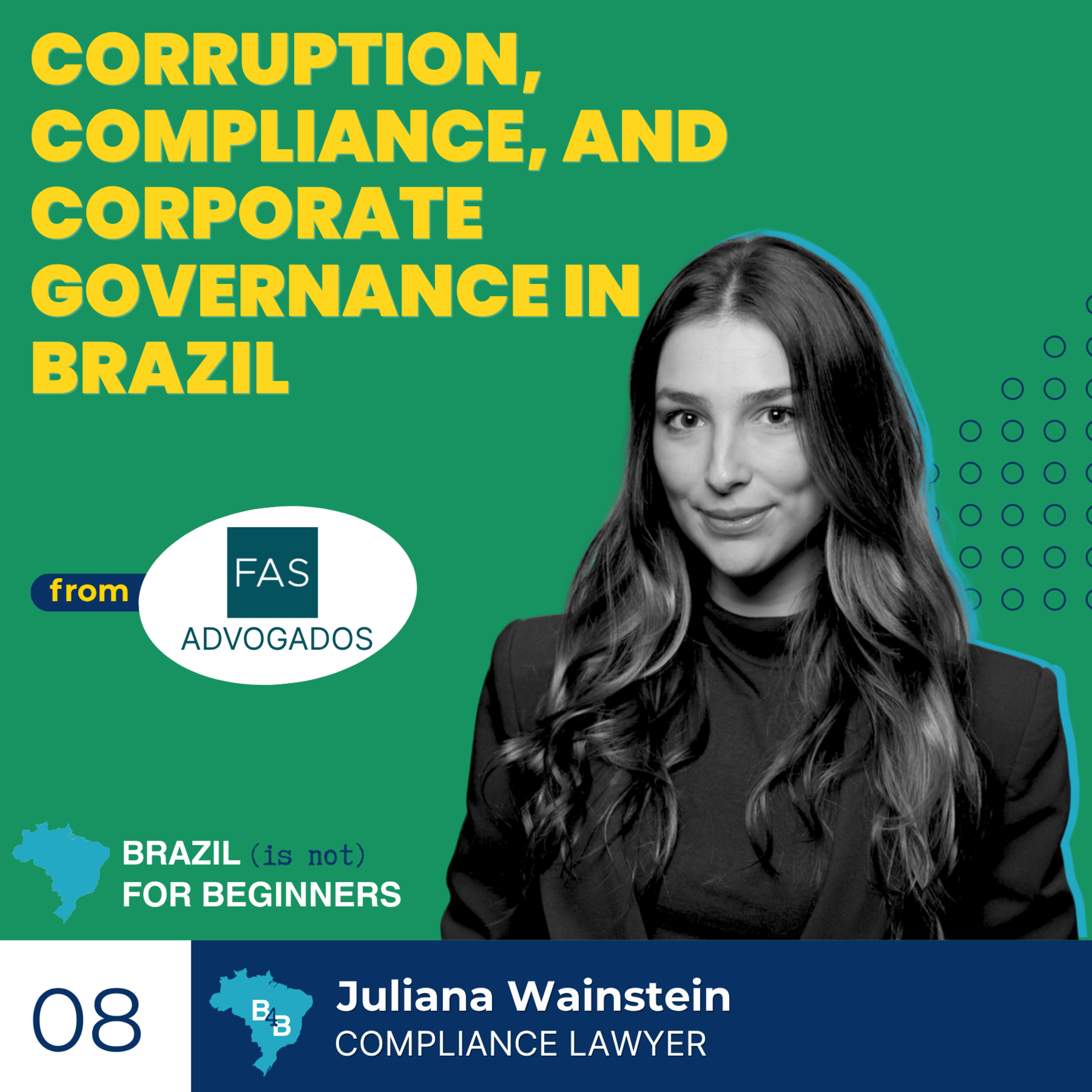
Episode #8
Corruption, Compliance, and Corporate Governance in Brazil
In this episode of Brazil (is not) for Beginners, Isaac Matzner sits down with Juliana Wainstein, a lawyer and member of the compliance team at FAS Advogados - part of the CMS group - for a timely conversation about corruption, organized crime, and the growing importance of compliance in Brazil’s business environment. The backdrop for this conversation is hard to ignore: Banco Master, Carbono Oculto, and the recent designation of the Brazilian criminal gangs as a terrorist organization by the United States, have proven that organized crime in Brazil is no longer just on the streets; it is infiltrating the heart of the financial system. Isaac and Juliana discuss how the sophistication of modern money laundering - where fintechs, logistics networks, and complex corporate structures, are used as fronts for illicit operations - is helping put compliance front and center for companies operating in Brazil. The conversation moves from the mechanics of how organized crime infiltrates legitimate businesses, to what a real compliance program looks like in practice, and since it’s 2026 to the role AI is playing on both sides of the equation. Juliana also makes a case that many companies miss or chose to overlook: compliance, done right, is not a cost or a constraint, it’s a competitive moat, and one of the best tools a company has for long-term success in Brazil’s complex business environment. Other key topics include: How Carbono Oculto worked - from gas production to fintech pocket accounts - and what it revealed about the convergence of licit and illicit operations Why logistics, payments, and financial services are the sectors most exposed to criminal infiltration Cash payments as a red flag, and the double-edged nature of Pix in the compliance landscape The PCC’s US terrorist designation and what it means practically for Brazilian and American companies doing business together (OFAC, SDGTs, the 50% rule) How vulnerable people are recruited into financial crime: fake account openings, stolen credentials, and the debt cycle inside Brazilian prisons What a real compliance program looks like - from diagnosis and risk matrix to training, whistleblower channels, and culture change Why compliance should start at day zero, regardless of company size The ‘broken windows’ logic of compliance culture, and why the little habits matter as much as the big policies How BTG and other large institutions are using AI to accelerate KYC - and how deepfakes are being used on the criminal side What foreign companies consistently get wrong when bringing compliance programs to Brazil - and how to localize them properly And much more… Subscribe to our newsletter for full episode notes and timestamps: brazilisnotforbeginners.substack.com Watch on YouTube: youtube.com/@brazil4beginners Follow us on Instagram: @brazilisnotforbeginners Follow us on LinkedIn: linkedin.com/company/brazil-is-not-for-beginners