Books & Writing episodes of the popular The Creative Process podcast. To listen to ALL arts & creativity episodes of “The Creative Process · Arts, Culture & Society”, you’ll find our main podcast on Apple: tinyurl.com/thecreativepod, Spotify: tinyurl.com/thecreativespotify, or wherever you get your podcasts! Exploring the fascinating minds of creative people. Conversations with writers, artists & creative thinkers across the Arts & STEM. We discuss their life, work & artistic practice. Winners of the Pulitzer, Academy Award, Emmy, Tony, Grammy, Booker, Nobel Prize, and other honors. Leaders & public figures share real experiences & offer valuable insights. Notable guests include: Neil Gaiman, Roxane Gay, Ada Limón, George Pelecanos, George Saunders, Viet Thanh Nguyen, Jericho Brown, Daniel Handler a.k.a. Lemony Snicket, Siri Hustvedt, Jeffrey Sachs, Jeffrey Rosen (National Constitution Center), Tom Perrotta, Ana Castillo, David Tomas Martinez, Rebecca Walker, Isabel Allende,
Pitch Analysis
Required Pod Score for this show. PitchCentric checks your profile against host openness, topical fit, and audience signals before you generate a pitch.
Contact path
Verified email
Booking probability
36%
Guest openness
Selective
Verified email on file
80/100
Required Score
Sign up to generate a grounded pitch for Books & Writers: Novelists, Screenwriters, Poets, Journalists, Playwrights, Non-fiction Writers & Showrunners Talk Writing, Creativity & The Creative Process.
What is Books & Writers: Novelists, Screenwriters, Poets, Journalists, Playwrights, Non-fiction Writers & Showrunners Talk Writing, Creativity & The Creative Process?
Books & Writers: Novelists, Screenwriters, Poets, Journalists, Playwrights, Non-fiction Writers & Showrunners Talk Writing, Creativity & The Creative Process is a arts podcast hosted by Unknown Host, with 183 episodes on record and a Required Pod Score of 80. PitchCentric scores this show on Booking Probability, Listen Score, and live audience signals refreshed every 24 hours.
About the host
Unknown Host hosts Books & Writers: Novelists, Screenwriters, Poets, Journalists, Playwrights, Non-fiction Writers & Showrunners Talk Writing, Creativity & The Creative Process, a arts show with 183 episodes published.
Our AI reads these to draft pitches. Use them as grounding for a pitch that cites a real guest and a specific topic.
Episode #1266
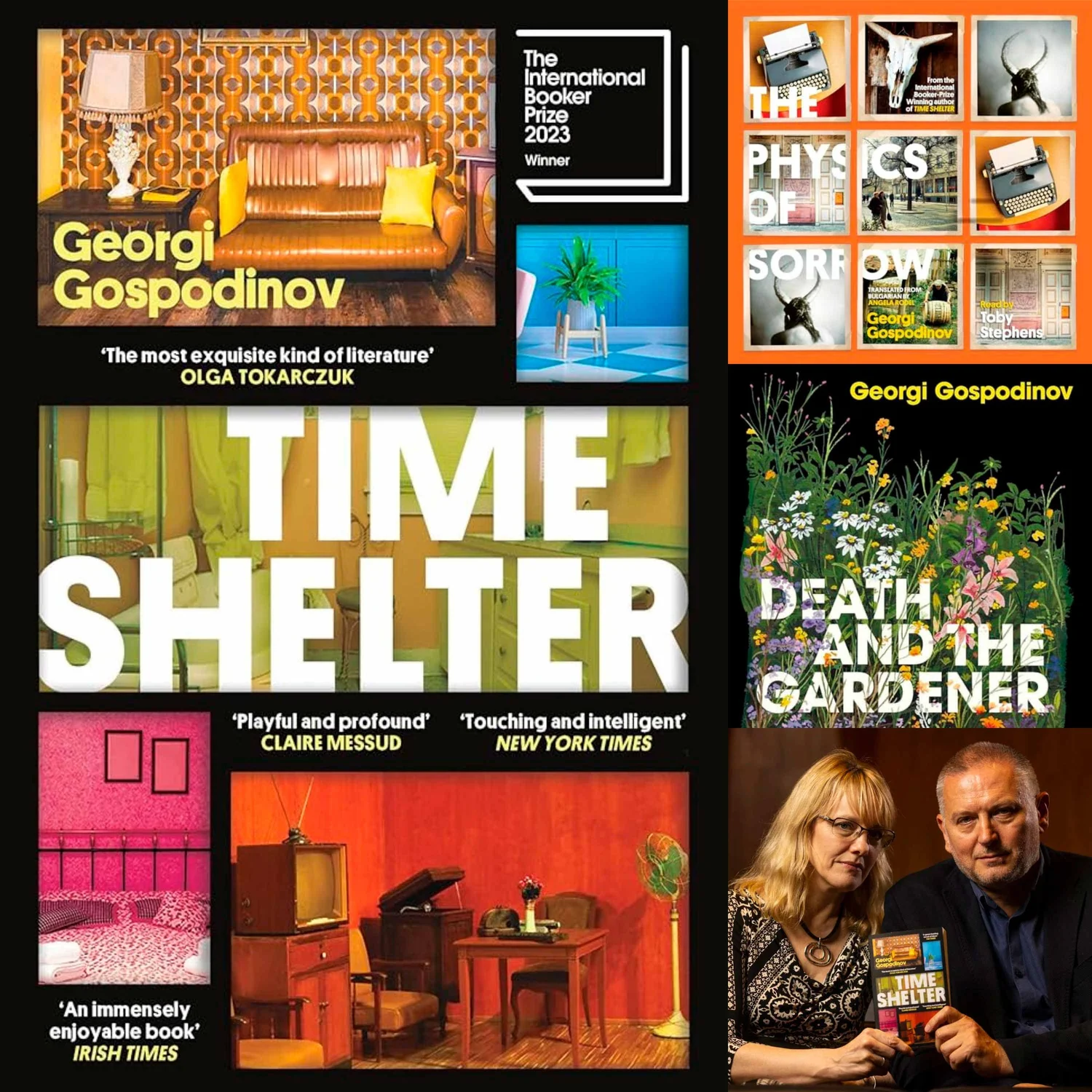
Literature is an Antidote to Propaganda - Grief, Memory & Humanity w/ G. GOSPODINOV & A. RODEL - Highlights
Aug 7, 202626 minS17
Today, we have a conversation about time, memory, and the bittersweet geography of human sorrow. Georgi Gospodinov is widely considered one of the most daring voices in contemporary European literature. His acclaimed novel, The Physics of Sorrow , won the prestigious Jan Michalski Prize in 2016 , blending ancient myth and quantum physics to chronicle the delicate realities of post-socialist Eastern Europe. Joining him is Angela Rodel , a brilliant linguist, musician, and translator whose profound artistic empathy carries the flowing cadences of the Bulgarian language into vivid English. Together, this extraordinary creative duo made history by winning the 2023 International Booker Prize for Time Shelter —the first book written in Bulgarian to ever receive the honor. Time Shelter is a masterfully dark, funny, and prescient novel. It begins with an enigmatic psychiatrist opening a clinic that treats Alzheimer’s patients by meticulously recreating past decades to match their internal clocks. But the experiment quickly escapes the clinic walls, triggering a pan-European crisis where entire nations hold democratic referendums to choose which era of the past they will retreat into. It is a book that holds up a mirror to our own world, exploring what happens when a civilization faces a deficit of meaning and tries to weaponize nostalgia. (0:00) The Trap of Nostalgia (1:22) The Nonlinear Approach to Storytelling (3:53) Translating the Atmosphere (4:31) The Pandemic of the Past (6:37) Death and the Gardener (9:49) The Translators Calling (11:00) Slowing Down Time (13:14) Storytelling vs Propaganda (15:54) Translating the Atmosphere (18:19) What makes a good life? What has given your life meaning? (20:56) Reflections on God and the Stories His Grandmother Told Him (23:43) The Importance of Hugging, Empathy and Storytelling Episode Website www.creativep rocess.info/pod Instagram: @creativeprocesspodcast
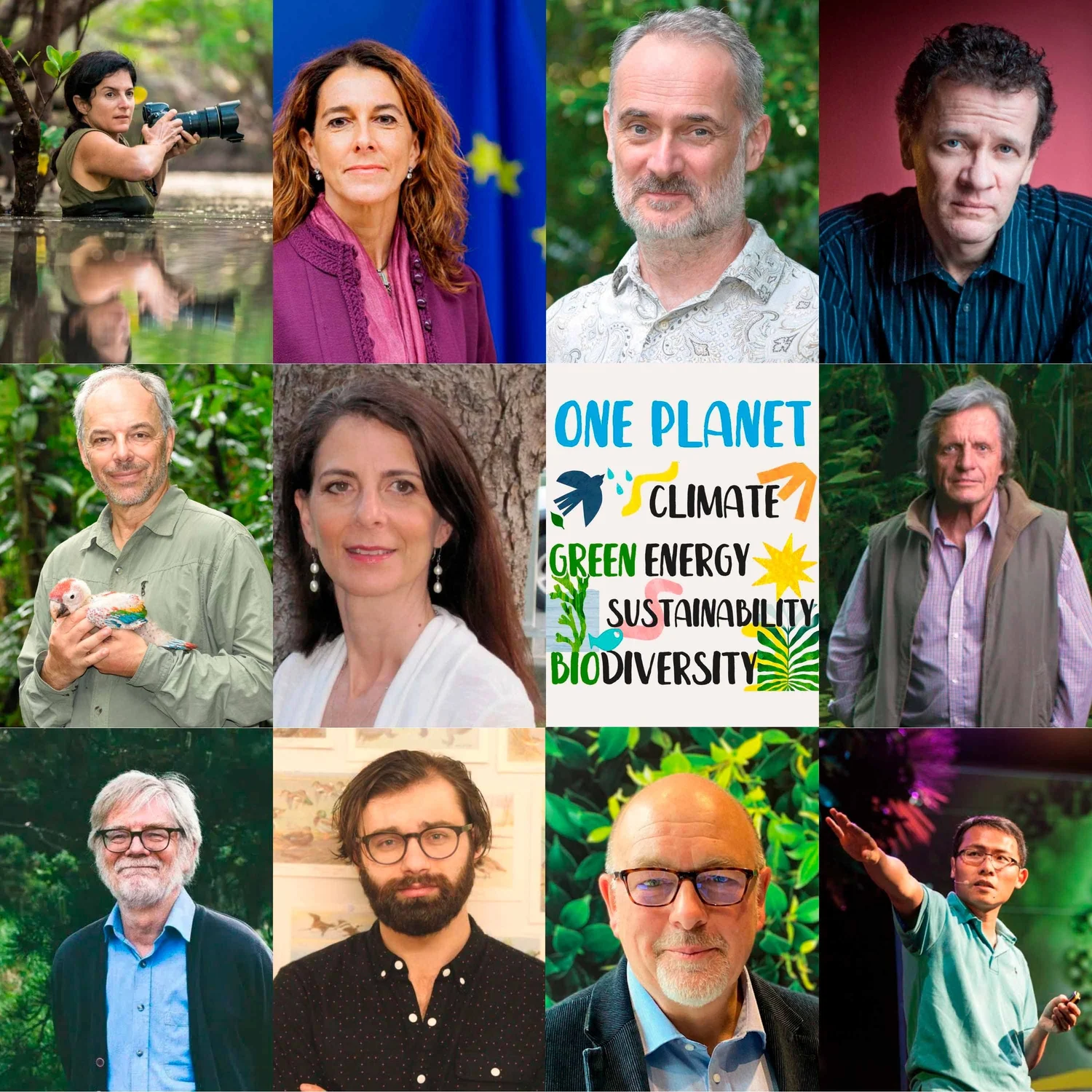
Listening to the Living World: Ami Vitale, Yann Martel, Carl Safina, David George Haskell & Others on Climate Change & The Rights of Nature
Apr 20, 202620 minS16
Today, we hear from writers Yann Martel, Carl Safina and David George Haskell on the practice of listening to the living world. Tom Chi discusses the dangerous volatility of a one-degree shift. Clayton Aldern explores how climate change alters brain health and behavior, while Ami Vitale,Osprey Orielle Lake and Martín Von Hildebrand remind us of the kinship we share with nature. Fred Pearce discusses 40 years as a journalist reporting on climate from around the world, while Richard Black of the environmental think tank Ember and Paula Pinho, European Commission’s Chief Spokesperson, talk about policy, hope and the radical empathy required to protect the planet for future generations. (0:00) Clayton Page Aldern – Finding awe and beauty in the world (0:40) David George Haskell – On consequences of humans tuning out the sounds of the living world (2:11) Yann Martel – How animals ask us to step out of our humanity (3:12) Carl Safina – The interior lives of non-human animals (5:08) Ami Vitale – Environmental collapse and human conflict (6:37) Martín von Hildebrand – Indigenous views of nature (8:00) Richard Black – Transition to clean energy vs. massive fossil fuel subsidies (10:01) Tom Chi – Climate destabilization (11:07) Paula Pinho – Europe’s vision for energy independence (14:04) Osprey Orielle Lake – Māori concept of "I am the river and the river is me” (16:08) Bill Hare – On limiting global warming to 1.5 degrees (17:19) Fred Pearce – Finding hope in nature’s resilience To hear more from each guest, listen to their full interviews . Episode Website www.creativeprocess.info/pod @creativeprocesspodcast
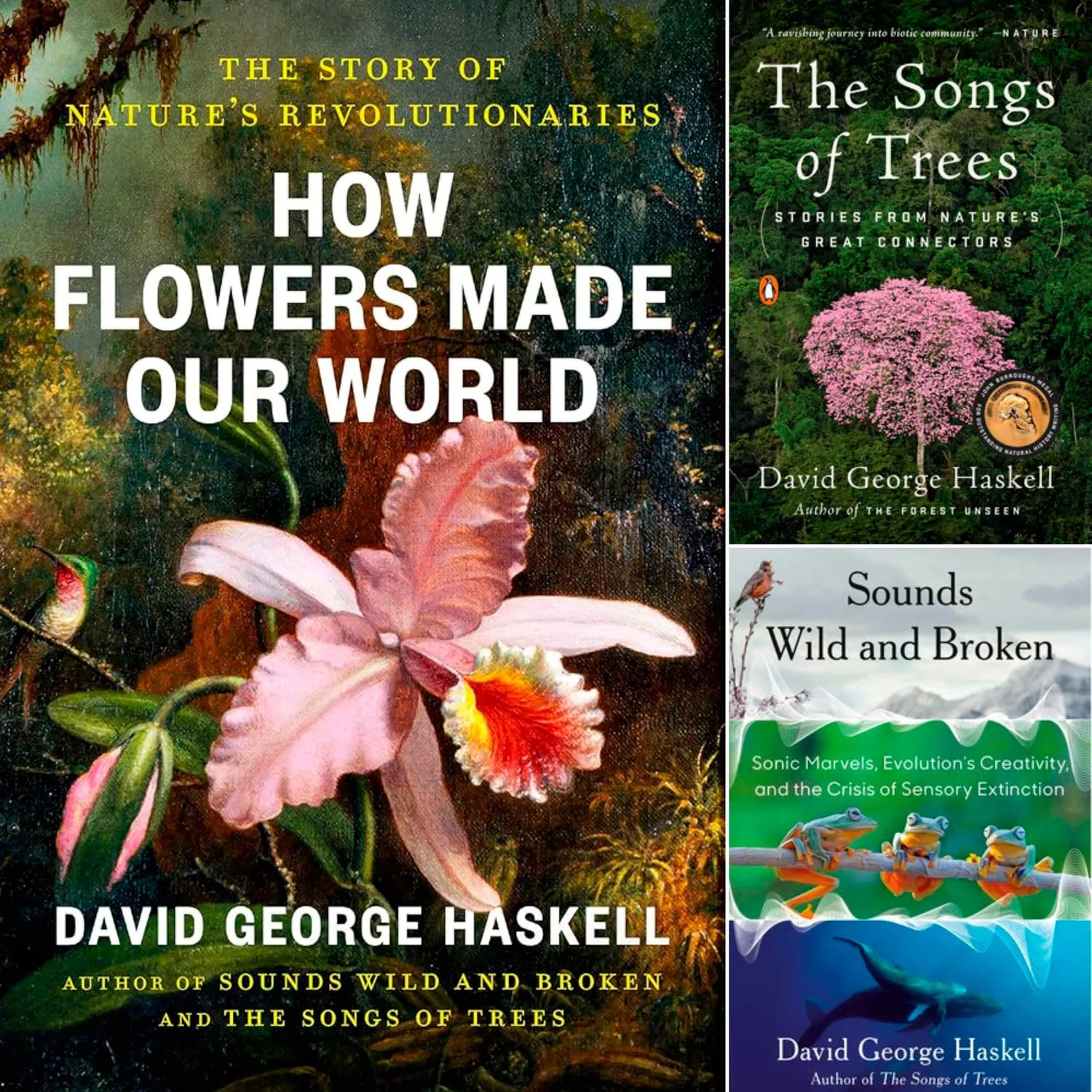
How Flowers Made Our World: DAVID GEORGE HASKELL on Deep Time, Plant Intelligence & Listening to the Living World
Apr 18, 20261h 26mS16
What if the defining revolution of Earth's history wasn't led by animals or humans, but by flowers? Are we truly individuals, or are our bodies and minds just walking ecosystems? Our guest today is David George Haskell , a biologist who has spent much of his life training himself to see the universal within the infinitesimally small. He's famously sat for a year in a single square meter of Tennessee's forest, a mandala experience that revealed the deep history of the world through a single fallen leaf. He's a two-time finalist for the Pulitzer Prize for his books The Forest Unseen and Sounds Wild and Broken , and he received the John Burroughs Medal for The Songs of Trees . His work often focuses on what he calls the unwaged labor of the natural world, the complex biological communities that sustain our planet without a monetary ledger. And his latest book is How Flowers Made Our World . In it, he argues that we are essentially grass apes dependent on the ancient innovations of flowering plants for two-thirds of our daily calories. (0:00) How Flowers Made Our World The incredible ancient history of flowers on Earth (4:56) Contemplating the Small Expanding our world by restricting our gaze (14:30) The Illusion of Individuality Why atomism is false and interconnectedness is the foundation of life (26:08) We Are Grass Apes The evolutionary origins of humans and our dietary dependence on grass (33:32) Memories of His Childhood in Paris & Wild Orchids (38:55) The Networked Intelligence of Forests How trees communicate and share resources beneath the soil (44:00) The Earth in Full Song Tracing the sonic history of our planet (51:08) The Practice of Listening Why tuning in to the natural world is crucial for our survival (1:01:21) Silence Without Expectation Sitting with nature without demanding progress or enlightenment (1:11:01) Transforming Ourselves Why personal change matters in the fight for the climate (1:15:20) Escaping the Screen Finding real human-to-human connection away from technology (1:16:16) The True Cost of AI The devastating impact of data centers on our fossil fuel consumption (1:23:18) A Sensory Legacy for the Future What we must preserve for the generations not yet born Episode Website www.creativeprocess.info/pod Instagram: @creativeprocesspodcast
Listening to the Living World: Biologist DAVID GEORGE HASKELL on Flowers, Forests & Songs of Nature - Highlights
Apr 9, 202618 minS16
Step into the deep time of the forest floor, where a single fallen leaf contains the history of the world, and invisible fungal networks hum with ancient conversations. Biologist and acclaimed author David George Haskell reveals a staggering truth: we are completely dependent on the botanical world, and our belief in strict human individuality is a biological illusion. Haskell has spent much of his life training himself to see the universal within the infinitesimally small. He's famously sat for a year in a single square meter of Tennessee's forest, a mandala experience that revealed the deep history of the world through a single fallen leaf. He's a two-time finalist for the Pulitzer Prize for his books The Forest Unseen and Sounds Wild and Broken , and he received the John Burroughs Medal for The Songs of Trees . His work often focuses on what he calls the unwaged labor of the natural world, the complex biological communities that sustain our planet without a monetary ledger. And his latest book is How Flowers Made Our World . In it, he argues that we are essentially grass apes dependent on the ancient innovations of flowering plants for two-thirds of our daily calories. (0:00) How Flowers Made Our World (1:33) Networked Connection is the Foundation of Life (2:00) Contemplating the Small (4:07) Consciousness, Intelligence & Memory in the More-Than-Human-World (4:18) We Are Grass Apes (5:41) Memories of His Childhood in Paris & Wild Orchids (6:34) The Networked Intelligence of Forests (7:45) The Earth in Full Song (8:46) The Practice of Listening (10:11) Escaping the Screen: Real Connections in the Classroom (11:35) The True Cost of AI (12:11) Transforming Ourselves (14:23) Silence Without Expectation (15:32) A Sensory Legacy for the Future Episode Website www.creativeprocess.info/pod Instagram: @creativeprocesspodcast
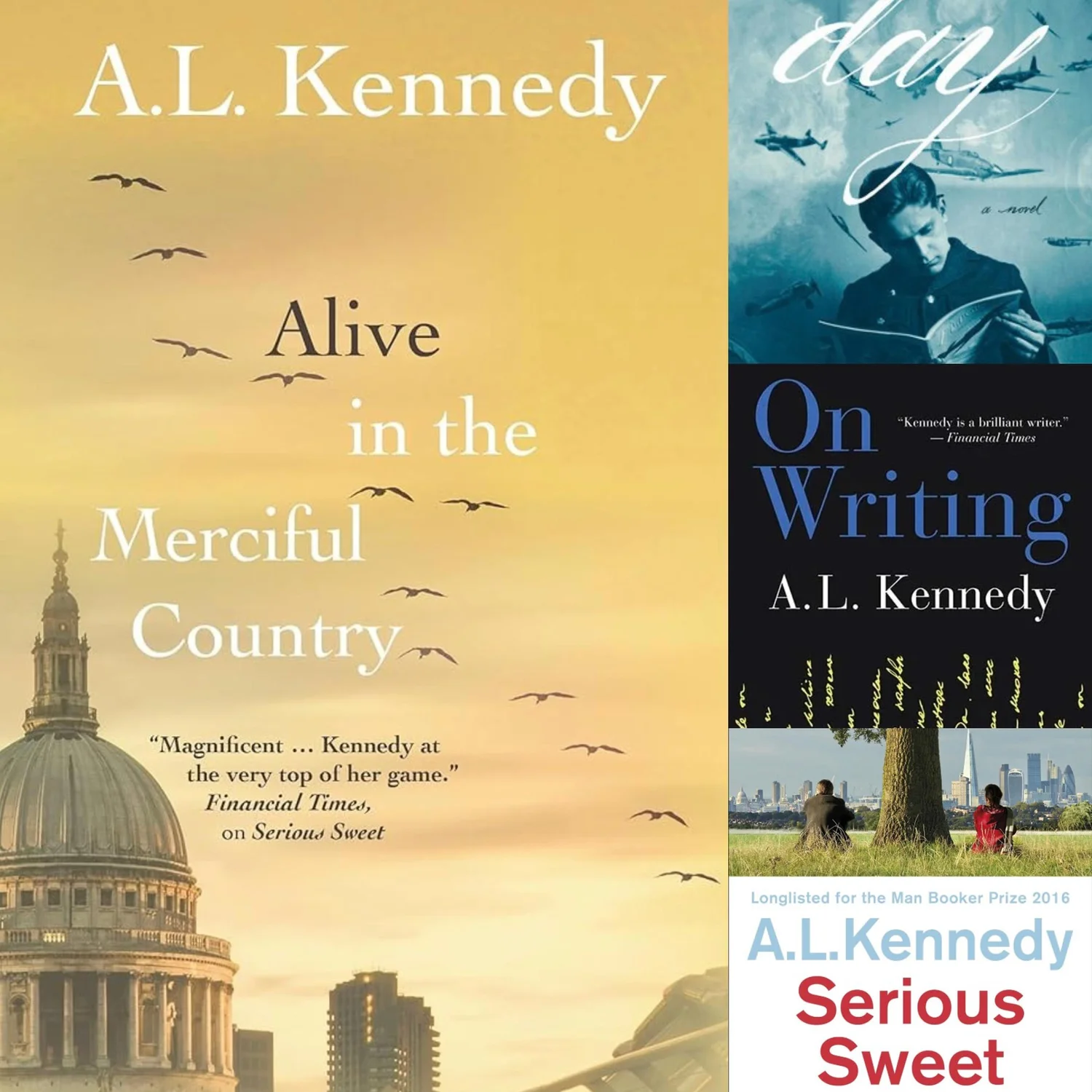
Trust, Education & Writing as Resistance w/ AL KENNEDY - Highlights
Mar 3, 202634 minS16
"The thing that puzzled him was why people don't agree to be fully expressed while they're alive. Why does it only happen in their last moment? Why wouldn't you live being fully expressed?" My guest today is AL Kennedy . She is one of Britain’s most acclaimed and versatile literary voices, a writer who can inhabit the internal life of a soldier in a POW camp, as she did in her Costa Book Award-winning novel Day , as easily as she can navigate the "professional lying" of a modern civil servant. Her latest novel, Alive in the Merciful Country , takes place during the 2020 lockdown. It tells the story of a primary school teacher who receives a confession from an undercover police officer who infiltrated her life decades earlier. It’s a provocative investigation into state power, the "Spy Cops" scandal and the search for mercy in an age of surveillance. It’s a book about the breakdown of trust. We talk about her life, her activism, and why she believes fiction is the only way to tell the truth when the facts are forbidden and how she balances the truth of her novels with the relief of stand-up comedy. (0:00) Finding Your Voice On the Alfred Wolfsohn voice method and the power of being fully expressed (2:30) Reading from Alive in the Merciful Country Kennedy shares a passage from her latest novel, exploring hope and resilience in dark times. (4:43) The Myth of Shrinking Attention Spans Challenging the narrative that modern audiences cannot focus, and the importance of engaging storytelling. (6:22) Education and the Foundation of Democracy The dangers of dismantling education and how critical thinking protects us from fascism. (10:26) The Spy Cop Scandal and State Surveillance Unpacking the reality of undercover police infiltrating peaceful protests and intimate lives. (13:59) Lockdown: A Global Pause and the Inrush of Empathy The fleeting moment of unified humanity during the pandemic and how it was ultimately betrayed. (17:34) Writing Without Theft: The Ethics of Character Creation Kennedy explains her imaginative process and why she refuses to steal details from real people's lives. (28:16) AI, Digital Slop, and the Loss of Trust Reflections on artificial intelligence as an unstable plagiarism machine and its impact on truth. (30:03) Nature, Spirituality, and the Merciful Country Finding healing in the natural world and navigating the future with love and awareness. Episode Website www.creativeprocess.info/pod Instagram: @creativeprocesspodcast
Best industries to pitch Books & Writers: Novelists, Screenwriters, Poets, Journalists, Playwrights, Non-fiction Writers & Showrunners Talk Writing, Creativity & The Creative Process for
Based on semantic analysis of episode topics and host coverage, this show is a strong guest fit for executives in:
artsstrong
Industry fit is computed by PitchCentric using vector embeddings of the show's episode catalog.
Podcasts like Books & Writers: Novelists, Screenwriters, Poets, Journalists, Playwrights, Non-fiction Writers & Showrunners Talk Writing, Creativity & The Creative Process
Every question we get asked before someone starts their trial.
If you have a concern about deliverability, AI quality, data privacy, or whether this will actually work for your specific situation, it's probably answered below.
What is the difference between Founder Solo and Founder Pro?
Founder Solo gives you 50 AI pitches per month using the credit model (Standard pitches cost 1 credit, Enriched pitches cost 2). Founder Pro raises that to 200 credits per month and adds full Booking Probability access, unlimited Magic Match, Apollo enrichment credits, and data export capabilities. Both plans use the same credit system, so you can stretch your monthly budget further by using Standard-mode drafting.
How do agency tiers work?
Agency tiers have no base fee. You pay per managed client and per talent profile. Agency Standard is $199 per client per month; Agency Pro is $399 per client per month. Both add $39 per talent profile per month. Your own team's user seats are always free.
What is a talent profile?
A talent profile represents one person (founder, executive, or spokesperson) you are booking onto podcasts. It includes their bio, topics, headshots, and outreach history. Team plans include 5 profiles; agency plans are pay-as-you-go.
Can I switch plans later?
Yes, at any time. Upgrades take effect immediately; downgrades apply at the end of the current billing period. Contact support if you need help migrating between plan families.
Do you offer a free trial?
Every paid plan includes a 15-day free trial. Your card is saved at signup but you will not be charged until day 16. Cancel any time from your dashboard.
What happens if I cancel?
You keep access until the end of your current billing period. No charges after that. Your data is retained for 30 days in case you reactivate.
Is the 20% annual discount automatic?
Yes. Select Annual on the pricing toggle and the discounted price is applied automatically at checkout. The annual price shown is the full year cost.
What if I have more than 50 profiles or 20 clients?
That is our Enterprise tier. Contact our sales team and we will build a custom plan with volume pricing, a dedicated account manager, and SLA guarantees.